Fall 2026 Militaria and Aviation Auction
Lot 158:
Description
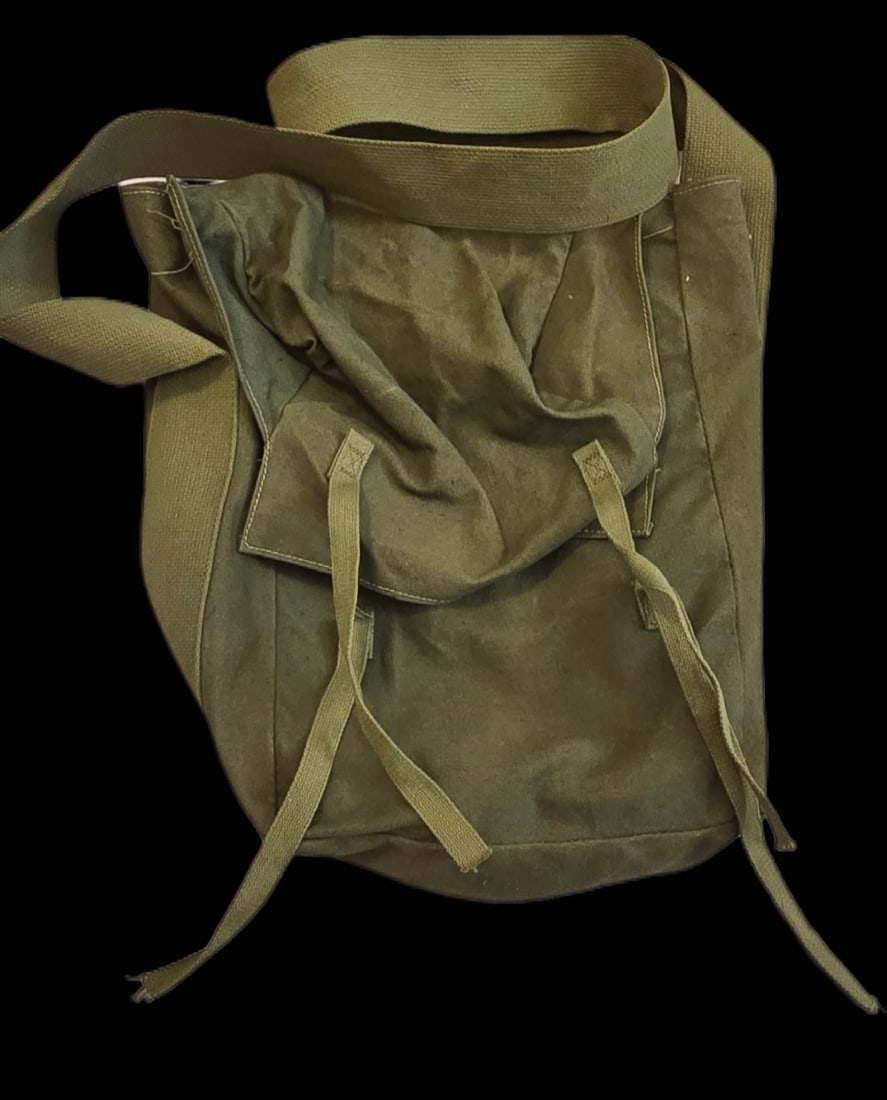
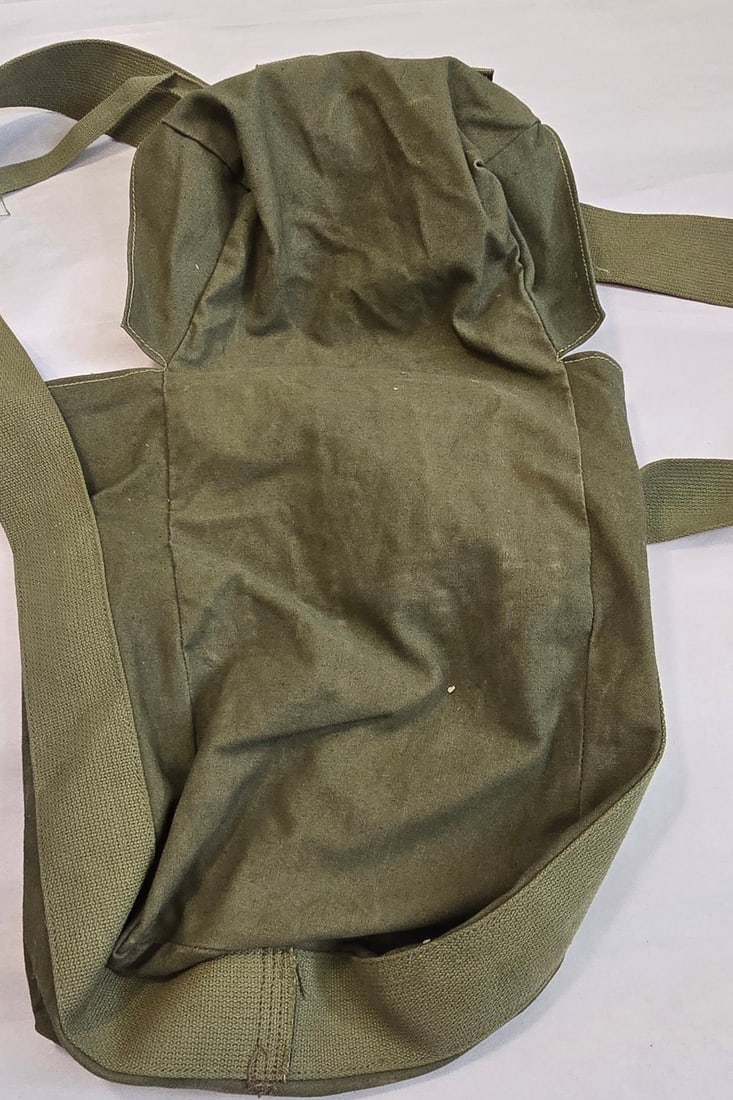
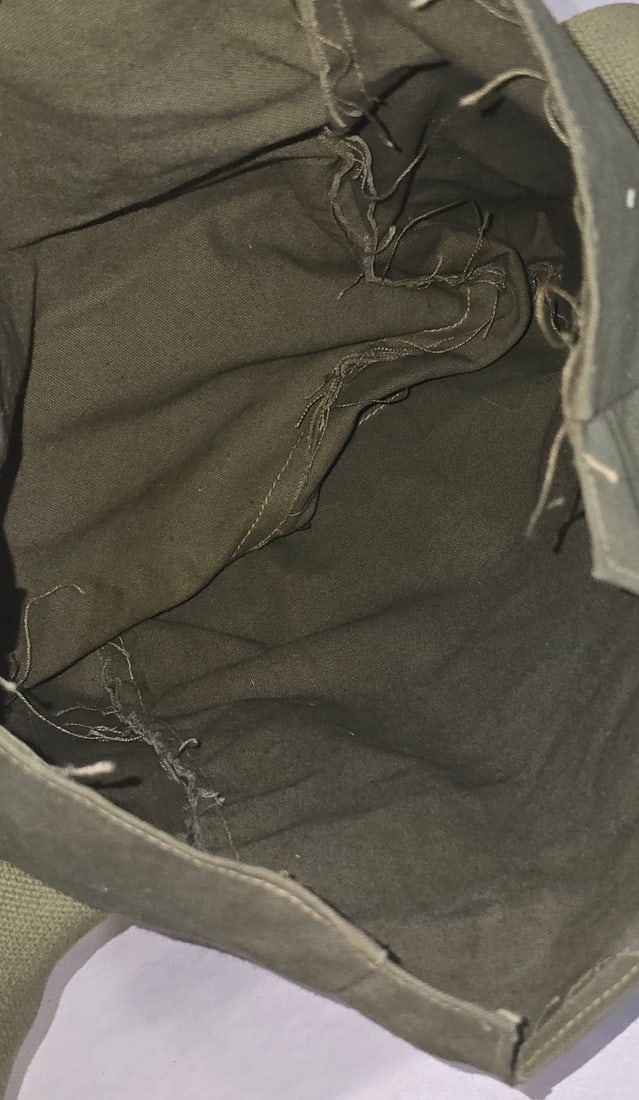
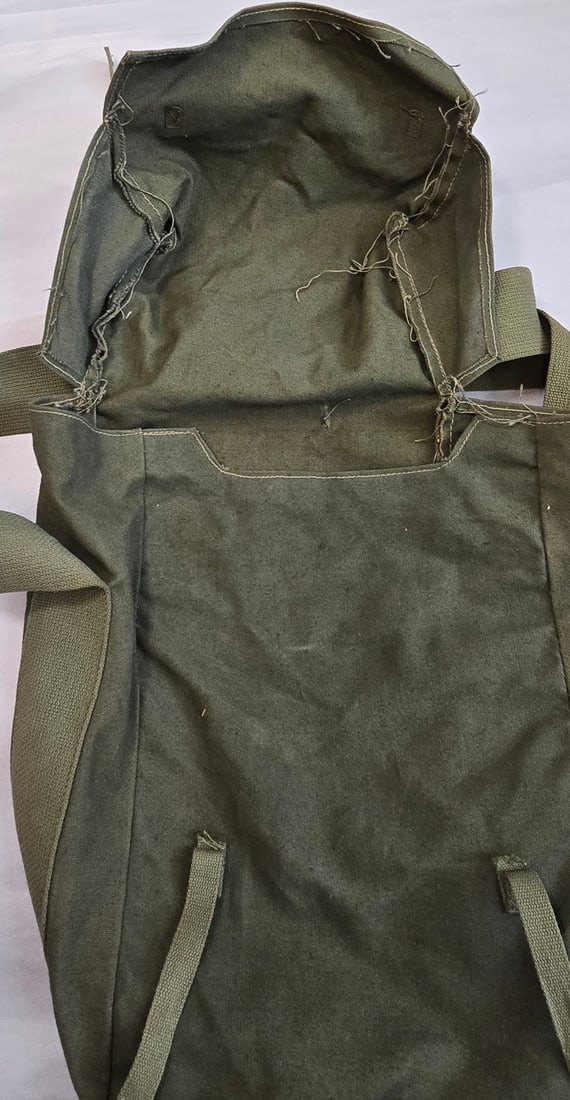
US Army Combat Engineer Demolition Satchel Charge Bag, OD canvas with fabric tie-tape closures, WWII to Korean War era, field-used Offered here is an original olive-drab canvas demolition satchel bag consistent with the type issued to U.S. Army combat engineers and airborne demolition specialists as part of the M37 demolition kit. No maker’s stamp, contract ink, or unit marking is apparent on the surviving fabric, and no separate provenance or named history accompanies the piece; its story is told through construction and field wear rather than any documented association with a specific soldier or unit. Satchels of this pattern were designed to carry block explosive charges such as composition C-2 or TNT forward to the objective, allowing combat engineers to breach bunkers, wire obstacles, and railway lines. A hallmark of the type is the deliberate absence of metal hardware – cloth tie tapes stand in for buckles and snaps, letting an engineer open and reseal the bag silently, without the risk of a stray metallic click betraying a position during a night demolition mission. The wide, continuous webbing shoulder strap let the charge be carried hands-free right up to the target, a feature that made this pattern of satchel indispensable to engineer and airborne demolition teams across the North African, European, and Pacific theaters, with continued service life extending into the Korean War. The bag is constructed of olive drab canvas with a wide integral web shoulder strap, a roomy main compartment, and a smaller internal pocket beneath the overlapping flap, each secured by cloth tie tapes rather than buckles or snaps. The flap and pocket edges show reinforced stitching, and two faint small stamped or embossed characters are visible on the underside of the flap, though they do not form a legible maker’s mark or contract stamp. Photographs show the front, reverse, and full interior construction, including the pocket lining and seam work. An honest, working example of the quick-release demolition satchel that put high explosive into the hands of the combat engineers who blew the way forward.
Share this lot: