Fall 2026 Militaria and Aviation Auction
Lot 16:
Description
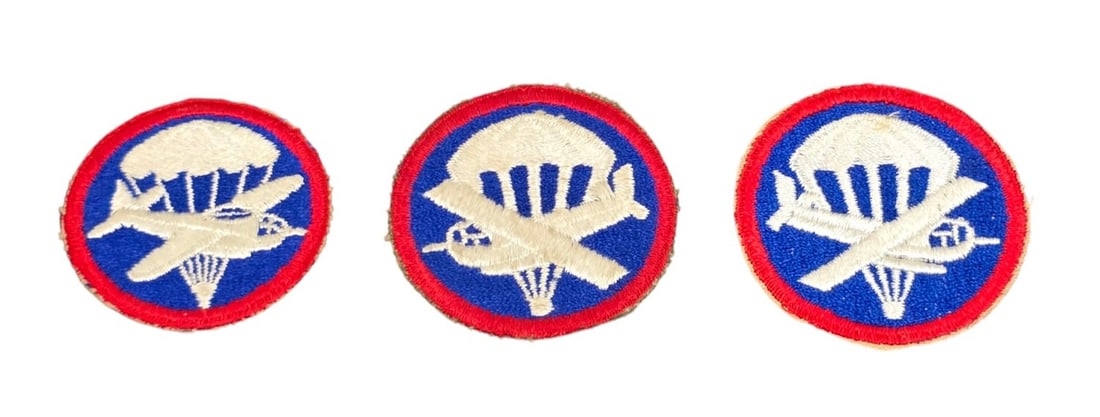
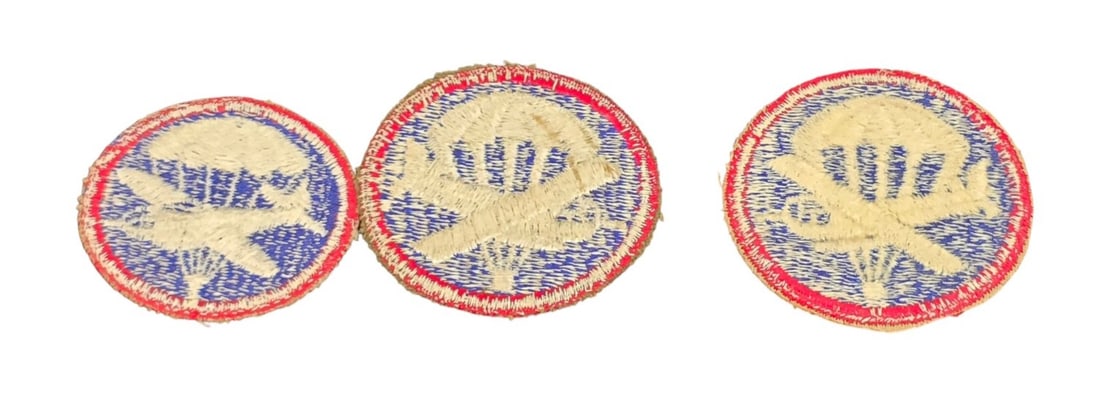
SCARCE WWII Airborne Glider Cap Patch Trio – Reverse & Bomber-Nose Variants. Three WWII US Army combined Parachute-Glider garrison cap patches, comprising a reverse (right-facing) glider variant and two examples of the sought-after "bomber" cockpit variation. This small but scholarly grouping represents one of the more nuanced corners of American airborne insignia collecting: the manufacturing variations produced by wartime contractors tasked with embroidering the combined parachute-and-glider device standardized circa 1943-1944 for troopers of the Airborne Command, worn on the garrison, or "overseas, " cap by formations such as the 82nd and 101st Airborne Divisions. No maker’s mark, unit attribution, or accompanying paper survives with this lot; the interest and value here rest entirely in the embroidery itself. Paratroopers and glider infantry originally wore separate distinctive insignia before the War Department unified the two branches under a single design pairing a white parachute canopy with a crossed glider silhouette on an infantry-blue field, bordered in red. While the regulation pattern depicts the Waco CG-4A glider descending toward the viewer’s left, embroidery houses working from imperfect specification drawings or altered dies produced a range of collectible deviations. The left patch in this lot shows the glider facing the opposite direction from standard issue – a recognized and desirable reverse-facing variation prized by specialists assembling comparative type sets. The center and right patches exhibit the "bomber" or blunt-cockpit treatment, in which the embroiderer rendered the glider’s nose with distinct multi-pane cockpit stitching more evocative of a multi-engine bomber’s greenhouse nose than the slender Waco fuselage – a wartime production quirk now eagerly sought as a stand-alone manufacturing curiosity within the broader combined-device patch family. These small variances, born of contract embroidery houses working at speed and scale, have become a specialized study area, with type and variant differences driving values well above common examples. All three patches are unmarked, as typical for the type, and consistent with wartime manufacture of the 1943-1945 period. Each is worked on tan/khaki twill base cloth with a red embroidered border, blue field, and white parachute and glider device in dense, tightly worked thread; cut edges are present throughout rather than the merrowed edges seen on postwar reproductions. Reverse examination shows untrimmed white thread backing, the "snowy back" characteristic associated with wartime-manufactured insignia. No cap, named attribution, or unit documentation accompanies the lot; the patches are offered together as a study group of three. Condition is very good for the type: embroidery remains tight and largely full with no significant moth damage or structural thread loss, colors show only light, consistent age toning, and edges display expected wartime handling wear with minor fraying visible on close inspection. A compact but scholarly trio for the airborne specialist, uniting a scarce reverse-facing glider with two examples of the elusive bomber-nose cockpit variant in a single instructive lot.
Share this lot: