Fall 2026 Militaria and Aviation Auction
Lot 170:
Description
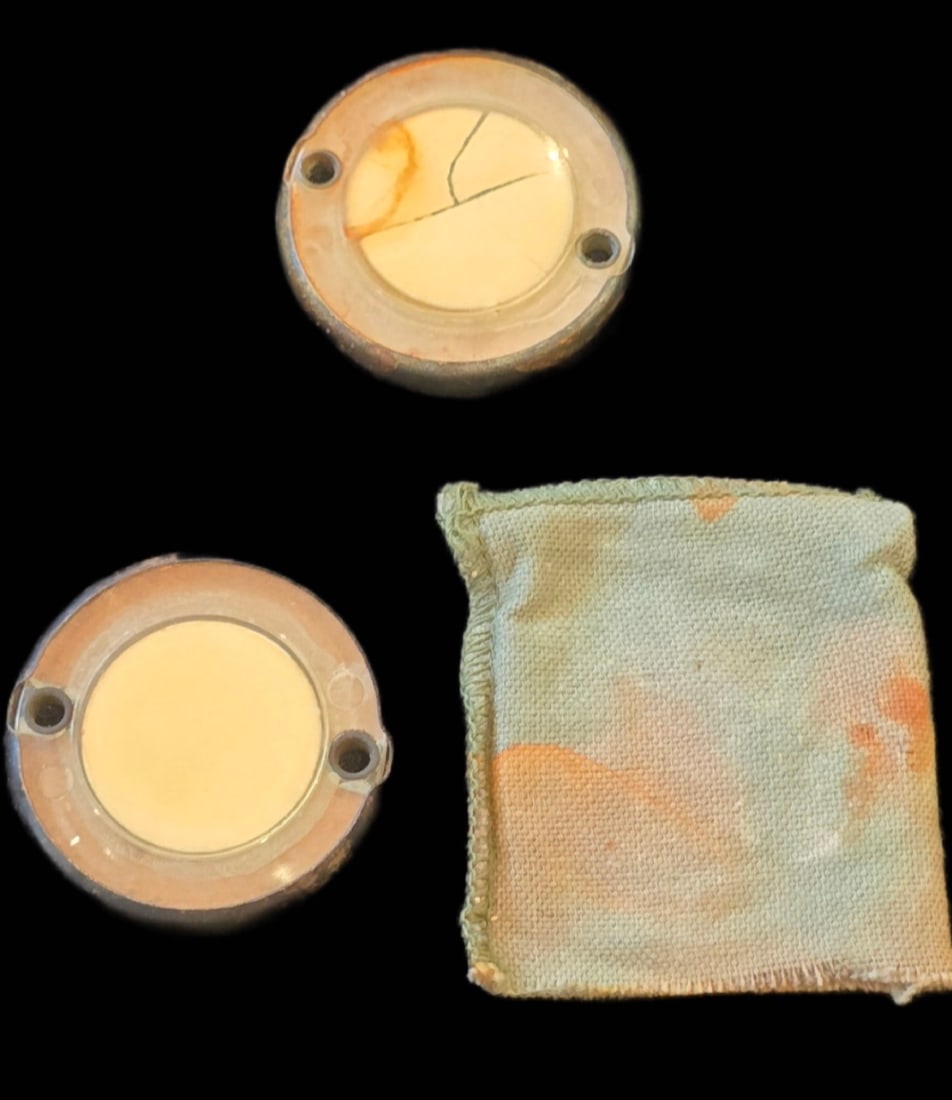
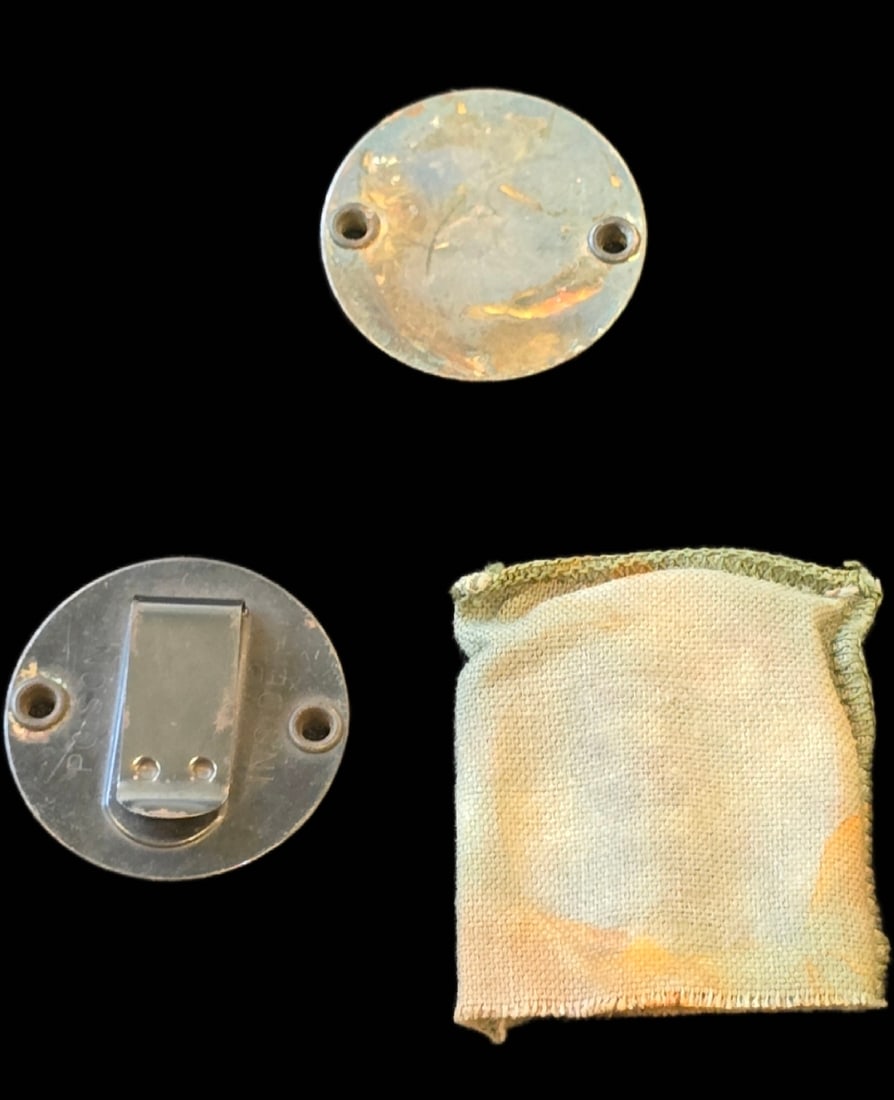
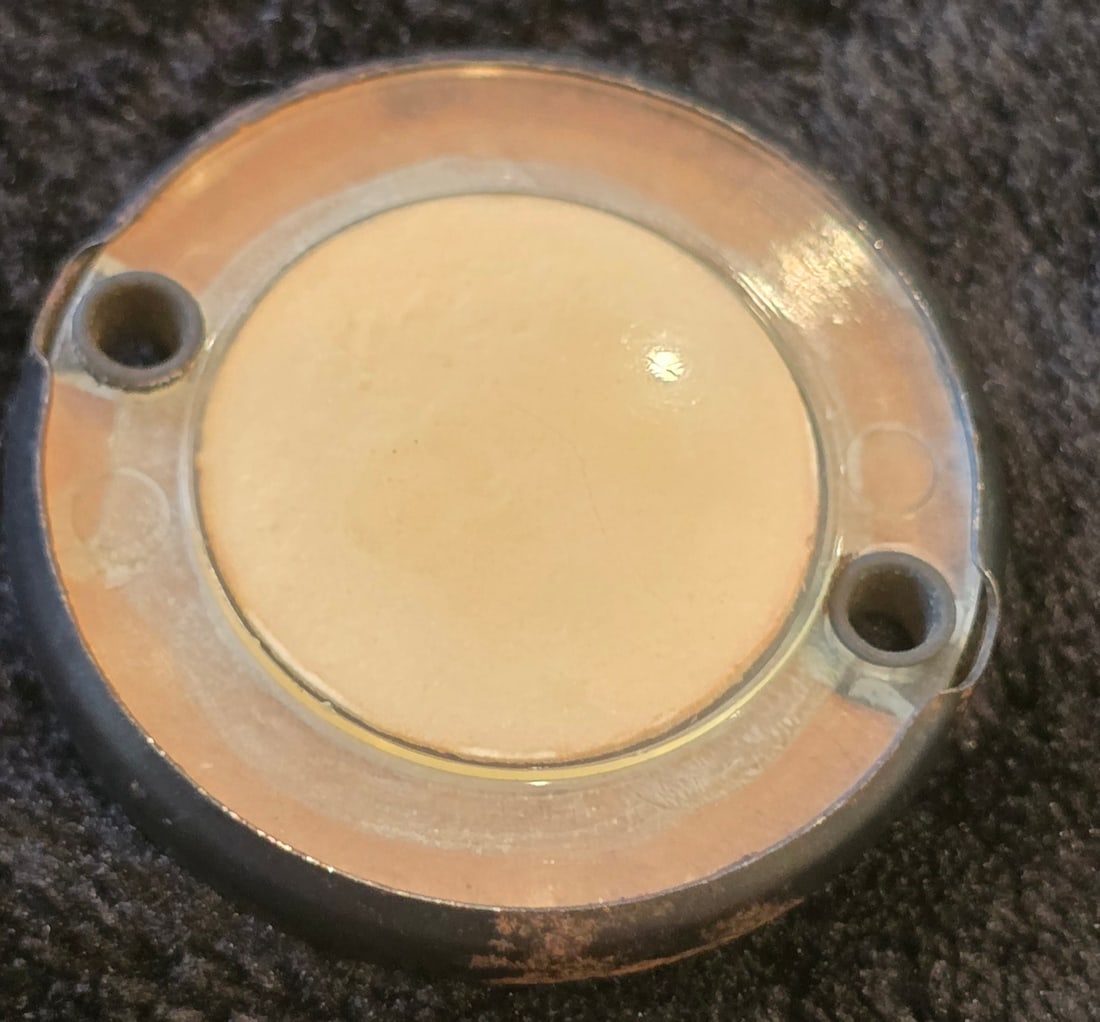
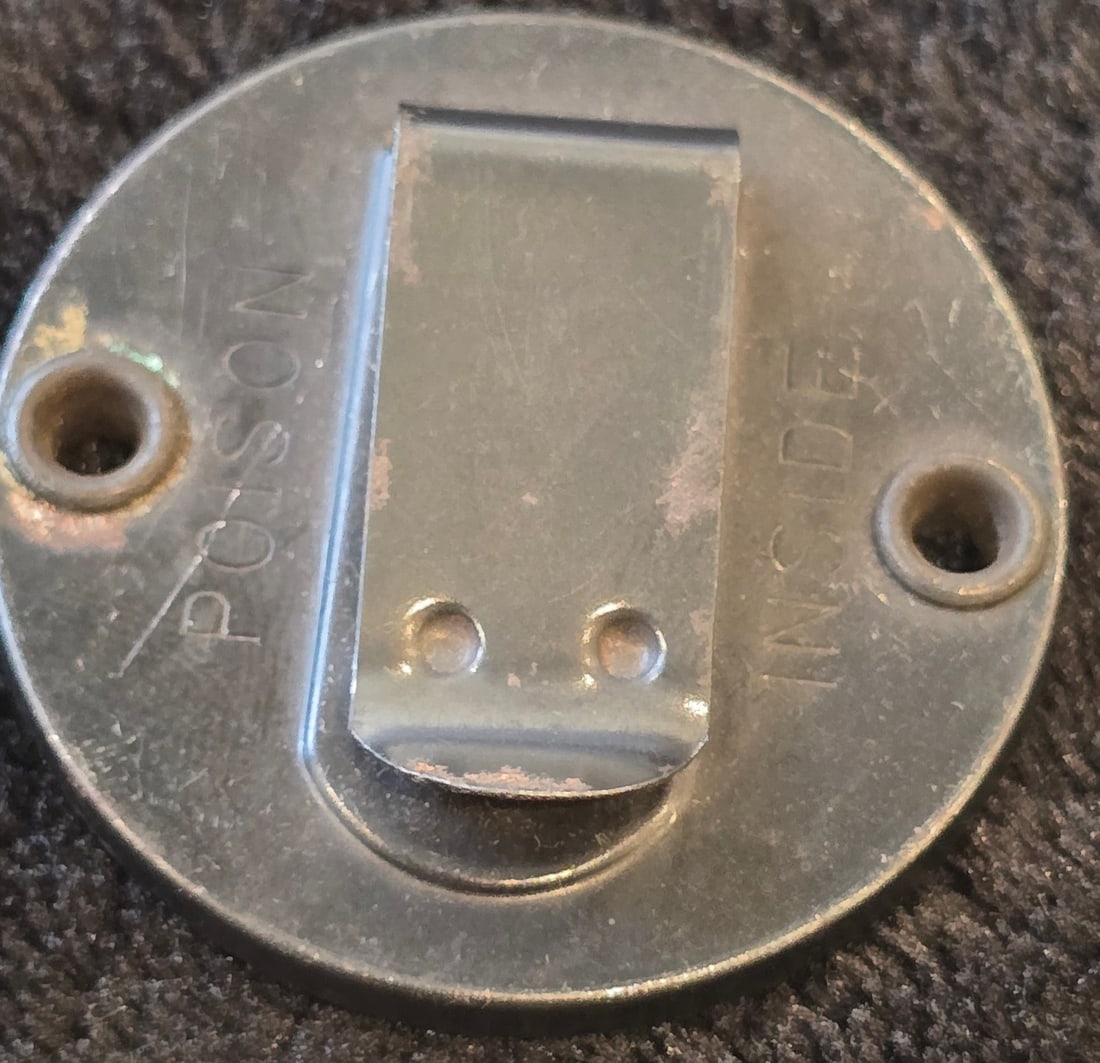
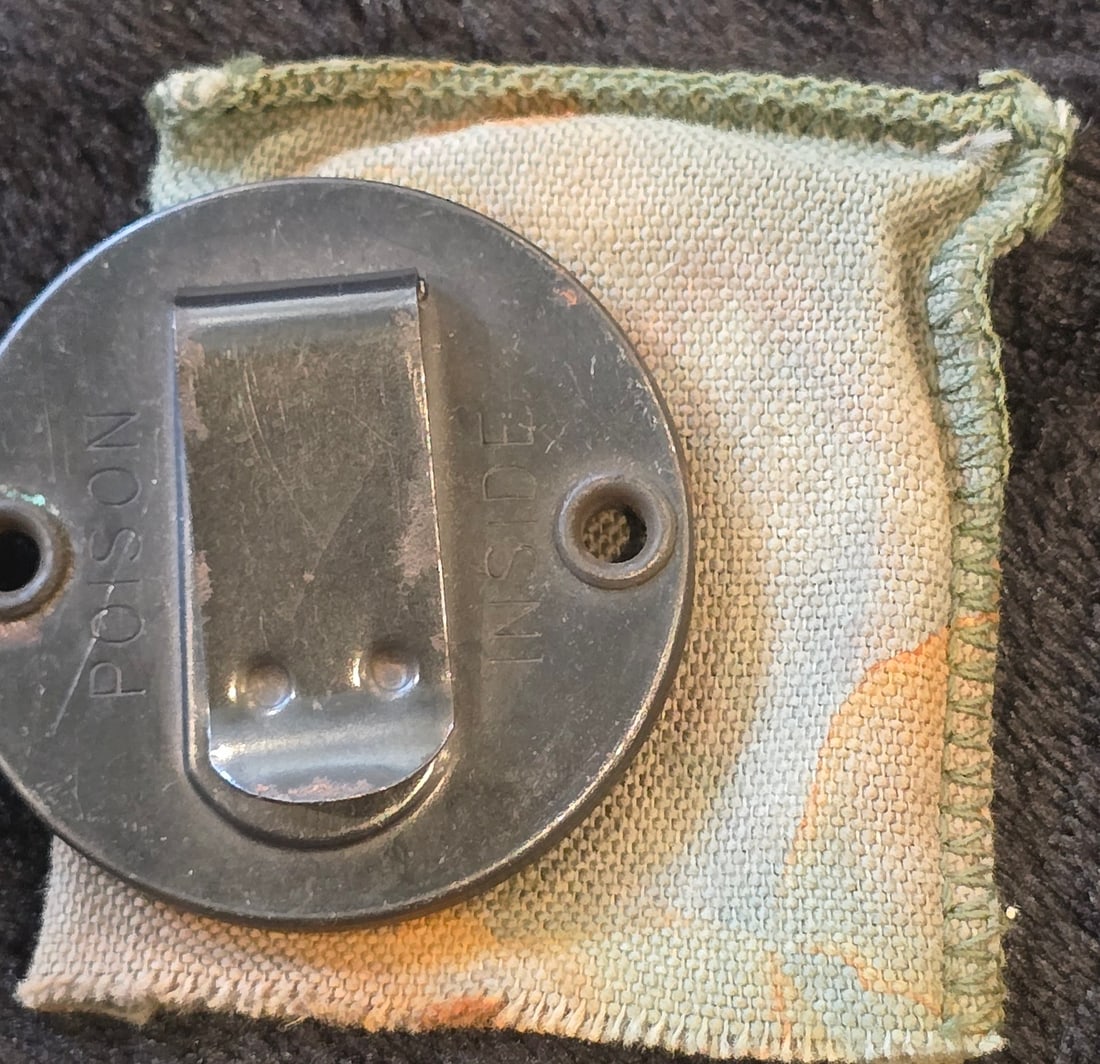
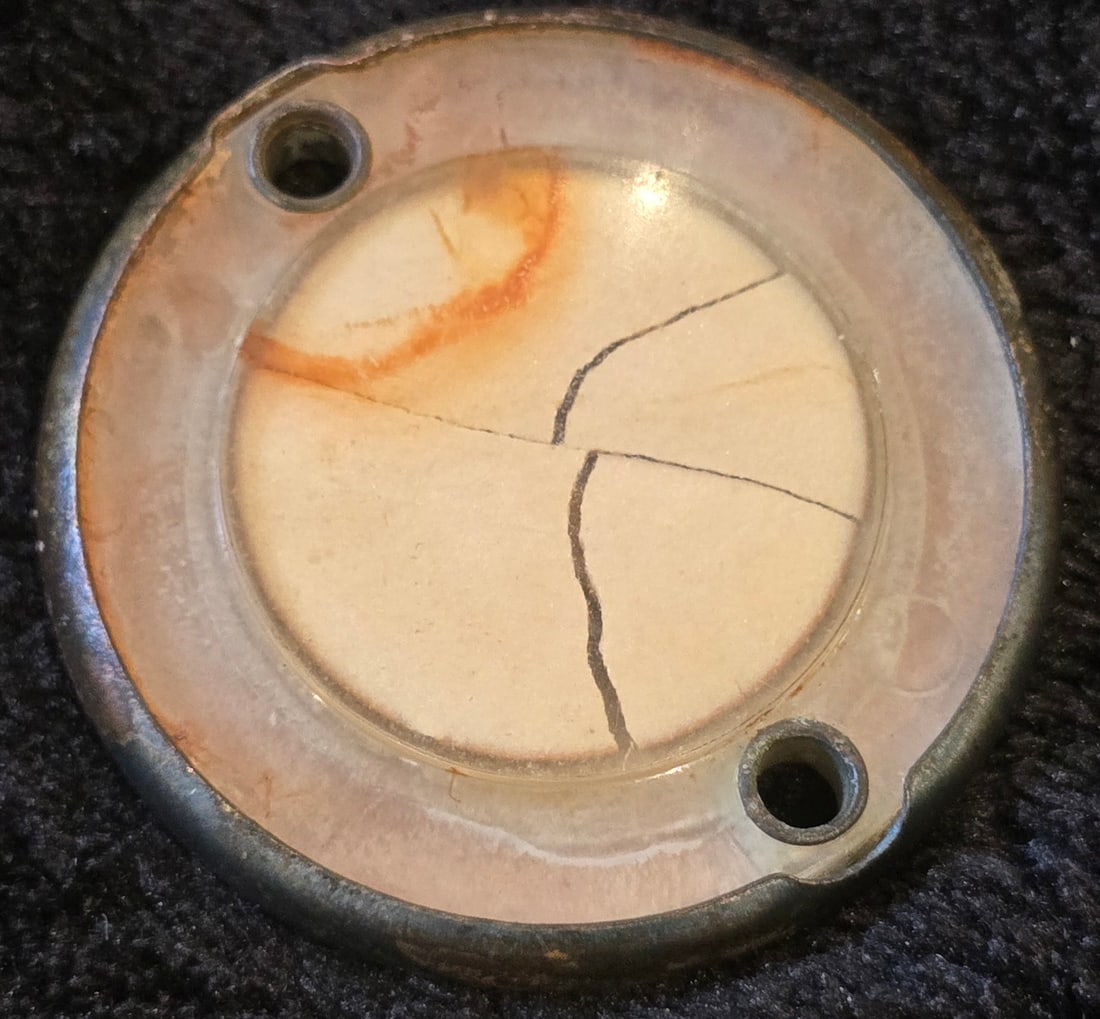
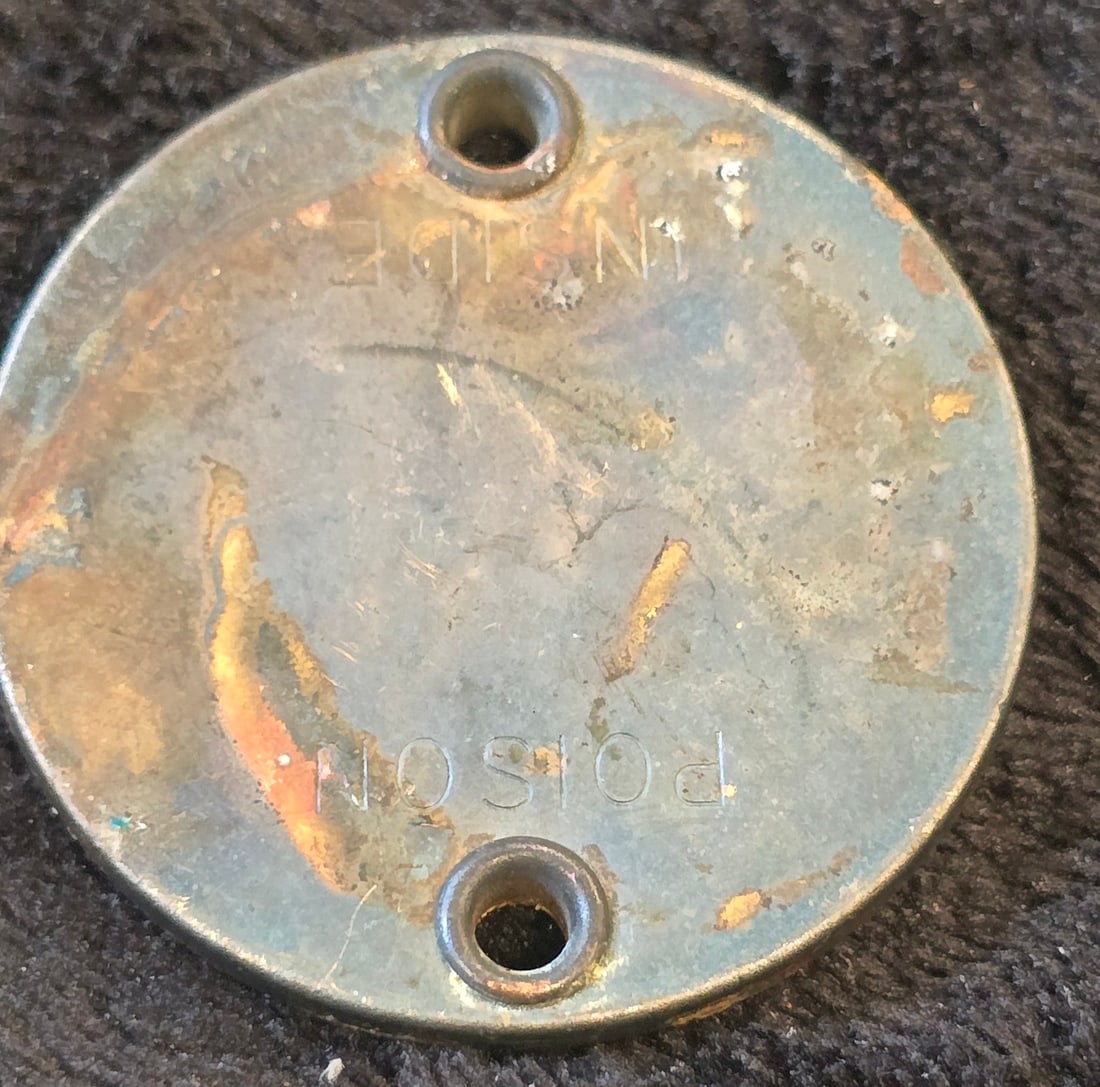
WWII US Army Airborne Radium-Luminous Marker Discs – Clip-On and Tie-On Patterns with Original Cloth Pouch, Reverses Stamped POISON INSIDE Offered here is a scarce pairing of World War II American radioluminescent identification discs, representing both principal mounting variants issued to airborne and combat engineer troops, together with a single original-issue cloth transport pouch. As stores-issue equipment distributed in bulk rather than to a named individual, no personal marking or unit association is present on either disc, and their history rests in the well-documented pattern of manufacture, issue, and battlefield use rather than any individual citation or published biography. These discs were filled with a compound of radium-226 and zinc sulfide, sealed beneath a clear celluloid or Plexiglas dome, producing a faint but steady glow visible only at close range in total darkness. Contracted through firms such as the United States Radium Corporation working to Army Corps of Engineers and Airborne Command specifications, they were issued in limited numbers ahead of major night operations, most famously the parachute and glider landings that opened the Normandy invasion in the early hours of 6 June 1944. Troops clipped or laced them to helmet netting, harness webbing, or jacket collars, using the discs to silently identify friendly personnel and mark trail routes for follow-on waves moving through unfamiliar and hostile terrain in darkness. Because the internal radium compound was genuinely hazardous if the dome was broken, the reverse of every disc was stamped POISON INSIDE as a period safety warning – a phrase legible, in mirrored relief, on the underside of the clip mechanism itself on the example offered here. The clip-on disc is the stronger of the pair: its reverse retains a robust, spring-loaded steel clip flanked by the clearly struck POISON / INSIDE warning, the two mounting eyelets intact, the dome clear, and the luminous face beneath smooth, evenly toned, and free of visible cracking. The tie-on disc, by contrast, shows a plain reverse pierced with the same two lacing holes and stamped POISON, its brass surface heavily mottled and tarnished with age; the luminous face beneath its dome has sustained pronounced radial cracking with rust-orange staining bleeding across one quadrant, consistent with long-term deterioration of the internal compound or its casing. Accompanying the pair is a single original-issue cloth carrying pouch of sage-green canvas with a hand-stitched edge, showing honest orange staining, light fraying at the opening, and wear consistent with genuine field use; no second pouch is present. Both discs should continue to be treated with appropriate caution given their radioactive content, particularly the cracked example. A genuinely scarce surviving pairing of both airborne luminous marker patterns with accompanying period pouch – tangible relics of the radium-age technology developed to guide American paratroopers and engineers through the darkness of the war’s greatest night operations.
Share this lot: