Fall 2026 Militaria and Aviation Auction
Lot 180:
Description
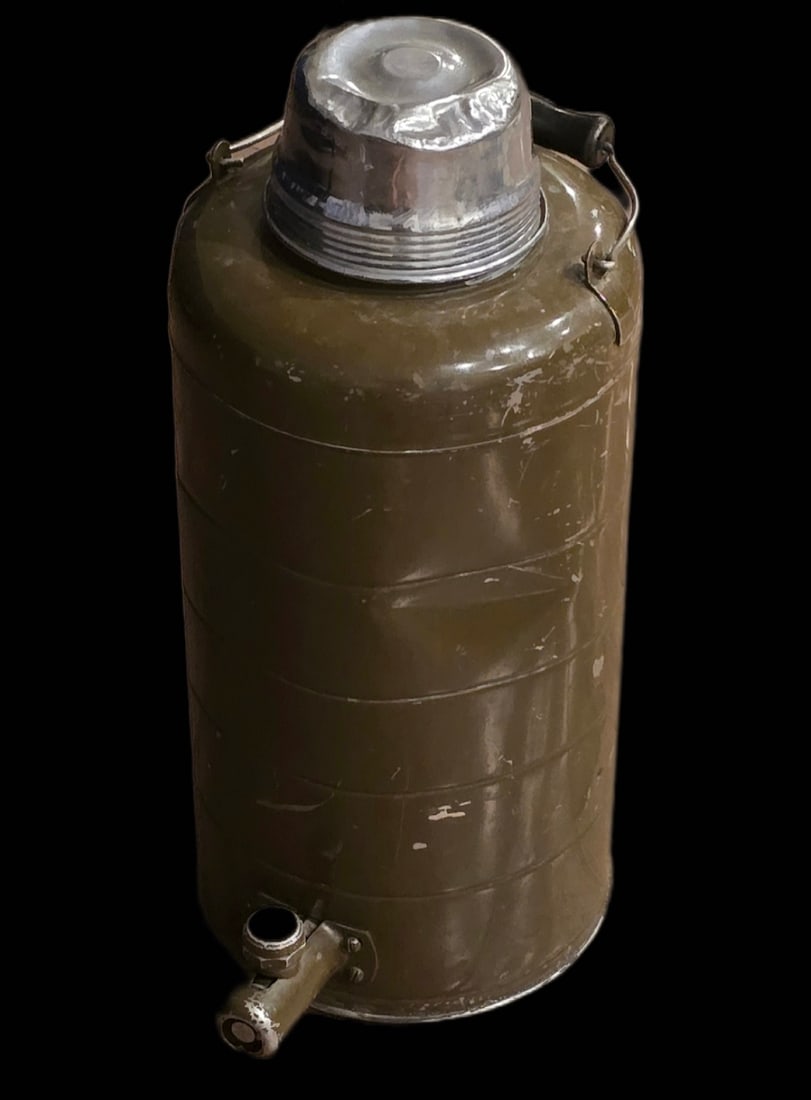
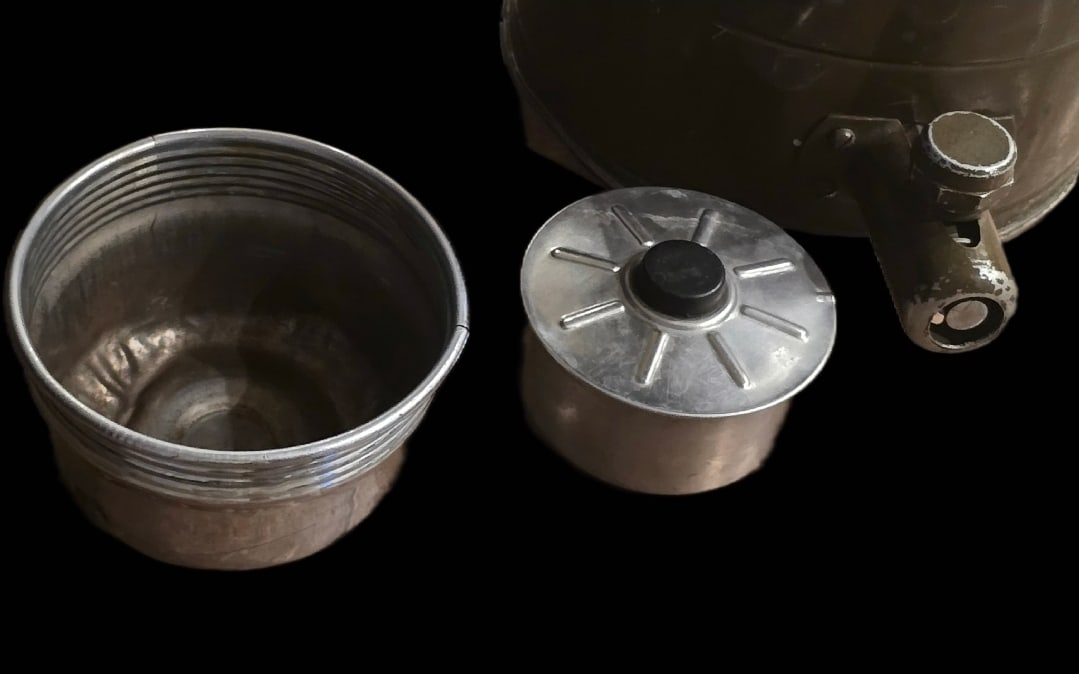
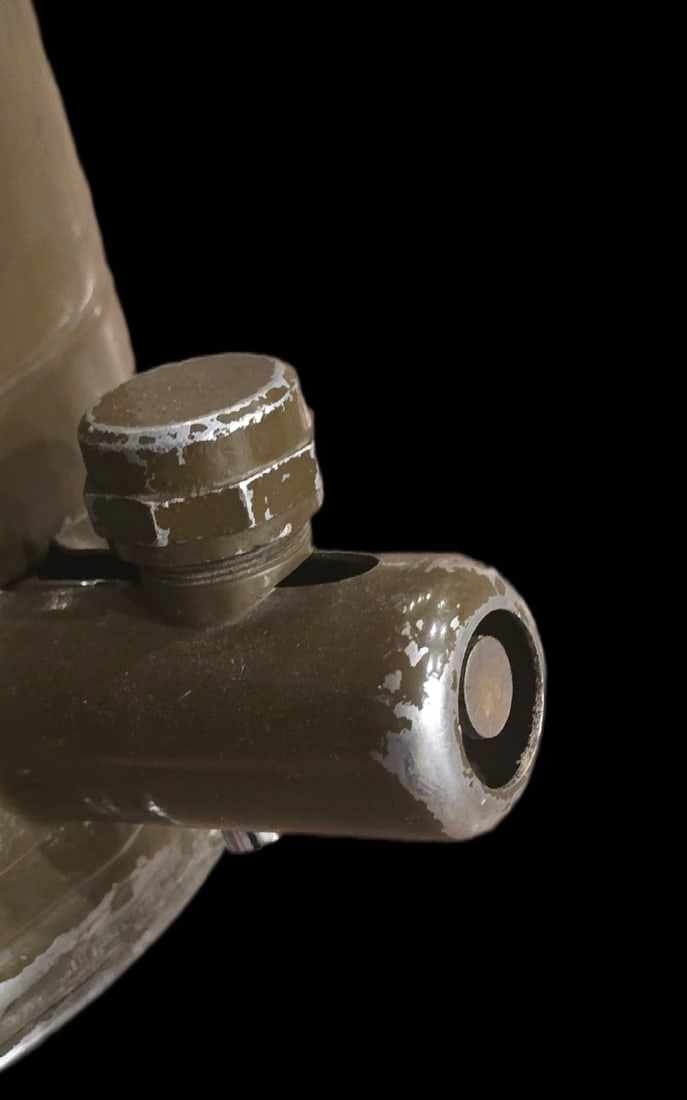
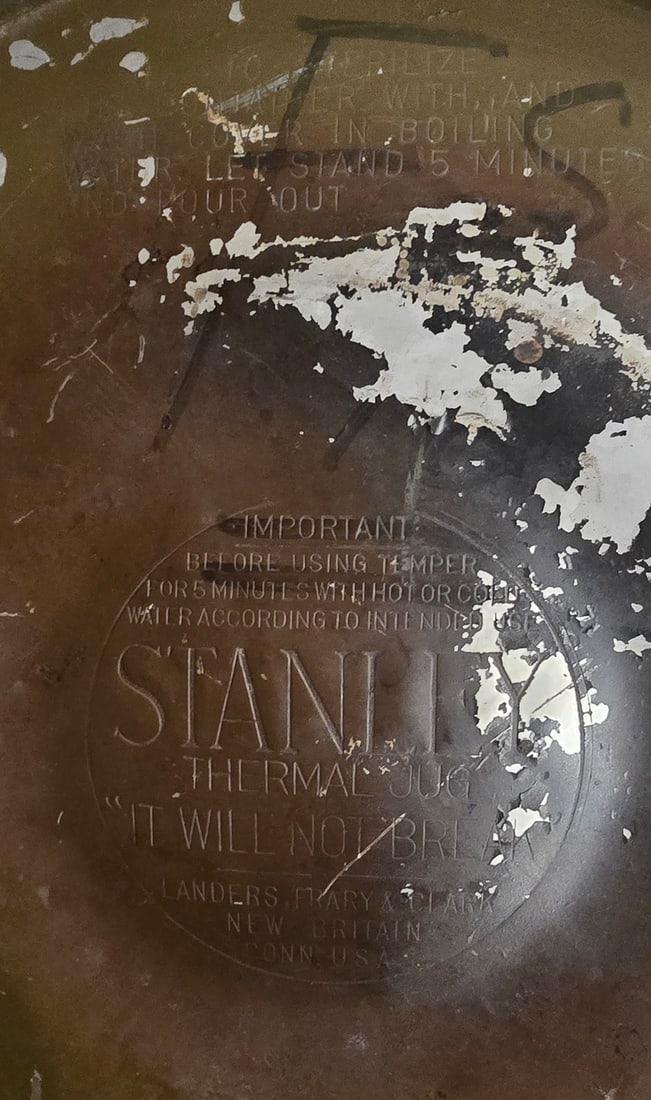
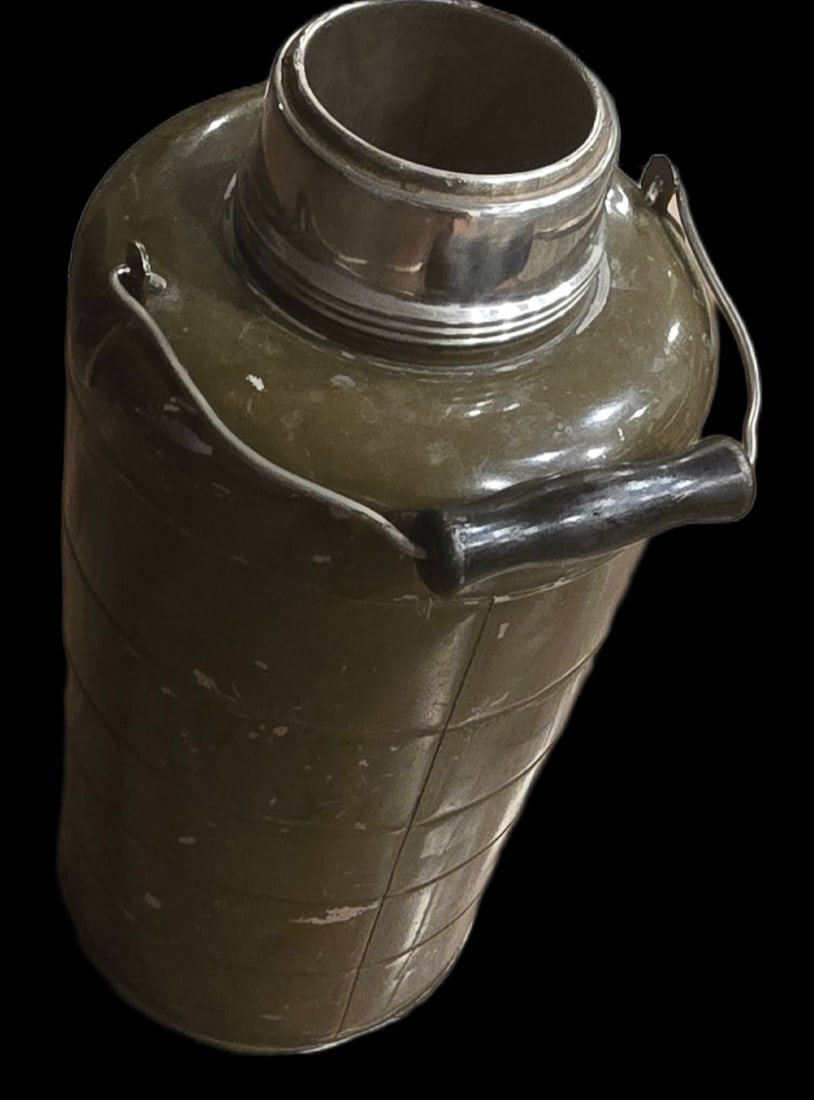
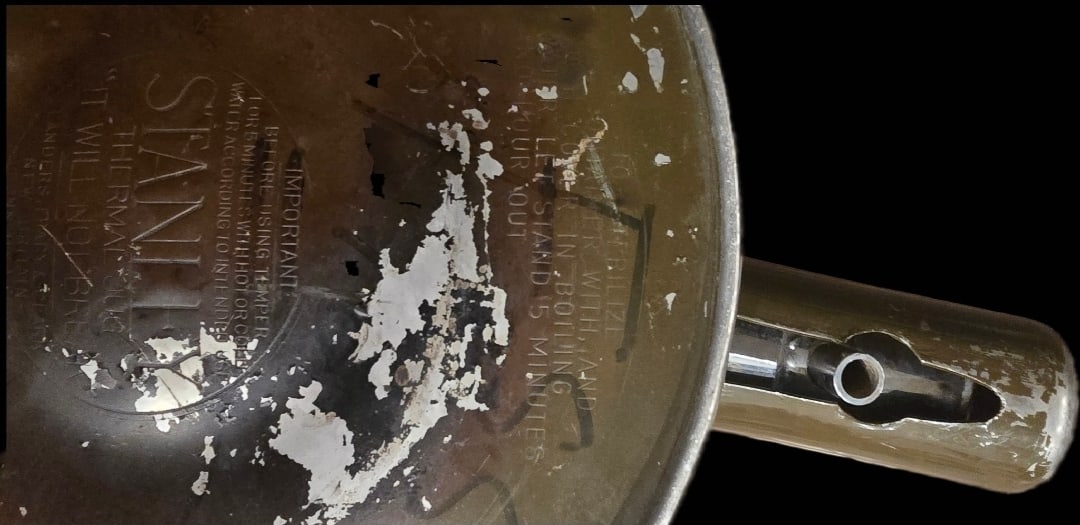
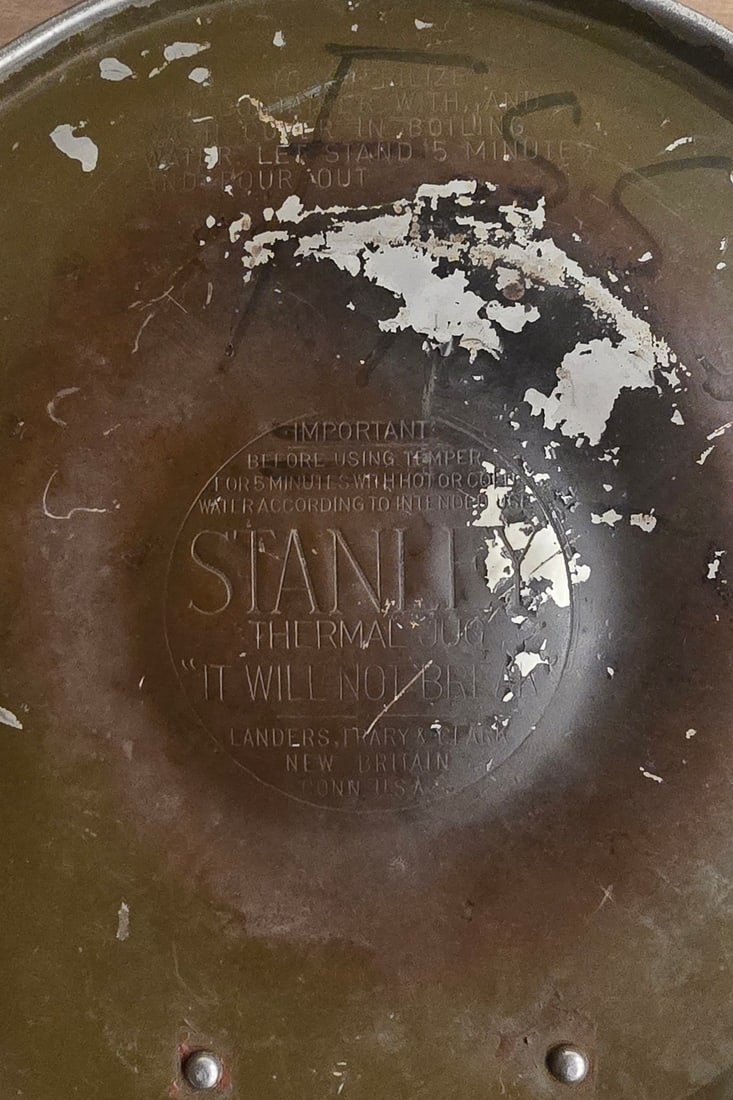
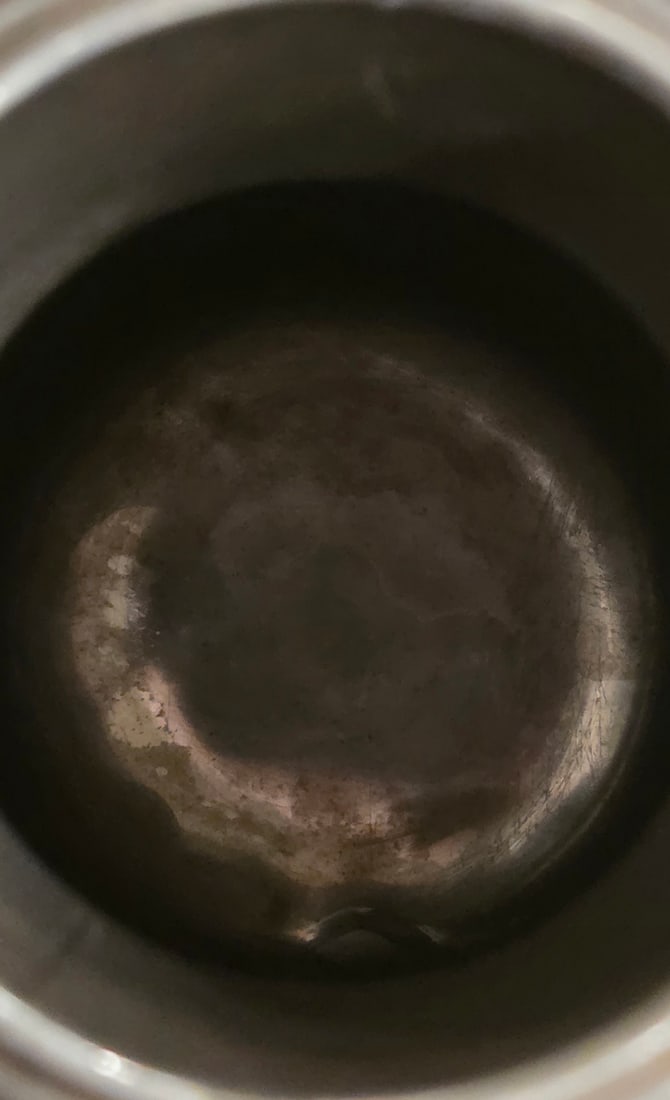
WWII-Era Stanley Aircraft Crew Thermal Jug by Landers, Frary & Clark, New Britain, Connecticut – Olive-Drab Bomber Dispenser with Base Valve, Cup and Stopper, Complete This lot offers an original World War II-era Stanley thermal jug of the type carried aboard American heavy bombers – the B-17 Flying Fortress, B-24 Liberator, and B-29 Superfortress among them – to keep hot coffee, soup, or water available to flight crews on long, frigid missions flown at high altitude. Manufactured by Landers, Frary & Clark of New Britain, Connecticut under the Stanley patent and its well-known trademark motto "It Will Not Break, " the jug retains its full complement of original functional components, a genuine rarity among surviving examples of this type. No aircraft, unit, or individual identification is visible on the piece, and attribution to a specific bomber or mission cannot be made from the jug alone; its story rests in what it represents rather than a documented provenance. Unpressurized bomber cabins routinely plunged well below freezing at operating altitude, and long-range multi-engine crews flying multi-hour missions over Europe and the Pacific depended on ruggedized, insulated vessels like this one, rack-mounted within the flight deck, to supply hot beverages during the ordeal. The low-mounted, push-button base spigot was a deliberate departure from civilian Stanley thermal jugs of the era, allowing a crewman in bulky flight gear to draw a drink one-handed without removing a top cap mid-flight – a design refinement built specifically for aircraft and shipboard service. The military’s olive-drab paint scheme, seen here, likewise distinguished procured examples from the bright chrome finish of Stanley’s contemporary commercial line. The jug presents a ribbed, cylindrical all-metal body finished in worn olive-drab paint, fitted with a wire bail carrying handle and turned wood grip. It retains its threaded aluminum screw cap/cup, its separate inner insulated stopper with dark turned knob, and the projecting base valve assembly with its circular push-button spigot face – all present, a rarity for surviving examples of this type. The stamped base plate reads, in part,
Share this lot: