Fall 2026 Militaria and Aviation Auction
Lot 183:
Description
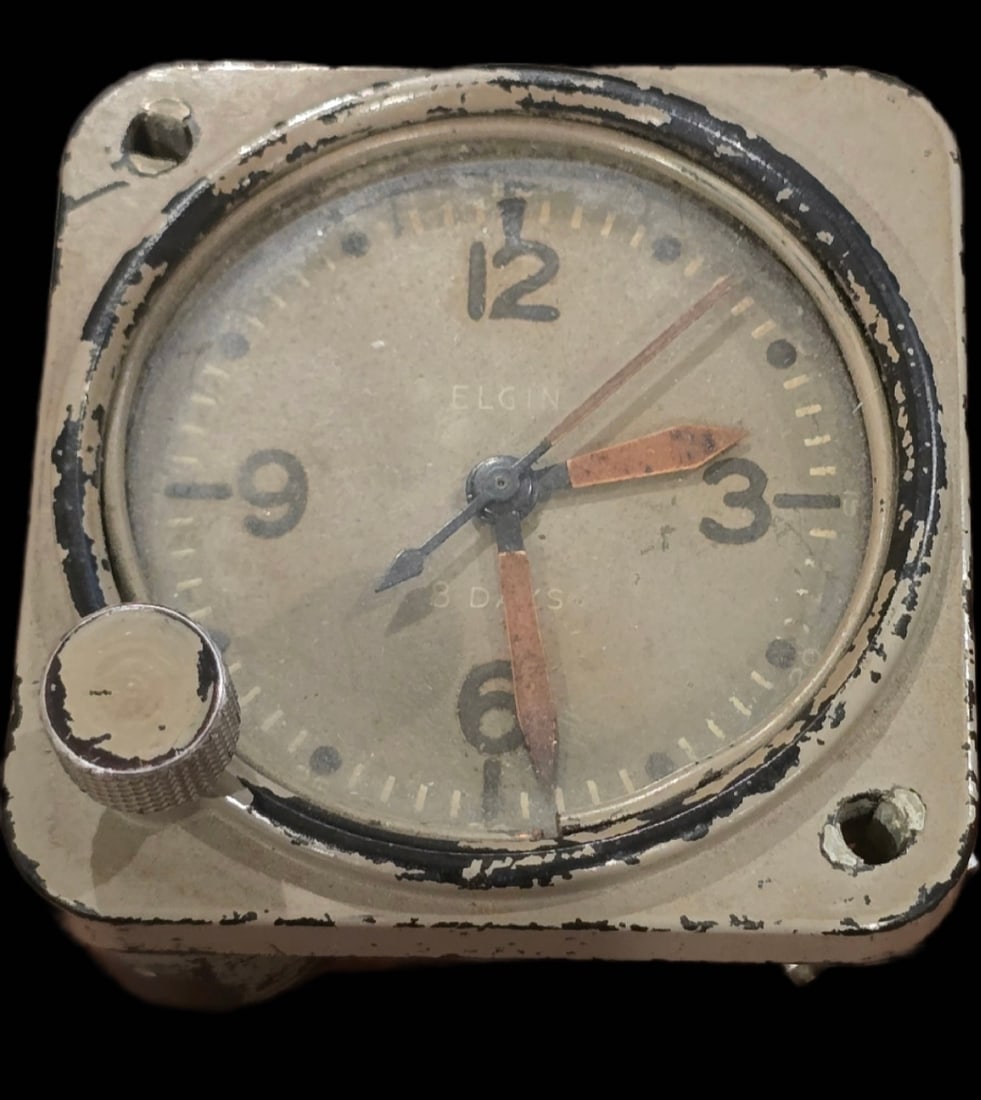
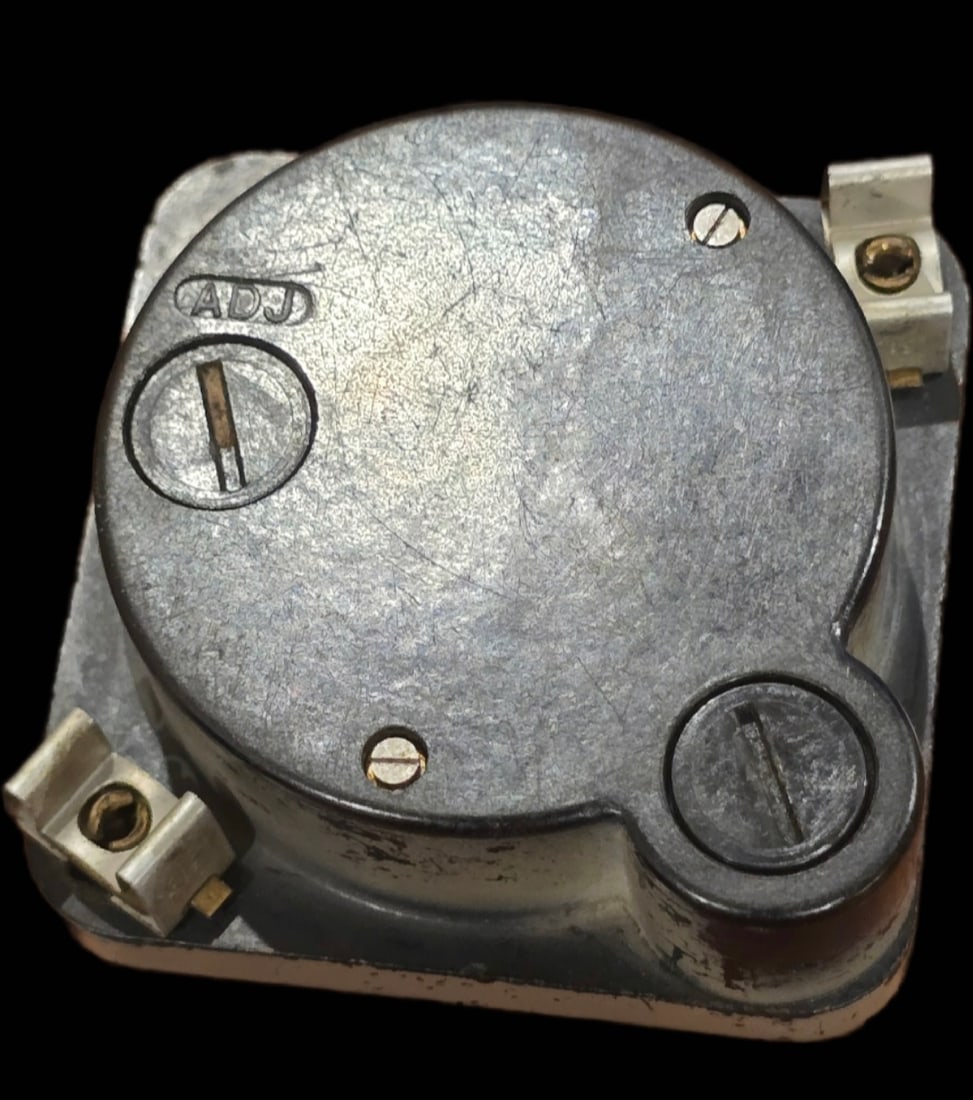
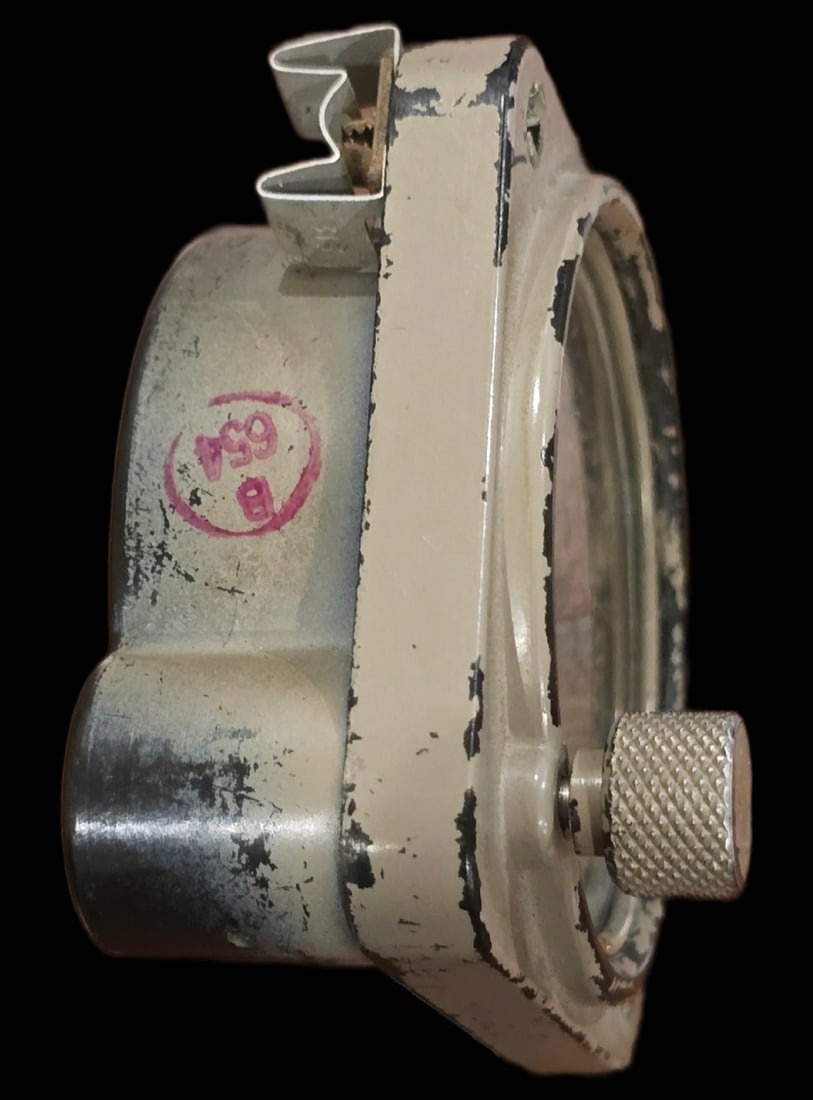
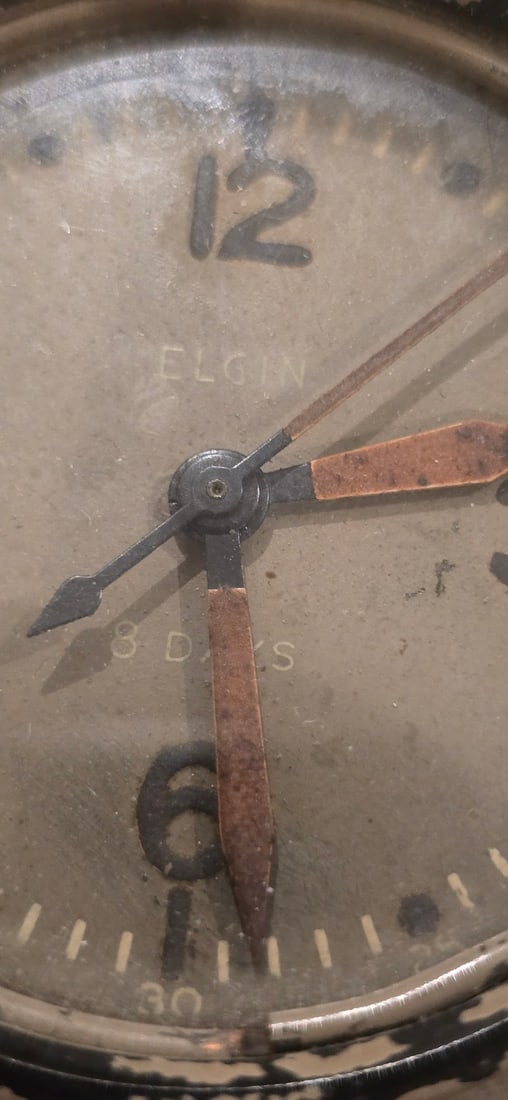
World War II U.S. Army Air Forces Elgin National Watch Co. 8-Day Aircraft Cockpit Clock, A-11/AN5743-Type, with Center-Sweep Seconds, Radium Dial, and Rear "ADJ" Regulator Port Offered here is a World War II-era American aircraft instrument-panel clock manufactured by the Elgin National Watch Company of Elgin, Illinois. Its square, lugged case, knurled winding/setting crown at the 7 o’clock position, and rear regulator access marked "ADJ" are all consistent with the Army-Navy AN5743/A-11 family of cockpit clock specifications that governed timekeeping instruments across U.S. combat aircraft; no separate manufacturer’s data plate or contract number is visible in the photographs, so the exact model designation cannot be confirmed beyond this general type. Eight-day cockpit clocks such as this one were essential wartime equipment, relied upon by navigators for dead-reckoning calculations over featureless ocean and terrain, and by pilots and bombardiers for the precise timing that coordinated formation flying and tactical bombing runs. Elgin was one of only a handful of American firms – alongside Waltham and Hamilton – contracted to build these rugged, manually-wound, eight-day movements to strict military tolerances, housed in shock-resistant cases with radium-luminous dials so crews could read the time in blacked-out cockpits during night operations over both the European and Pacific theaters. No individual aircraft, squadron, or crew association survives with this example; its story rests entirely in its military-pattern construction and inspection markings rather than any documented service history. The dial is signed "ELGIN" beneath the 12 and "8 DAYS" above the 6, with bold Arabic numerals at 12, 3, 6, and 9, luminous minute markers, and a subsidiary running-seconds hand at the center. The broad hour and minute hands retain their original luminous fill, now heavily oxidized and darkened with age, consistent with period radium compound and to be handled with the usual caution appropriate to vintage radium-dial instruments. The knurled crown remains intact and appears functional. The reverse housing bears the engraved "ADJ" regulator port with beat and rate adjustment screws, and the side of the case carries a circular pink ink inspection stamp, faintly legible as a partial number, characteristic of wartime military acceptance marking. The case shows an old field or depot repainting in light drab over an earlier black finish, with extensive chipping and edge wear to the bezel, crown surround, and mounting flange consistent with genuine service handling over decades. The dial shows expected toning, surface dust beneath the crystal, and fading to the printed legends. The movement’s running condition and timekeeping accuracy are unverified, and the clock is offered strictly as an unserviced instrument likely to require professional cleaning before any attempt at winding. A solid, honestly-worn example of the eight-day cockpit clocks that kept American aircrews on schedule through the skies of Europe and the Pacific.
Share this lot: