Fall 2026 Militaria and Aviation Auction
Lot 195:
Description
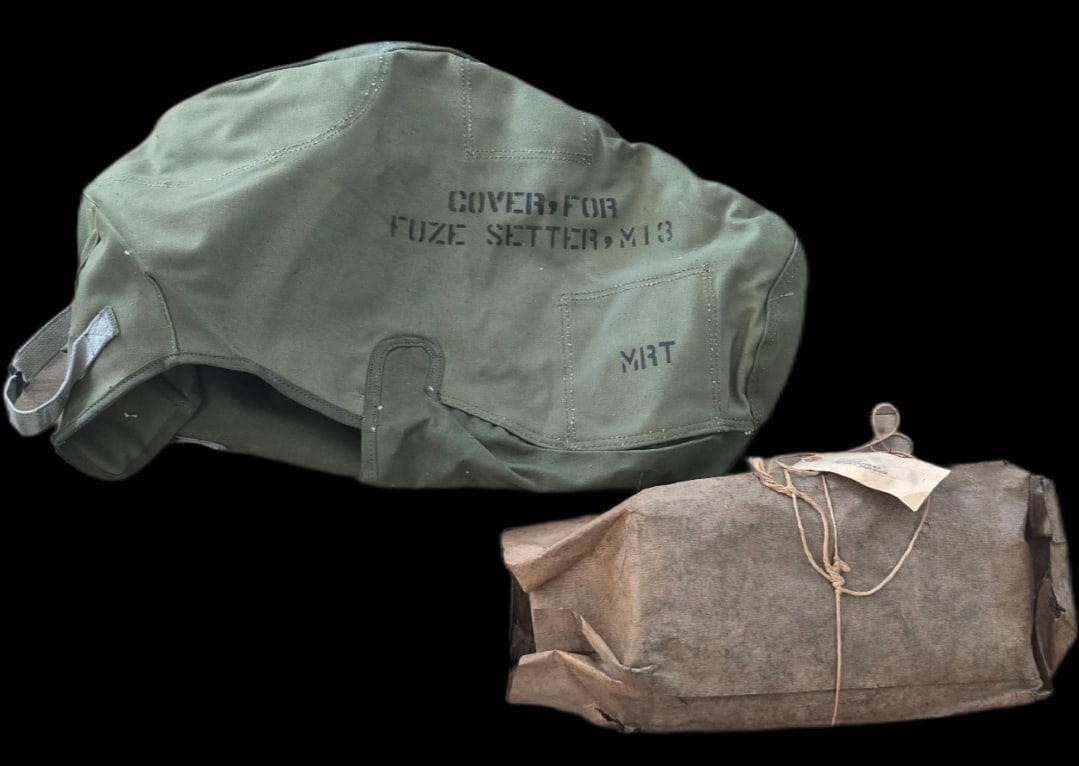
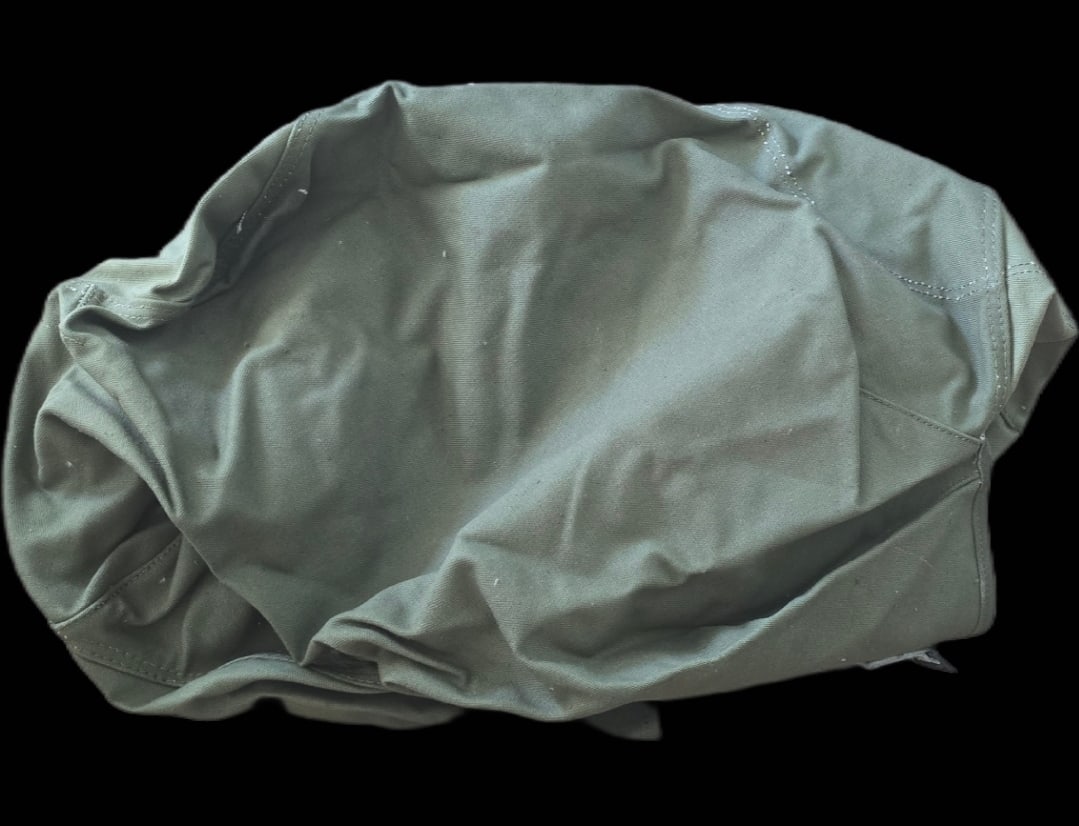
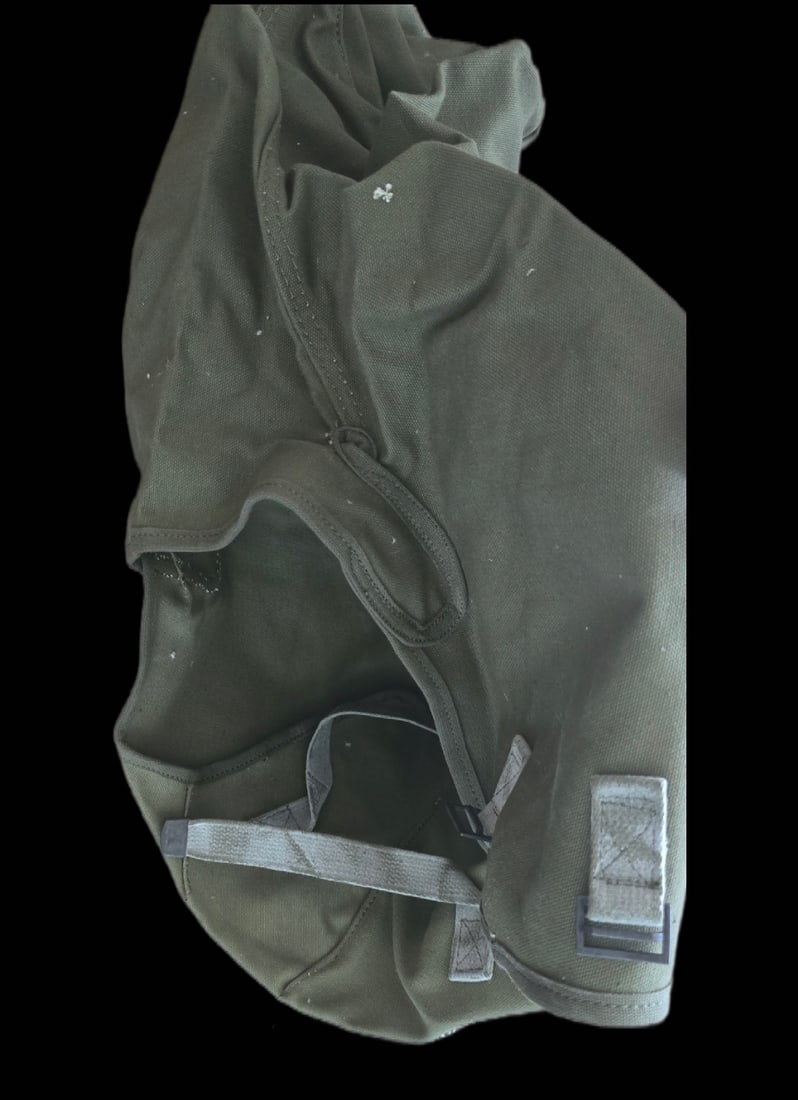
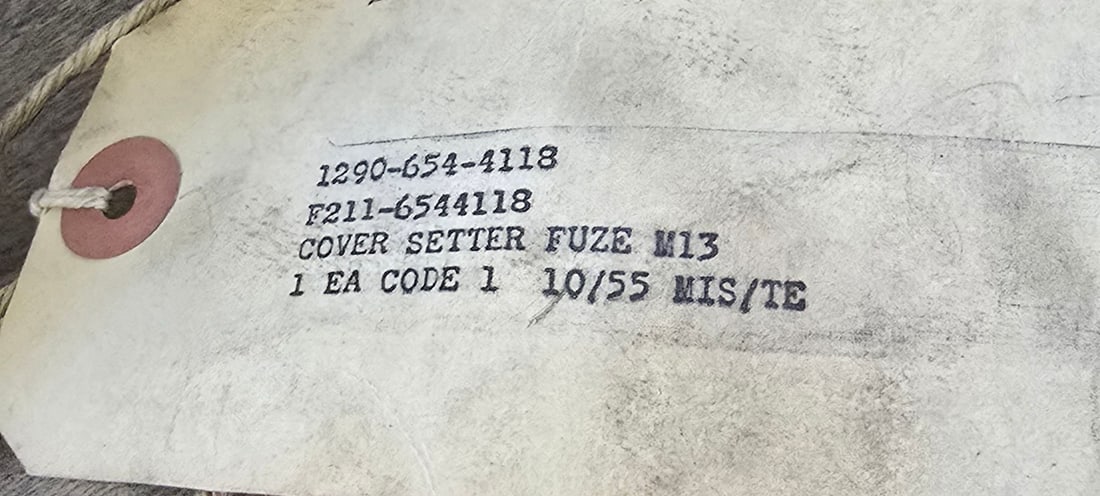
Cover, For Fuze Setter, M13 – Pair of U.S. Ordnance Canvas Protective Covers, One Opened NOS Example and One Factory-Sealed Example with Original October 1955 Depot Stock Tag (FSN 1290-654-4118 / F211-6544118) Offered here is a two-piece lot of U.S. Army M13 Fuze Setter canvas protective covers, a small but well-preserved piece of Cold War ordnance equipage. The first cover has been opened for inspection and display, retaining crisp black stenciling reading "COVER, FOR FUZE SETTER, M13" alongside a separate "MRT" mildew-resistant treatment marking. The second remains undisturbed in its original heavy brown treated packing paper, tied with its issue cord, and still bearing a complete, legible typed depot tag identifying the contents as "COVER SETTER FUZE M13," 1 EA, Code 1, dated 10/55, MIS/TE. No named recipient or unit history attaches to this lot; its story is told through the Federal Stock Number, the depot markings, and the surviving inspection tag rather than through published biography. The M13, and its later refinement the M13A1, were mechanical fuze-setting devices issued to U.S. Army field and anti-aircraft artillery batteries to rapidly index mechanical time fuzes on projectiles immediately before loading – a critical step in achieving accurate airburst timing against ground troops or aircraft. Because the setter’s internal gearing demanded protection from rain, mud, and abrasion in the field, the Ordnance Department specified a fitted canvas cover for transit and storage. The "MRT" stencil denotes Mildew Resistant Treatment, a chemical impregnation process applied extensively to U.S. military canvas and web equipment from the late 1940s through the 1950s to combat fungal deterioration in humid and tropical theaters during the early Cold War buildup. The October 1955 depot tag places at least this example squarely within the post-Korean War rearmament period, when large quantities of ordnance accessory equipment were manufactured, inspected, and warehoused against future contingency; the tag date should be read as applying to the wrapped item rather than assumed for both covers. The unwrapped cover is constructed of heavy olive-drab cotton duck with shaped panels, reinforced double-stitched seams, an adjustable web closure strap with metal friction buckle, and the stenciled nomenclature and MRT marking still sharp and fully legible, with only light storage soiling and minor handling marks. The second cover remains fully sealed within its original factory wrapping paper and cord, its typed stock tag intact and readable, offering the collector the choice of preserving it as a time-capsule package or opening it to reveal what should be a complete, unissued cover beneath. A tidy, honestly complete lot of Cold War fire-control canvas, pairing a display-ready opened cover with a still-sealed 1955-dated companion for the specialist collector of U.S. artillery accessory equipment.
Share this lot: