Fall 2026 Militaria and Aviation Auction
Lot 238:
Description
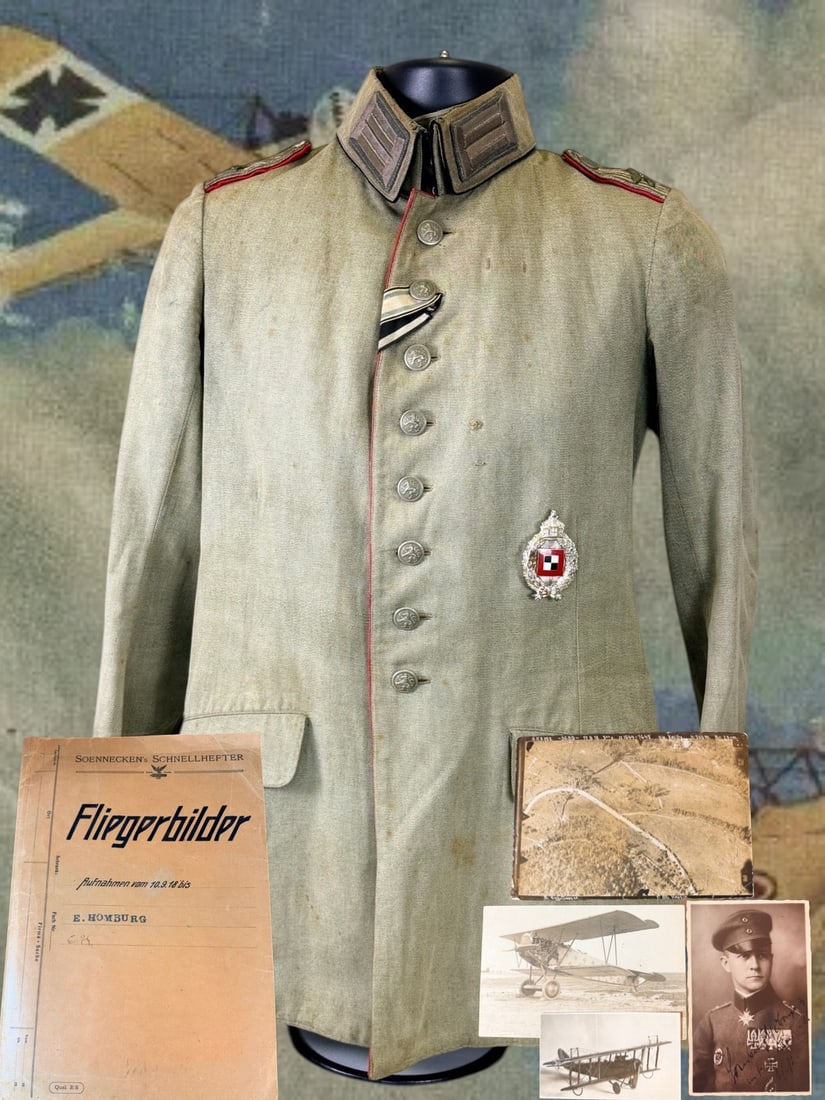
Exceptional named World War I Imperial German aviation archive associated with Oberleutnant Erich Homburg (1886-1954), an important German aerial reconnaissance officer and commander of Flieger-Abteilung (LB) 269, who was awarded the Pour le Merite on October 13, 1918. The group brings together Homburg’s aviation-related uniform, aerial reconnaissance material, photographs, ephemera, and a striking Imperial German Beobachterabzeichen, forming an unusually cohesive archive connected to the development and operational use of military aerial photography during the First World War. Homburg was associated with long-range observation and photographic reconnaissance, a field that became increasingly vital as aerial imagery was used to record trench systems, roads, artillery positions, railways, fortifications, and changing battlefield conditions.
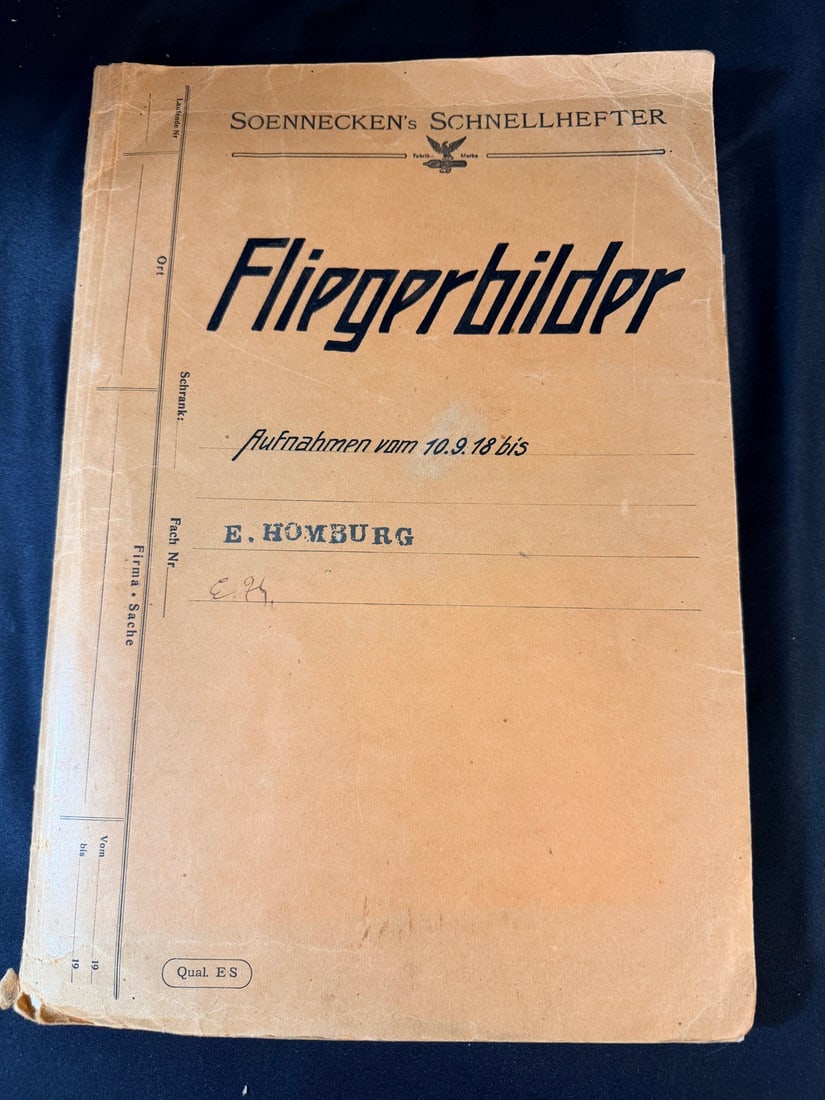
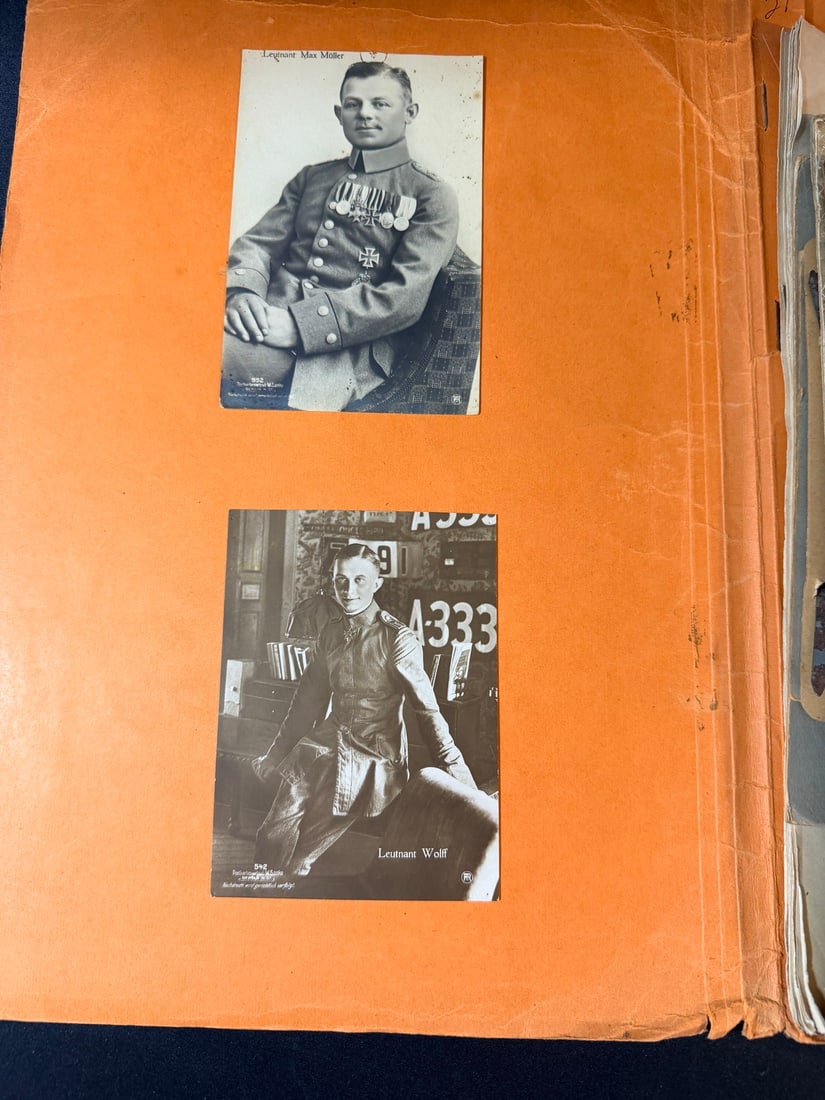
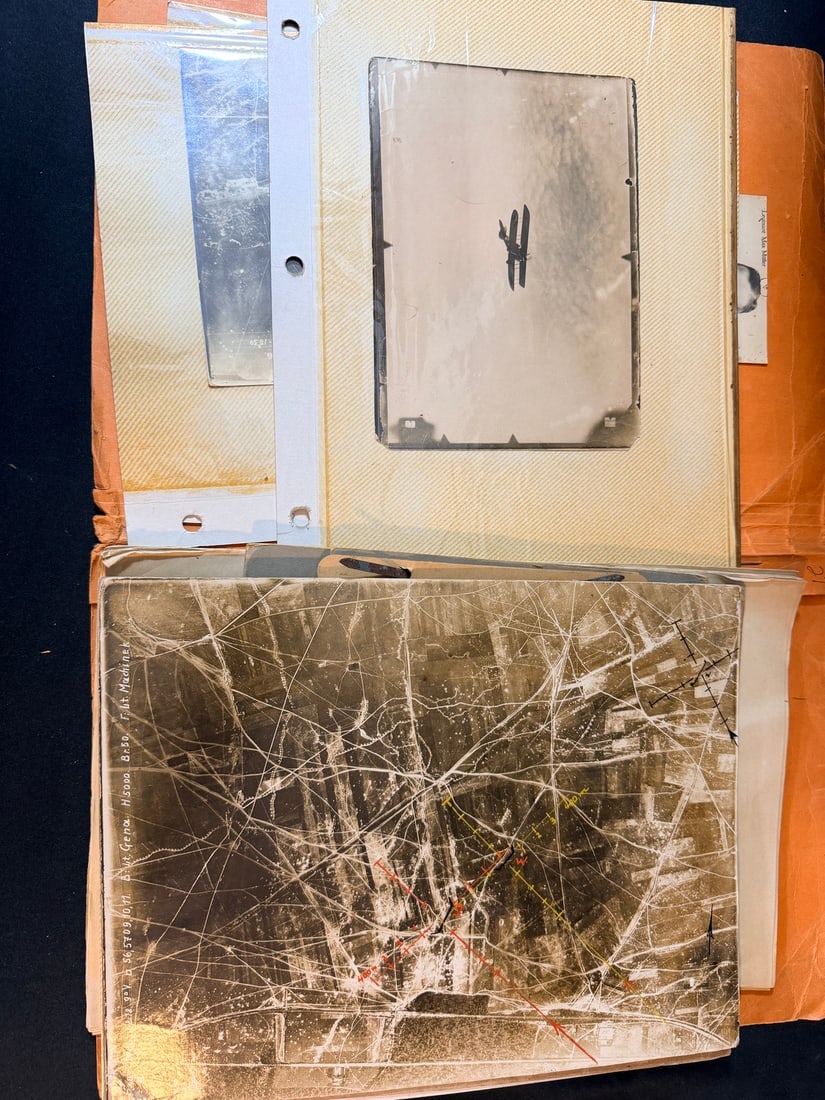
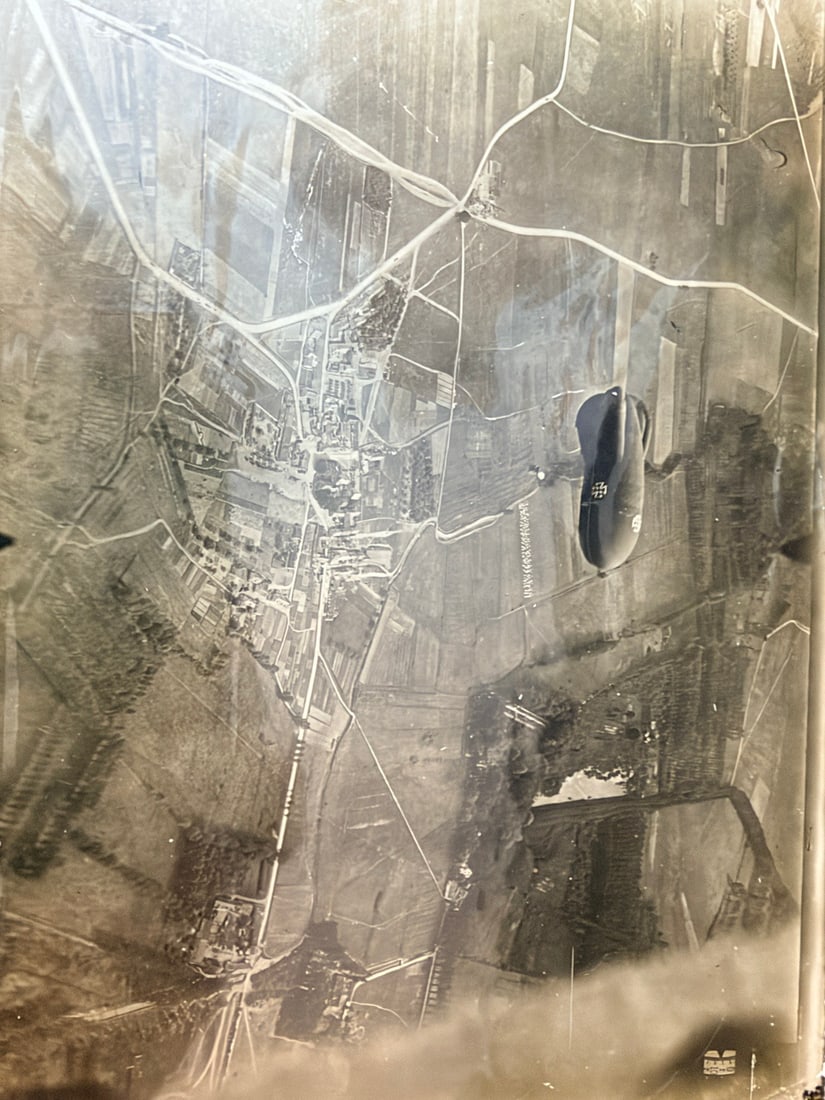
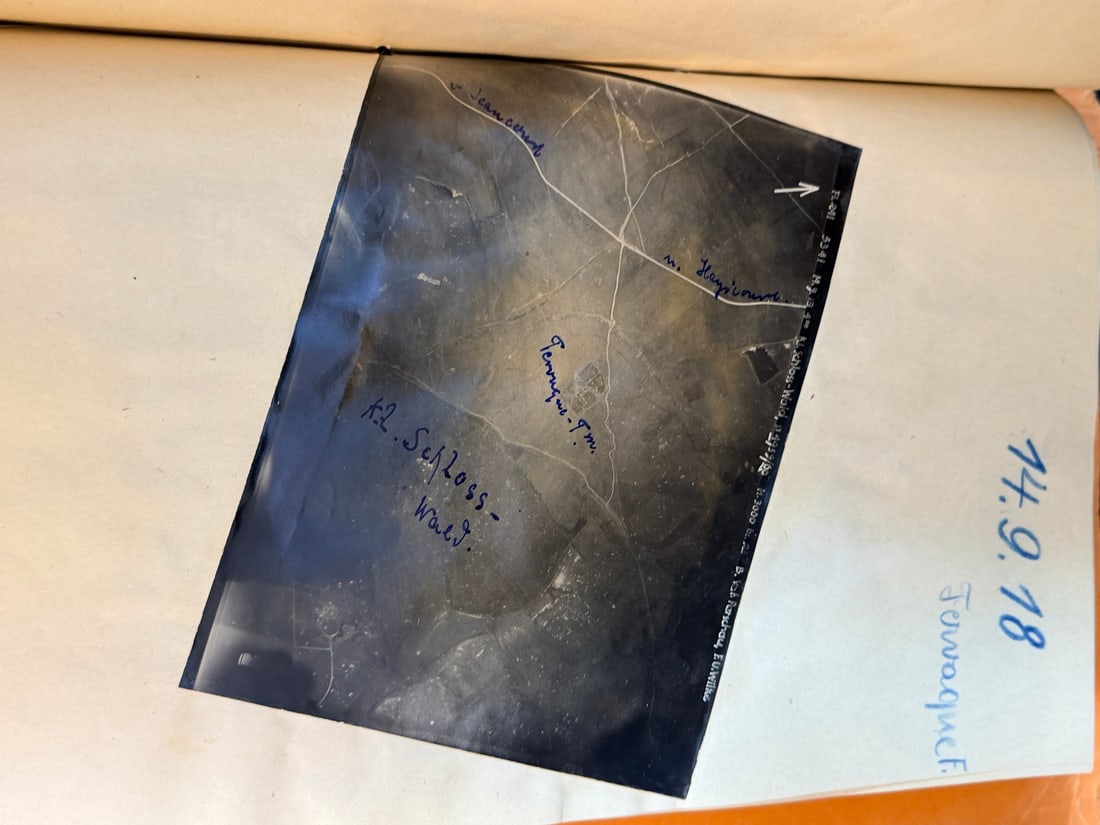
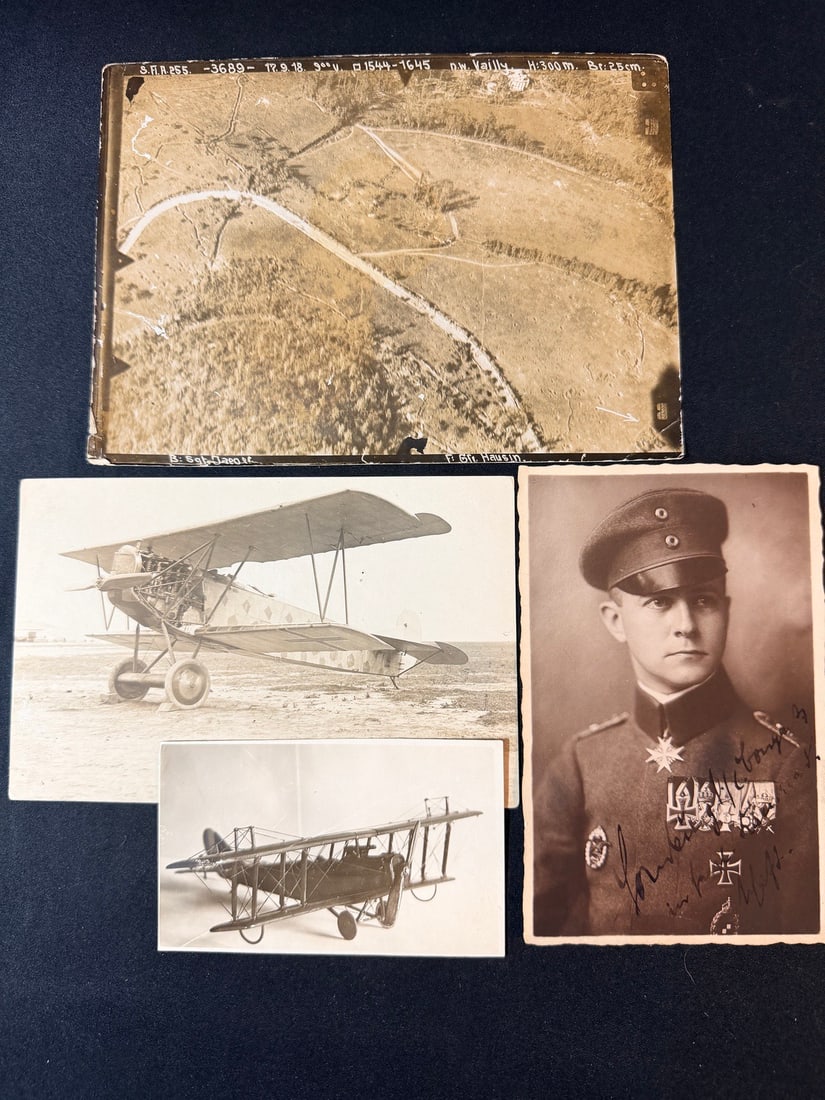
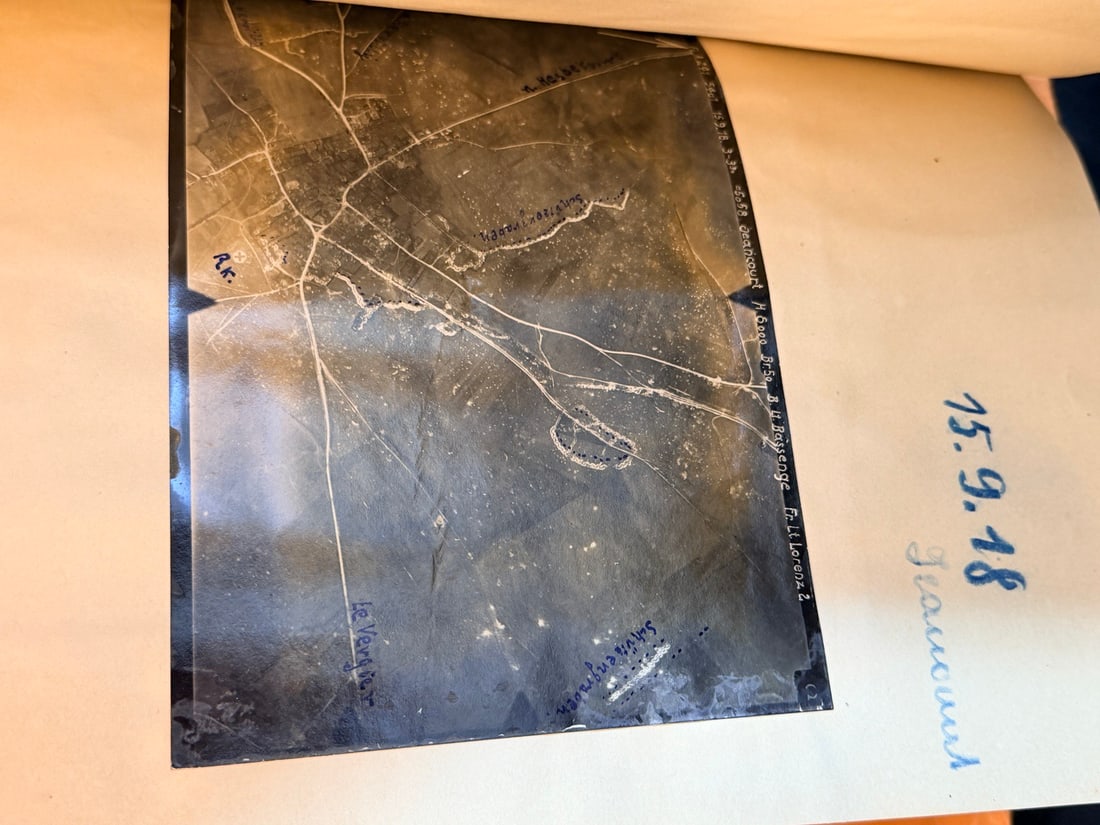
Central to the collection is a named Soennecken Schnellhefter "Fliegerbilder" binder, marked "E. HOMBURG, " containing operational aerial reconnaissance photographs and related material. Visible examples bear period annotations and photographic data, including 1917-1918 dates, altitude references, locations, and crew or photographic notations. These images are particularly evocative survivals of the technical side of wartime aviation, illustrating how German aircrews systematically photographed and interpreted the front from above. Also present are period aviation photographs and postcards, including Sanke portrait cards of Leutnant Max Mueller, No. 552, and Leutnant Wolff, No. 542, together with photographs of German military aircraft and an original aerial view dated 12 September 1918.
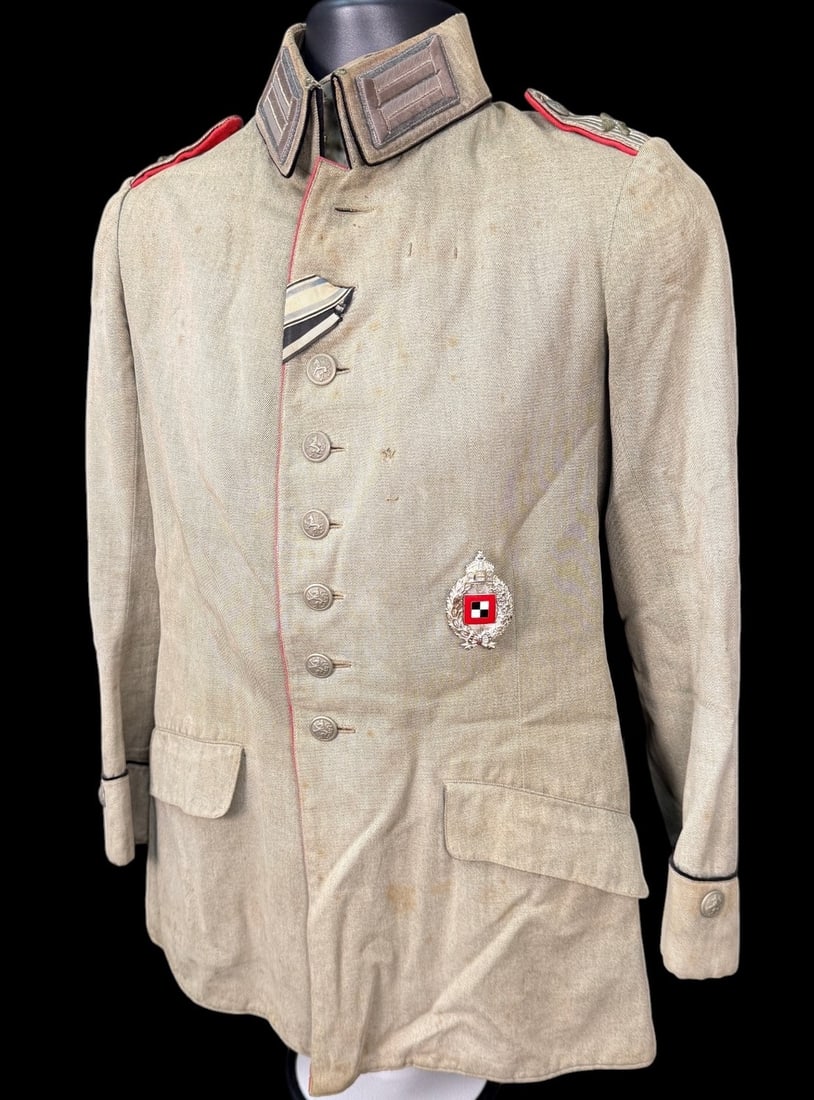
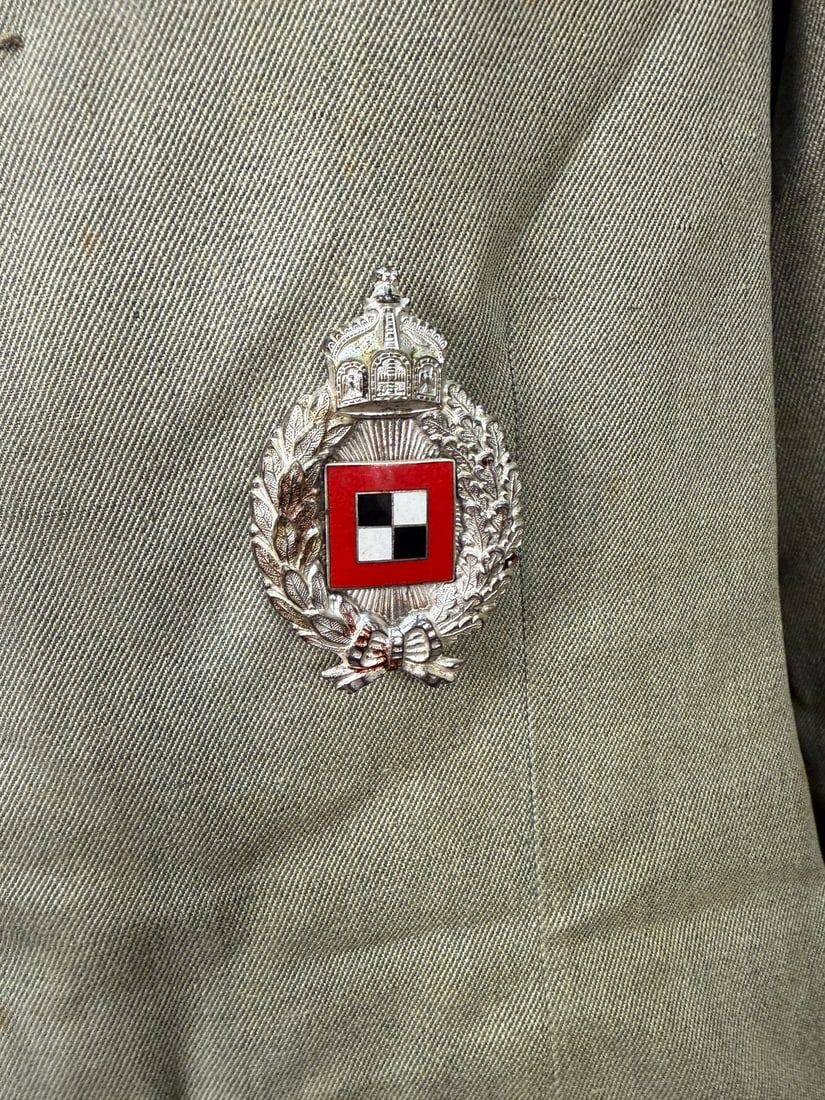
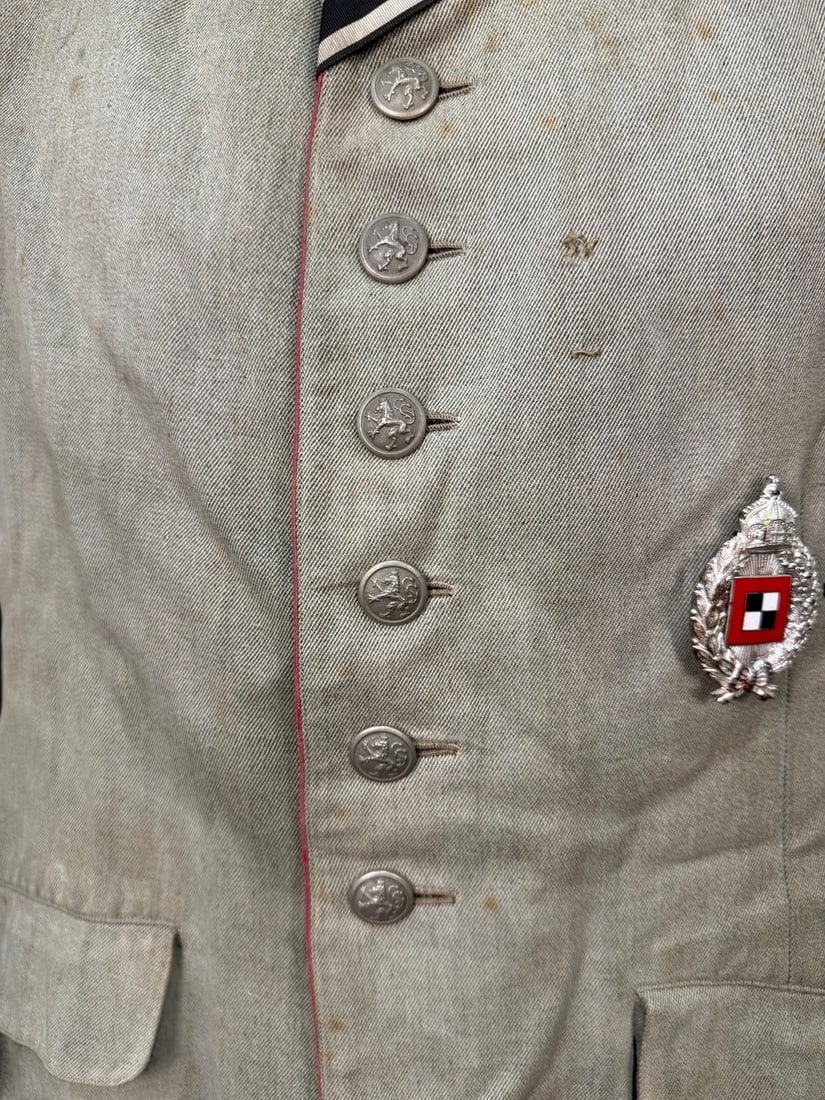
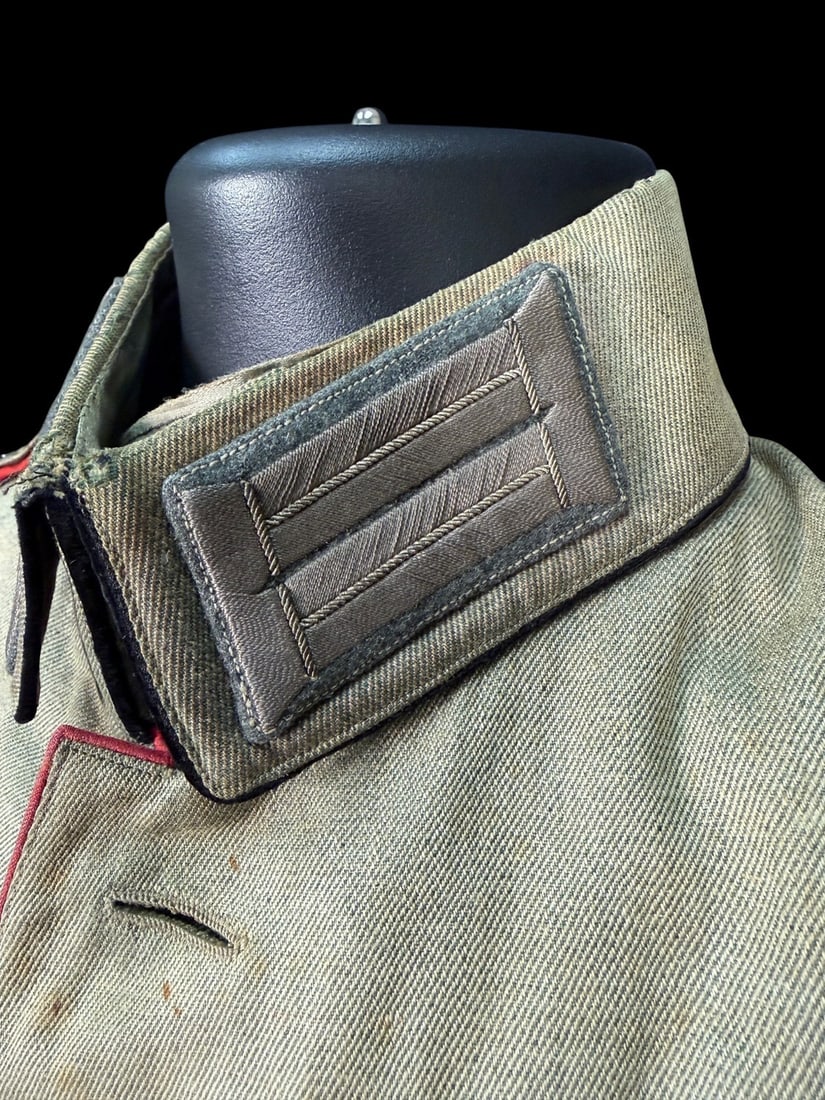
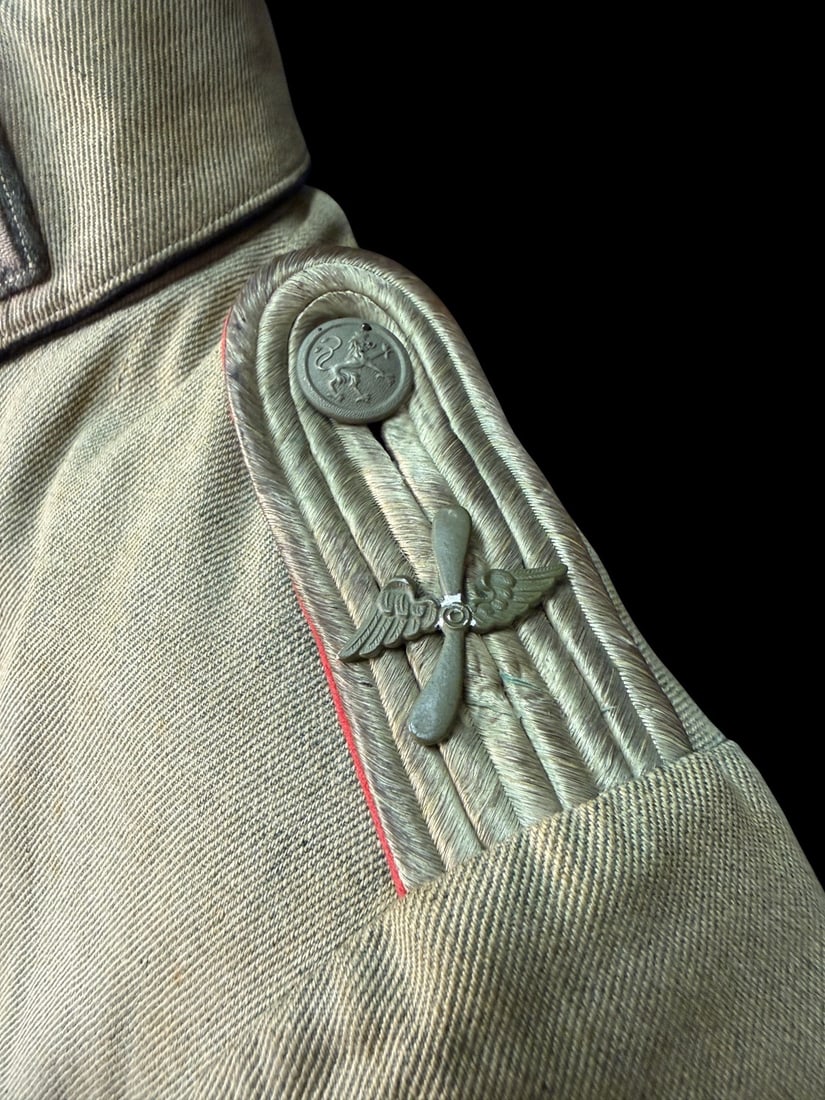
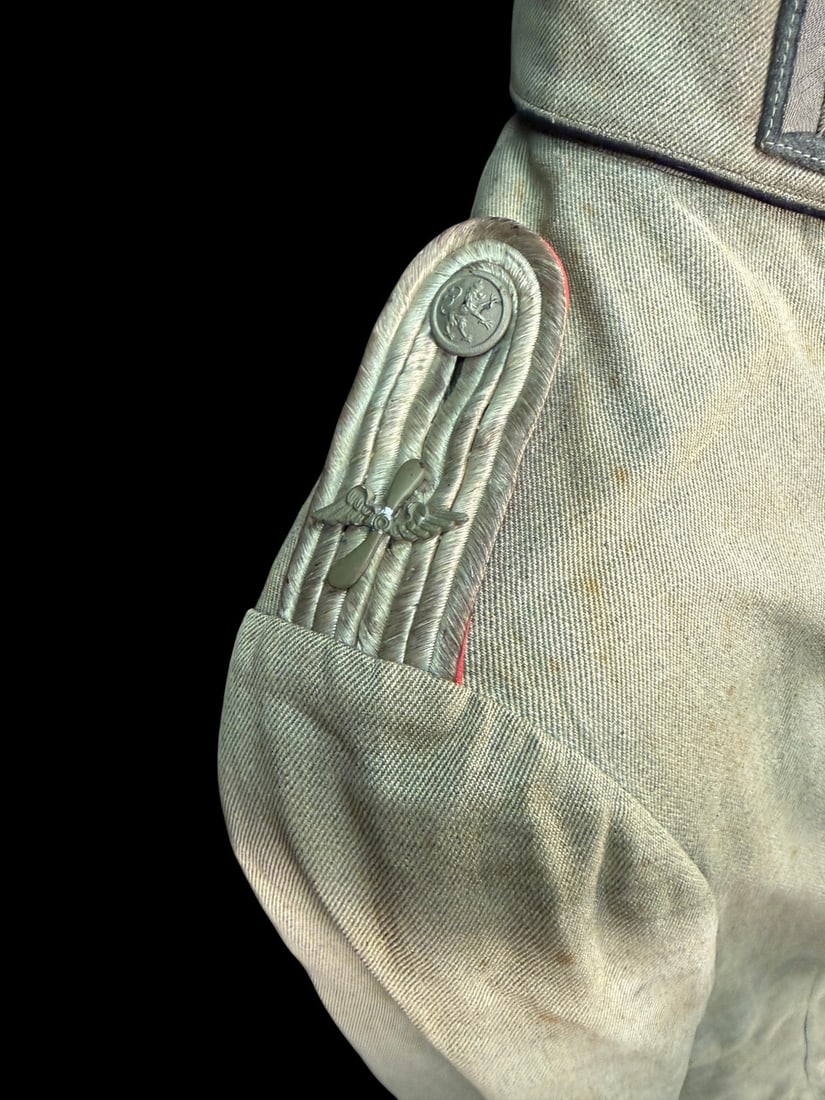
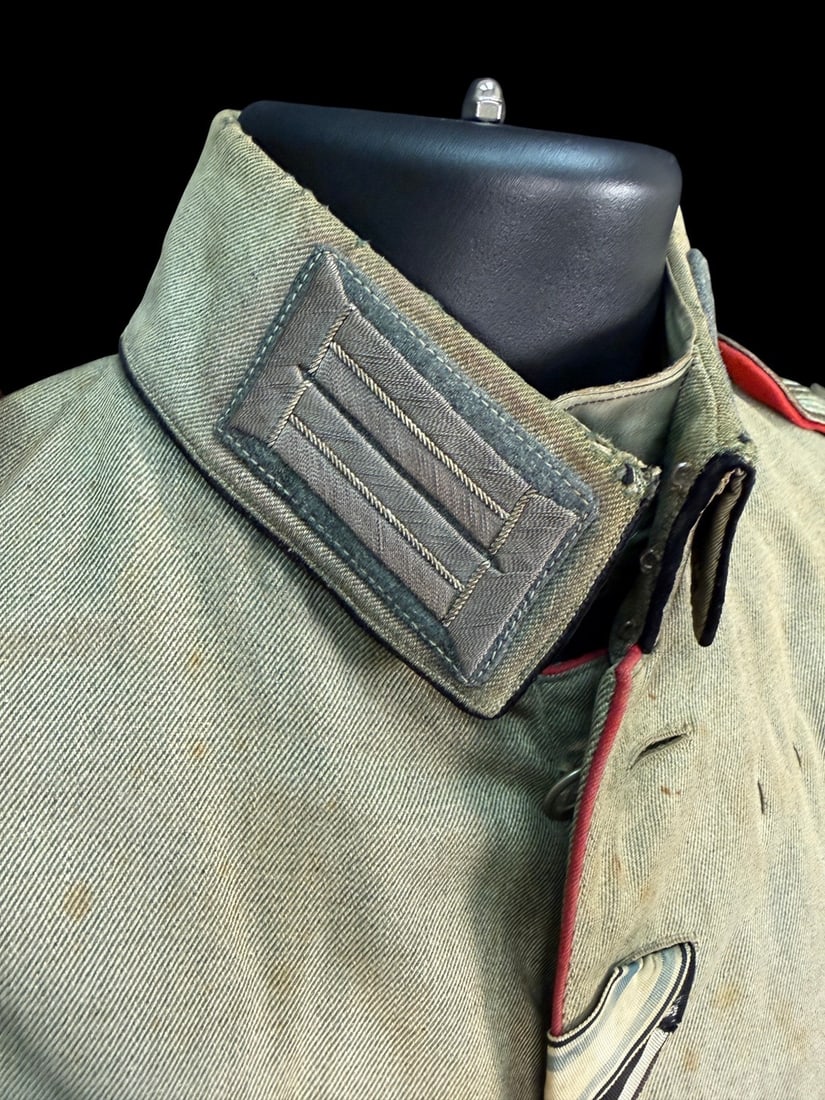
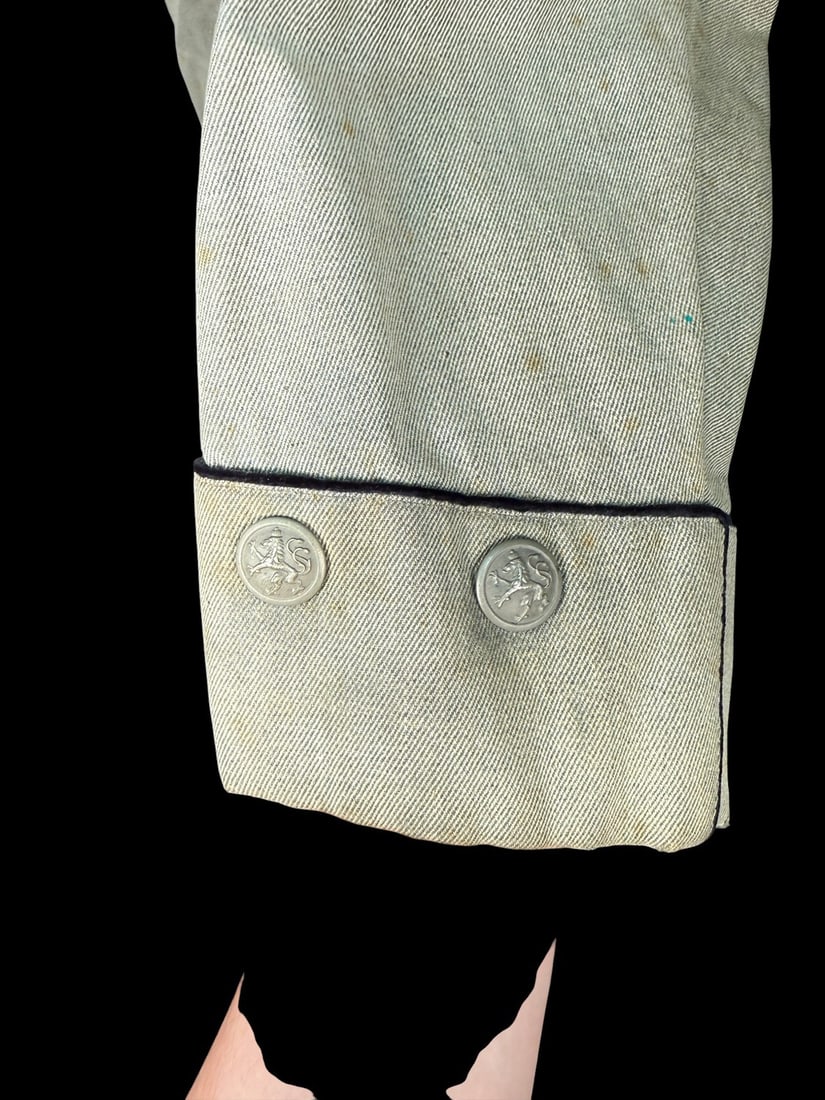
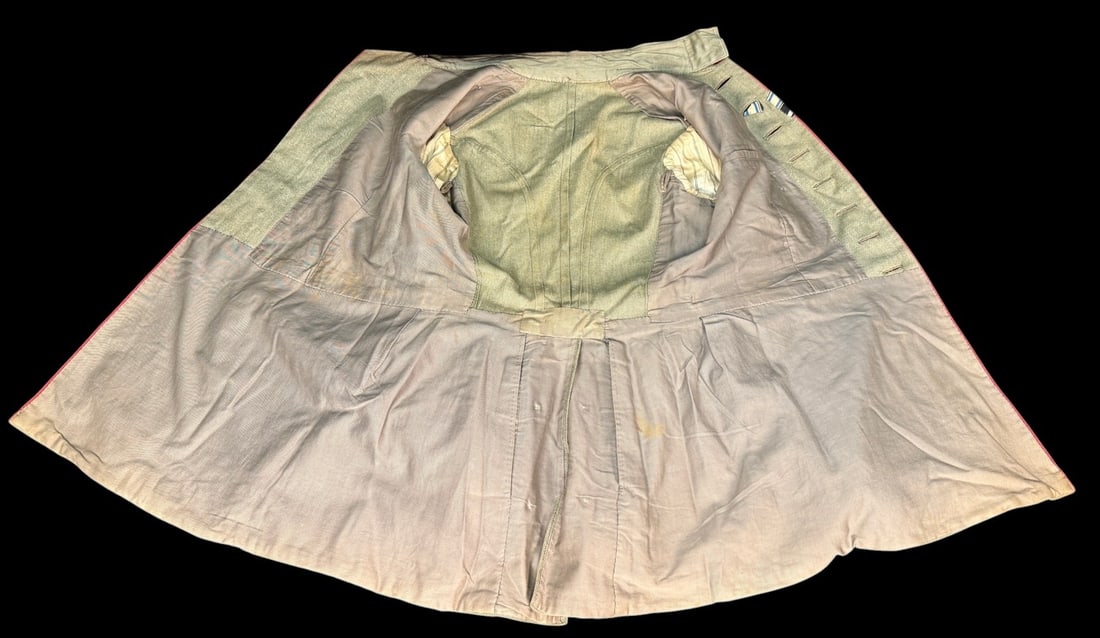
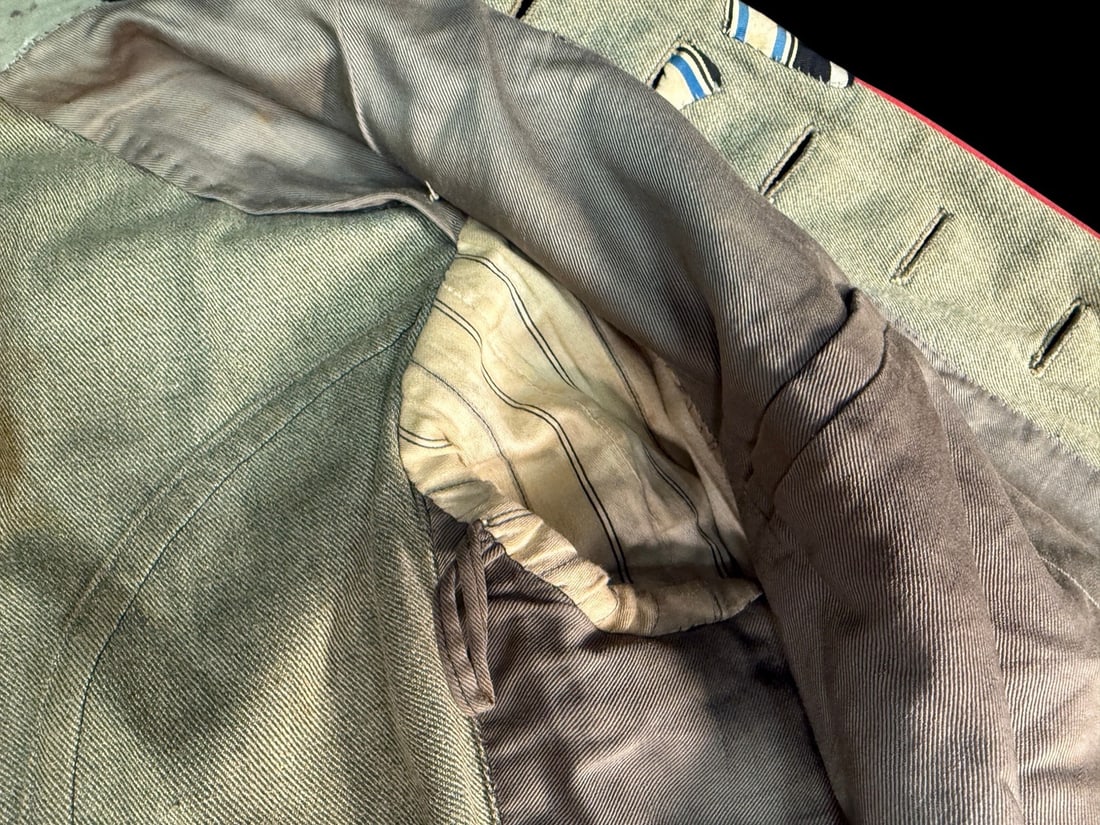
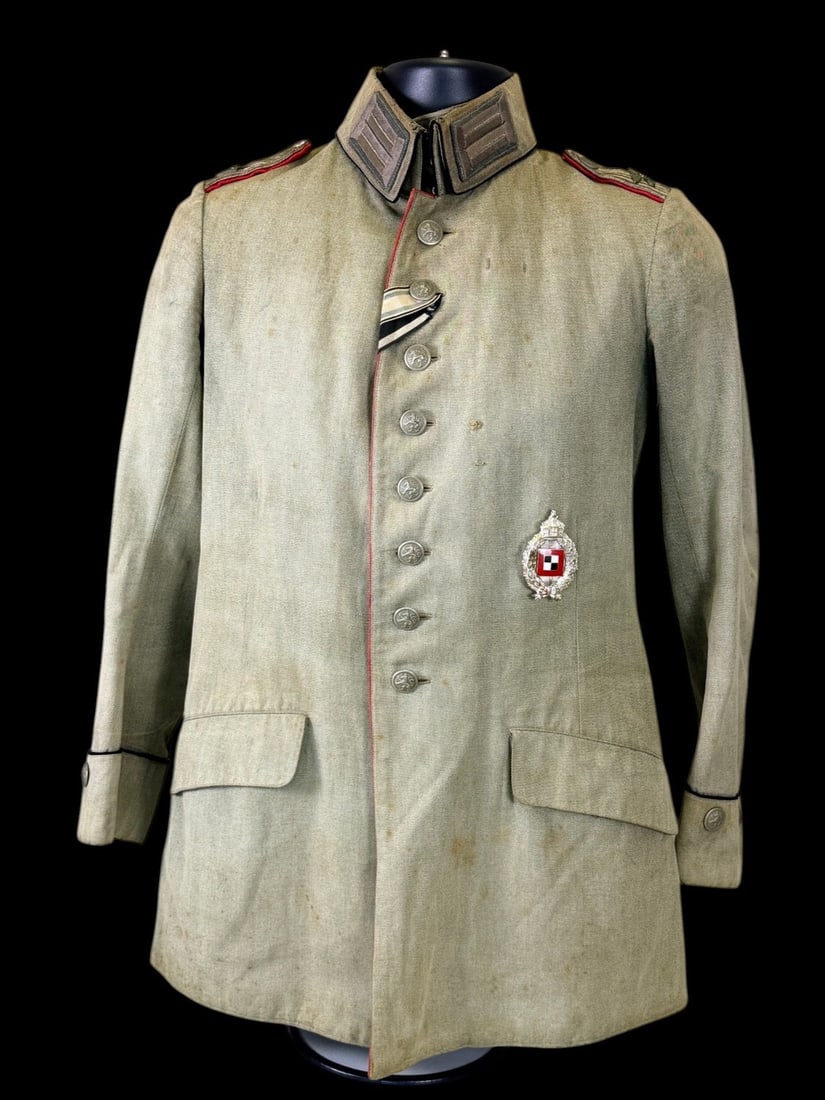
A major component of the archive is the accompanying Imperial German officer’s tunic, constructed in light field-gray/stone-gray cloth with contrasting piping and period officer appointments. The standing collar retains dark facing panels with officer-grade collar insignia, while the shoulders carry officer shoulder boards with red underlay and aviation-related insignia. The front is closed by a full row of matching Imperial-pattern buttons, with additional matching buttons at the cuffs. Fine contrasting piping traces the front closure and collar line. A ribbon for the Iron Cross 2nd Class is worn through the upper buttonhole, a typical period method of displaying the decoration in service dress. Most notably, the left breast bears an Imperial German observer’s qualification badge, or Beobachterabzeichen, of the classic First World War type, featuring the Imperial crown above a wreath and a central red-enamel square containing the distinctive black-and-white checkerboard device. Surviving period examples of this Imperial observer badge are known in silver and silvered metal with multicolored enamel and were worn by qualified aerial observers. eMedals
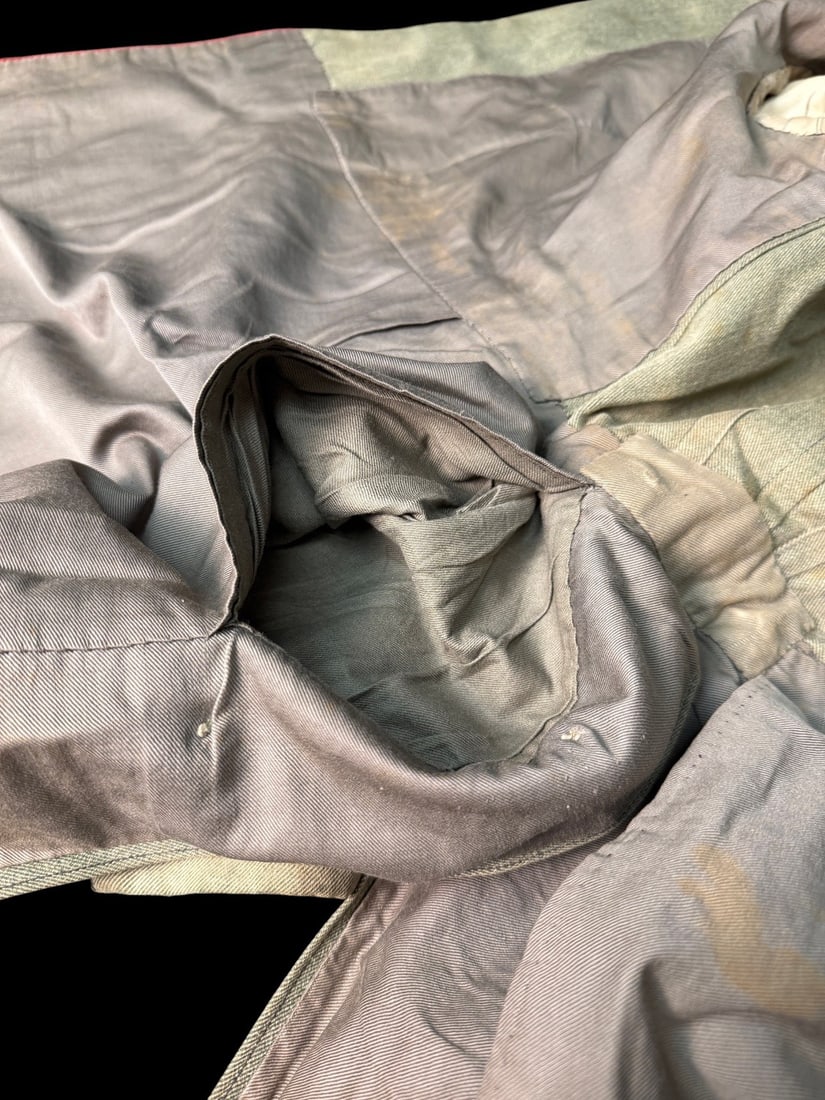
The uniform itself is an especially compelling display piece because it connects the photographic and documentary material to the visual identity of an Imperial German aviation officer. The shoulder boards display winged propeller devices, reinforcing the aviation association, while the collar insignia, piping, button configuration, and high-standing collar are all consistent with the officer dress styles of the Imperial German Army during the First World War. The tunic shows honest age and service wear, including scattered staining, surface soiling, and areas of discoloration, all consistent with a century-old textile and contributing to its untouched appearance.
The collection also includes period portrait photographs, including an image of a highly decorated German aviation officer wearing the Pour le Merite and multiple decorations, as well as additional photographs of aircraft, aviation personnel, and reconnaissance-related subjects. Together with the "Fliegerbilder" binder and Homburg attribution, these materials form an important documentary grouping illustrating the operational intersection of aviation, reconnaissance, photography, and command during the final years of the war.
The Imperial German observer badge displayed on the tunic is of the characteristic pattern comprising a crowned wreath surrounding the red-enamel signal square with black-and-white checkerboard center; comparable period examples are documented in both silver and silvered brass construction. eMedals The exact maker of the present badge has not been established from the photographs provided and should be determined from reverse markings, if any, before cataloging it more specifically.
A highly desirable and visually impressive named Imperial German aviation grouping, combining uniform, qualification insignia, aerial reconnaissance photography, named archival material, aircraft photographs, Sanke cards, and period ephemera associated with Erich Homburg and Flieger-Abteilung (LB) 269. The group has considerable research potential and would make an outstanding centerpiece for an advanced collection of World War I aviation, German Fliegertruppe, aerial reconnaissance, Imperial German uniforms, Pour le Merite recipients, or military photography. Paper material and photographs range from Good to Very Good with expected handling wear, folds, edge wear, toning, and age-related imperfections; the badge retains attractive detail and enamel; the tunic exhibits staining, soiling, and age wear as photographed. Buyer should review all images carefully for full contents, condition, and completeness.
Share this lot: