Fall 2026 Militaria and Aviation Auction
Lot 240:
Description
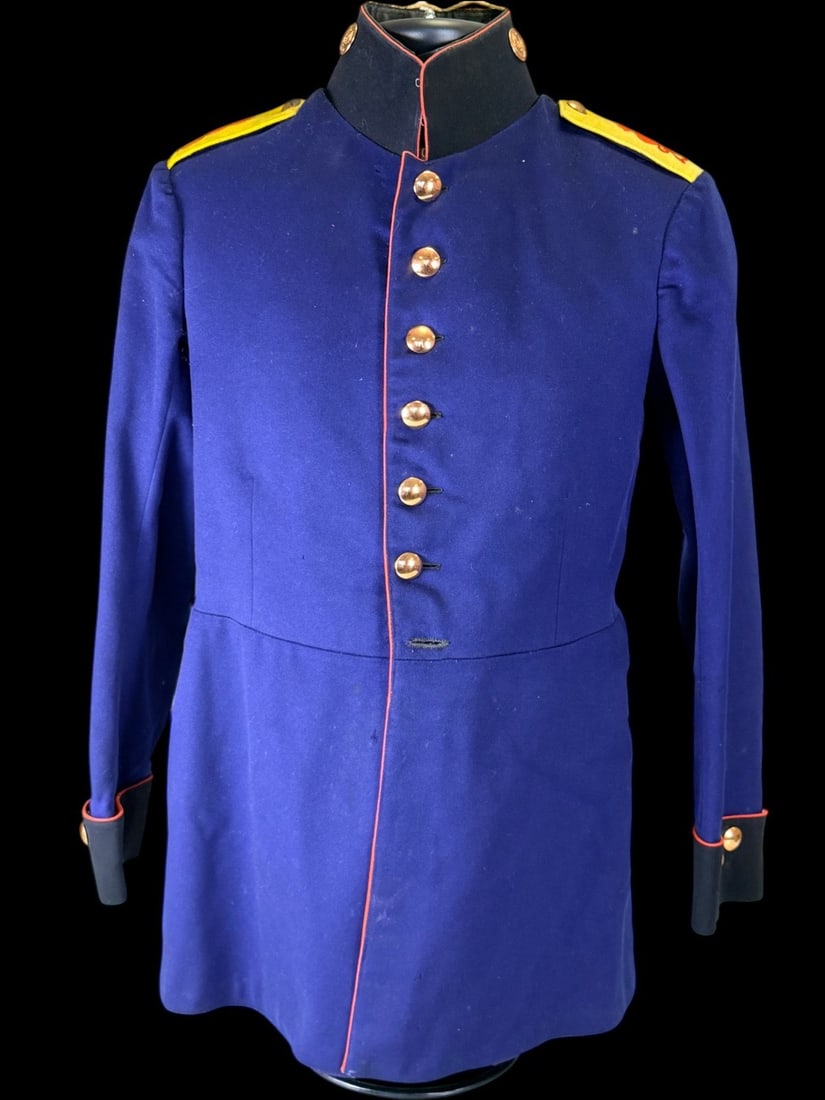
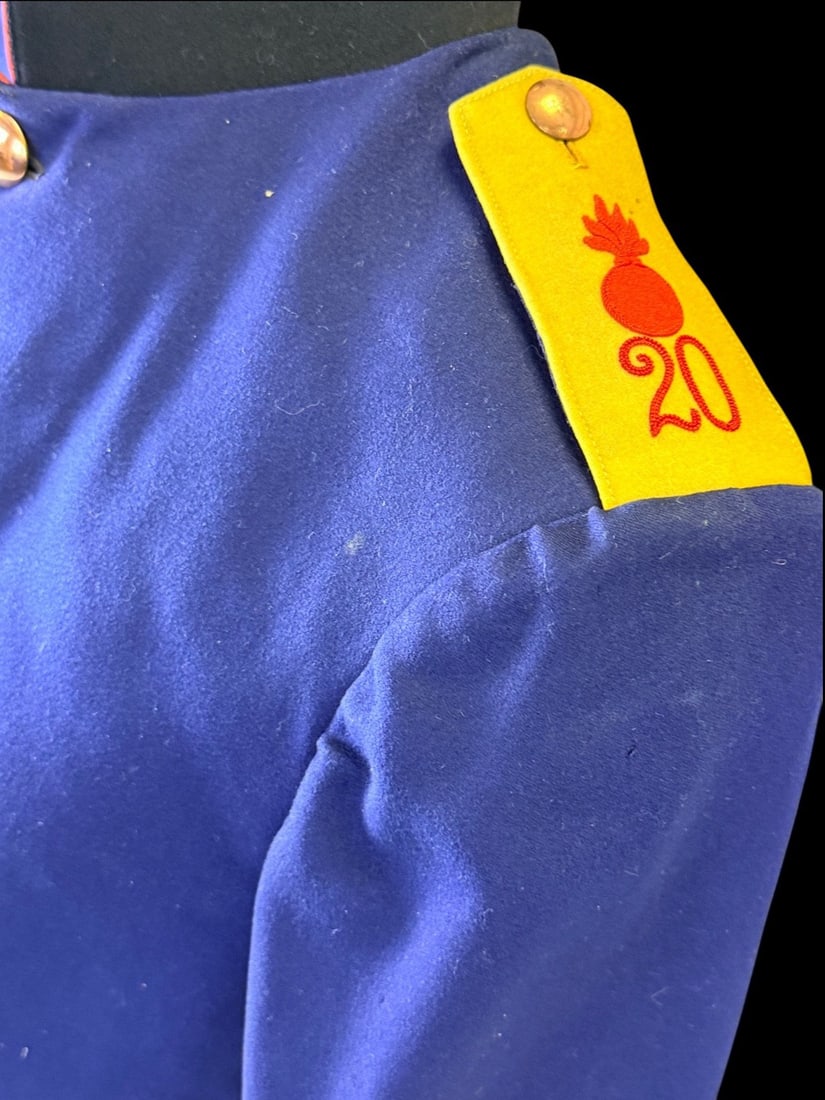
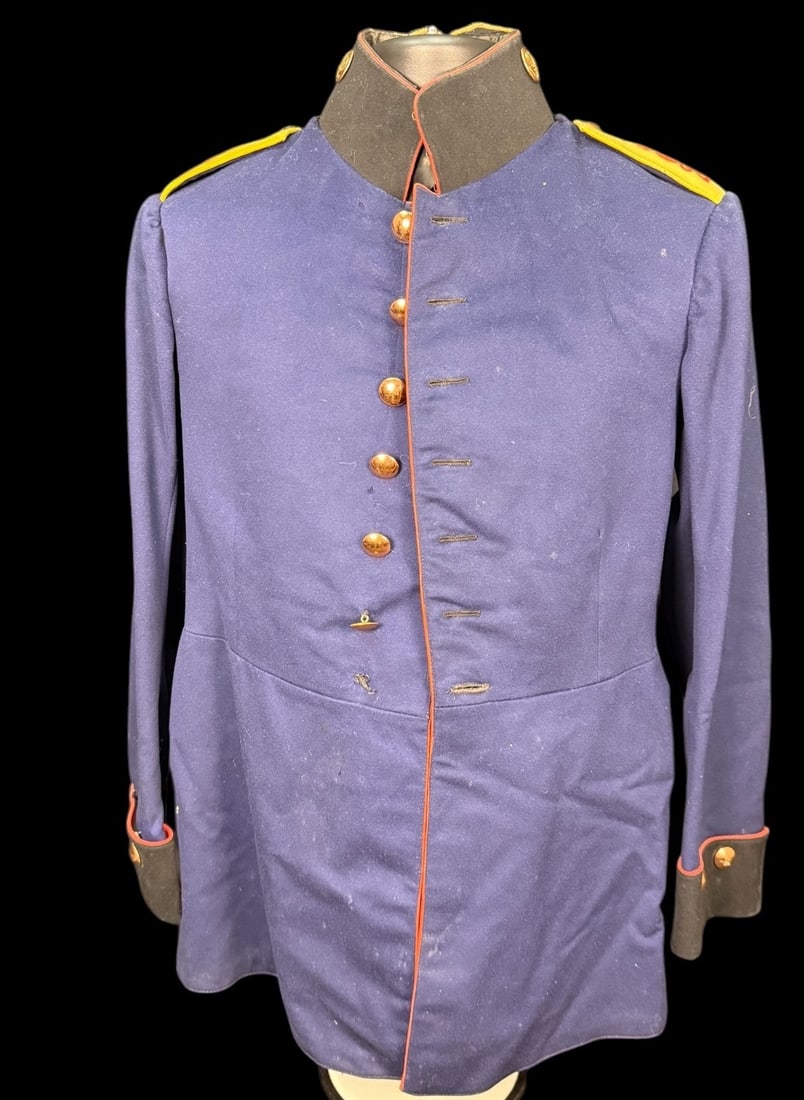
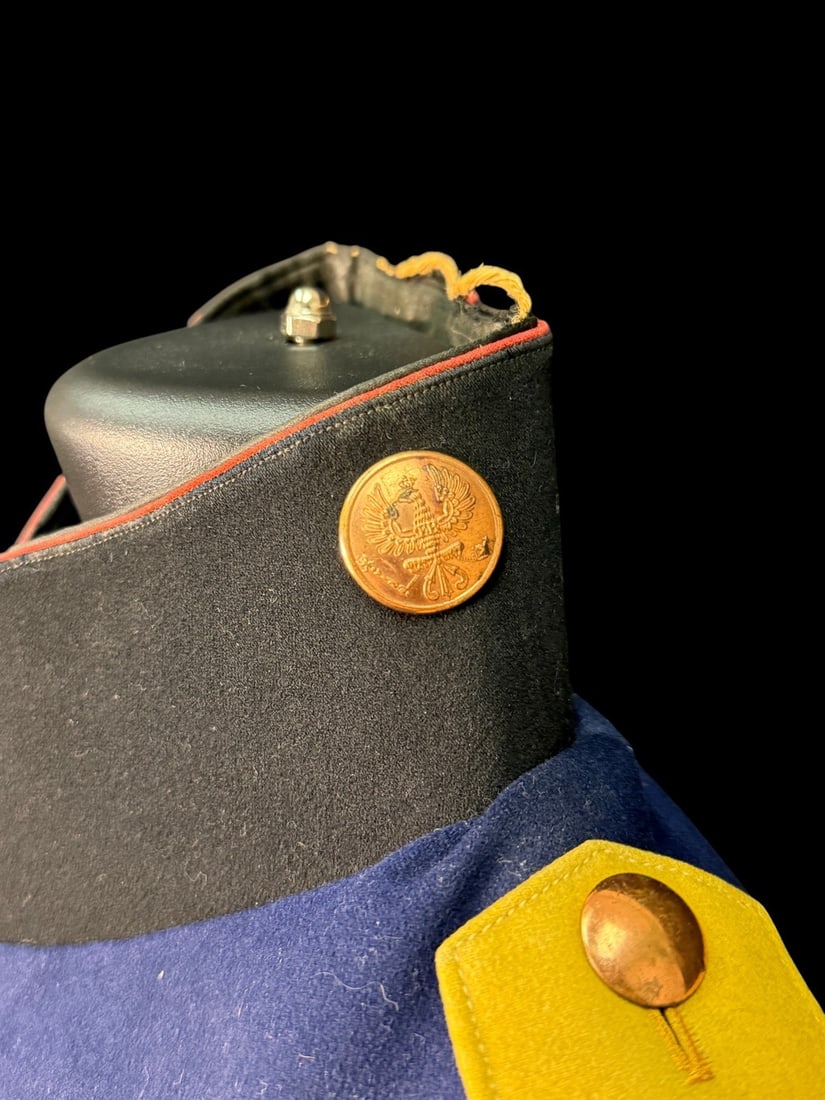
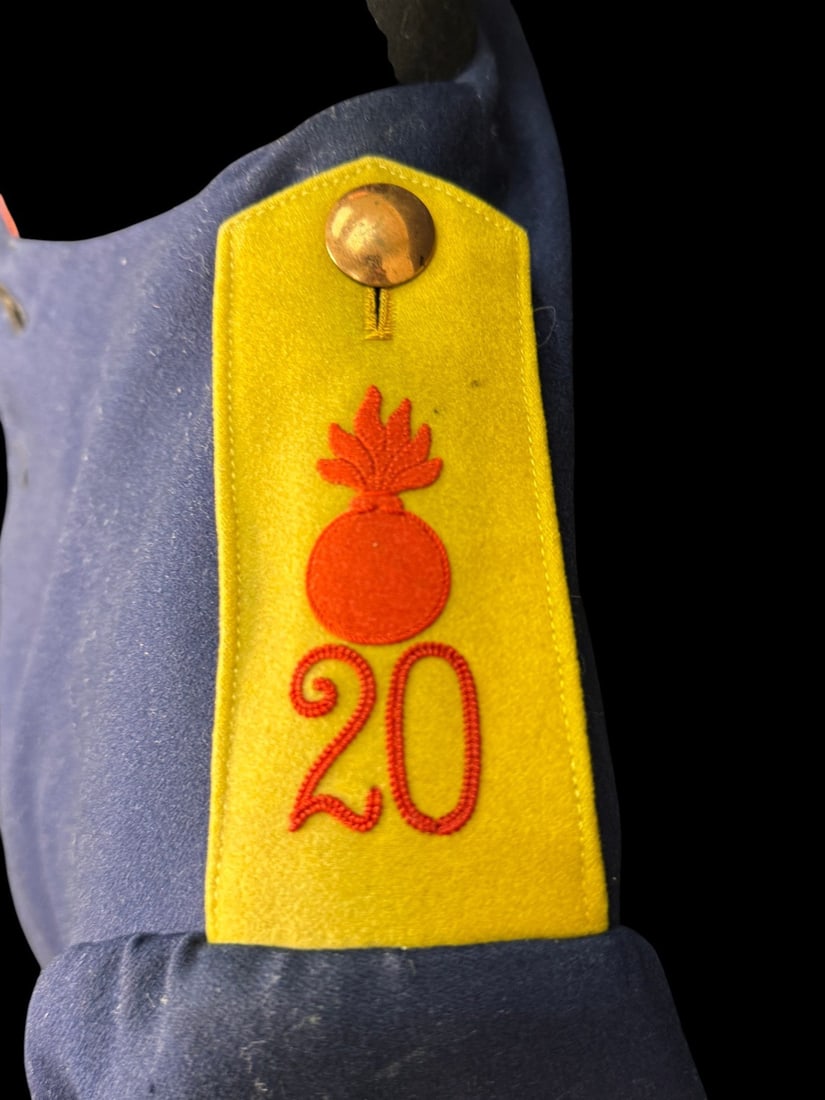
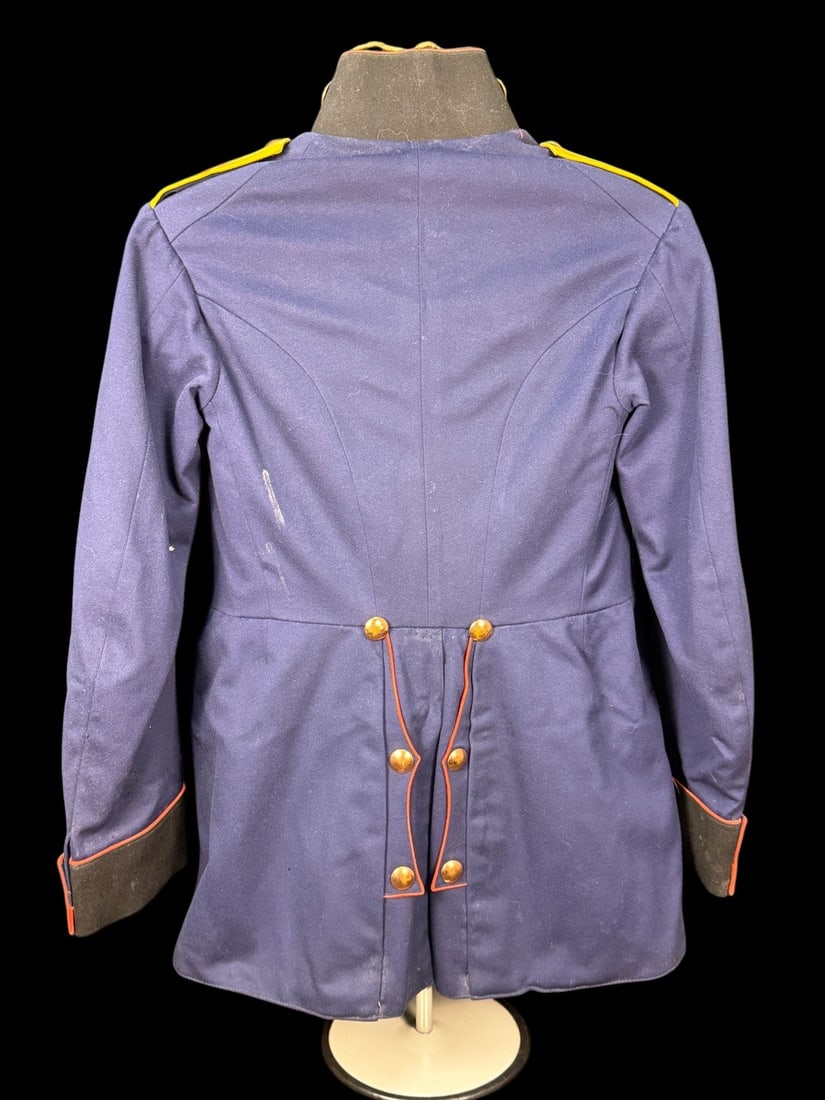
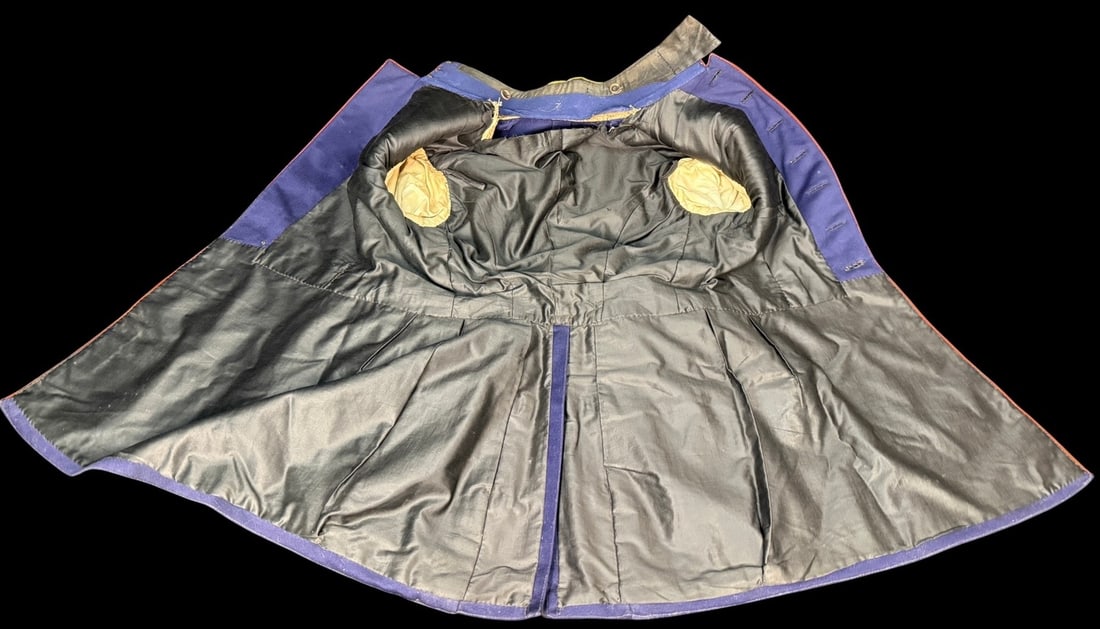
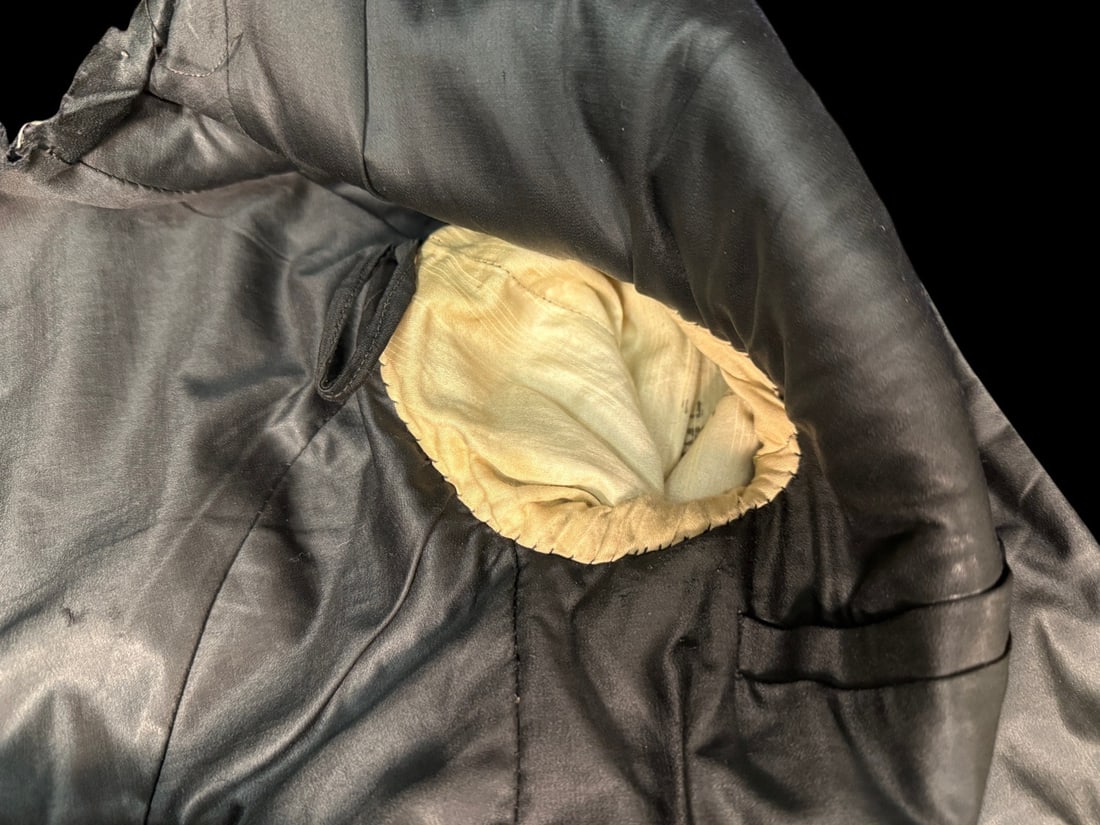
Imperial Prussian Enlisted Waffenrock Dress Tunic of the 3. Brandenburgisches Infanterie-Regiment "Graf Tauentzien von Wittenberg" Nr. 20, with chain-stitched flaming grenade and numeral "20" shoulder straps and heraldic Prussian eagle collar buttons, circa 1895-1914 Offered here is a dark blue wool enlisted man’s Waffenrock attributed to the 3. Brandenburgisches Infanterie-Regiment Nr. 20, a Prussian foot regiment garrisoned at Wittenberg under III Army Corps. The tunic is immediately identifiable by its yellow shoulder straps, each bearing a red flaming grenade above the chain-stitched numeral "20," the specific regimental distinction of this Brandenburg unit, paired with brass heraldic Prussian eagle buttons at the standing collar. The combination of insignia is consistent with a Gefreiter or junior NCO candidate’s dress coat. The wearer is unidentified, and no separate biography or paper trail accompanies the piece; its story is told entirely through the surviving insignia and construction. The "bunter Rock, " or colorful dress coat, was the standard parade and garrison uniform of the Imperial German infantryman in the decades before the First World War, worn with pride at reviews, ceremonies, and off-duty occasions even as it was gradually withdrawn from active field use following the 1910 adoption of feldgrau service dress. Regiment Nr. 20 carried a long lineage within the Prussian army, its Brandenburg heritage and "Graf Tauentzien von Wittenberg" honorific commemorating the Napoleonic-era Prussian general for whom it was named. By August 1914, tunics of this style had already been retired to depot storage or private keeping, making surviving examples with such vividly colored, intact insignia a tangible link to the last generation of Imperial soldiers to serve in old-style parade dress before the war that ended it for good. The tunic is constructed of dark blue wool with red piping to the front placket, standing collar, cuffs, and rear skirt vents, black facings to the collar and cuffs, and seven brass eagle-motif buttons closing the front, with additional brass buttons securing the rear skirt pleats. Both shoulder straps are intact and vividly colored, chain-stitched in red wool thread with the flaming grenade device over the numeral "20." The standing collar retains its pair of brass heraldic Prussian eagle buttons. The interior is finished in a dark satin-weave lining with pale contrasting underarm shields, showing age toning, perspiration discoloration, and faint faded ink stamps within the sleeve lining consistent with period depot or inspection marks. Condition is very good for an antique wool dress tunic of this age: the blue body and yellow straps remain bright and vibrant, with light surface soiling and minor scuff marks to the reverse left shoulder blade. One front closure button is detached and hangs loose at the lower placket, its wire eye exposed, and there is fraying with fabric separation to the upper inner collar edge and the lining’s hanging loop. The garment is offered as the single tunic shown, with no accompanying cap, trousers, or accoutrements. A colorful, well-marked survivor of Imperial Germany’s last peacetime parade dress, its regimental grenade straps and eagle buttons preserving the identity of Brandenburg’s Infanterie-Regiment Nr. 20 on the eve of the Great War.
Share this lot: