Fall 2026 Militaria and Aviation Auction
Lot 244:
Description
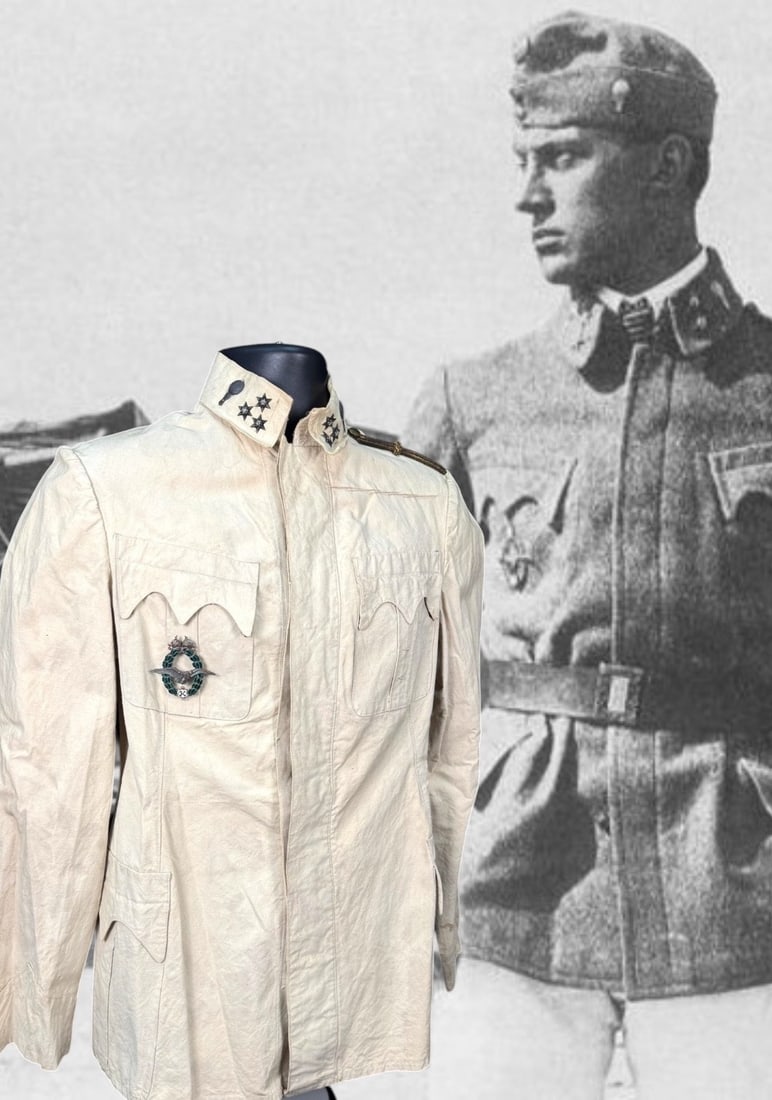
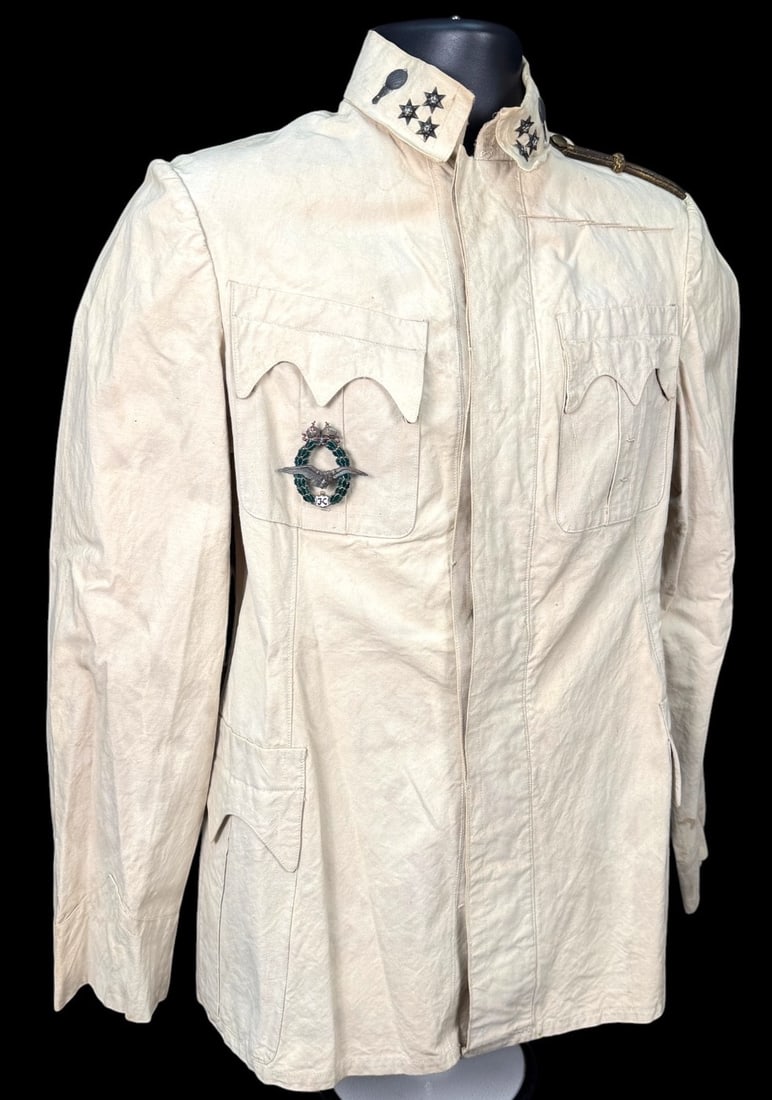
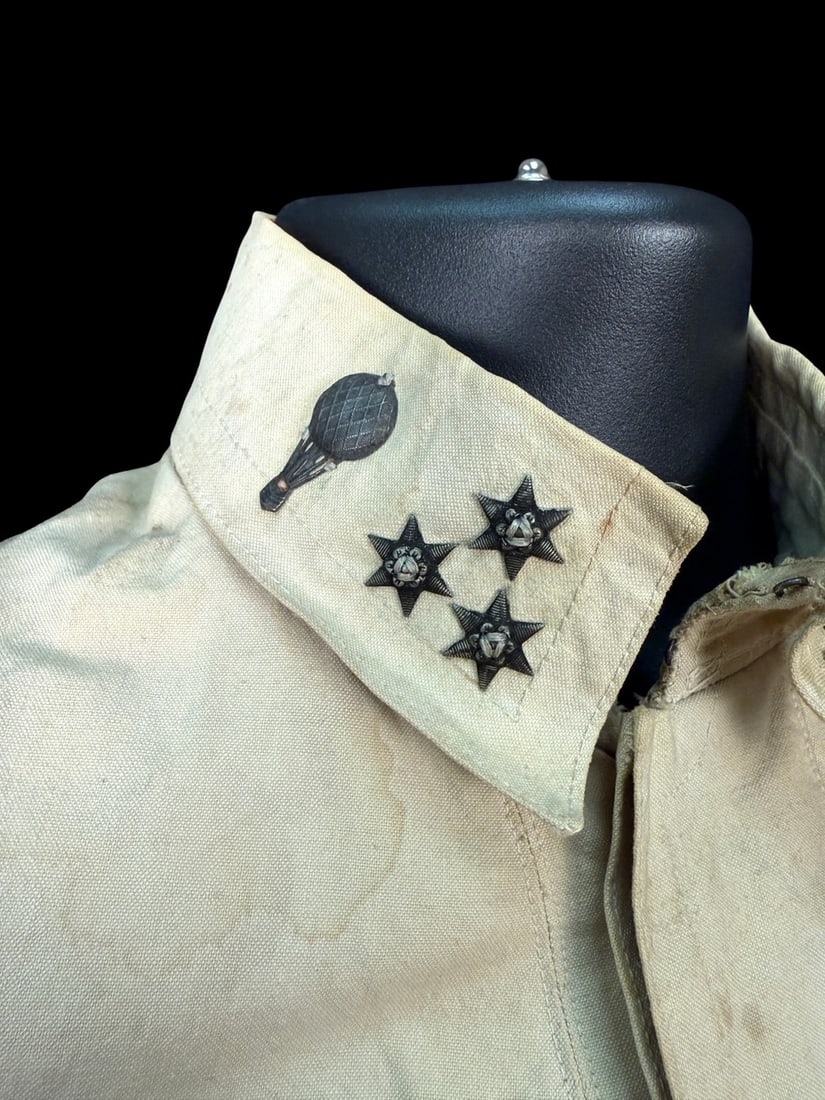
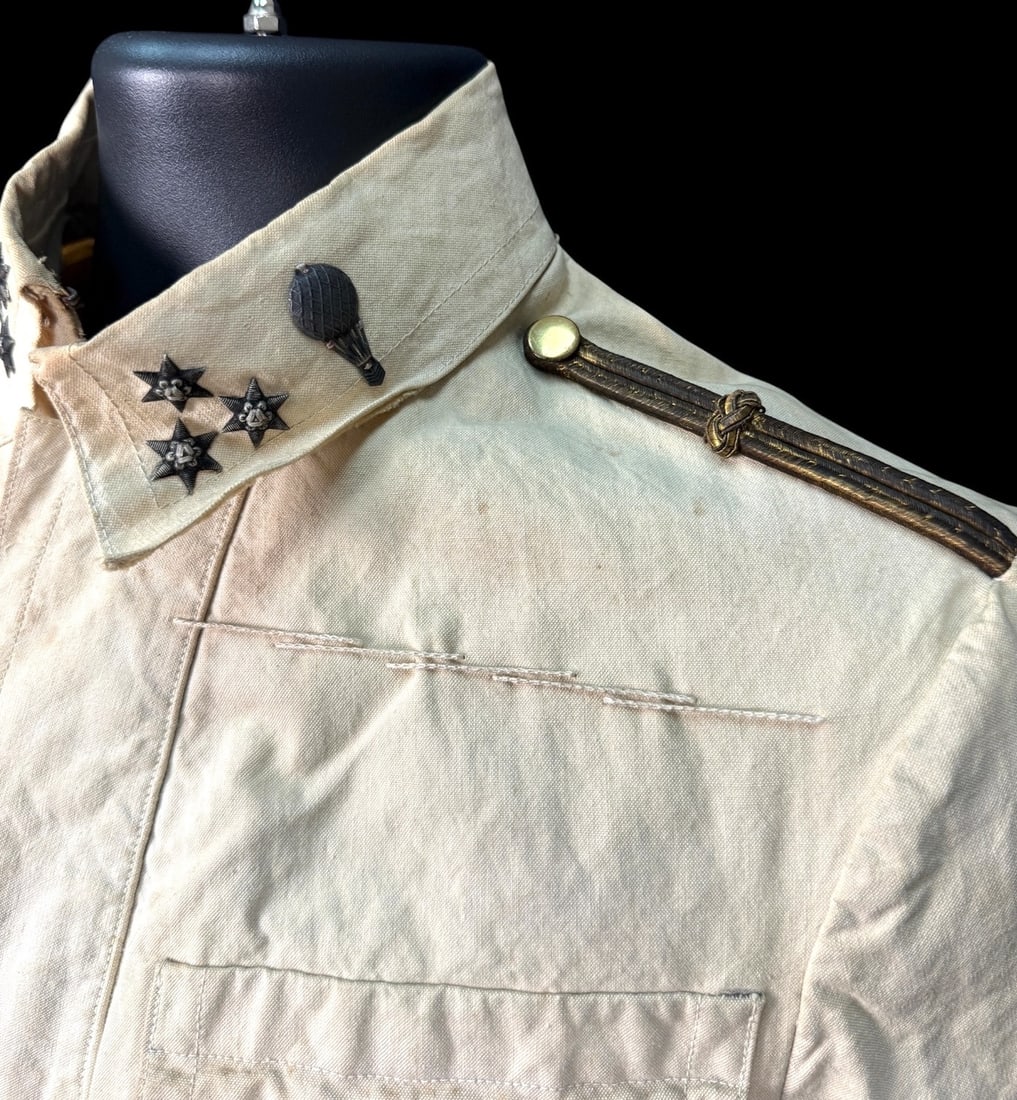
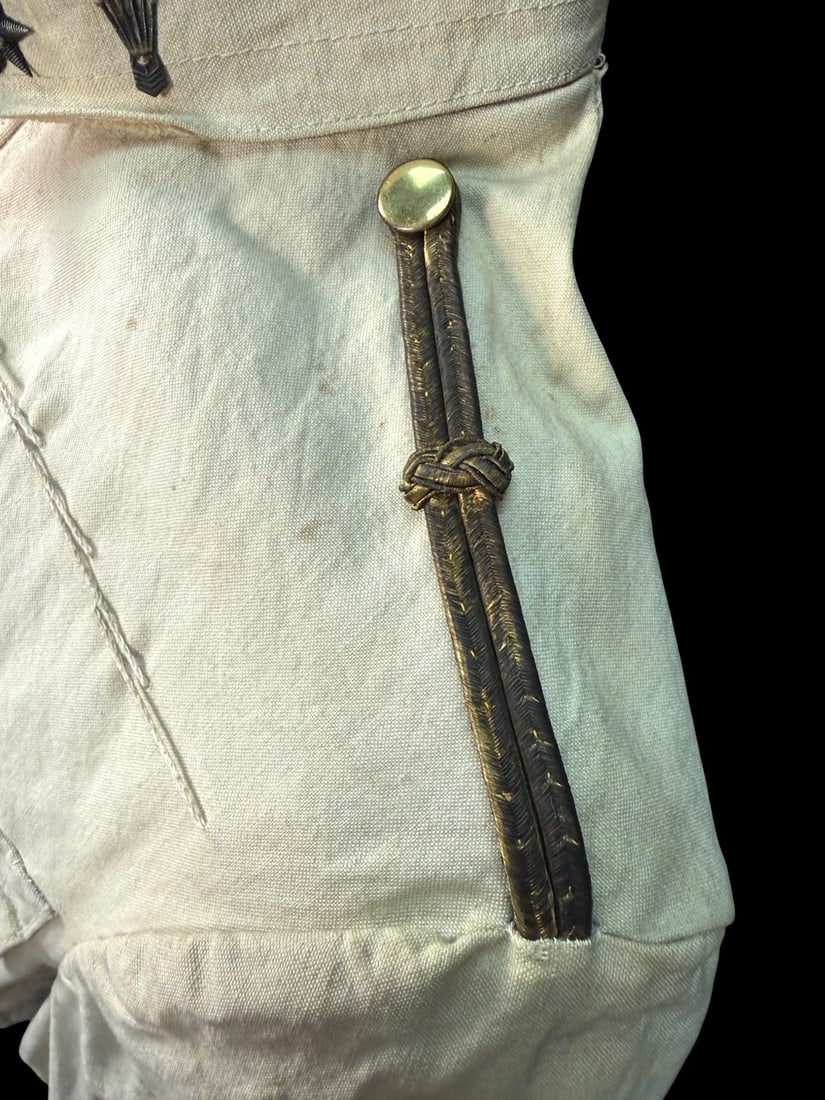
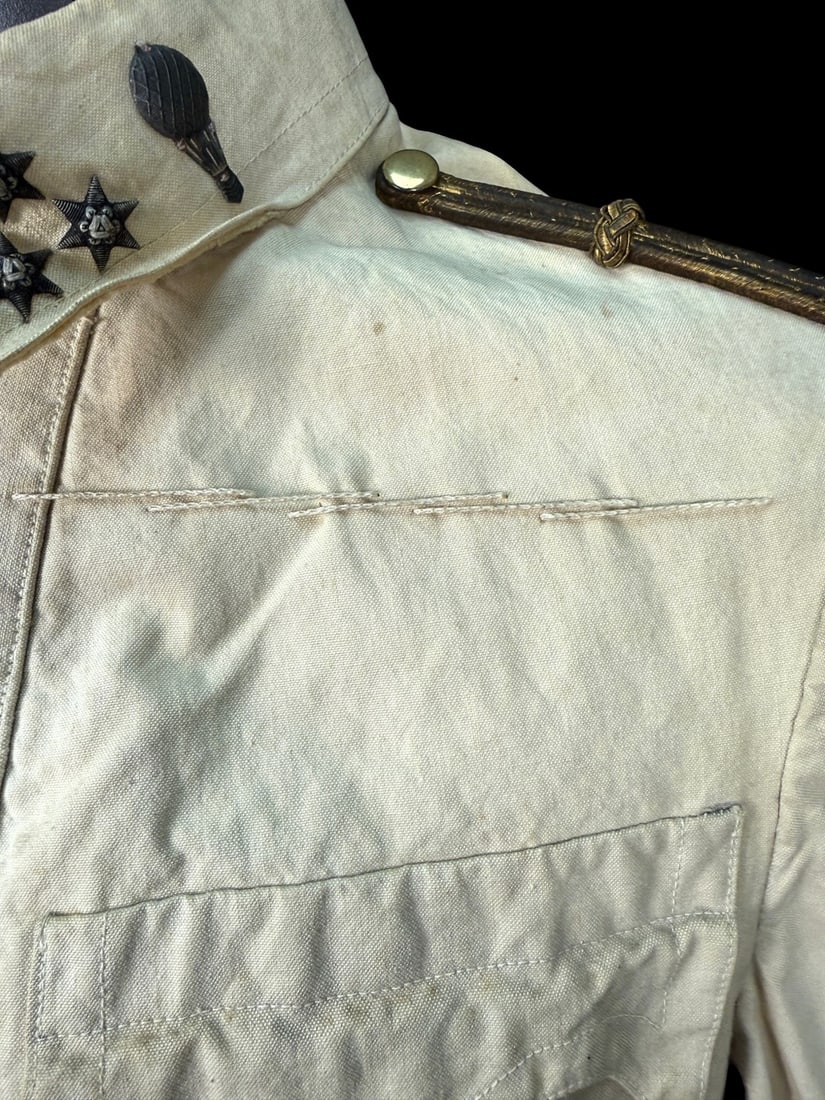
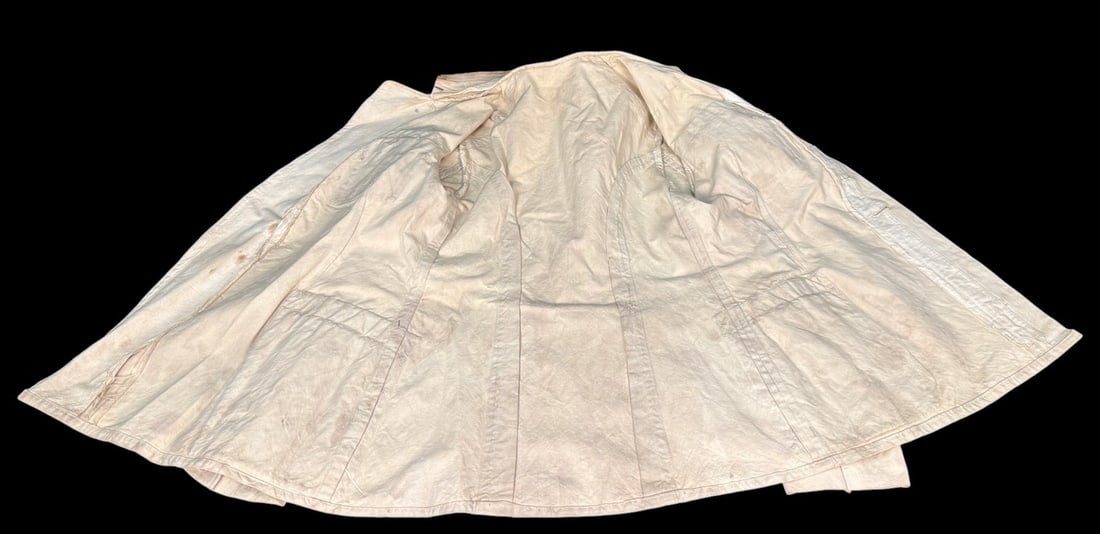
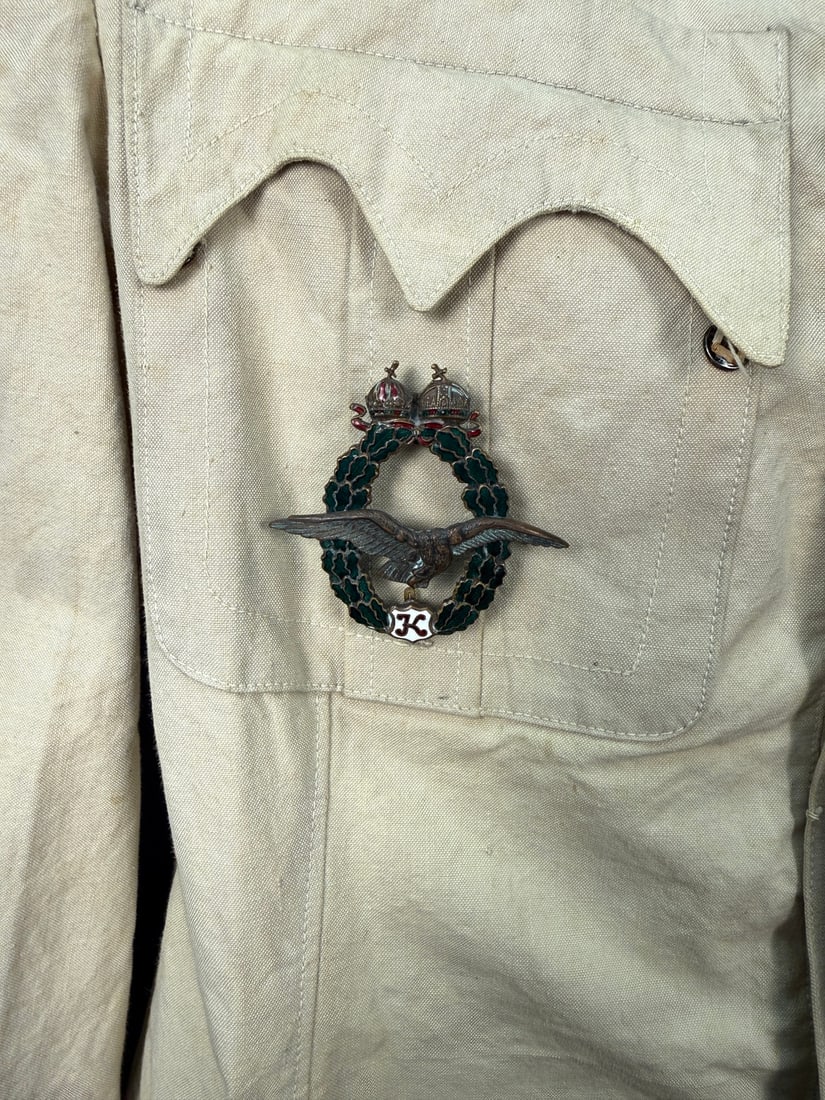
RARE Austro-Hungarian K.u.K. Fliegertruppe Officer’s Tropical Sahariana Tunic with Model 1917 Karl-Era Pilot’s Badge and Balloon/Airship Collar Insignia, Hauptmann Rank, circa 1917-1918 Offered here is a scarce Austro-Hungarian aviation officer’s lightweight tropical field tunic, cut in the distinctive multi-scalloped "sahariana" form long associated with Mediterranean and colonial summer dress, but here bearing unmistakable k.u.k. Austro-Hungarian insignia. The standing collar carries a captive observation-balloon device paired with three six-pointed officer’s rank stars denoting the grade of Hauptmann, while the right breast pocket mounts an enamelled Fliegerabzeichen Model 1917 – the pilot’s badge instituted under Emperor Karl I. No wearer’s name, maker’s label, or unit marking is visible in the photographs supplied, and no separate published biography accompanies the garment; its story rests entirely in the surviving insignia and construction. The Austro-Hungarian Luftfahrtruppen, reorganized as the k.u.k. Fliegertruppe, expanded rapidly during the First World War, drawing officers from balloon, airship, and fixed-wing branches alike under a single aeronautical command by 1916. Personnel posted to the warmer reaches of the front – the Isonzo, the Balkans, and southern garrison stations – were frequently issued or privately commissioned lightweight linen and cotton drill tunics in place of heavier wool service dress, retaining full rank and branch insignia in miniature metal form suited to a soft, unlined garment. The pilot’s badge on the pocket, instituted in 1917 under the new emperor, replaced the earlier Franz Joseph-era design and is recognizable by its dual Austrian Imperial and Hungarian Royal crowns, enamelled laurel wreath, an eagle in flight, and the monogram "K" within a small enamelled escutcheon at the base – a pattern that saw only a single wartime year of issue before the empire’s collapse in November 1918. The cut of the tunic, so often mistaken at a glance for an Italian summer sahariana, instead confirms that this tailoring tradition crossed theater lines within the k.u.k. forces as well. The tunic itself is of soft ecru/khaki linen or cotton drill, with a standing-fall collar, concealed front fastening, and four patch pockets with deeply scalloped flaps. The collar bears the darkened-metal balloon device at the front point with three six-pointed rank stars trailing behind, consistent with a Hauptmann assigned to balloon or airship (Luftschiffer) duties. A metallic bullion cord shoulder knot, finished with a decorative knot and button, is retained on the right shoulder. The enamelled Model 1917 Karl Flieger badge is pinned to the right breast pocket, showing attractive aged patina with no significant enamel loss to the wreath or crowns. Stitched ribbon-bar loops survive above the opposite (left) breast pocket, though no ribbon bar is presently mounted to them. The garment is shown opened to reveal its lightweight, largely unlined interior construction. Condition throughout is very good for a field-used textile of this age: the linen shows expected light overall toning, scattered handling spots, and storage creases, but the weave remains sound with no significant tearing, and all stitched pocket loops and seams are intact; the metal collar devices, shoulder cord, and enamelled badge remain firmly seated with vintage patina. A scarce and visually compelling survivor of Austro-Hungarian aviation dress from the final year of the Habsburg air service, uniting a Karl-era Model 1917 pilot’s badge with genuine balloon-branch collar insignia on an increasingly hard-to-find tropical tunic form.
Share this lot: