Fall 2026 Militaria and Aviation Auction
Lot 248:
Description
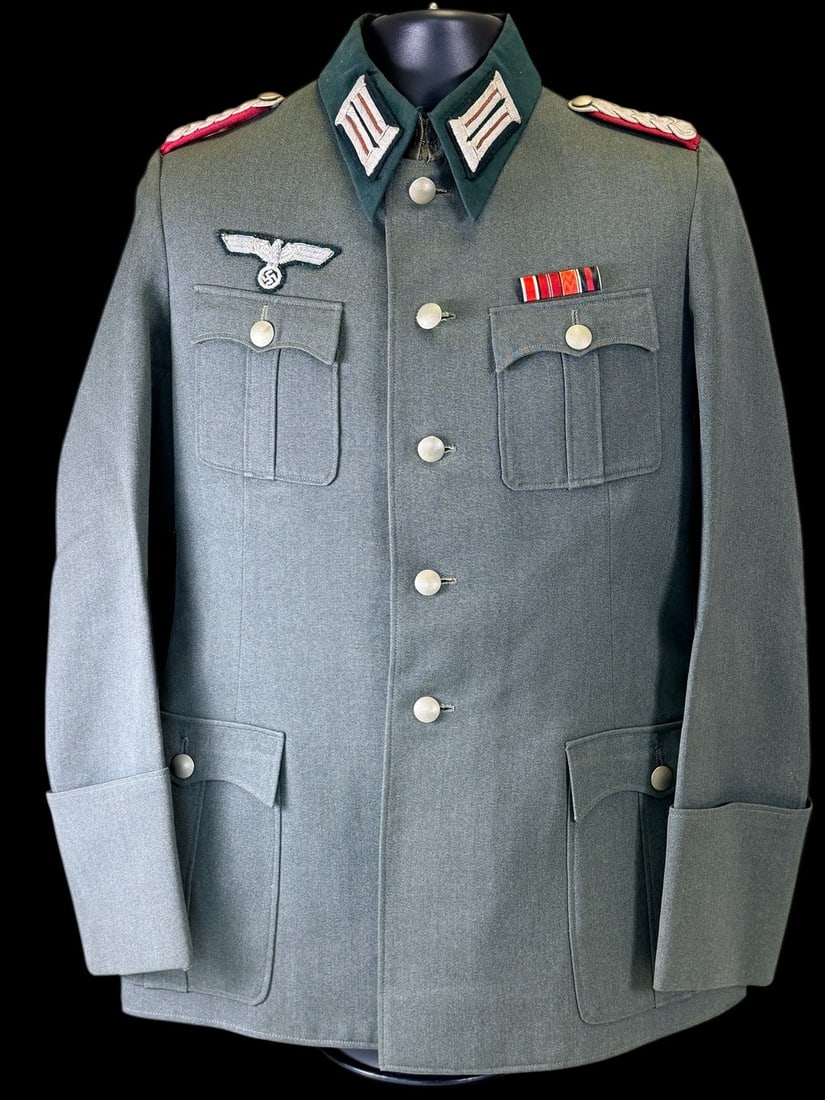
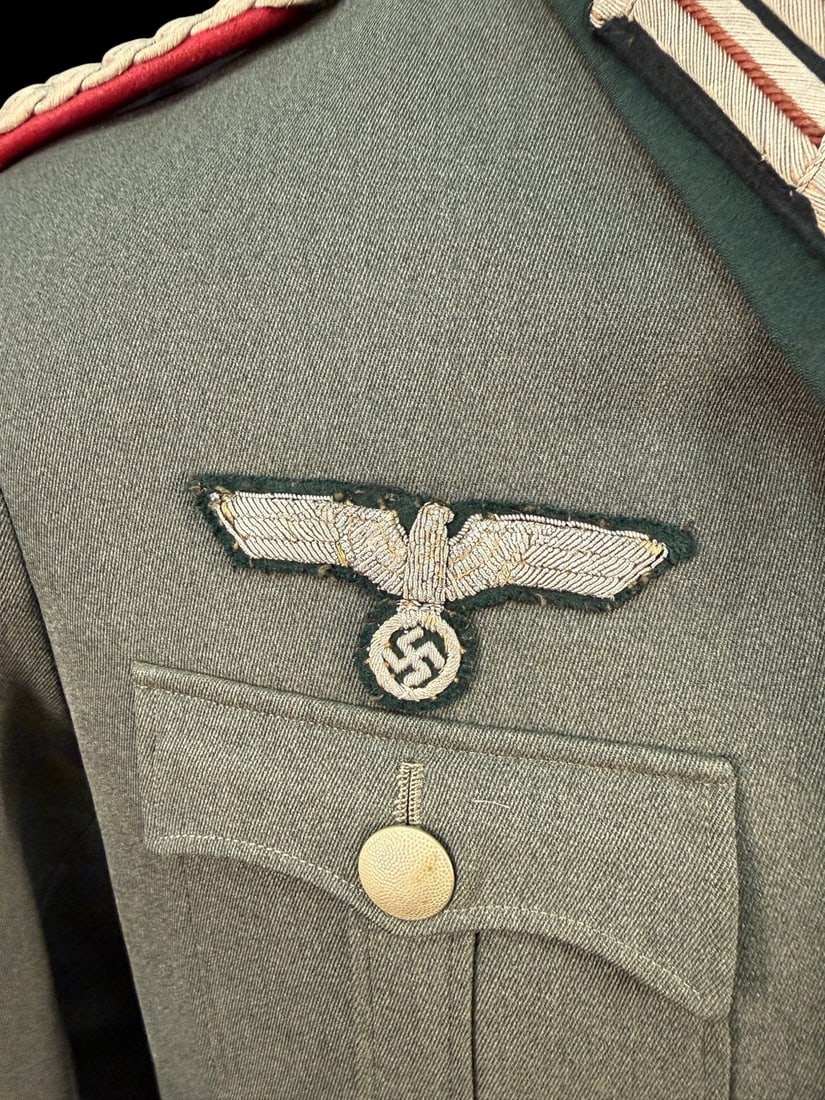
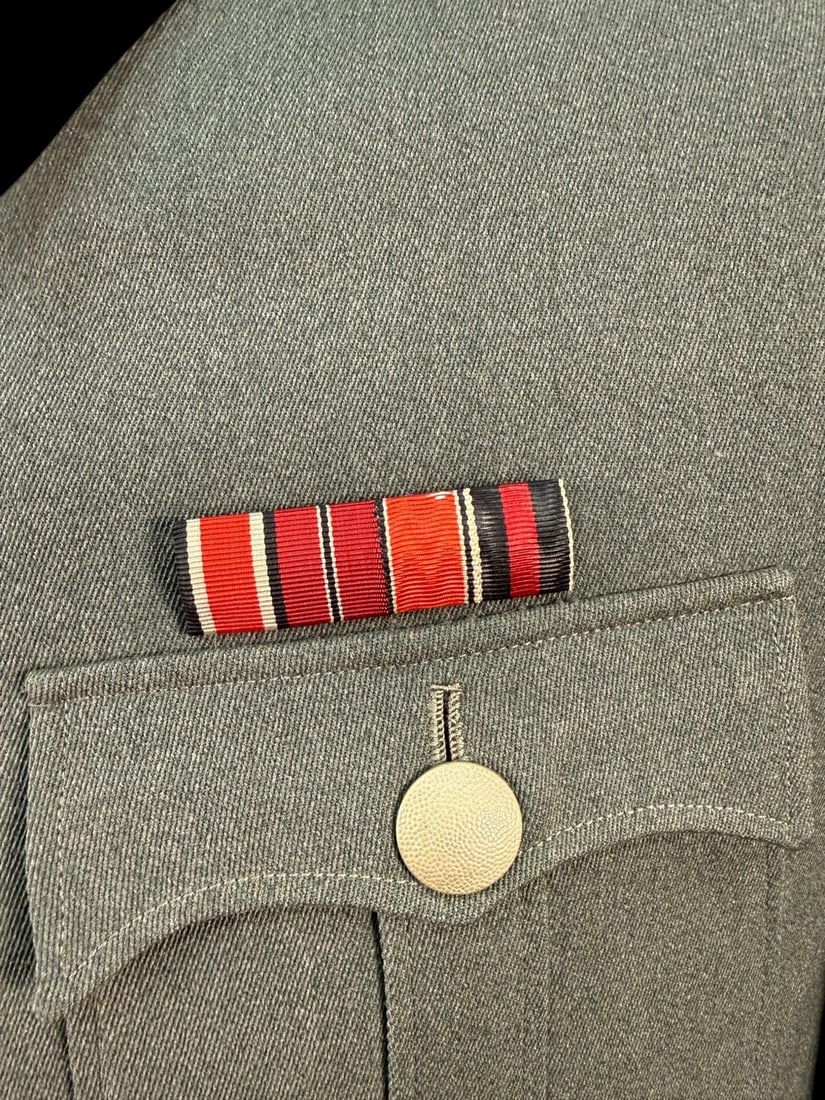
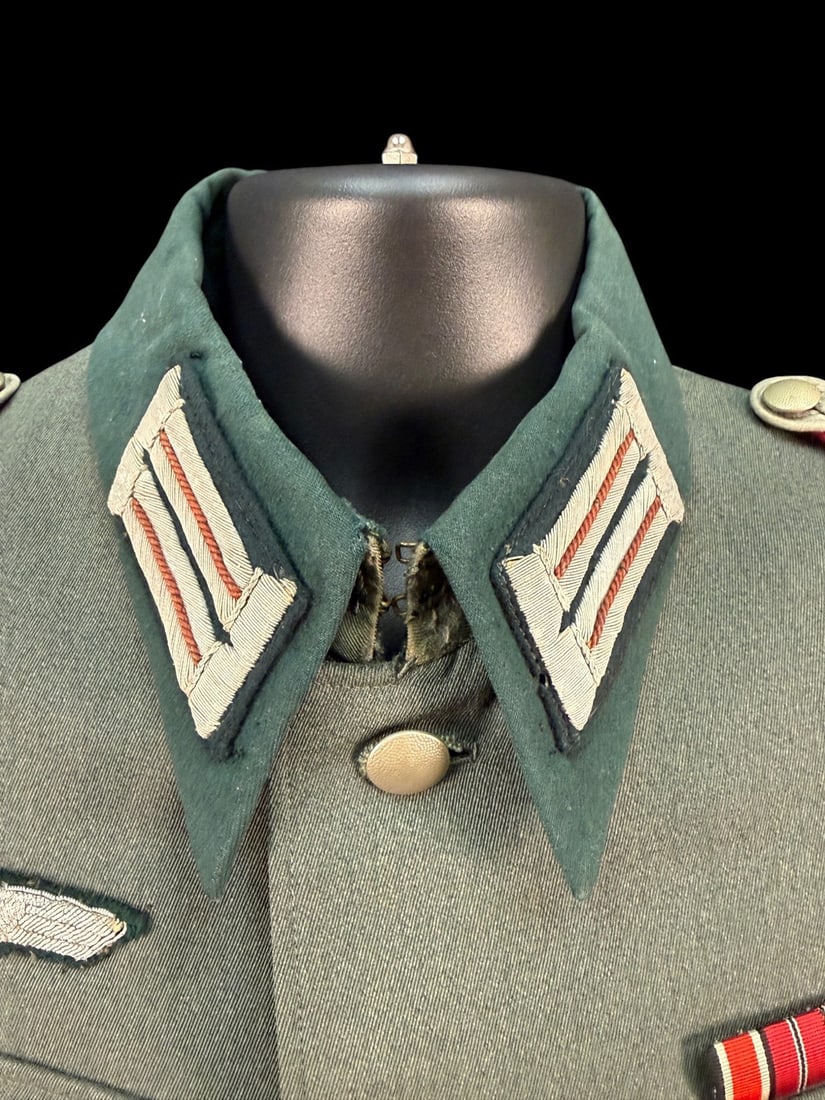
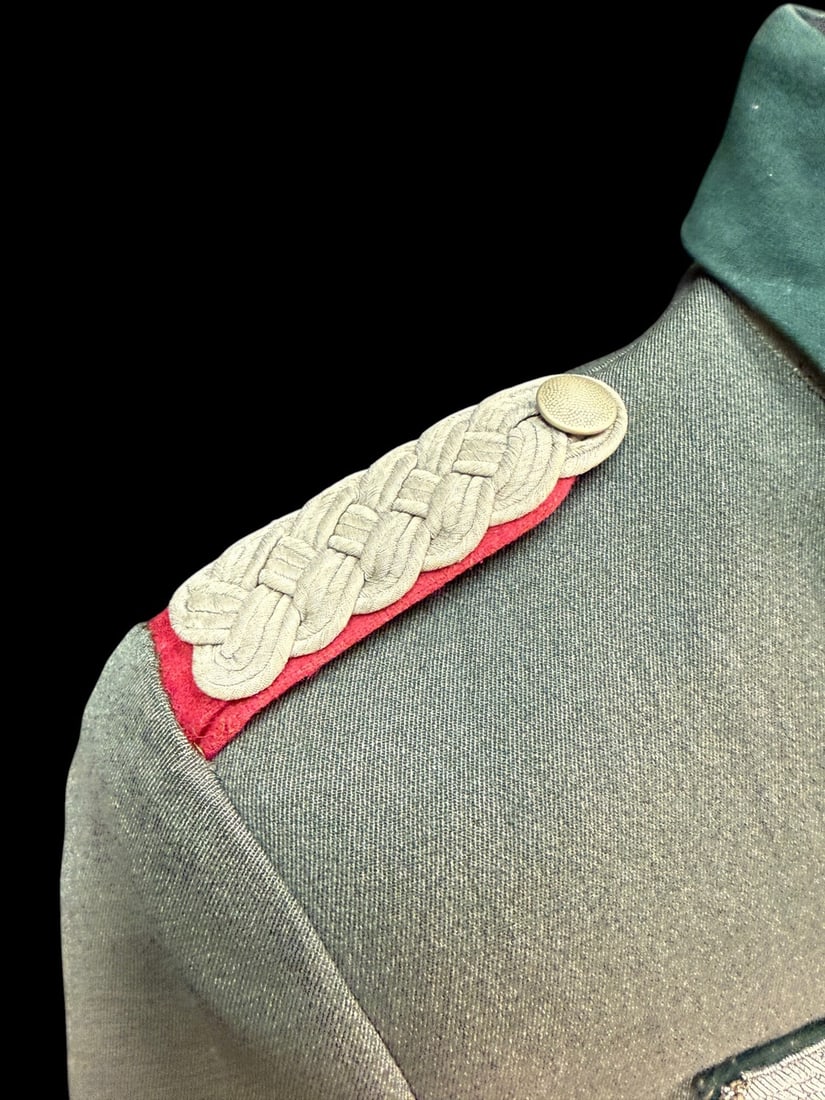
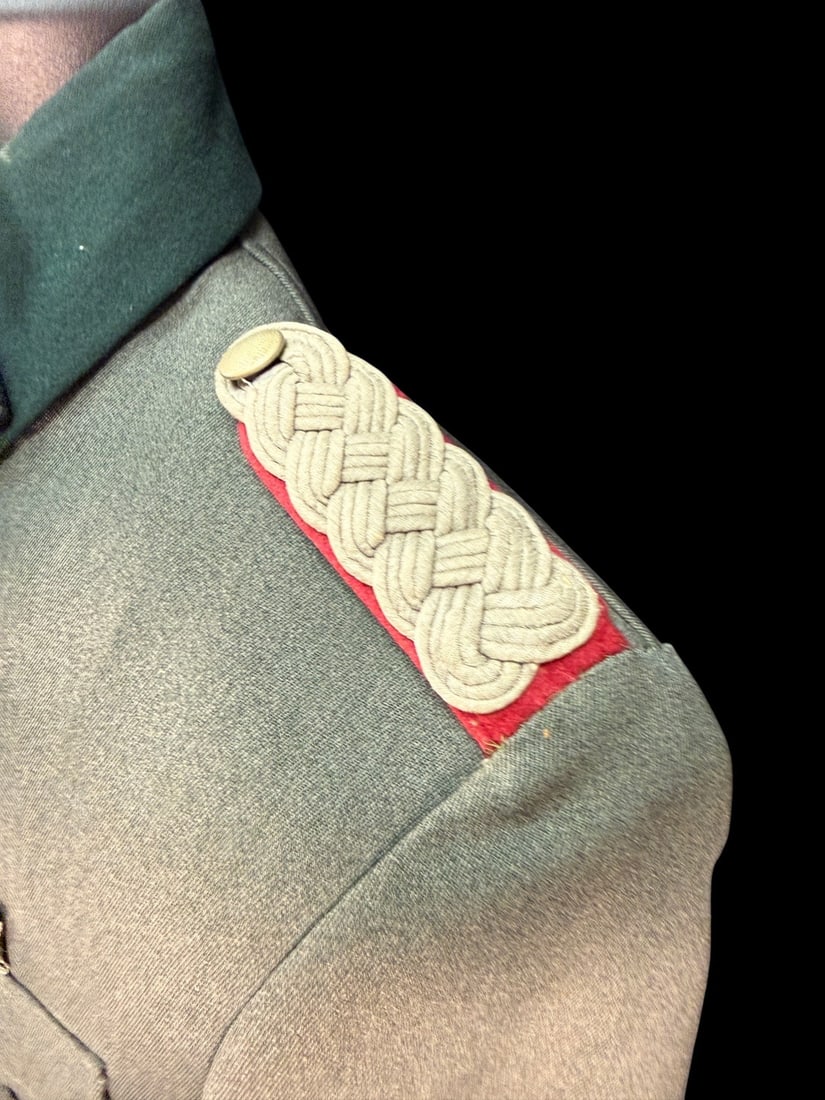
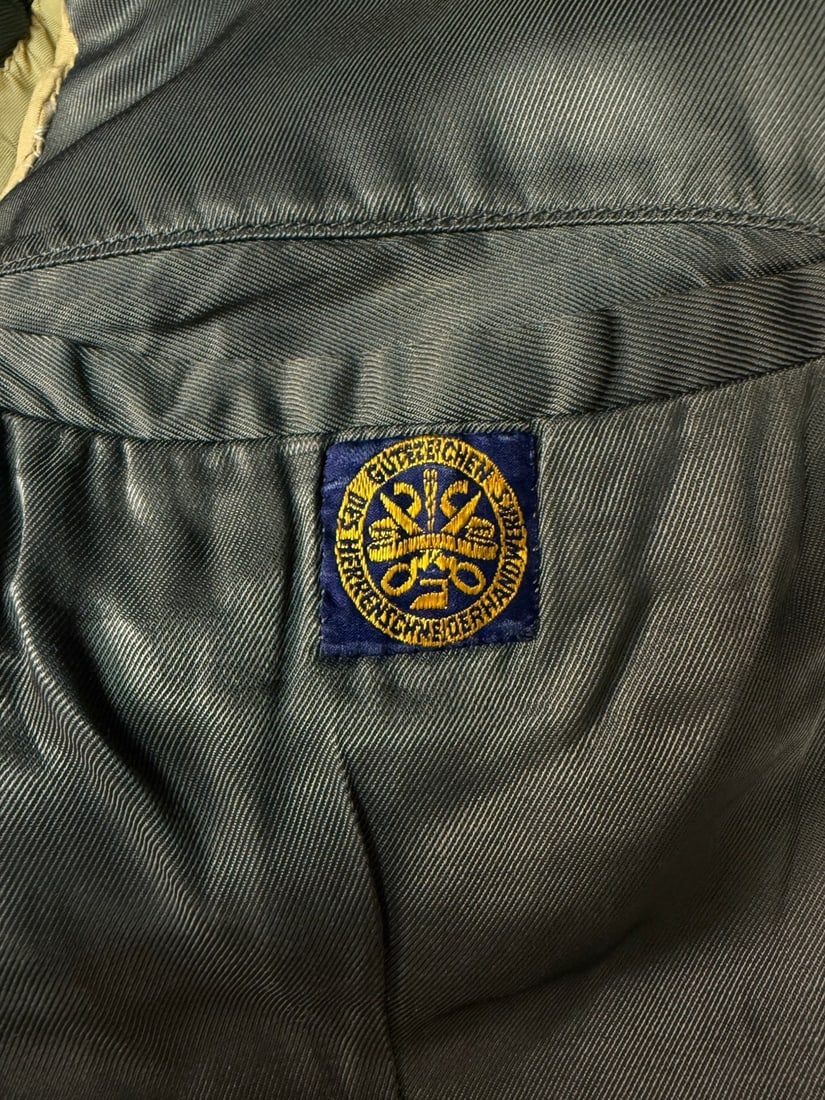
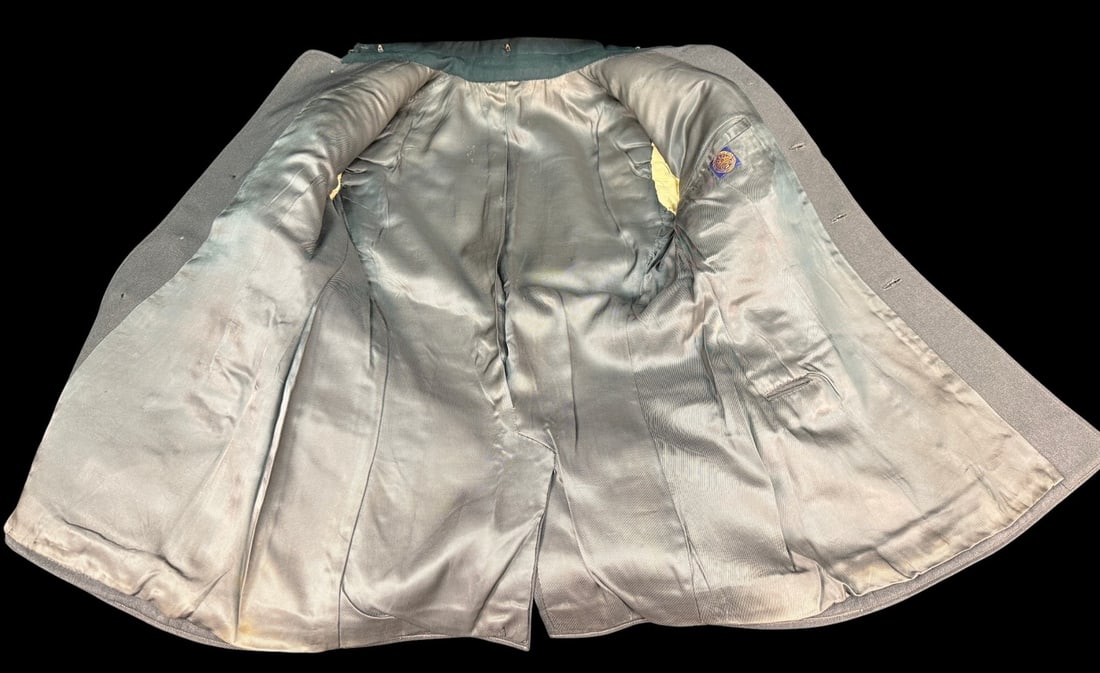
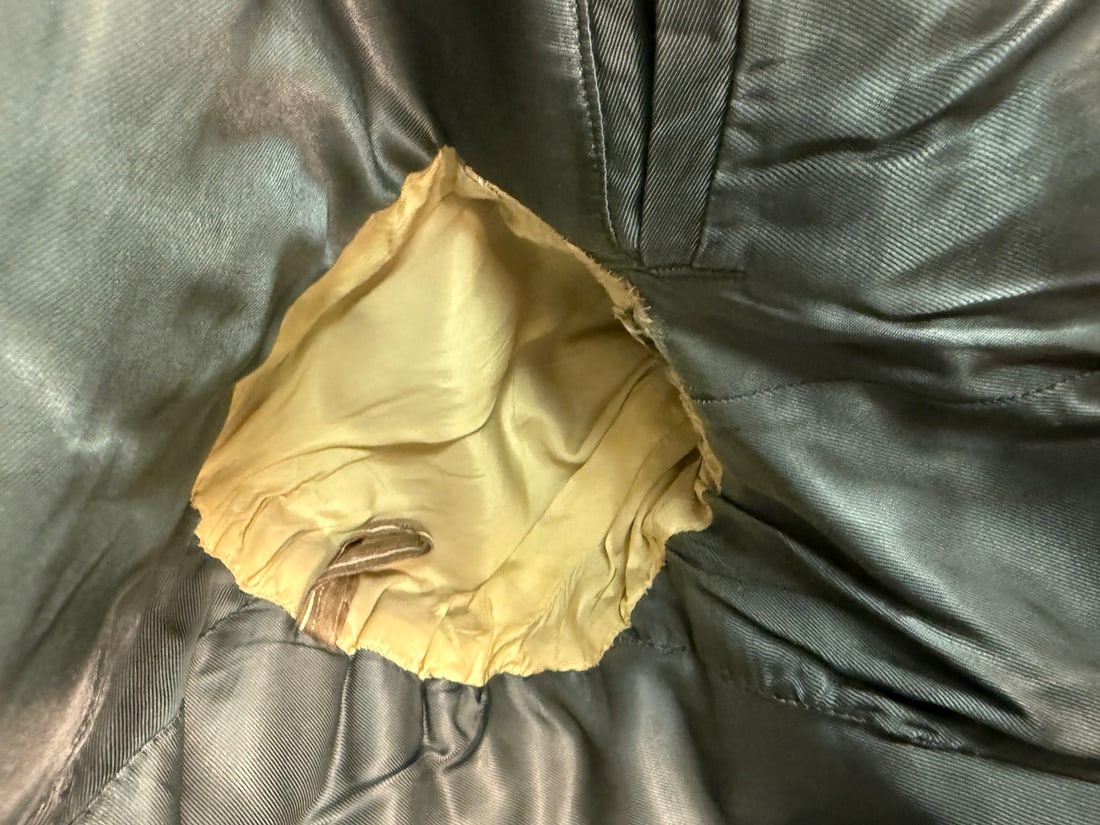
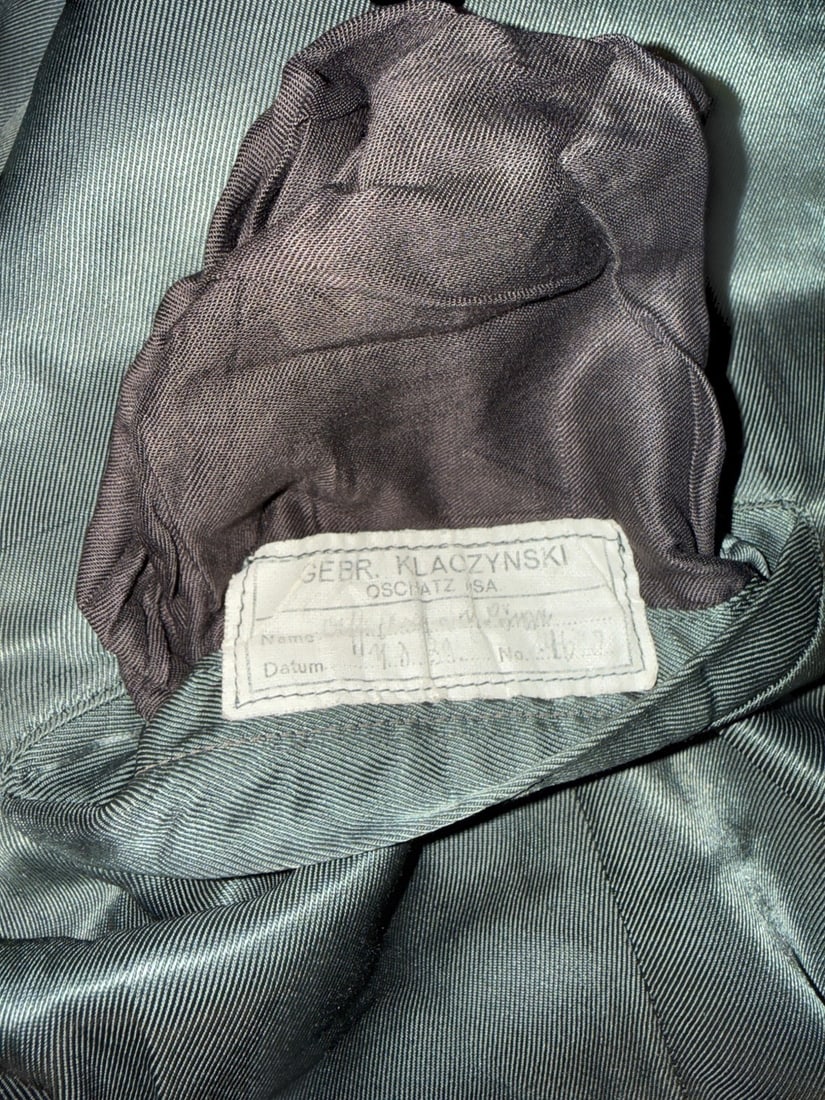
WWII German Heer Major’s Private-Purchase M36-Style Feldbluse – Tailored by Gebr. Klaczynski, Oschatz i. Sa., Dated 11 March 1939 Offered here is a bespoke German Army officer’s field tunic (Feldbluse), cut to the transitional M36 pattern and dated 11 March 1939 inside a woven maker’s label reading "Gebr. Klaczynski, Oschatz i. Sa." The braided matte-aluminum shoulder boards, mounted on a deep reddish-orange truppenfarbe underlay, carry the rank configuration of a Major, and the color of that piping – repeated in the center stripe of the officer-pattern bullion collar Litzen – points to either the Feldgendarmerie (field police) or the Artillery branch rather than a plain infantry posting, though the precise shade should be confirmed in hand. No separate published biography accompanies the tunic; its story rests in the surviving maker’s label, its hand-inked tailoring entry, and the ribbon bar sewn above the left breast pocket. German Army officers were required to purchase and maintain their own service dress, patronizing civilian master tailors registered with the Reich’s tailoring guild, the Herrenschneiderhandwerk, whose woven blue-and-gold quality seal is stitched inside this garment alongside the maker’s paper label. Dated in the tense spring of 1939, only months before the invasion of Poland, the tunic would have been ordered on the eve of general mobilization and likely accompanied its original owner, whose name on the label is now too faded to transcribe with confidence, into the opening campaigns of the war. The ribbon bar mounted above the left pocket – showing an Iron Cross Second Class ribbon combined with an Eastern Front or comparable service-ribbon pattern – suggests a wearer who was recognized for gallantry or endured a demanding theater posting, though the specific unit, campaign, and citation behind the award cannot be confirmed from the garment alone. The tunic is finished in fine field-grey gabardine wool with a bottle-green collar, five pebbled aluminum buttons, pleated breast patch pockets, and turned, scalloped cuffs typical of the M36 cut. The hand-embroidered silver bullion national eagle on the right breast, worked in tarnished wire with visible verdigris consistent with age, is affixed to a dark green backing. Both collar tabs display officer-pattern silver bullion lace over dark green wool with a colored center piping matching the shoulder-board underlay, and the shoulder straps themselves are woven in a tight braided pattern secured by frosted aluminum buttons. A sword or dagger hanger strap survives intact beneath the left armhole, and the original hook-and-eye collar closure remains functional, though the hooks show wear consistent with age and use. Also present and legible inside the garment is the accompanying tailor’s pocket label, reading "Gebr. Klaczynski, Oschatz i. Sa." with a hand-inked date of "11.3.39" and a faint, now-illegible name and order-number entry. No other insignia, headgear, or paperwork accompanies the lot. Condition is very good for the type: the wool shell shows only minor surface wear and light scattered moth tracking, while the rayon-blend twill lining is toned and worn at the underarms, with a distinct area of fabric loss and seam separation at one armpit gusset, visible in the interior photographs. A well-preserved, dated private-tailor’s Feldbluse whose named maker, guild seal, and Major’s insignia give an otherwise anonymous Heer officer’s tunic a tangible, documented point of origin.
Share this lot: