Fall 2026 Militaria and Aviation Auction
Lot 257:
Description
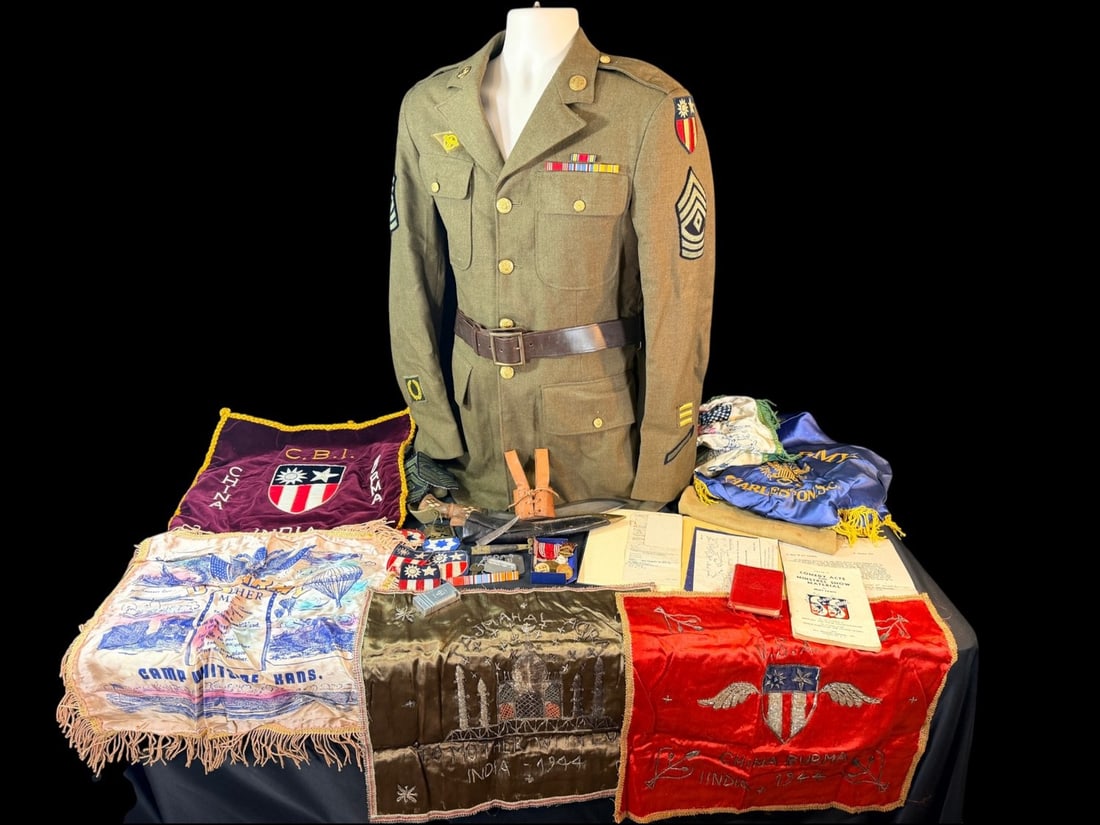
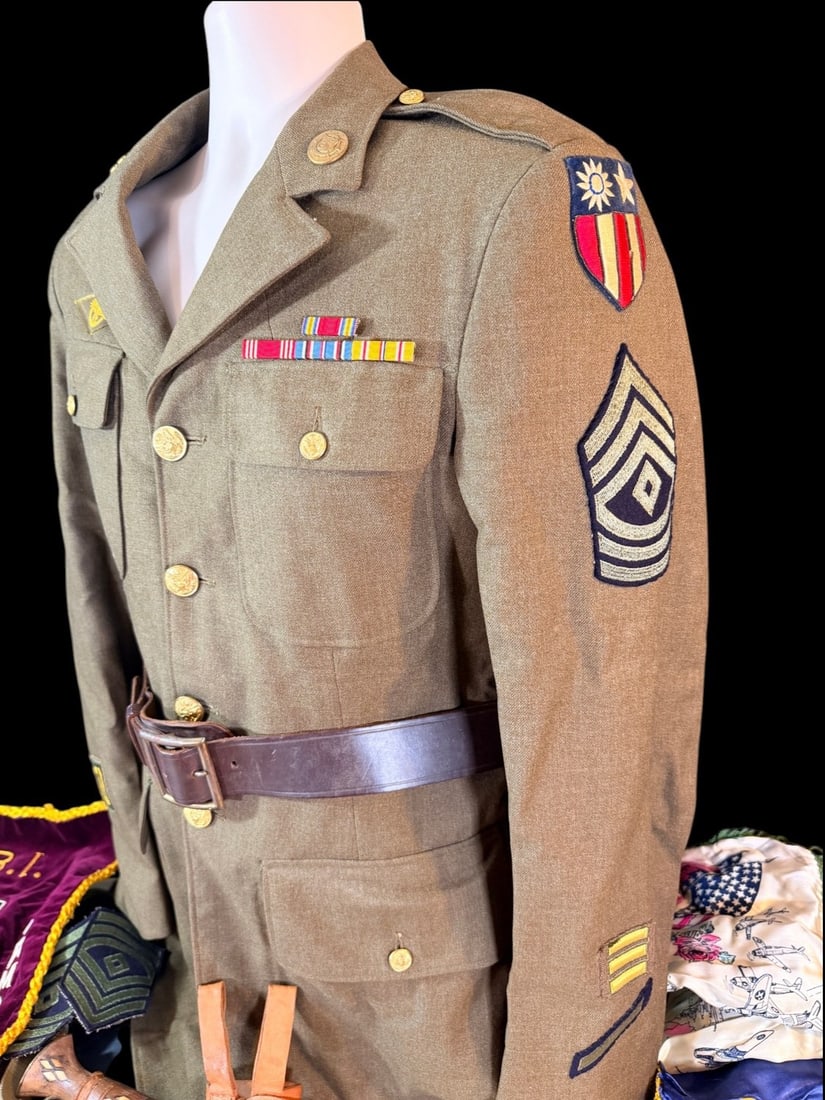
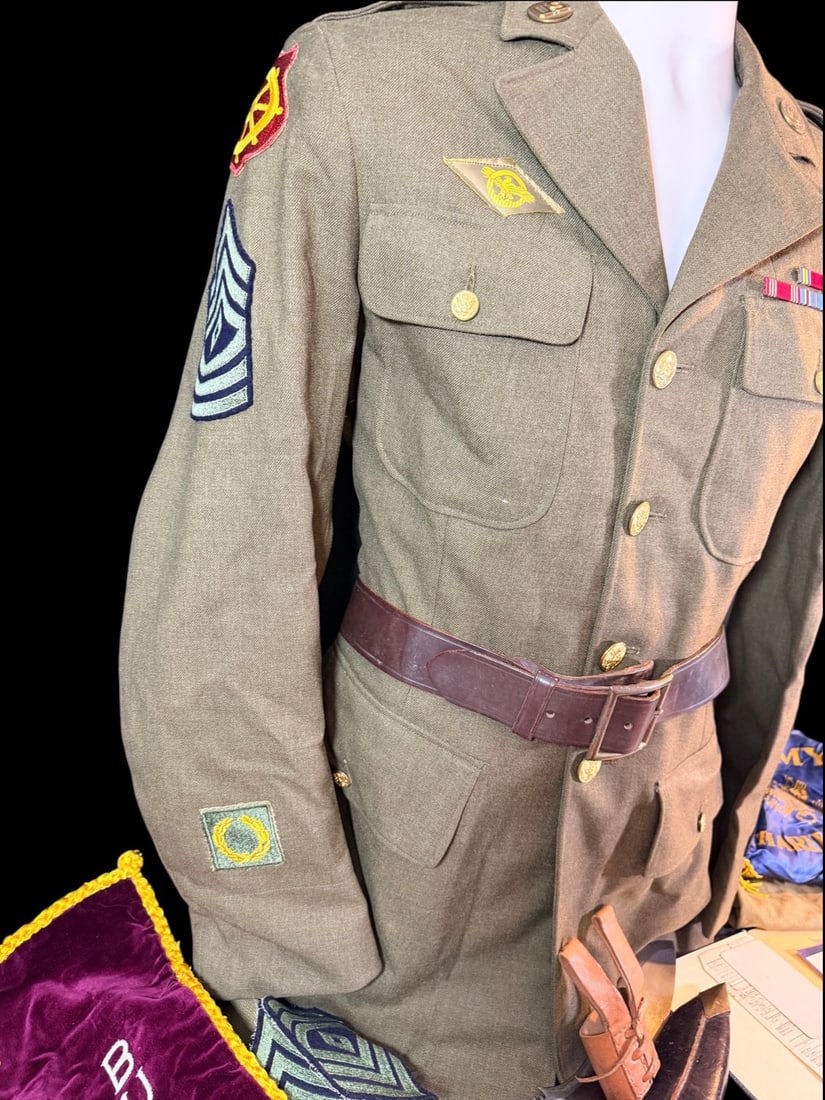
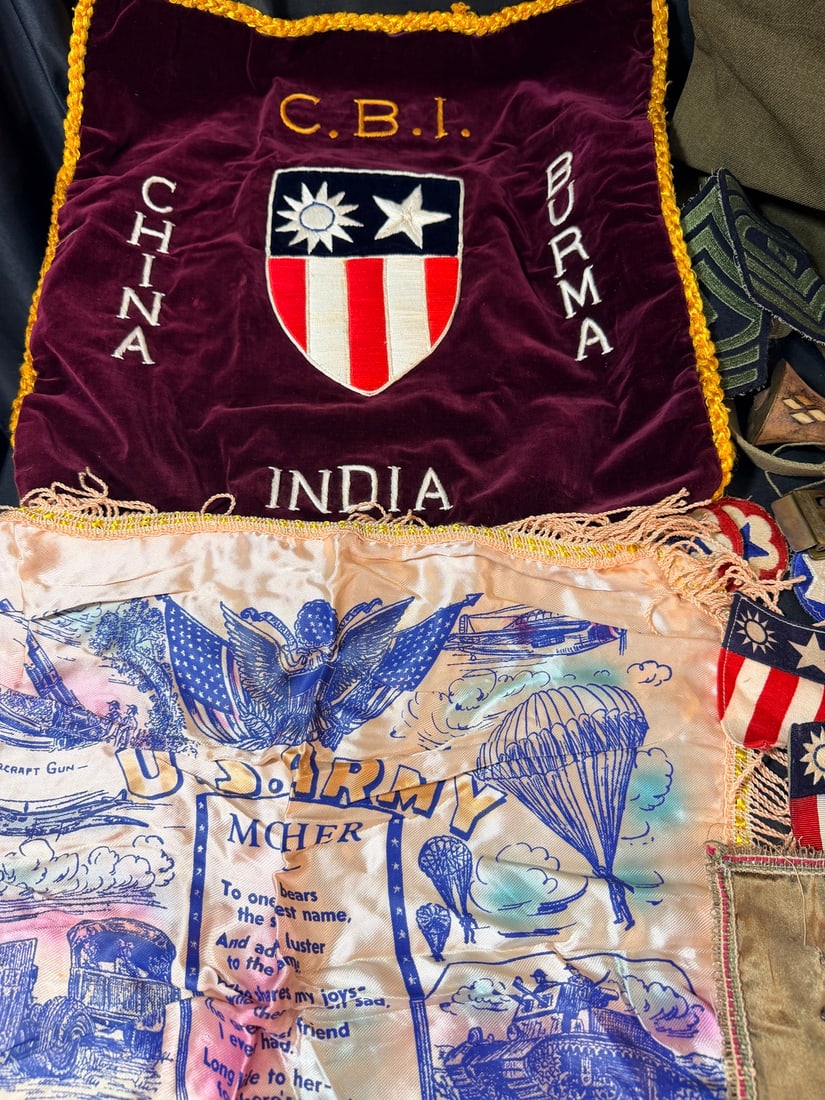
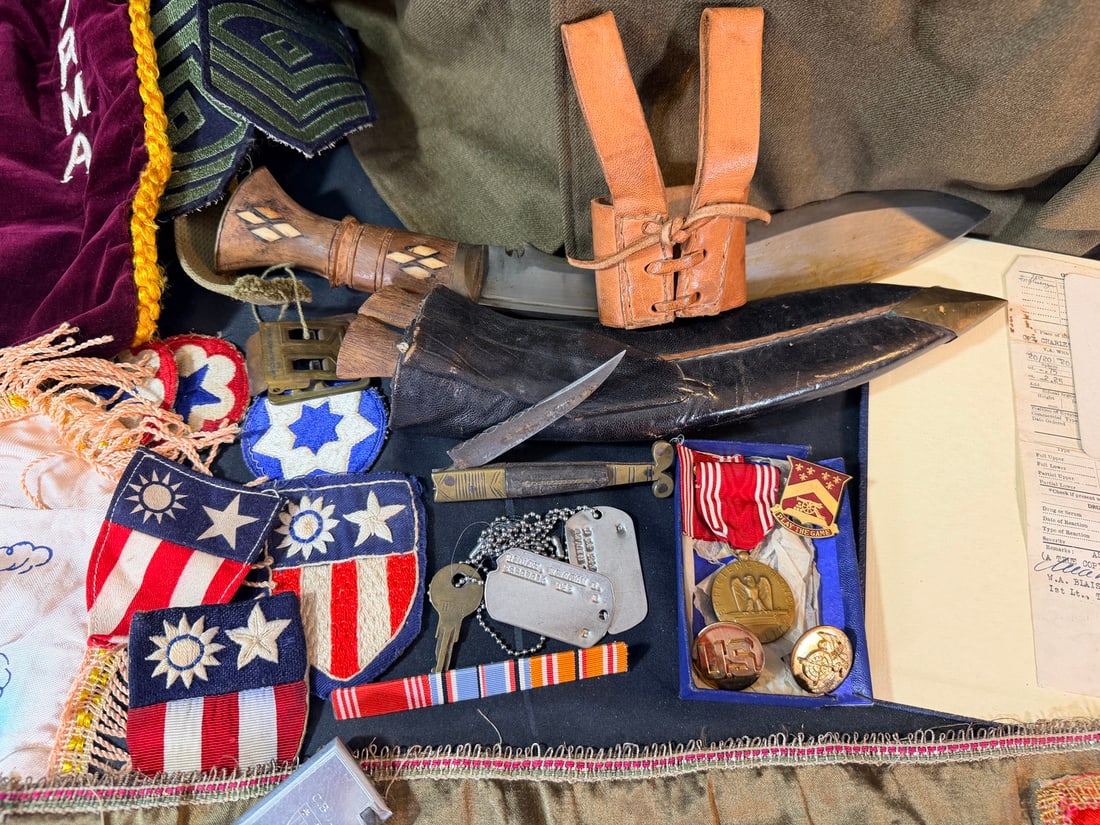
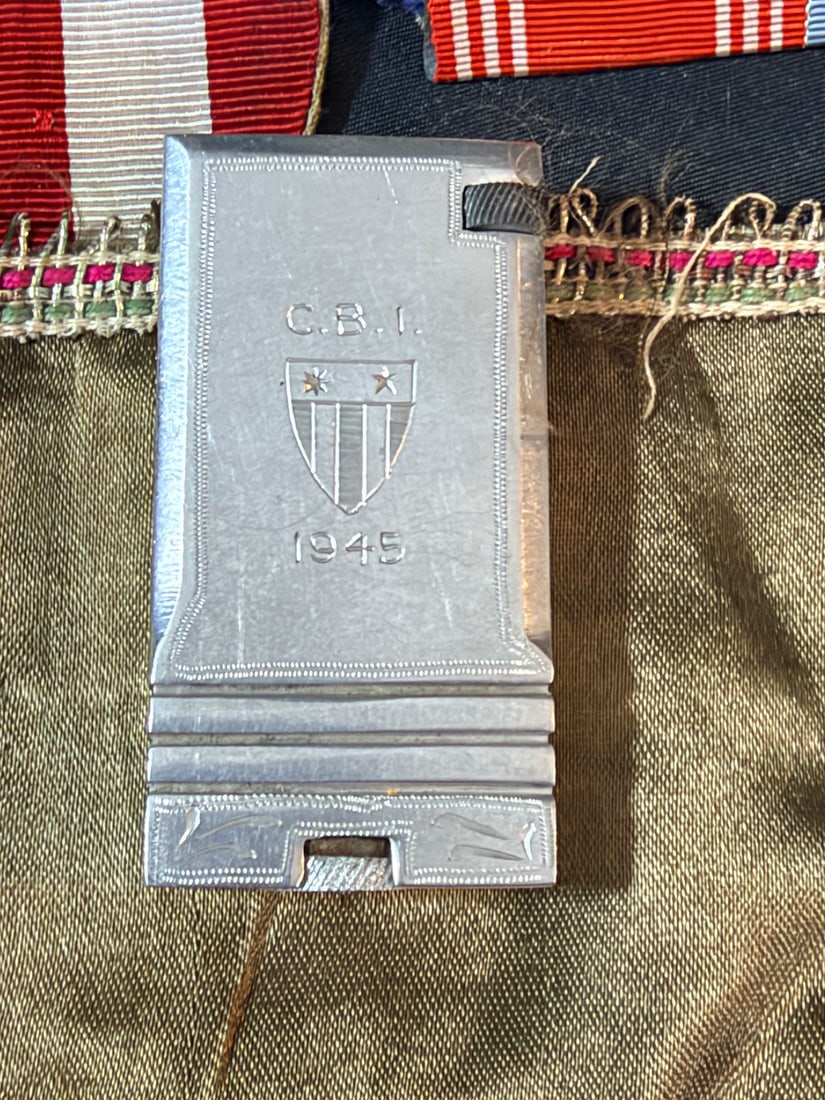
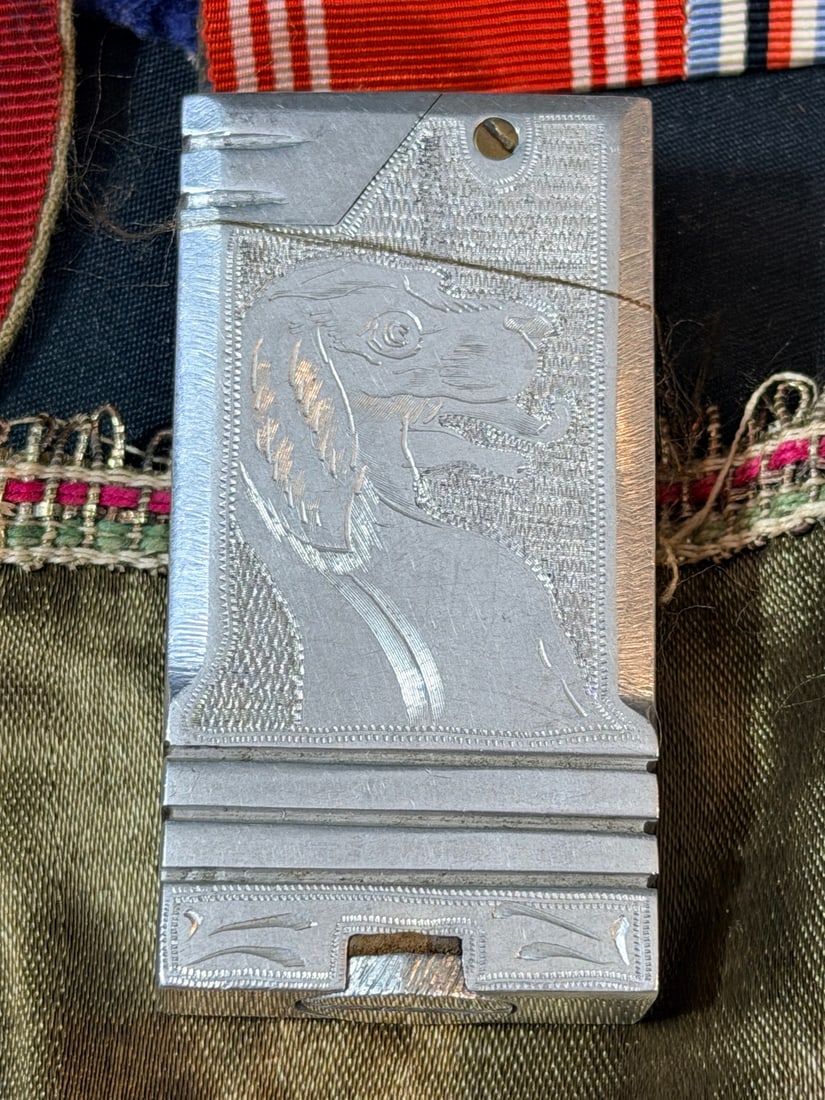
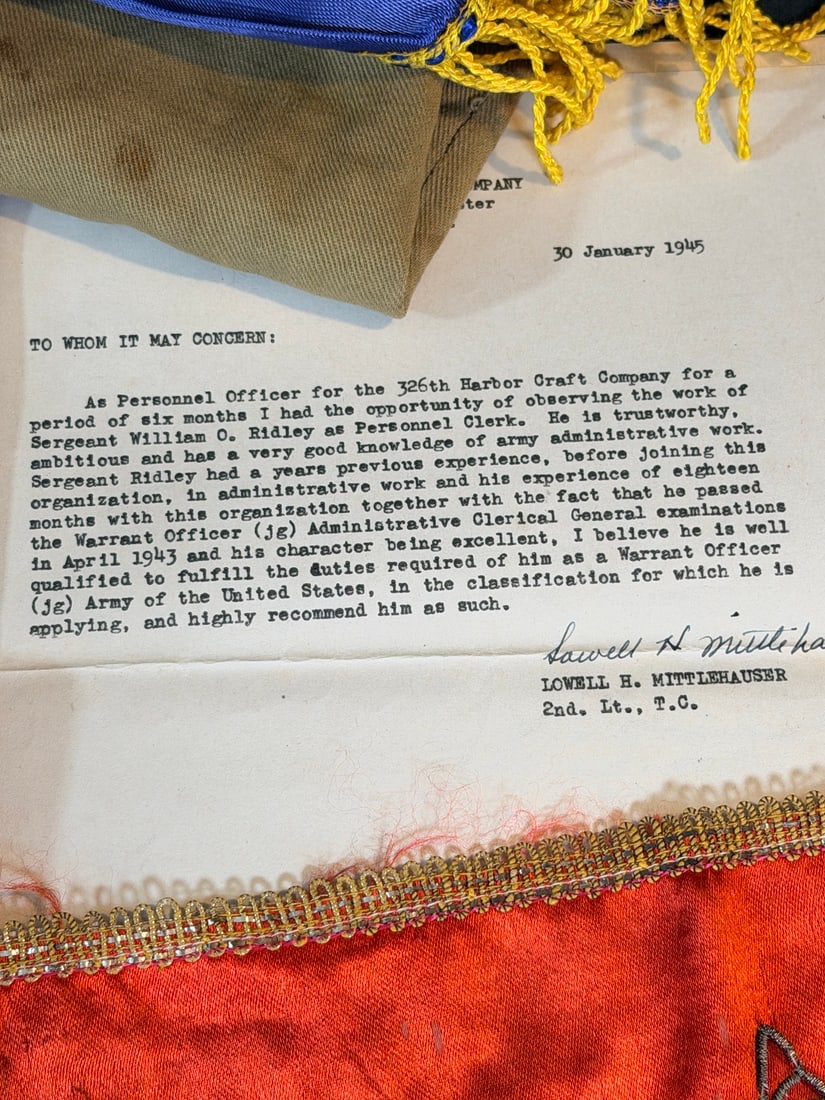
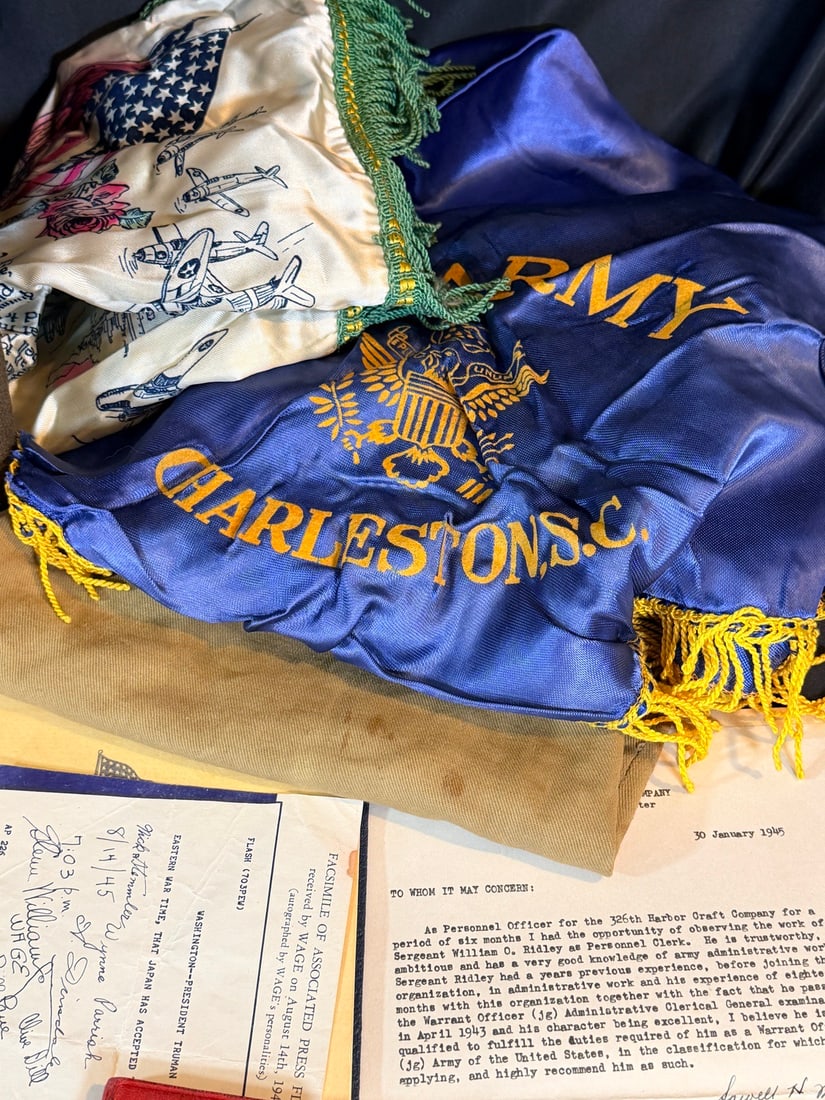
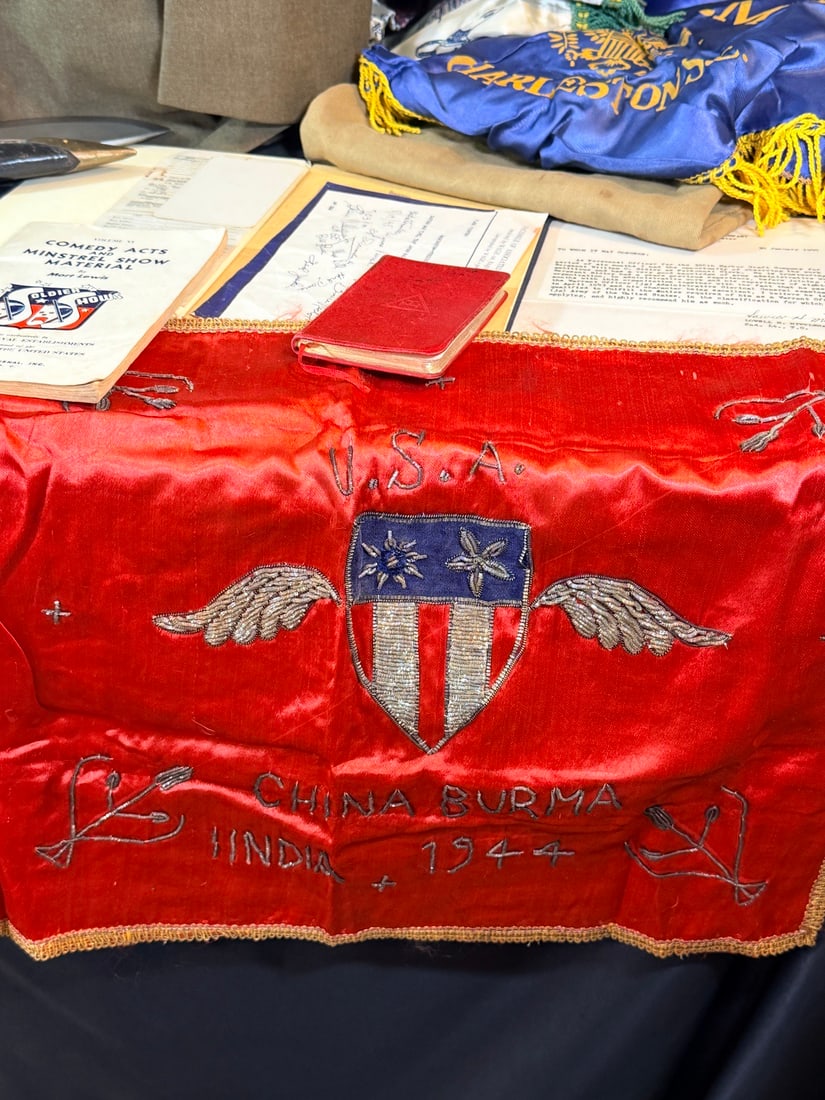
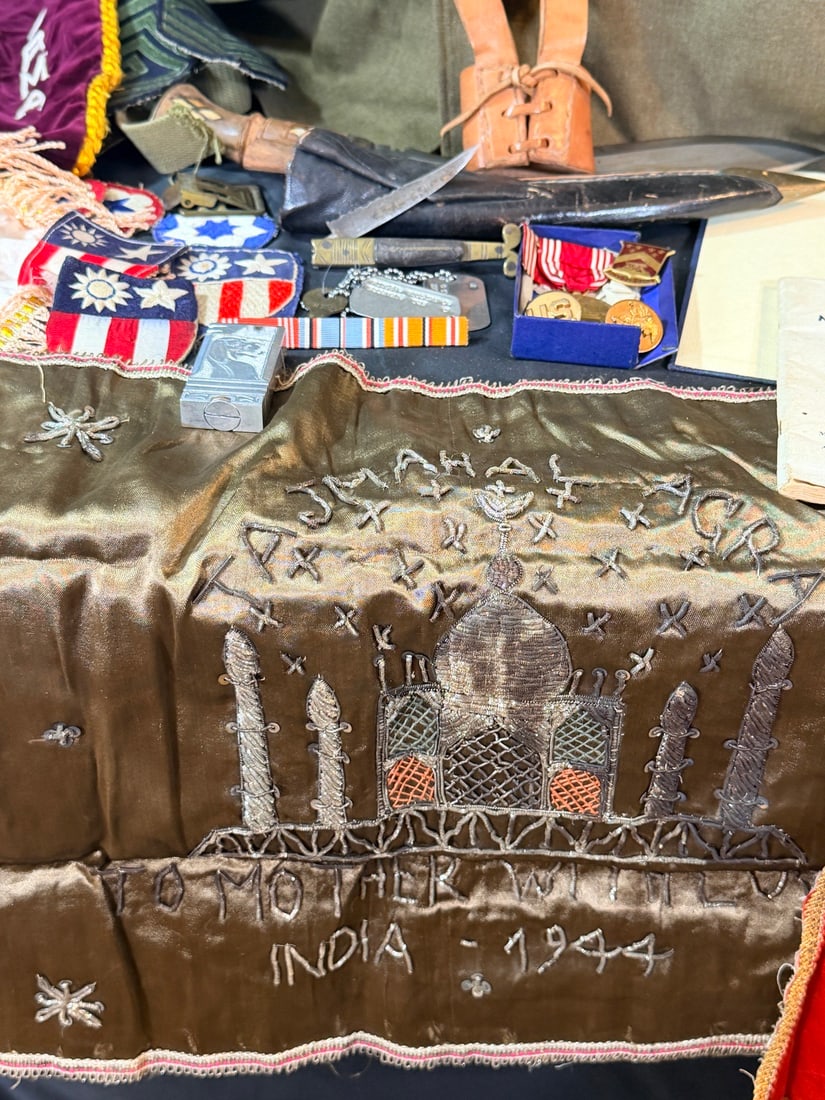
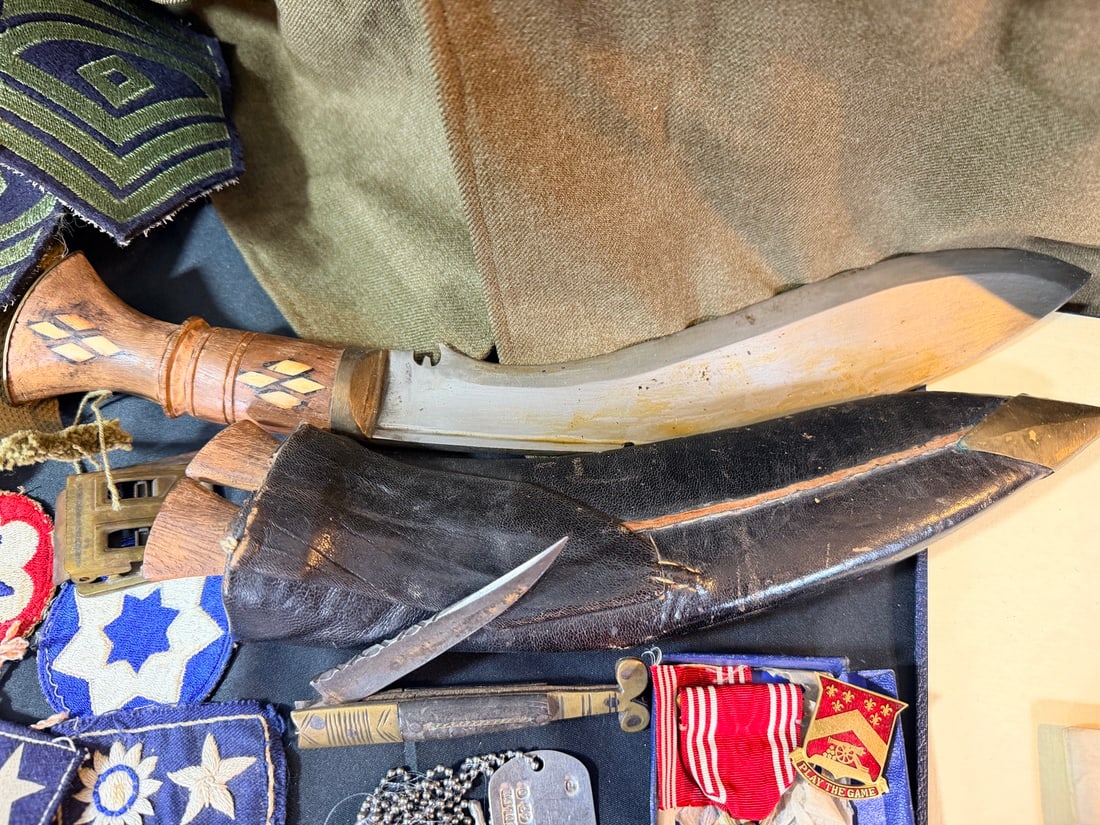
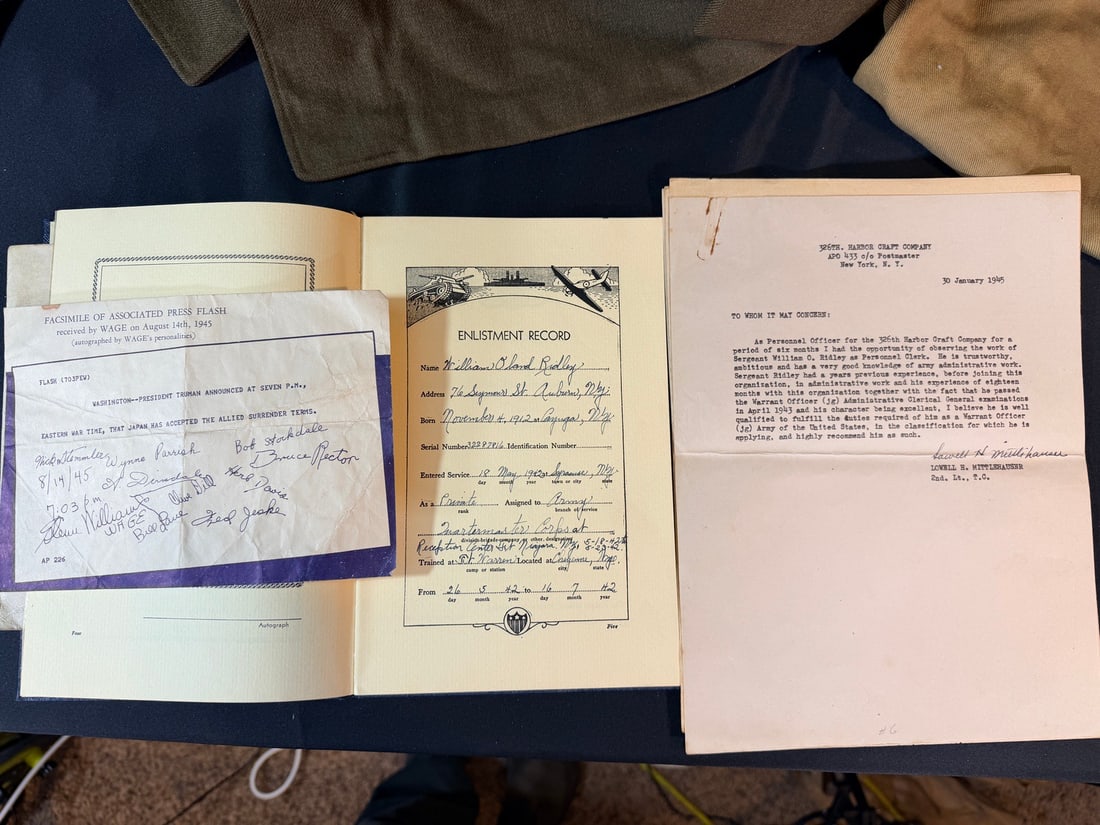
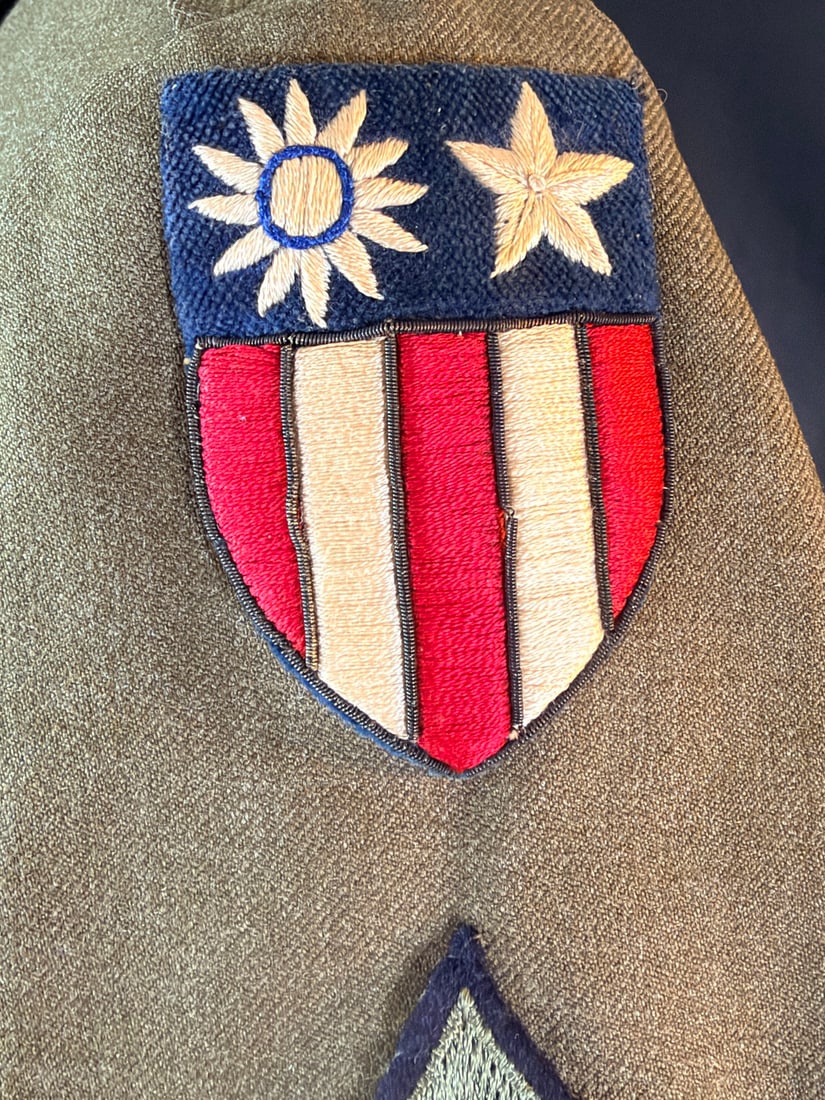
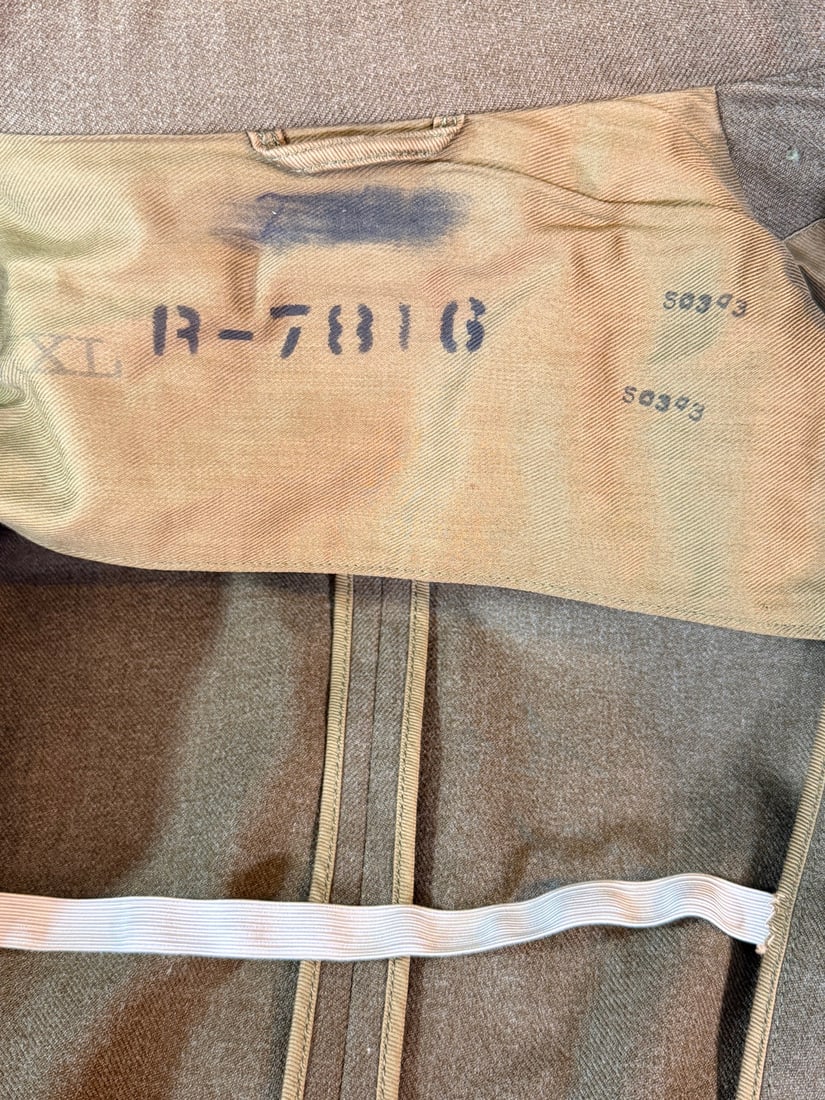
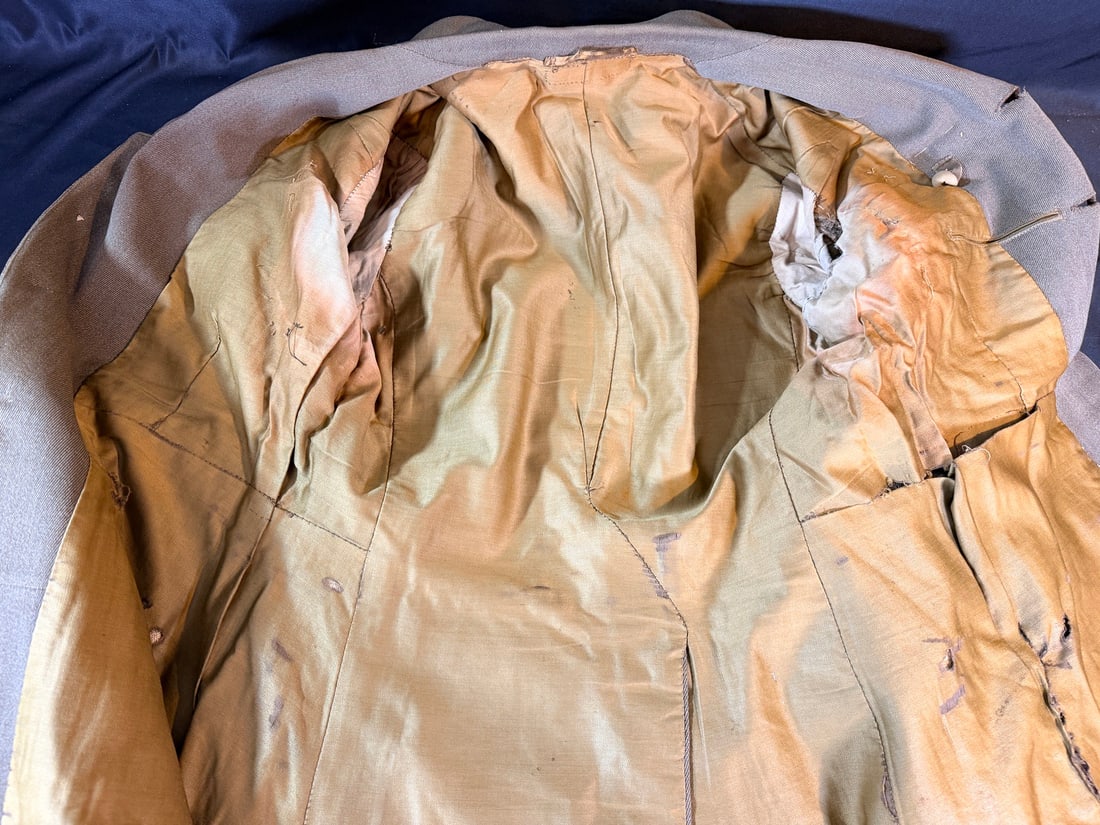
Named CBI M/Sgt Ridley Group: Bullion, Kukri, Docs. WWII China-Burma-India Theater Named Grouping to Master Sergeant William Oland Ridley, Serial No. 32297816, 326th Harbor Craft Company, Transportation Corps – Service Coat with Bullion CBI/SOS Patches, Souvenir Bullion Pillow Shams, Kukri, Trench-Art Lighters, Enlistment Record, and August 1945 Surrender Wire Facsimile Offered is a richly documented CBI Theater grouping identified to Master Sergeant William Oland Ridley, Serial No. 32297816, who served as personnel clerk and rose to senior NCO with the 326th Harbor Craft Company, Transportation Corps. The lot centers on Ridley’s wool four-pocket service coat, retaining a theater-made bullion China-Burma-India shoulder patch, an SOS-style opposite-shoulder insignia, First Sergeant/Master Sergeant rank chevrons, a Meritorious Unit Commendation cuff patch, overseas service bars, and a ‘Ruptured Duck’ discharge patch, and is directly supported by his named Enlistment Record booklet, dog tags, and a signed 30 January 1945 letter of recommendation. No separate published biography of Ridley has been located; his story here rests on these citations, official records, and the material culture he carried home. The CBI Theater was famously dubbed the ‘Forgotten Theater, ‘ its harbor craft, riverine, and road-logistics units overshadowed by the headline campaigns of Europe and the Pacific yet indispensable to keeping the Ledo and Burma Roads open and supplies moving through Calcutta and the Bay of Bengal. Ridley’s recommendation letter, penned by 2nd Lt. Lowell H. Mittlehauser, Personnel Officer of the 326th Harbor Craft Company, praises Ridley’s eighteen months of administrative service, notes his passing of the Warrant Officer (jg) Administrative Clerical General examinations in April 1943, and recommends him for appointment – though the file does not establish that an appointment followed. The accompanying Associated Press facsimile flash, dated 14 August 1945 and bearing period signatures, records President Truman’s announcement that Japan had accepted the Allied surrender terms, tying Ridley’s personal service directly to the war’s closing hour. The embroidered Taj Mahal/Agra and winged-shield CBI textiles, both dated 1944, speak to the flourishing souvenir trade that grew up around American servicemen stationed across India. The olive-drab wool service coat, interior-stamped with size and contract markings, displays its bullion CBI shoulder shield, First Sergeant/Master Sergeant chevrons, ribbon bar mounting the Good Conduct ribbon among others, collar ‘US’ and disc devices, and a brown leather garrison belt with brass buckle. A boxed Good Conduct Medal with ribbon, additional loose cloth CBI shield variants, and a distinctive-insignia crest (‘Play the Game’) accompany the coat. Three large bullion and silk pillow shams are present – a maroon velvet ‘C.B.I. China Burma India’ shield panel, a red silk winged-shield ‘China Burma 1944’ panel, and an olive silk Taj Mahal/Agra panel inscribed ‘To Mother Whitlow, India 1944’ – together with a printed satin ‘Camp Whitside, Kans.’ sham and blue/gold ‘U.S. Army Charleston, S.C.’ silk pillow cover. Two aluminum trench-art lighters, one engraved ‘C.B.I.’ above a theater shield and ‘1945,’ the other with a finely engraved horse’s head, join a locally made kukri with carved wood grip housed in a black leather scabbard with its karda and chakmak companion blades, and Ridley’s dog tags on chain. Additional paper items include Ridley’s named Enlistment Record booklet, a ‘Comedy Acts and Minstrel Show Material’ theater entertainment booklet, and the January 1945 recommendation letter and surrender facsimile described above. Condition is fair to good throughout: the coat’s rayon lining shows significant tearing, staining, and seam separation at the shoulders and armpits, though the wool shell remains stable with only light scattered soiling; the textiles show expected age toning, fringe fraying, and fold creasing; the kukri scabbard exhibits dried, cracked leather and the blade shows surface oxidation; paper items display edge toning, creasing, and minor fold tears consistent with eighty years of handling. A well-documented, named CBI grouping whose bullion patches, souvenir textiles, and surrender-day facsimile together preserve a personal record of the ‘Forgotten Theater’ rarely found with this depth of supporting paperwork.
Share this lot: