Fall 2026 Militaria and Aviation Auction
Lot 260:
Description
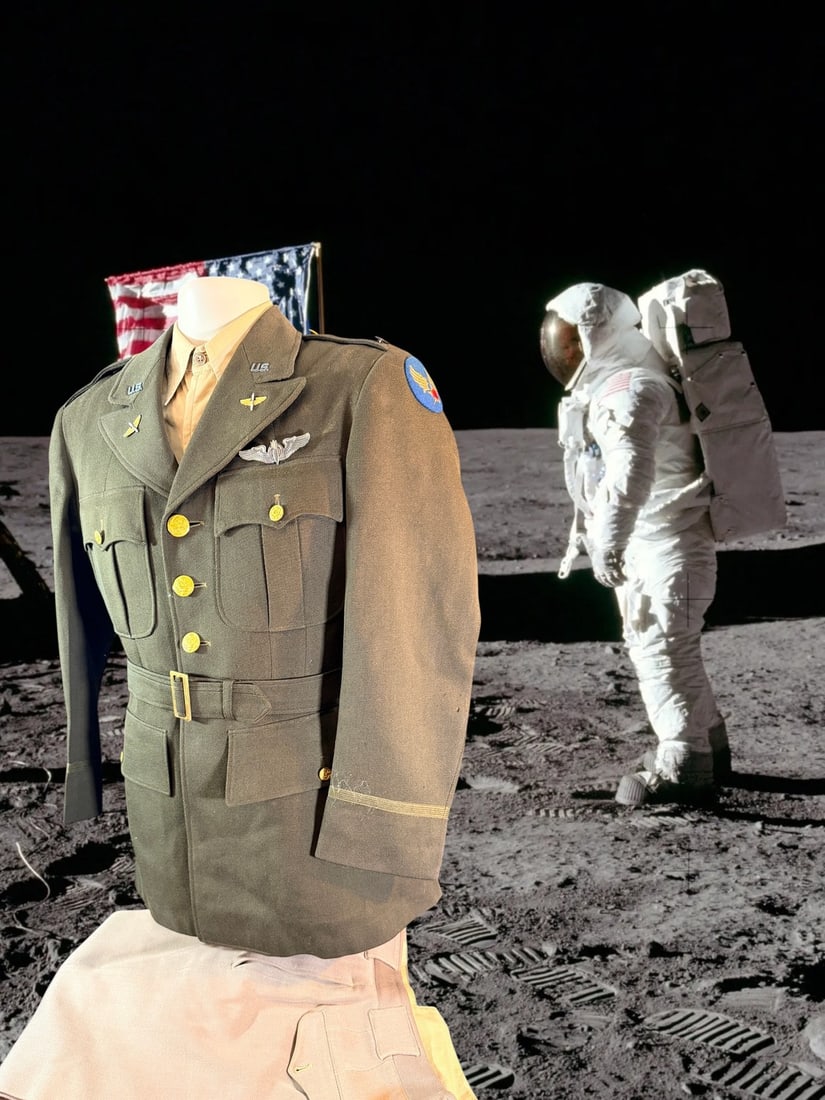
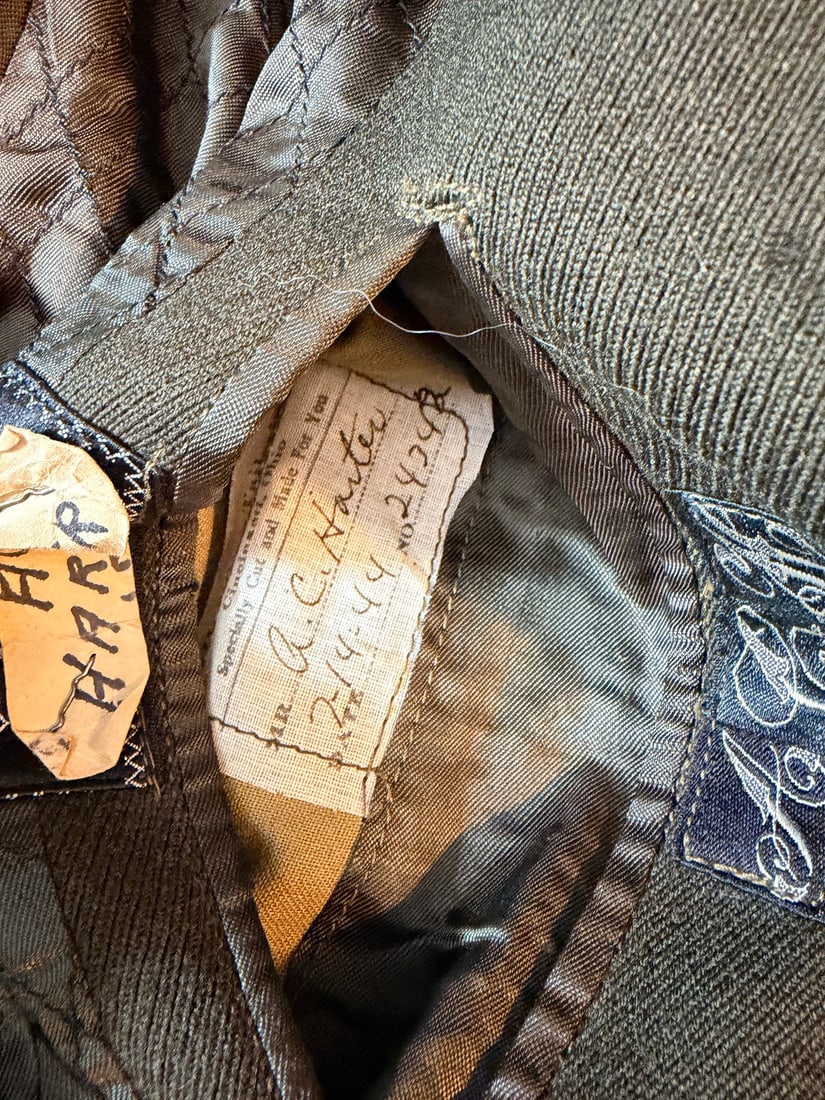
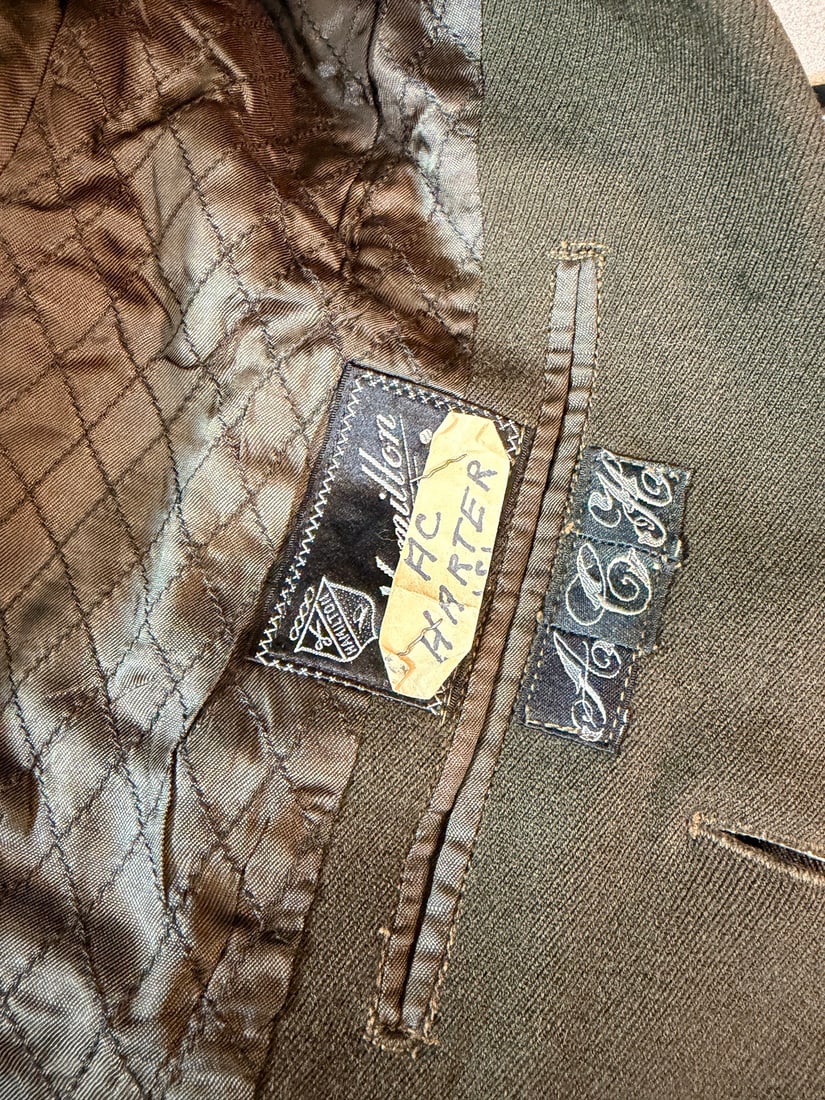
Exceptional named World War II U.S. Army Air Forces officer’s uniform grouping belonging to **Alan C. Harter**, whose wartime aviation service was followed by a significant medical career with NASA during the Apollo era. The group includes Harter’s olive-drab officer’s service coat with matching trousers and shirt, retaining its original insignia and period tailor labels. The coat is identified internally to **"A. C. Harter"** with handwritten service/order information, providing an important direct link to the named wearer.
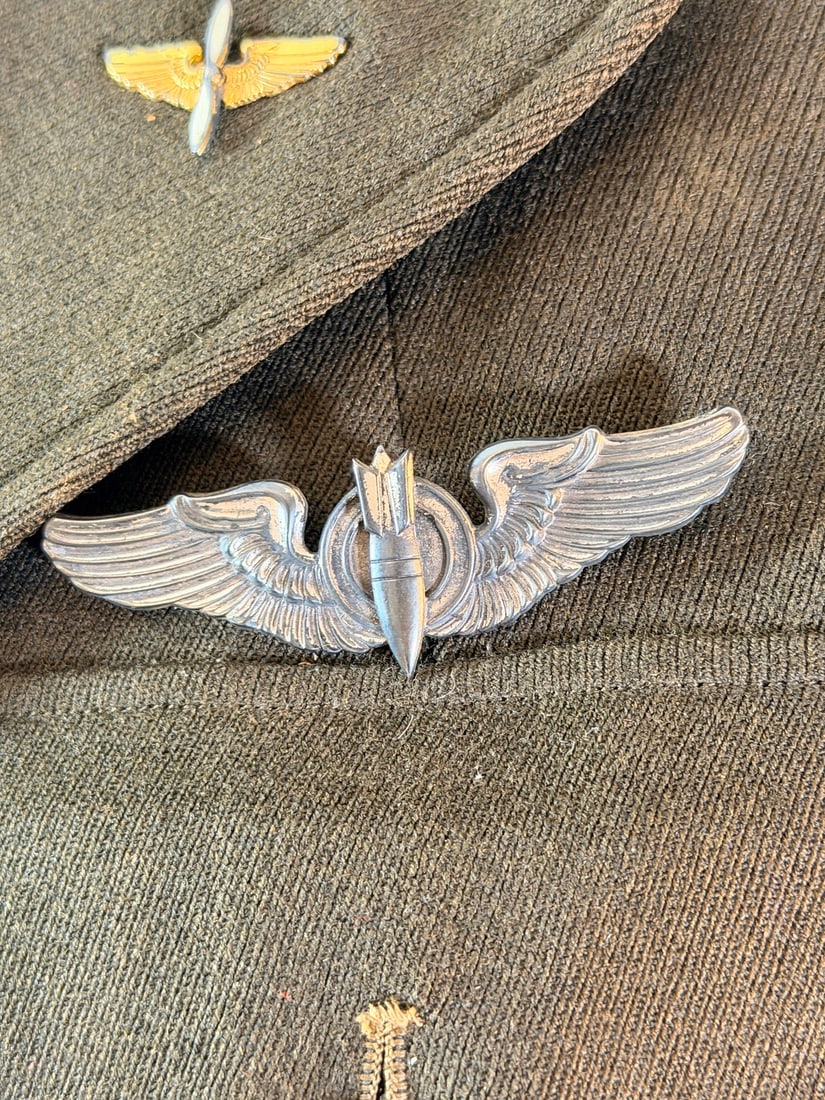
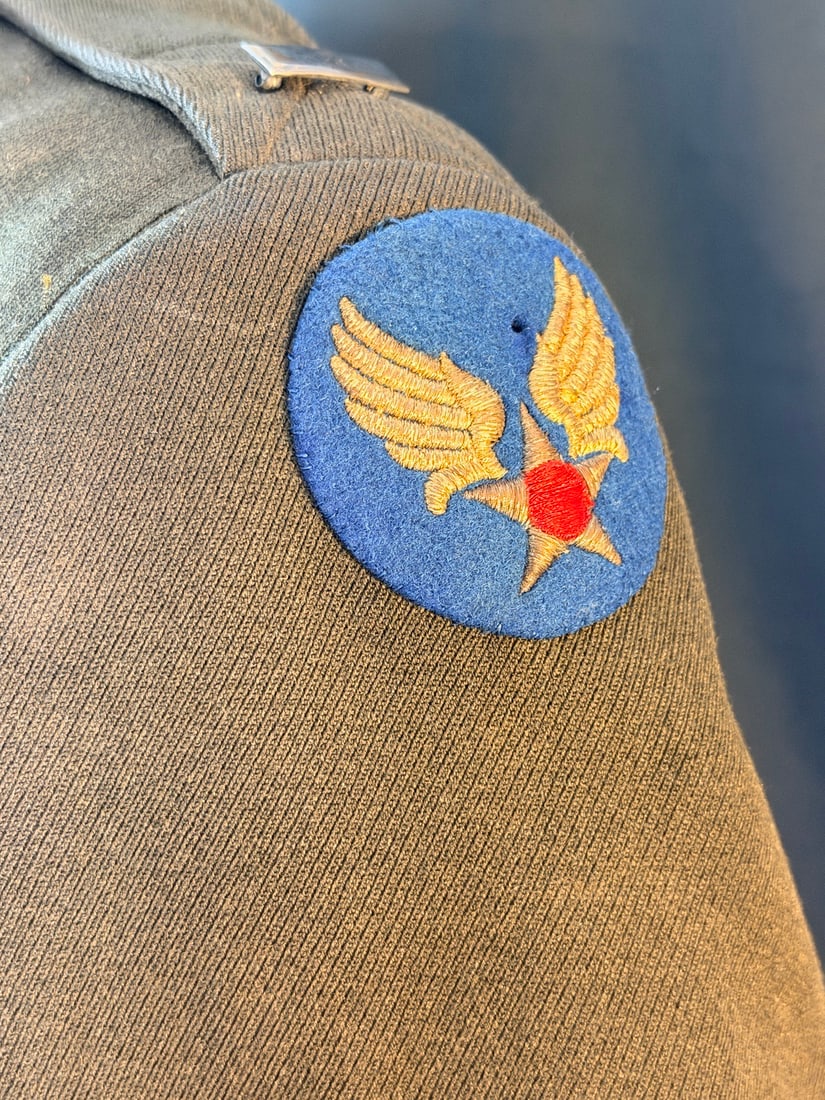
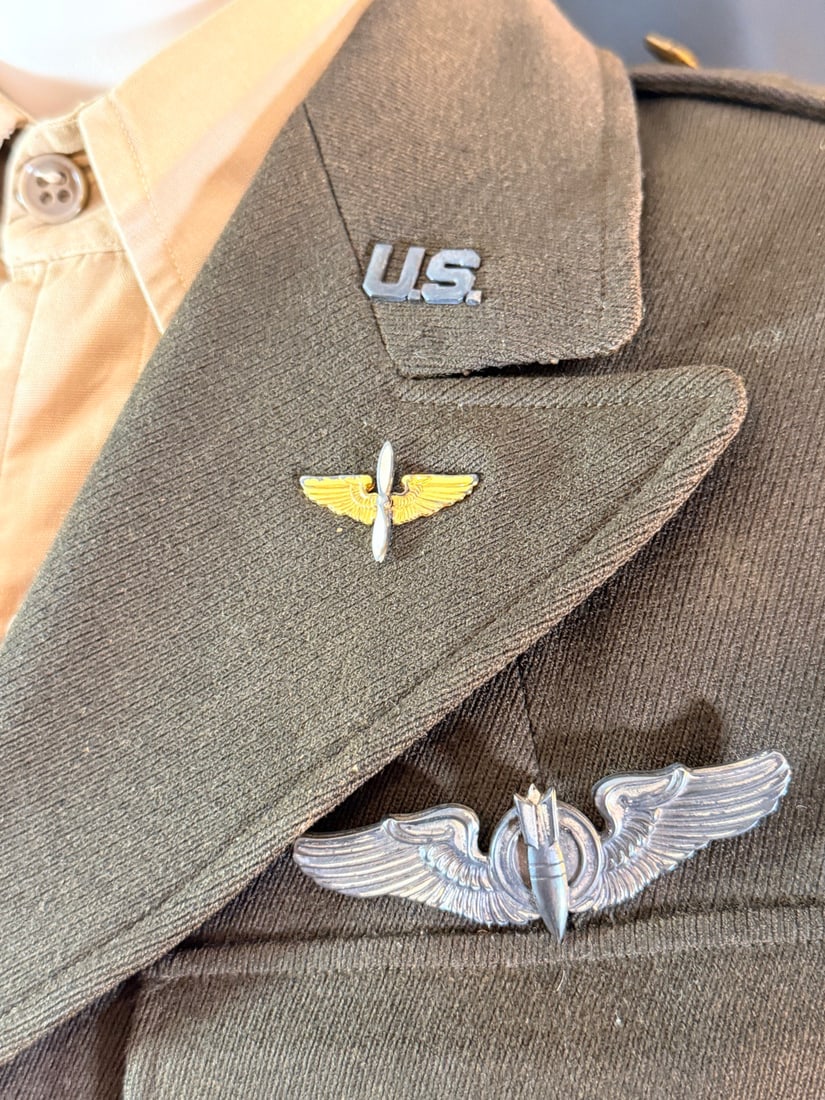
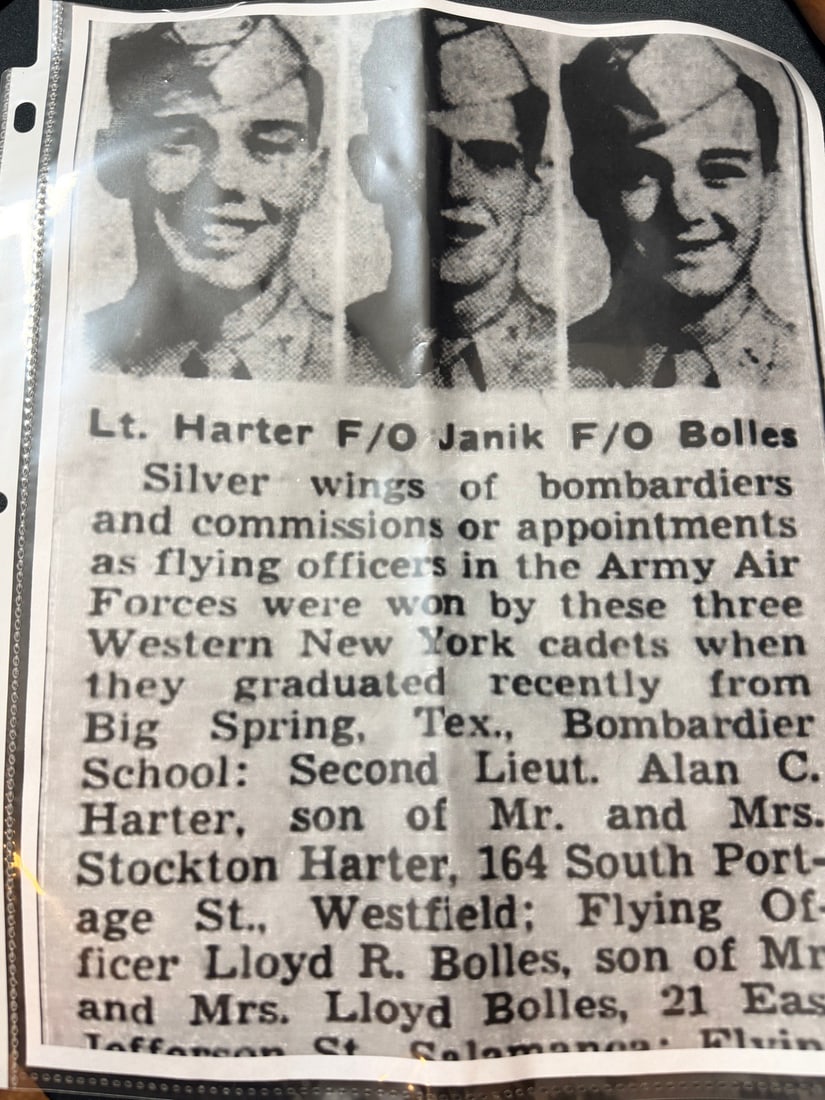
Harter trained during World War II as a **U.S. Army Air Forces bombardier**, and the accompanying period newspaper clipping identifies **Second Lieutenant Alan C. Harter of Westfield, New York**, as a graduate of the **Big Spring, Texas Bombardier School**, where he received the silver wings of a bombardier and his commission. The uniform reflects that wartime aviation background, displaying U.S. collar insignia, Air Corps aviation branch devices, the blue-and-gold **Army Air Forces shoulder sleeve insignia**, and a prominent silver **Bombardier Badge** consisting of spread wings centered by the characteristic falling bomb device. The coat also retains rank and service detailing appropriate to an Army Air Forces officer.
What makes this grouping especially compelling is Harter’s remarkable second career in the American space program. **Dr. Alan C. Harter later became Chief of Medical Services at NASA’s Kennedy Space Center**, placing him directly within the operational medical structure supporting the Apollo program. NASA records list him as KSC’s chief medical officer/Chief of Medical Services during the Apollo period, and contemporary accounts document his participation in astronaut medical evaluation and launch-site medical operations. In October 1968, Harter headed a medical team that examined **Apollo 7 astronauts Walter Schirra, Donn Eisele, and Walter Cunningham** prior to the first crewed Apollo mission, with the crew declared physically fit for flight.
Harter also had a direct and somber connection to one of the defining events in NASA history: the **Apollo 1 fire of January 27, 1967**. NASA’s official Apollo history records that physicians **G. Fred Kelly and Alan C. Harter** reached the spacecraft after the hatch had been opened and participated in the immediate medical response. NASA accident documentation further records Harter’s involvement in the postmortem examinations of astronauts **Virgil "Gus" Grissom, Edward White II, and Roger Chaffee**, including oversight of the removal and examination of the crew’s clothing and personal effects as part of the formal investigation.
Harter remained an important medical figure at Kennedy Space Center into the later Apollo program. NASA material identifies him as **Chief of KSC’s Medical Services Office** during Apollo 15 preparations, where he was involved with illness surveillance and health-protection procedures for personnel in contact with flight crews. He is also specifically identified in Apollo 14 launch-processing records as **Dr. Alan C. Harter, KSC’s Chief of Medical Services**, alongside senior NASA flight-crew and medical personnel including Deke Slayton and Dr. Charles Berry. :chatgpt-content-reference{index="2"} NASA’s own historical index further preserves contemporary KSC coverage of Harter’s work, including a 1968 feature describing how he "wears 2 hats" in his duties and a 1969 feature on his work in Venezuela.
The uniform itself remains an impressive and historically resonant artifact of Harter’s earlier military aviation career. The officer’s coat retains its original **bombardier wings**, aviation branch insignia, U.S. collar devices, Army Air Forces shoulder patch, and period tailor labels, while the accompanying shirt and trousers further complete the presentation. The military service material is particularly notable when viewed in the context of Harter’s later career: he progressed from wartime bombardier training in the Army Air Forces to becoming one of the physicians entrusted with the health and safety of America’s astronauts during the race to the Moon.
A compelling named grouping bridging **two defining eras of American aerospace history – World War II military aviation and the Apollo space program**. Its association with a documented USAAF bombardier who later served as a senior NASA physician at Kennedy Space Center, participated in Apollo astronaut medical support, and was involved in the official medical response to the Apollo 1 tragedy gives the uniform significance well beyond that of a standard named Army Air Forces officer’s set. An outstanding collection centerpiece for the specialist in **USAAF aviation, bombardiers, NASA, Apollo, aerospace medicine, Kennedy Space Center, or the history of American flight**.
Share this lot: