Fall 2026 Militaria and Aviation Auction
Lot 314:
Description
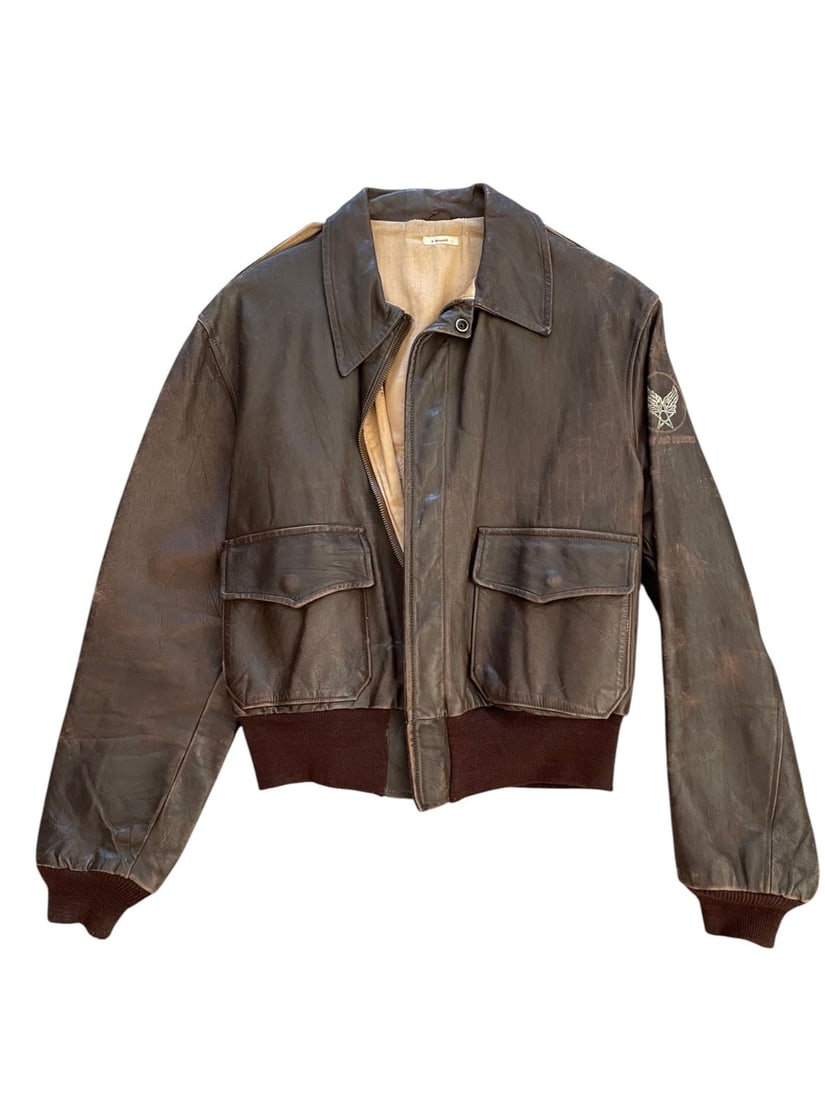
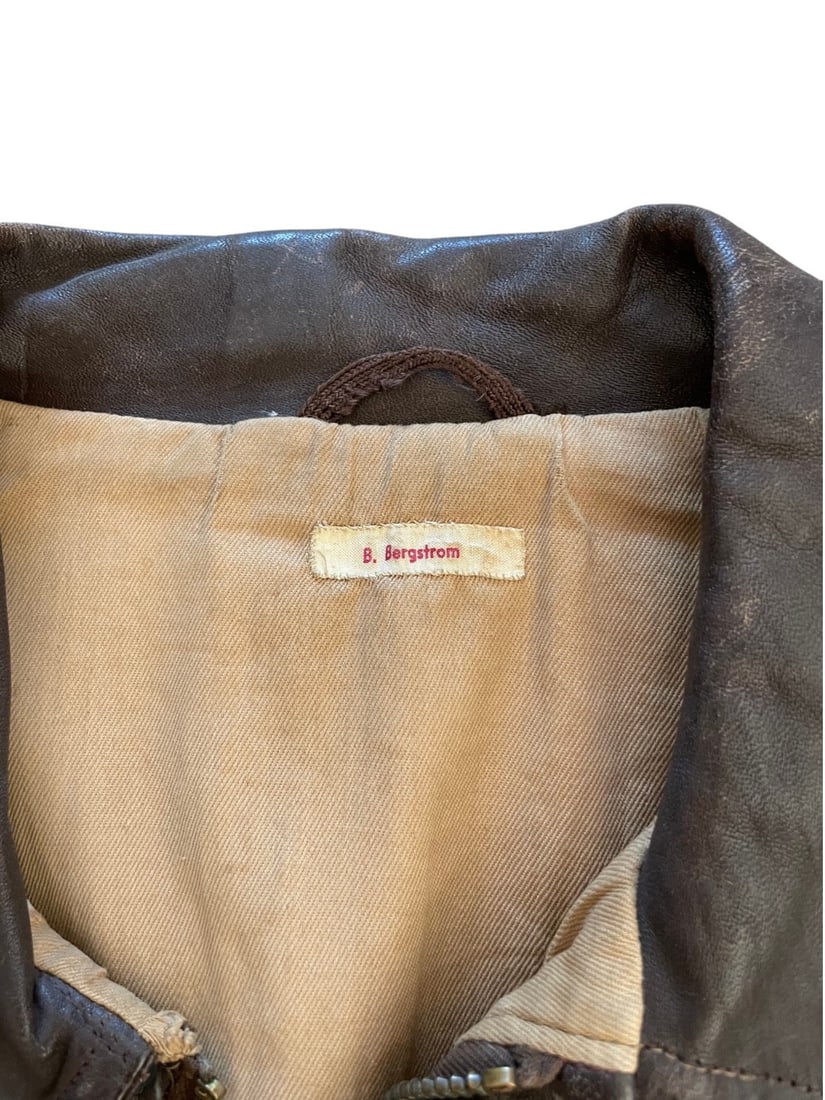
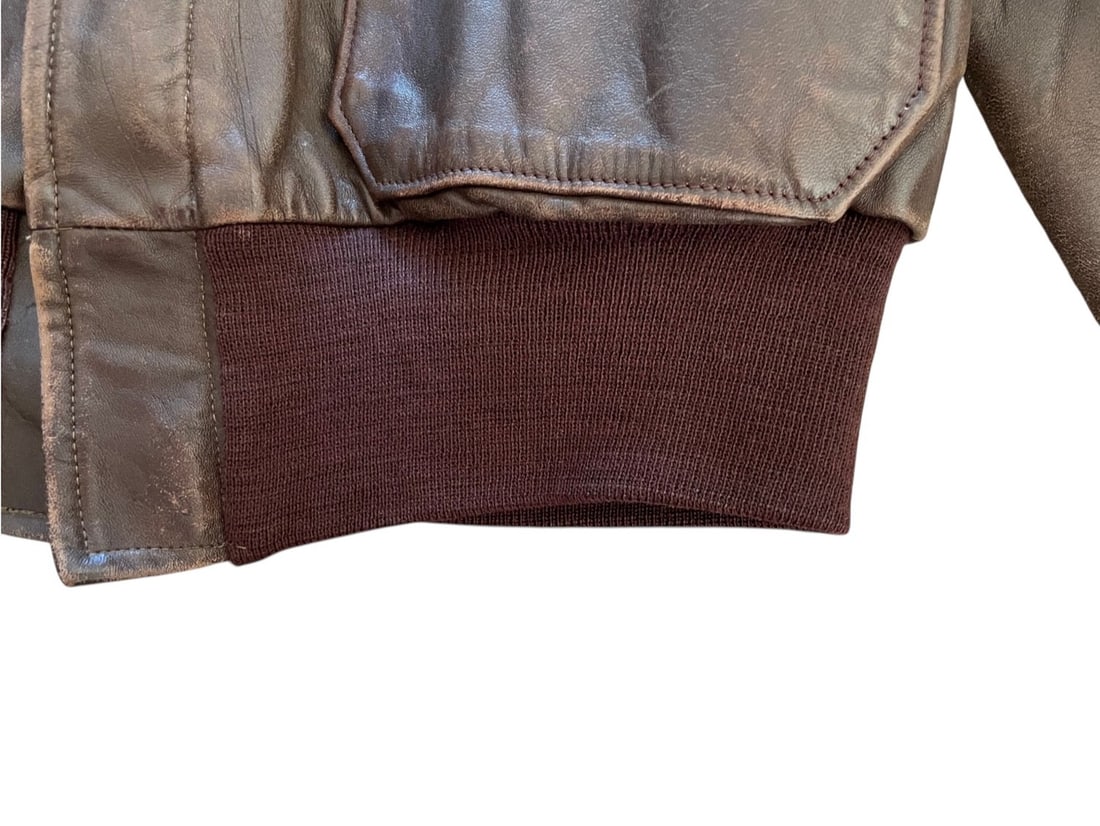
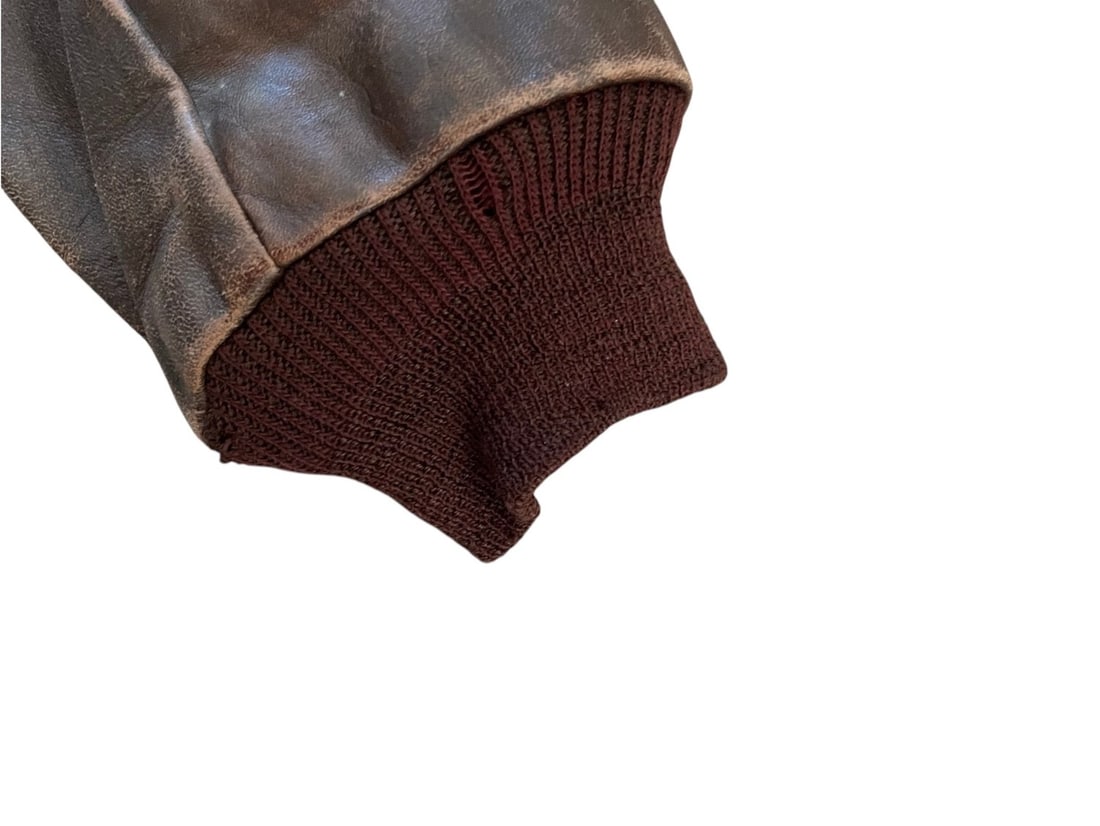
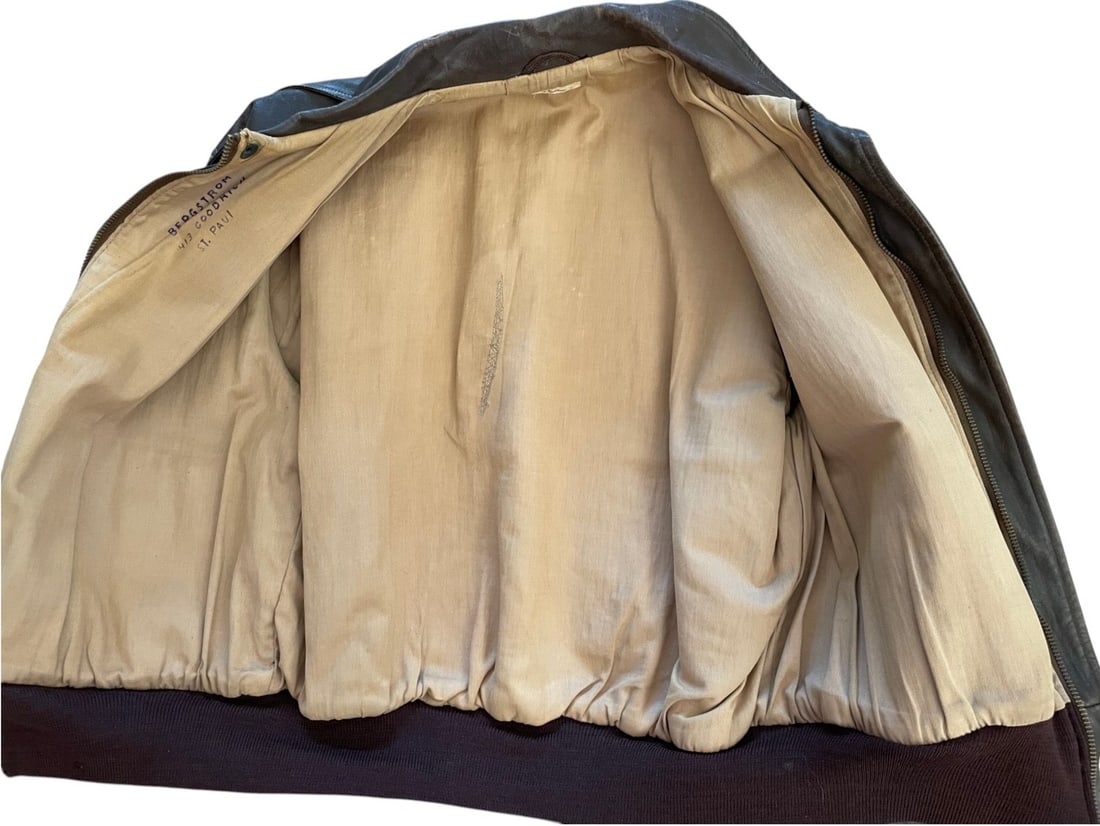
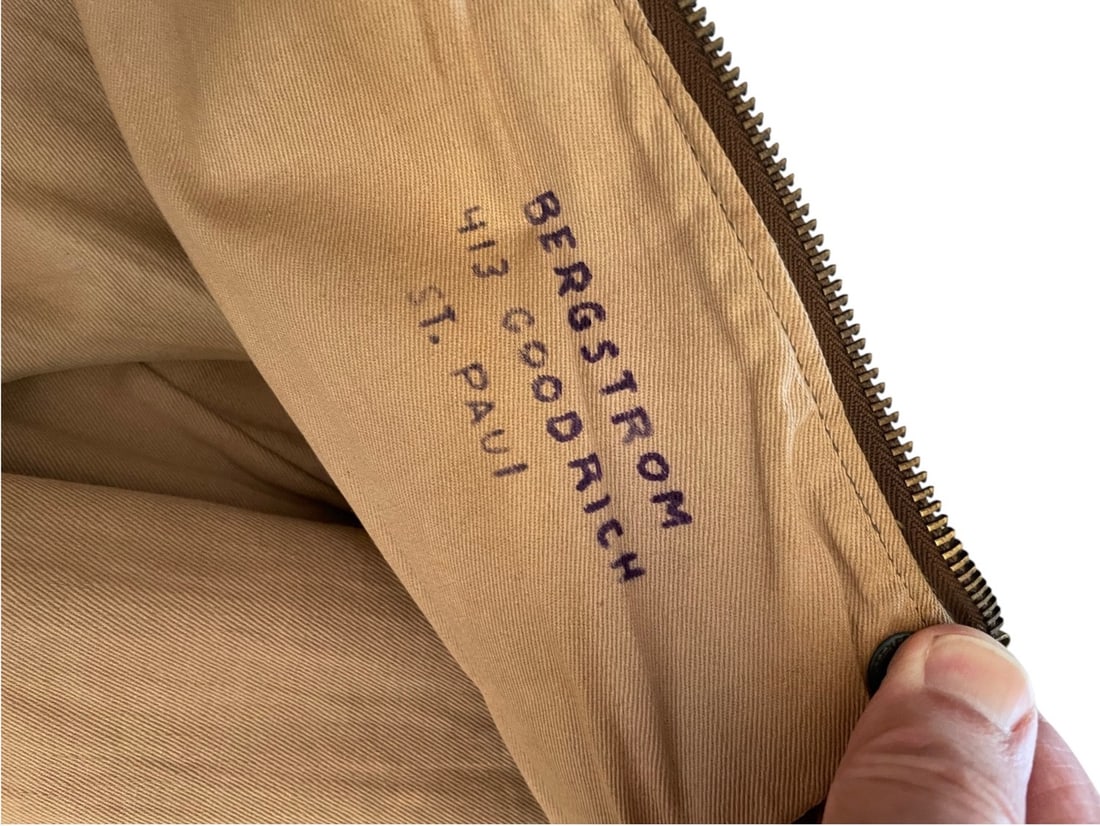
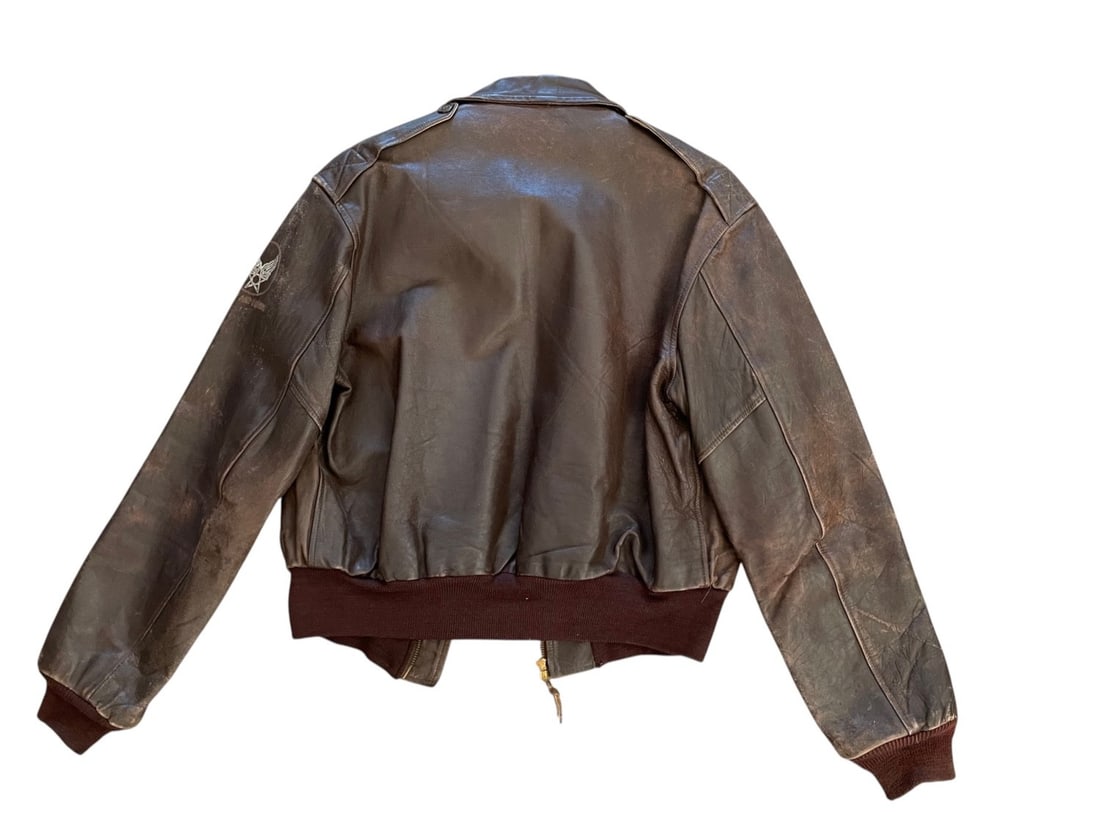
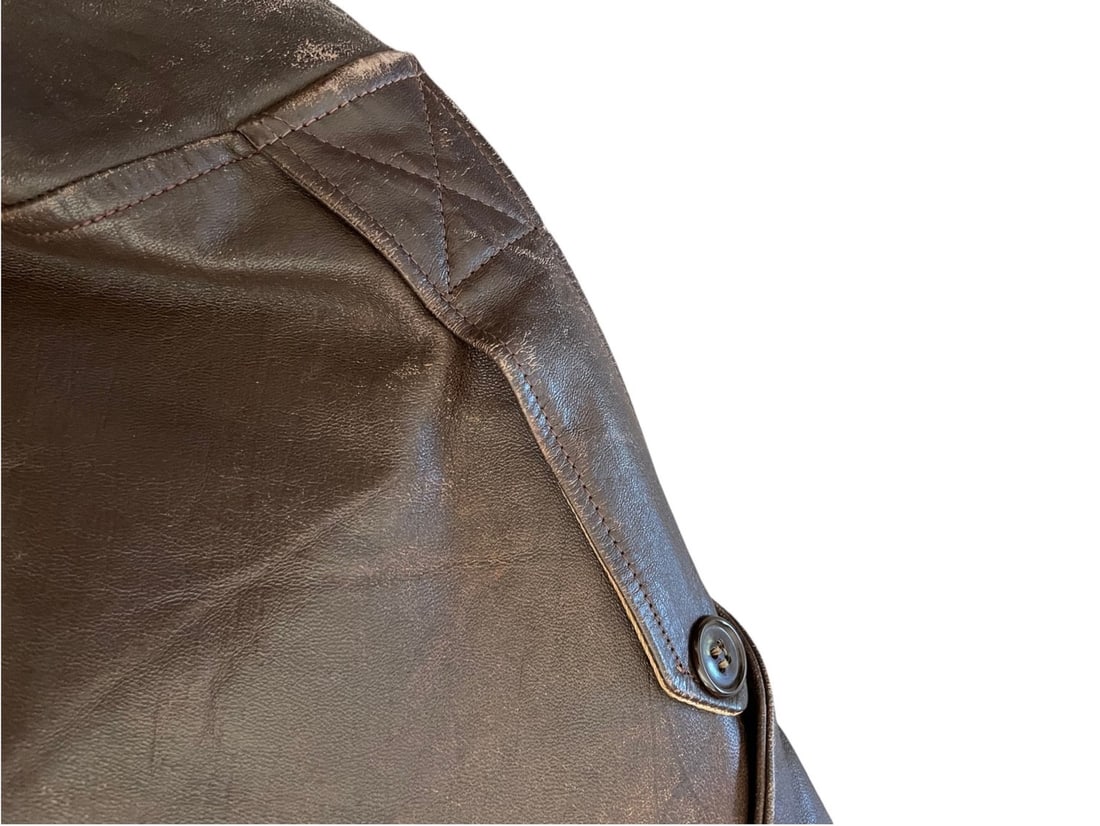
WWII USAAF Australian-Made Type A-2 Leather Flight Jacket – Named. Scarce and highly appealing WWII U.S. Army Air Forces leather flight jacket identified to **"B. Bergstrom"**, retaining a period name tape sewn into the lining and additional hand-applied identification reading **"BERGSTROM PAUL."** The jacket is constructed in the general A-2 pattern, with dark brown leather, knit waistband and cuffs, front zipper closure, shoulder epaulets, and large flap-covered patch pockets. Of particular interest, its construction appears consistent with the scarce **Australian-made V505-type flight jackets** produced during WWII for American airmen serving in the Southwest Pacific. Australian-made V505 jackets were procured for U.S. personnel in Australia beginning in 1943 and closely followed the American A-2 pattern, but used locally sourced materials and construction details that can differ from standard U.S.-contract A-2s. Surviving examples are most often associated with **Fifth Air Force personnel operating in Australia, New Guinea, and the Southwest Pacific**.
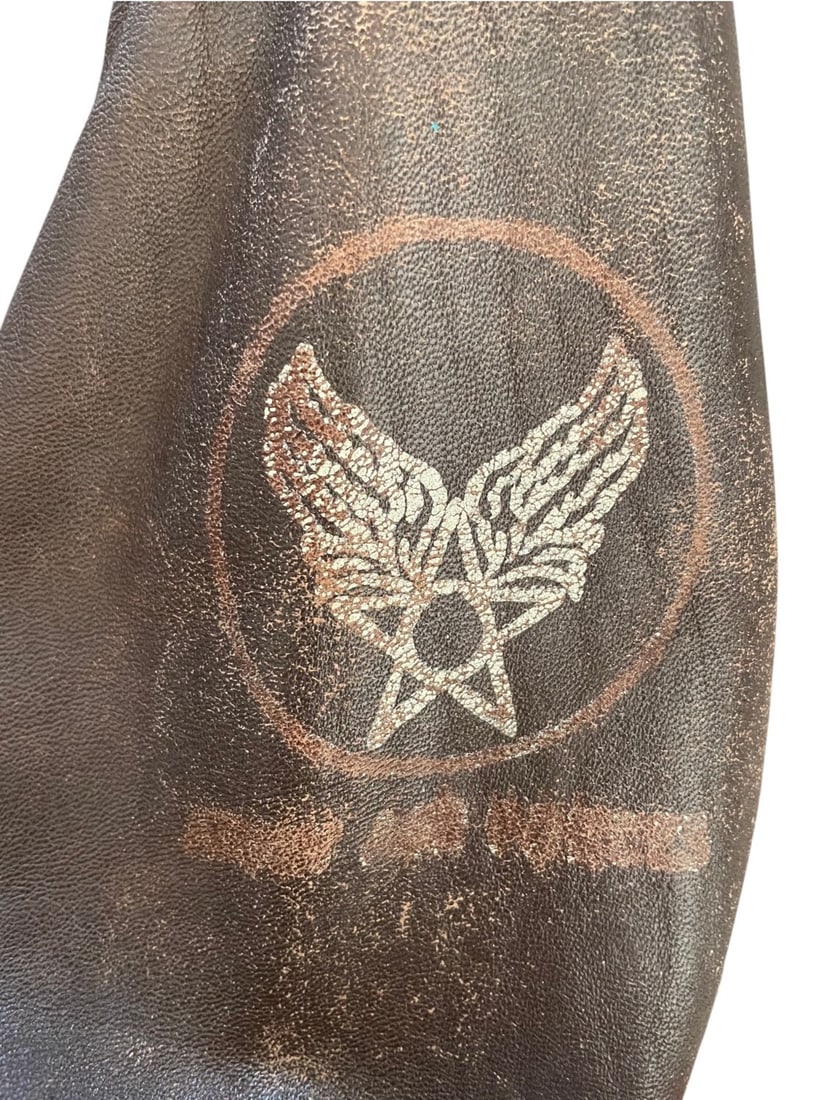
The left sleeve carries a large, hand-painted **U.S. Army Air Forces shoulder insignia**, depicting the familiar winged white star device within a circular field. The painted insignia is heavily worn and faded but remains clearly recognizable, giving the jacket the unmistakable character of a theater-used wartime garment rather than a later dress or commemorative piece. Australian-produced and locally modified flight clothing is particularly associated with American airmen who arrived in the Southwest Pacific before the U.S. supply system could consistently provide standardized flying garments. Contemporary research into the Australian contracts indicates that thousands of locally manufactured flying jackets were produced for U.S. air personnel, including a documented order for more than 3,200 jackets from an Australian contractor.
The surviving identification provides an intriguing avenue for further research. A University of Minnesota directory from the immediate postwar period records **Berton E. Bergstrom** at the exact address **413 Goodrich Avenue, St. Paul, Minnesota**, the same address written inside this jacket. This makes Berton E. Bergstrom a strong candidate for the jacket’s wearer, although his specific wartime unit and aircrew duties have not yet been conclusively established. :chatgpt-content-reference{index="2"} The precise address match substantially strengthens the identification and offers future researchers an excellent starting point for locating enlistment, separation, unit, or Veterans Administration records.
The jacket shows extensive period wear throughout, including surface rubbing, finish loss, creasing, abrasions, and discoloration to the leather, while the brown knit cuffs and waistband remain largely intact. The tan cotton lining shows staining and use consistent with service wear but retains the important identifying name tape and address markings. The overall appearance is one of genuine age and prolonged use, with the painted USAAF insignia exhibiting the same wear and surface aging as the surrounding leather.
Australian-made USAAF flight jackets occupy a particularly interesting niche in WWII aviation collecting because they document the improvisation and local procurement that characterized the early Southwest Pacific air war. American aircrews serving under Fifth Air Force operated from Australia and progressively advanced through New Guinea, the Netherlands East Indies, and the Philippines, often flying under extremely primitive field conditions. An identified, service-worn jacket of this type therefore represents not merely a variation of the famous A-2, but a distinctly Pacific Theater adaptation of American flight clothing.
A compelling WWII USAAF flight jacket with strong evidence of **Australian manufacture, period-painted Army Air Forces insignia, and unusually specific named provenance to B. Bergstrom **. Further military research on Bergstrom may reveal the specific unit and combat history associated with the jacket, making this an especially promising example for the advanced USAAF or Pacific Theater collector.
Share this lot: