Fall 2026 Militaria and Aviation Auction
Lot 343:
Description
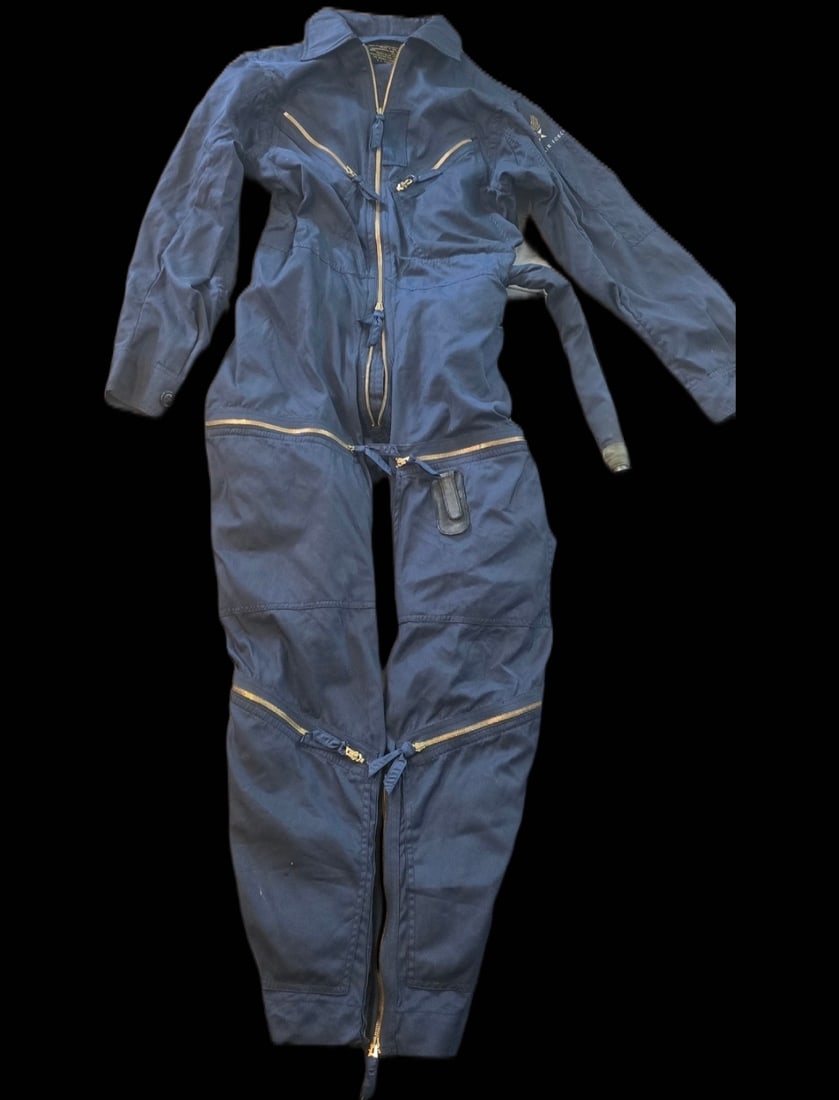
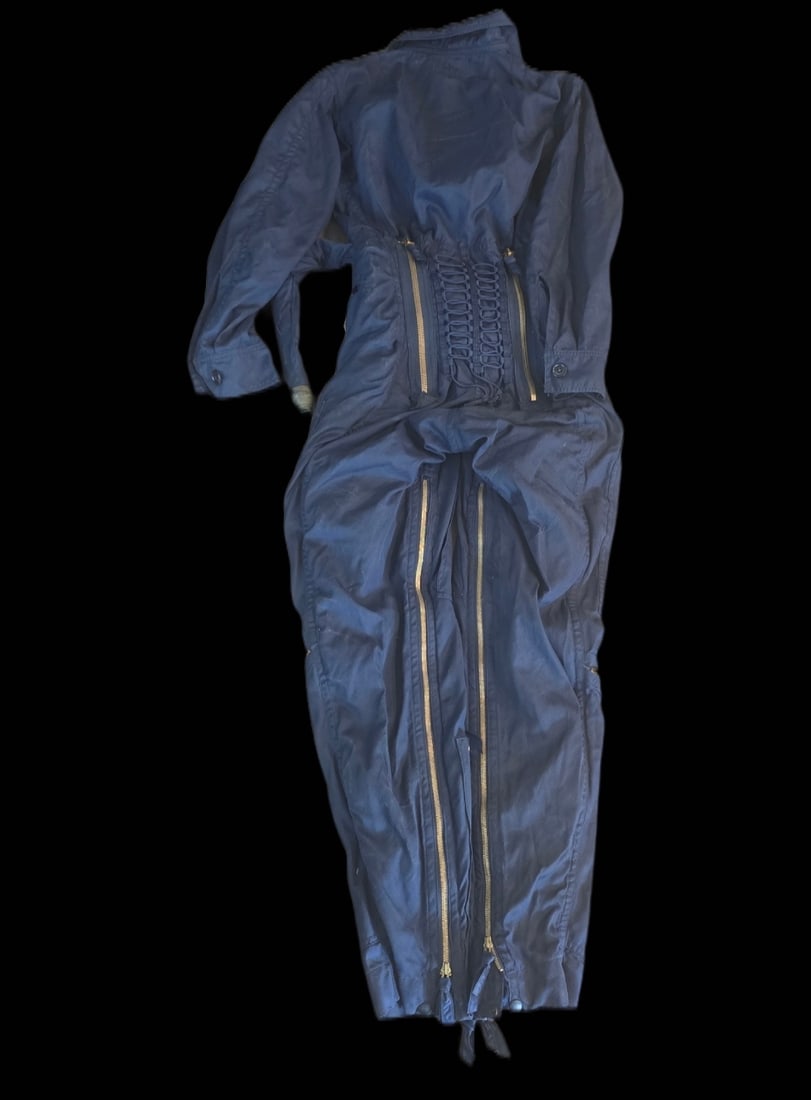
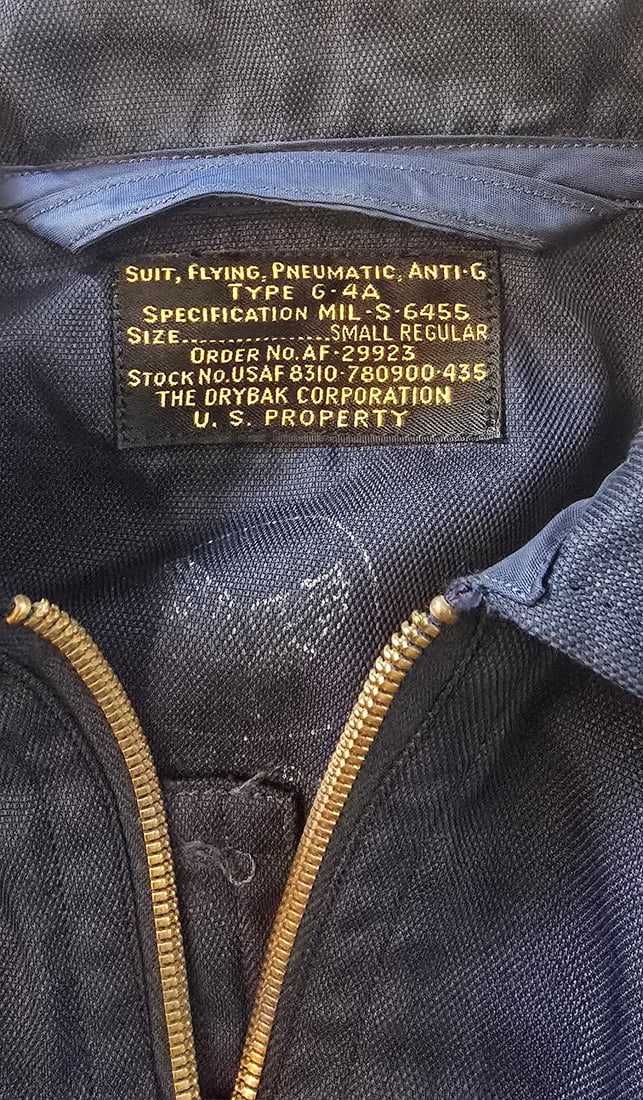
USAF Type G-4A Pneumatic Anti-G Flying Suit by The Drybak Corporation, Specification MIL-S-6455, Order No. AF-29923, Stock No. USAF 8310-780900-435, Size Small Regular, circa 1950-1953. Offered here is a complete, one-piece Korean War-era anti-G flight suit manufactured under United States Air Force contract by The Drybak Corporation. No individual pilot’s name or unit assignment is documented with this example, and no separate published biography has been located; the identifying detail rests entirely in the woven specification label sewn beneath the collar, which reads "Suit, Flying, Pneumatic, Anti-G, Type G-4A, Specification MIL-S-6455, Size Small Regular, Order No. AF-29923, Stock No. USAF 8310-780900-435, The Drybak Corporation, U.S. Property." As such it stands as a well-documented type-example of a scarce and short-lived category of early jet-age flight equipment. The Type G-4A was among the first generation of full one-piece pneumatic anti-G garments rushed into USAF service as swept-wing jet fighters entered combat in the early 1950s. Pilots flying the F-86 Sabre over MiG Alley and in other high-speed, high-G engagements of the Korean War faced a genuine physiological hazard: G-force induced loss of consciousness, or G-LOC, brought on by sustained hard turns and pullouts that pooled blood away from the brain and eyes. The G-4A addressed this danger by integrating pneumatic bladders directly into a form-fitting flight suit, connected via an umbilical air hose and connector to the aircraft’s pressure supply, automatically inflating under G-loading to maintain blood flow and stave off blackout. This bulky, full-body configuration was superseded within only a few years by lighter two-piece anti-G trouser assemblies such as the later CSU-series, making complete surviving G-4A examples increasingly difficult to find. The suit is constructed of dark Air Force blue cotton twill, with a full-length front zipper closure, a pair of brass-toned chest zippers over integrated bladder pockets, and buttoned shirt-style cuffs. A small woven "Air Force" wing/star insignia is stitched to the upper right sleeve. The rear waist shows paired brass zippers flanking a corset-style adjustment lacing for fitting the bladder assembly to the wearer, with long zippered openings running down the backs of both legs to allow the pneumatic sections to expand. A black leather-tabbed pneumatic hose fitting extends from the left hip for connection to the cockpit air supply. The woven maker and specification label at the collar is crisp, fully legible, and shows a faint internal stencil mark just below it. The fabric retains a deep, largely uniform blue color with only light fading, along with minor creasing, a few small surface marks, and handling wear consistent with age and storage; the brass zippers, adjustment lacing, buttons, and pneumatic hose connector all appear present and structurally intact throughout. A scarce and clearly labeled Korean War G-4A anti-G suit, a tangible survivor of the earliest USAF effort to keep jet pilots conscious through the violent maneuvers of the MiG Alley air war.
Share this lot: