Fall 2026 Militaria and Aviation Auction
Lot 346:
Description
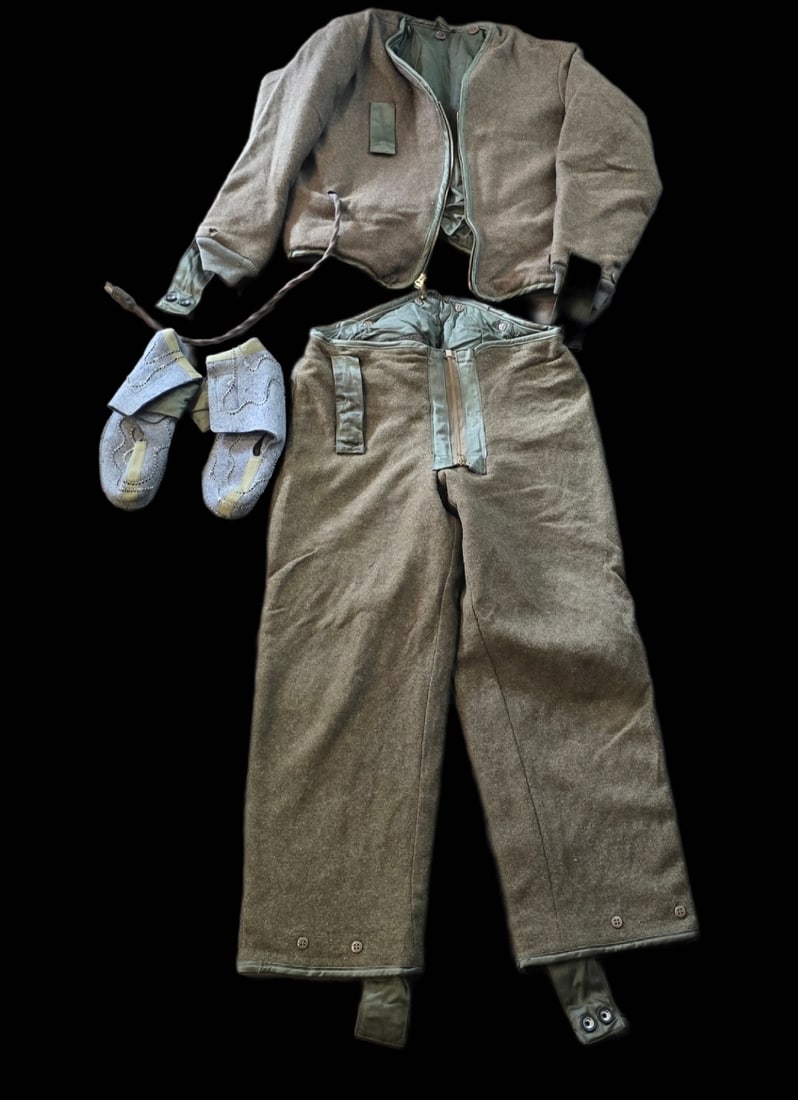
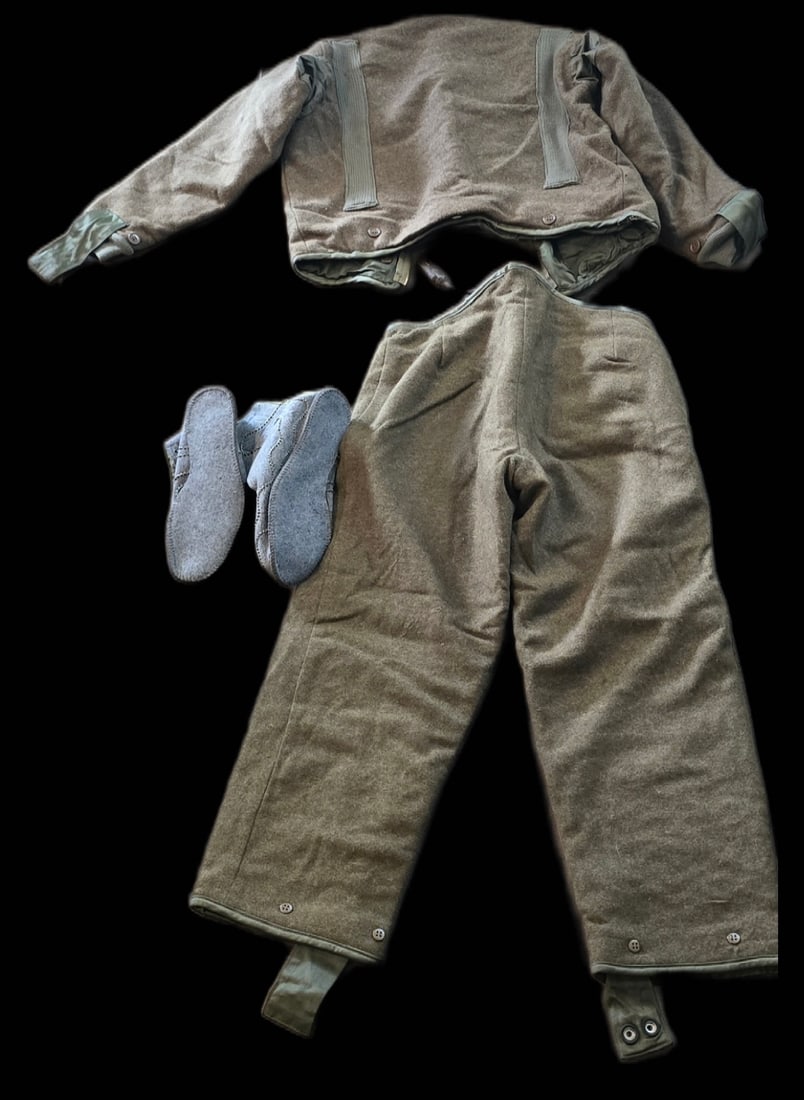
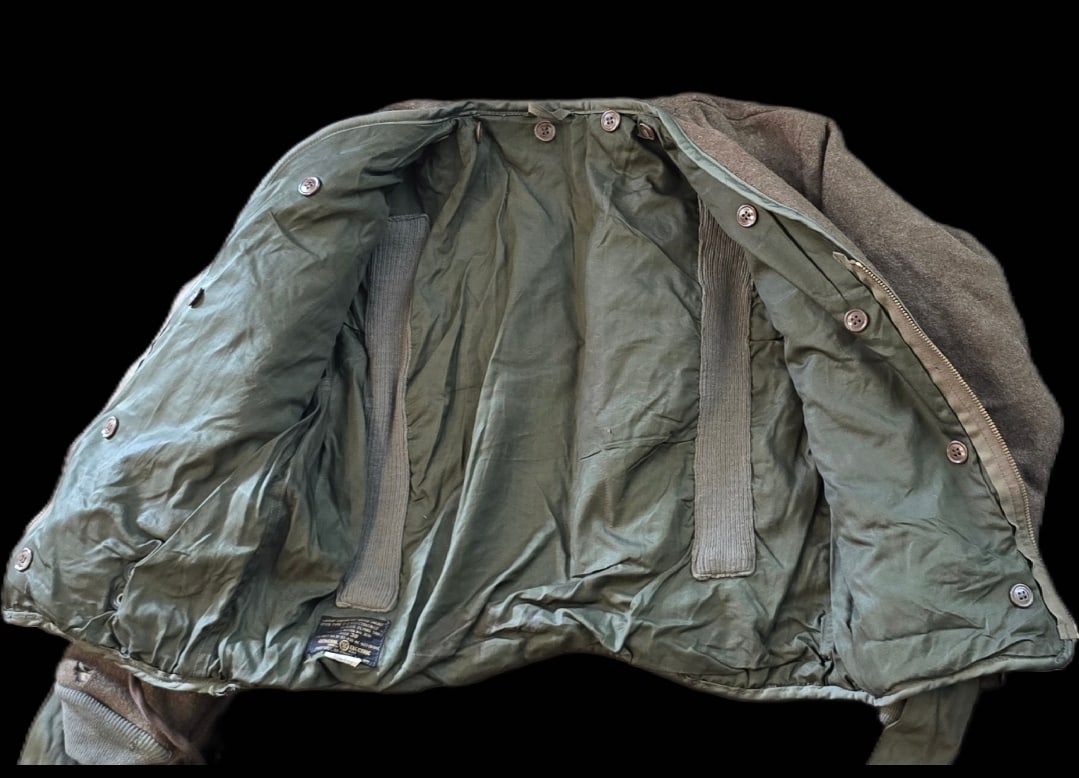
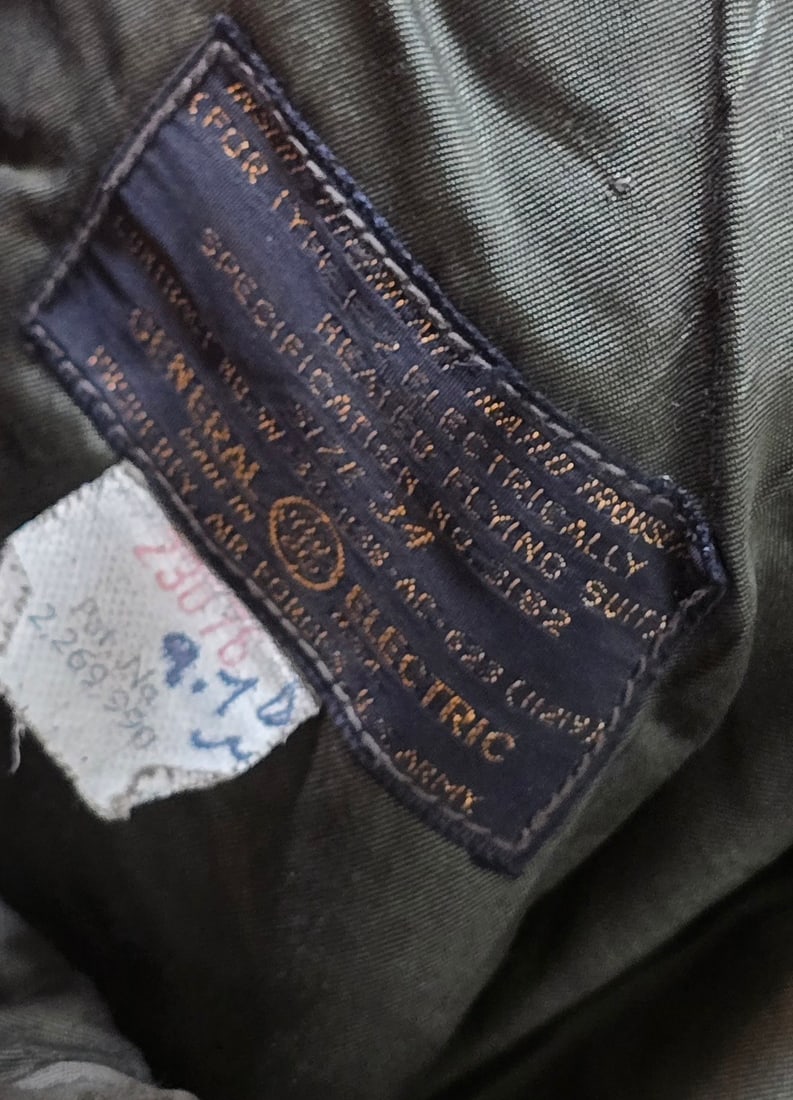
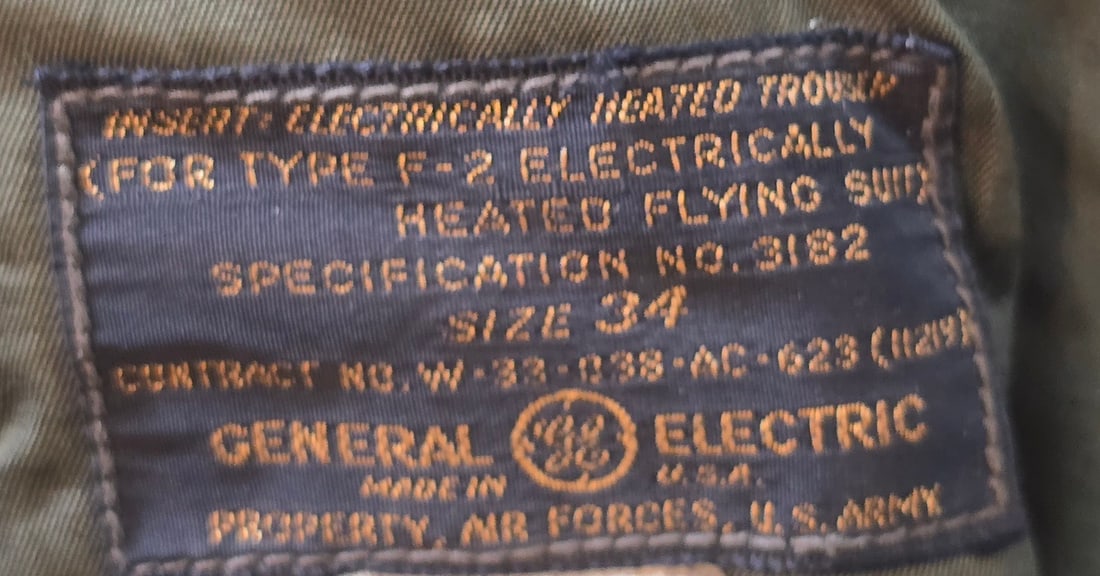
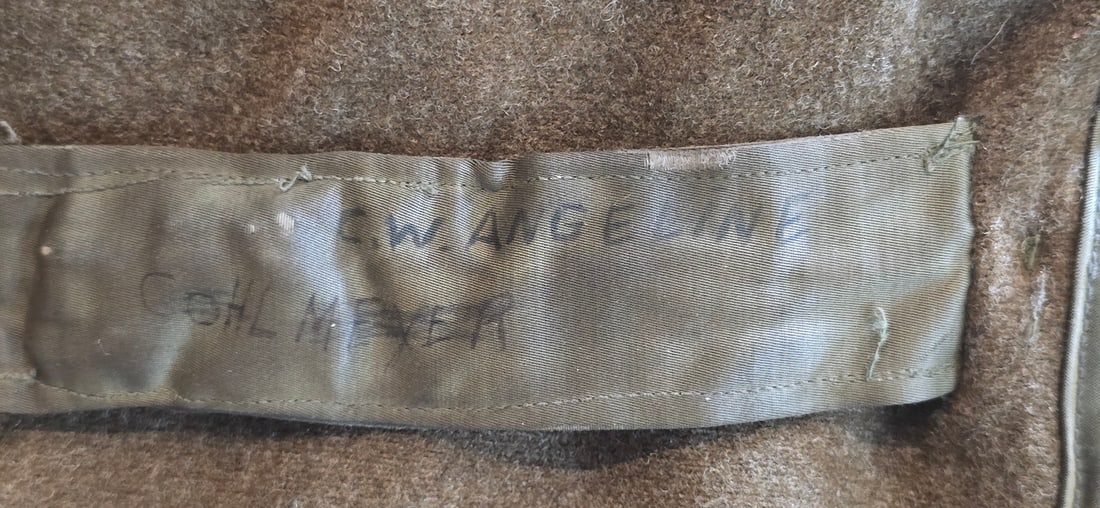
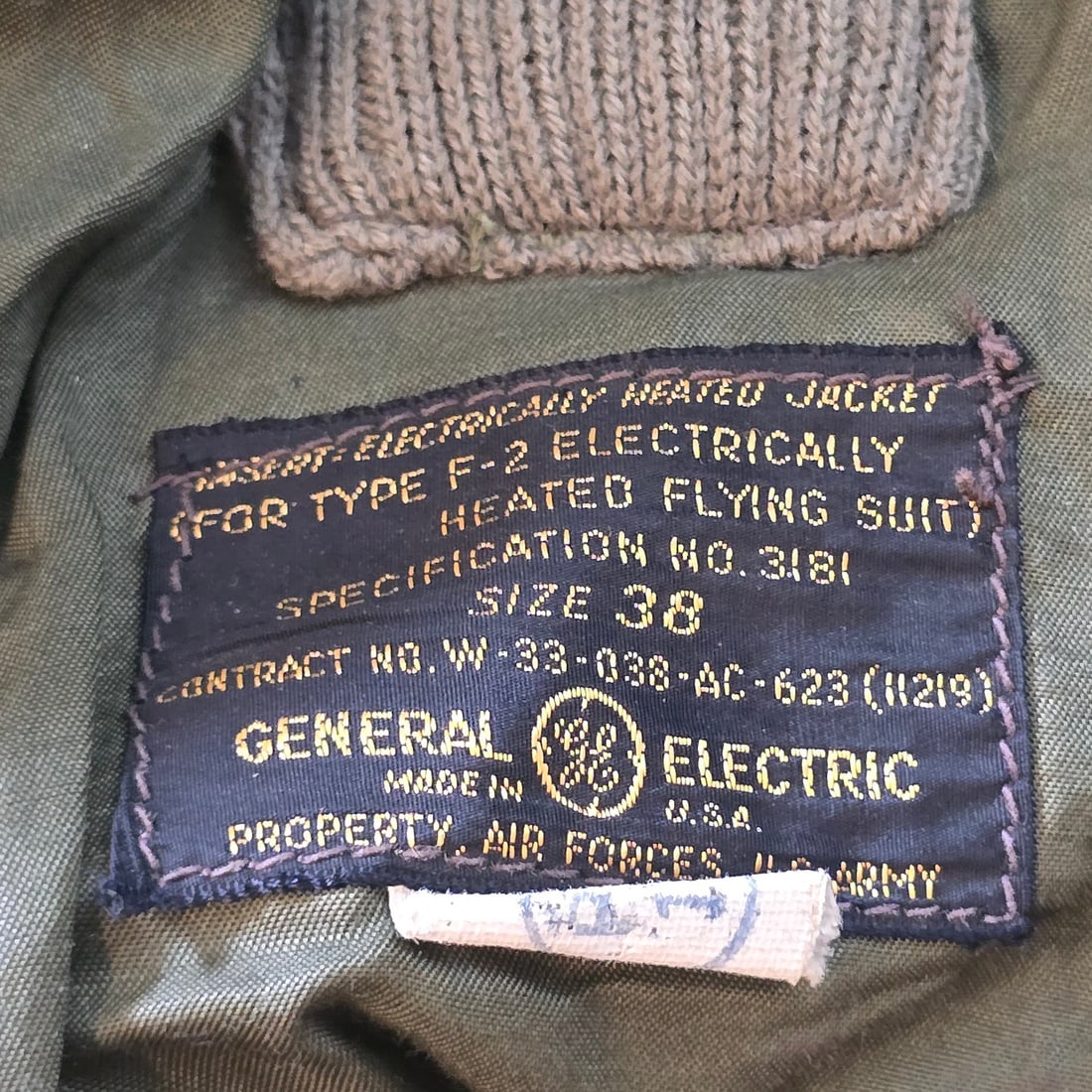
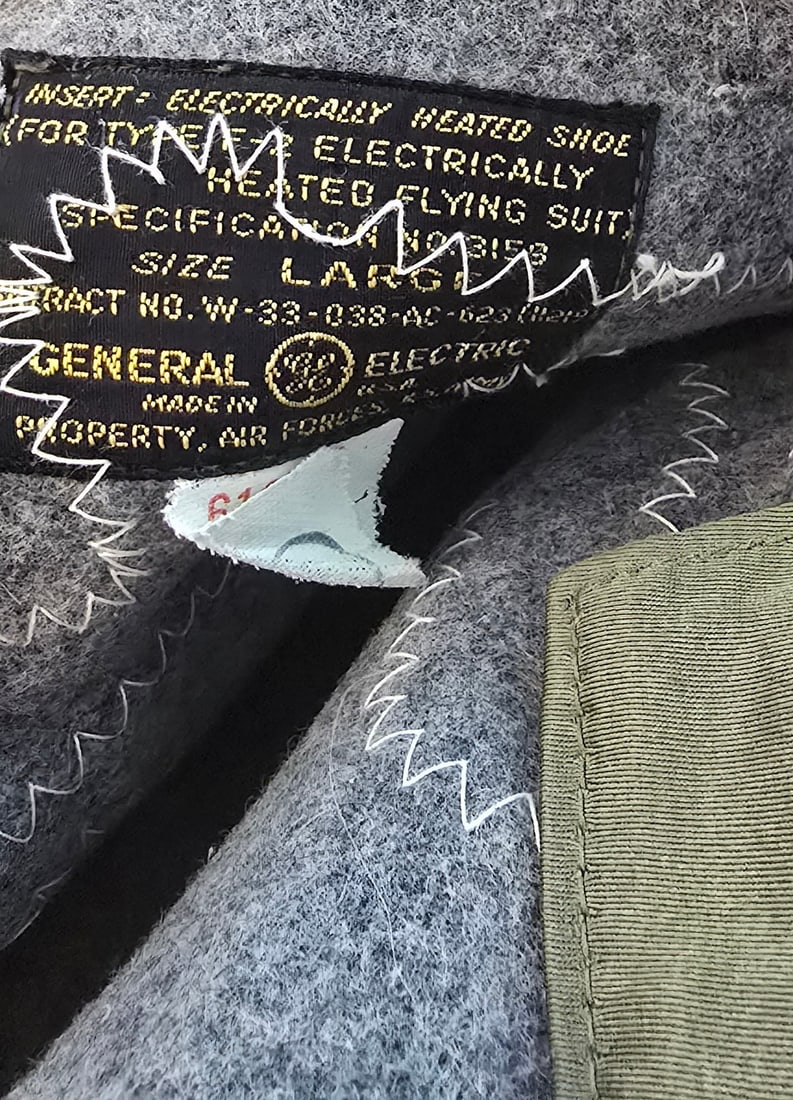
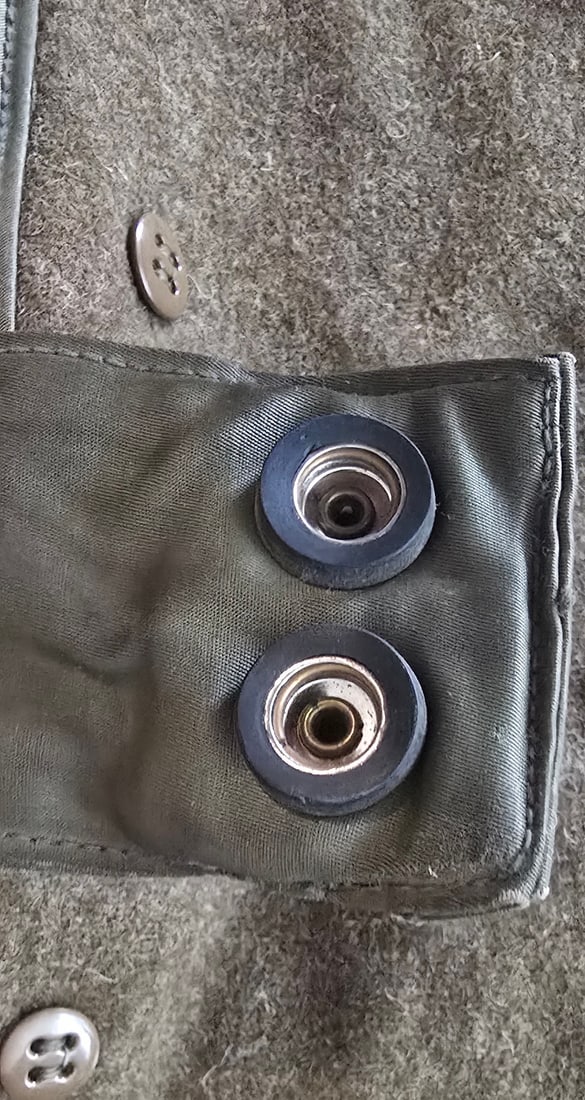
Complete WWII USAAF Type F-2 Electrically Heated Flying Suit Insert Set by General Electric – Jacket (Size 38, Spec No. 3181), Trousers (Size 34, Spec No. 3182) and Shoe Inserts (Size Large, Spec No. 3183), Contract No. W-33-038-AC-623(11219), named on interior tape to C. W. Angeline / Gohl Meyer Offered is a complete three-piece General Electric Type F-2 electrically heated flying suit insert set, retaining all of its component garments: a wool jacket insert, matching wool trouser insert, and a pair of felt shoe inserts, each carrying its own woven GE specification label marked "PROPERTY, AIR FORCES, U.S. ARMY" under the identical government Contract No. W-33-038-AC-623(11219). The jacket is labeled Specification No. 3181, Size 38; the trousers Specification No. 3182, Size 34; and the shoe inserts Specification No. 3183, Size Large – an internally consistent, correctly matched grouping seldom found together. A period-inked name reading "C. W. ANGELINE, " with a secondary notation appearing to read "GOHL MEYER, " is hand-lettered on the interior khaki retention tape of the jacket; no separate biography for either name has been located, and their exact relationship to the suit has not been established. Standardized by the U.S. Army Air Forces in August 1943, the Type F-2 electrically heated suit was engineered by General Electric in partnership with Lion Apparel to correct the chronic failures of the earlier one-piece F-1 and E-1 heated suits, whose single continuous circuits could leave an airman without heat entirely if any one section of wiring failed. The F-2’s modular construction – separate jacket, trouser, and shoe inserts wired in parallel through snap-type electrical connectors – allowed heating to be maintained in the remaining components even if one circuit was damaged, a meaningful safety improvement for heavy bomber crews. Waist gunners, tail gunners, and turret operators aboard unpressurized B-17 Flying Fortresses and B-24 Liberators depended on suits of this type to survive missions at altitudes where ambient temperatures could plunge to roughly -30 degreesF, conditions in which unprotected exposure could incapacitate a crewman within minutes. The surviving wiring, connectors, and matched labeling on this set make it a instructive, hands-on example of the equipment that stood between bomber crews and frostbite over Europe and the Pacific. The jacket insert is constructed of olive drab wool blanket-weight material over a cotton/rayon lining, retaining its wiring harness, cloth-covered leads, and rubberized snap connectors at cuffs and body, with its woven GE data label and a small paper inspection tag still stitched inside near the hem. The trouser insert is of matching wool construction with a zip-front closure, waist adjustment tabs, buttoned cuff straps, and its own woven Spec 3182 label, along with a partial paper inspection tag. The pair of shoe inserts is fashioned from grey felt with quilted stitch patterning and its own wiring lead exiting for connection into the trouser circuit, each carrying a woven GE label and a fragmentary paper inspection tag. Condition throughout is very good to excellent for the type: the wool components show minimal to no moth damage, with clean, tightly woven fabric and crisp, fully legible specification labeling on all three pieces. The knitted cuffs, snap connectors, and wiring runs appear intact, with only light storage creasing and age-appropriate wear evident; electrical function has not been tested. This genuinely complete and named example of a scarce, often incomplete USAAF cold-weather electrical system brings together its three matched components and inked wartime provenance to stand as a standout piece for any high-altitude flying gear or bomber crew equipment collection.
Share this lot: