Fall 2026 Militaria and Aviation Auction
Lot 413:
Description
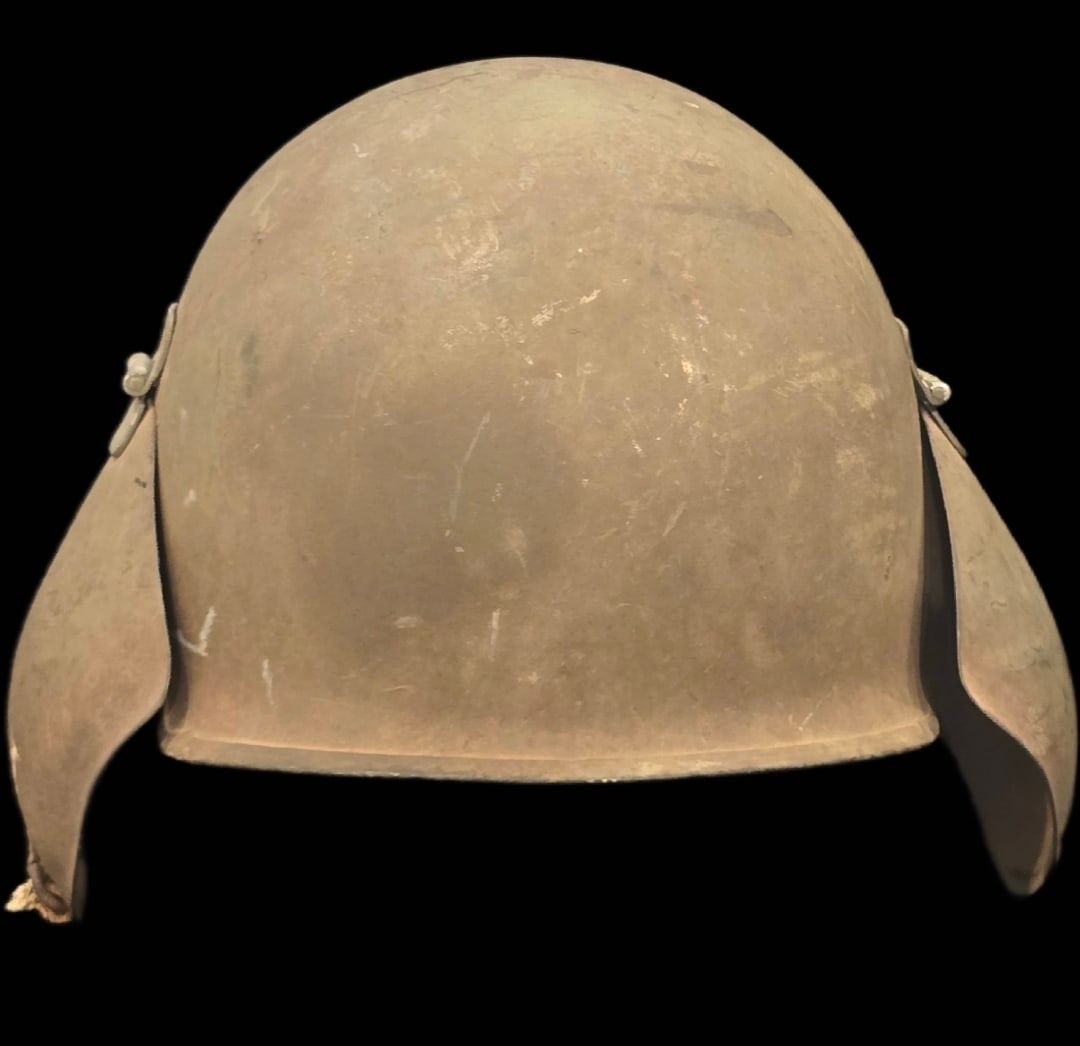
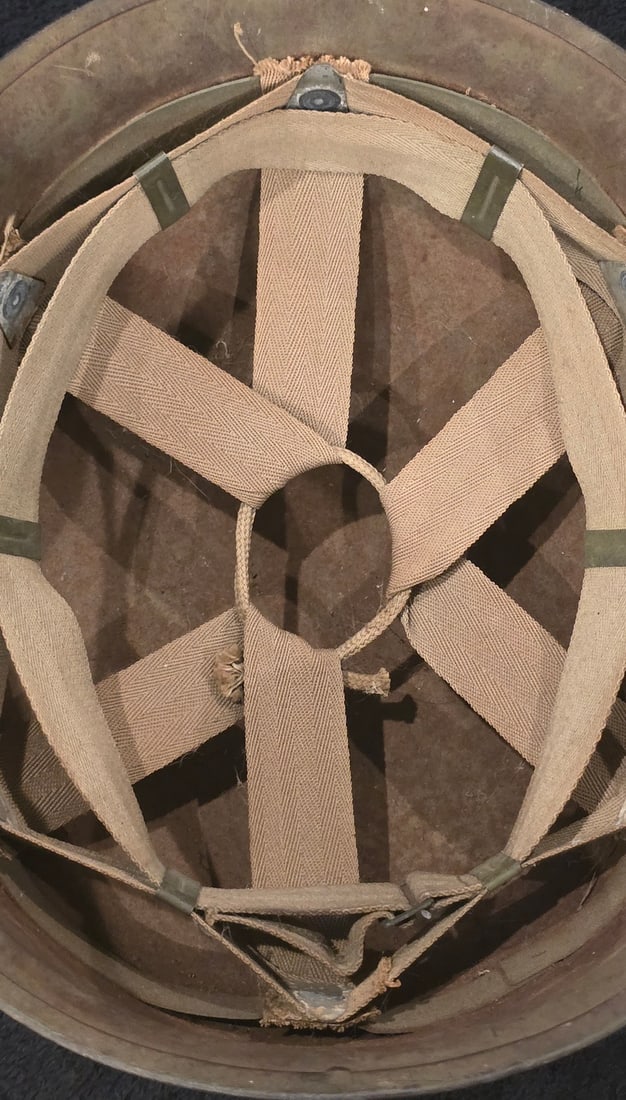
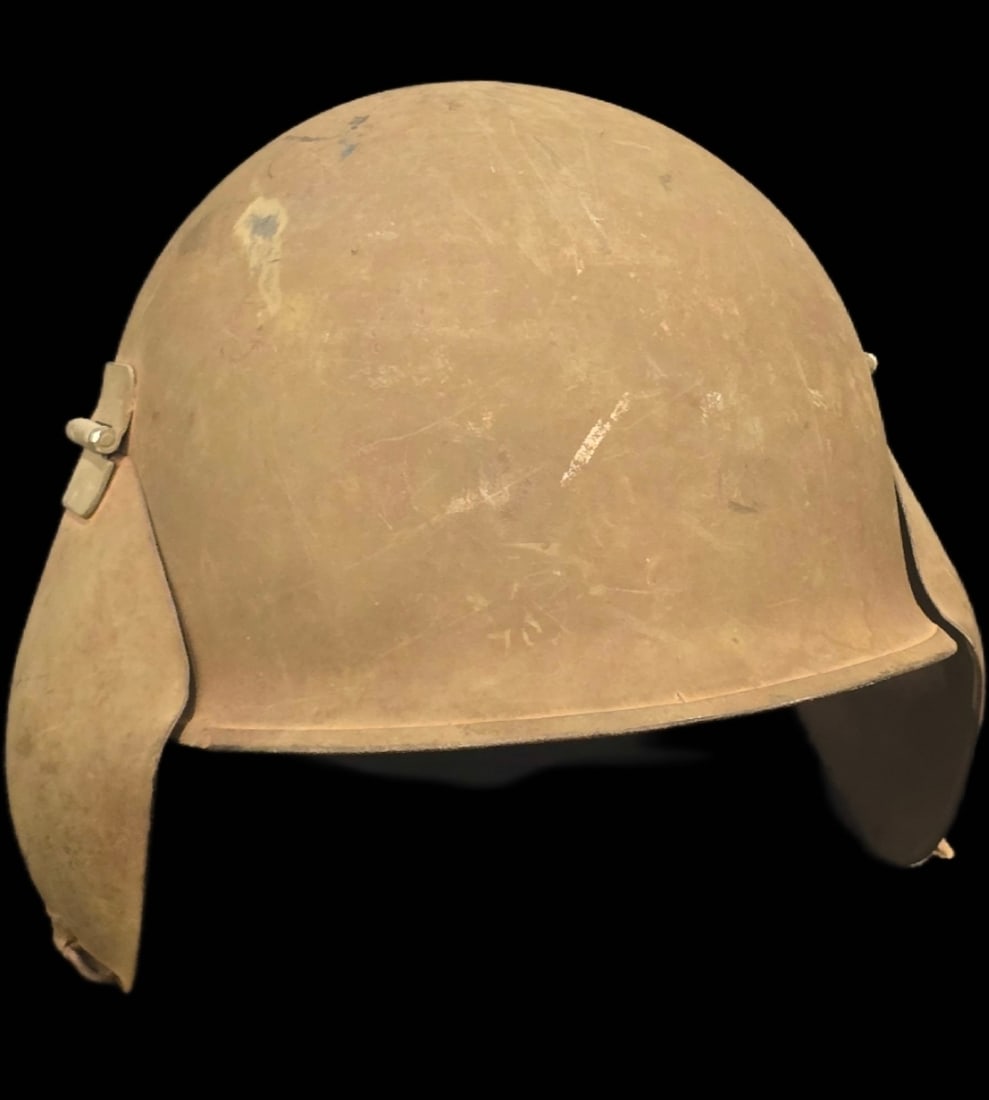
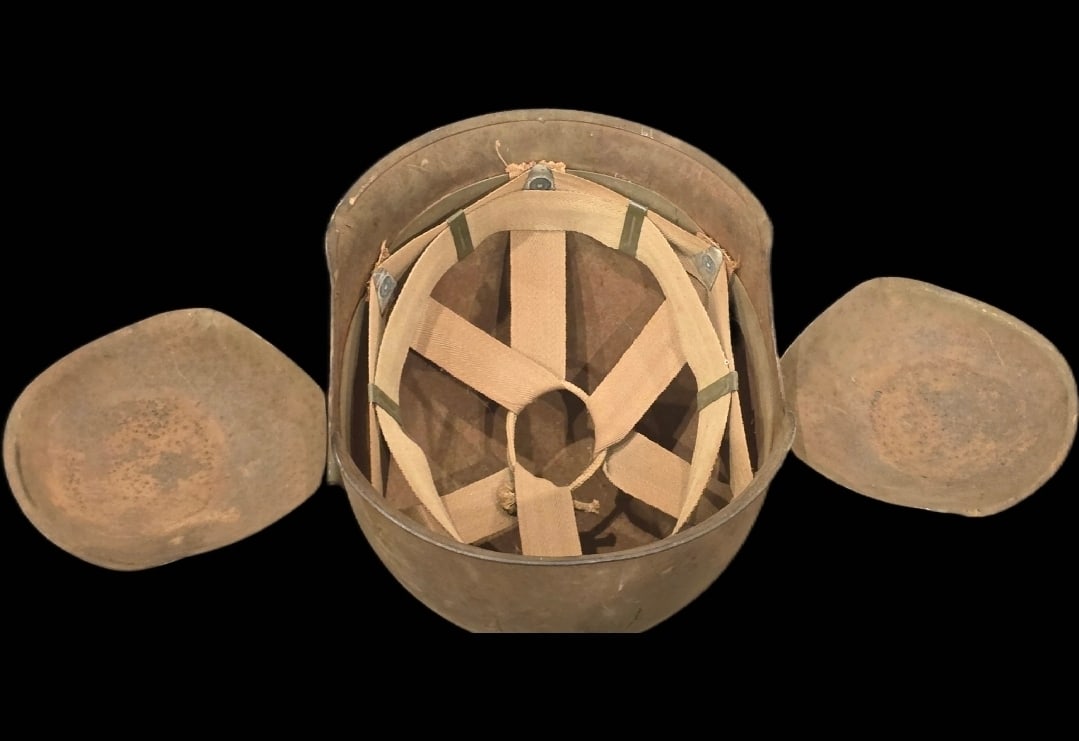
Original U.S. WWII Army Air Forces M3 Steel Flak Helmet with hinged, flared ear flaps and web suspension, as worn by heavy bomber crewmen over their flying helmets during high-altitude daylight missions, circa 1943-1945. This lot presents an original M3 flak helmet, the distinctive shell adapted from the M1 infantry pattern and standardized in late 1943 specifically for U.S. Army Air Forces bomber crews. The photographs show no legible maker’s mark or shell number, so no individual recipient, crew, or unit can be documented with this example; its story rests in the well-recorded combat role of the type itself rather than in any named provenance. The M3 was born of hard operational necessity. As American heavy bombers pressed deeper into occupied Europe and across the Pacific through 1943 and 1944, aircrews flying at altitude through flak-filled skies needed head protection that would not interfere with their bulky flight helmets and intercom headsets. The Army’s solution was this shell, fitted with flared, hinged steel ear flaps that swung outward to clear the crewman’s earphones while still shielding the temples and lower skull from low-velocity flak splinters, spent shell fragments, and flying aircraft debris – hazards that accounted for a significant share of aircrew wounds over targets in Germany, Austria, and the Japanese home islands. Gunners hunched over their turrets and pilots holding formation through bursting anti-aircraft fire relied on helmets exactly like this one, worn cinched over a leather flying cap, for the duration of a mission that could last eight hours or more at altitude. The steel shell retains its factory olive-drab finish, now toned with age and showing scattered surface scuffs, scratches, and light oxidation across the dome and flaps. Both shaped ear flaps remain attached at their upper pivoting hinges and swing freely as designed. Inside the shell, the herringbone-twill web suspension and its crown tie cord remain intact and correctly configured, with light soiling and minor fraying to the webbing at the attachment points. A well-preserved and instantly recognizable example of USAAF aircrew protective gear, its ingenious hinged side flaps standing as a tangible reminder of the flak-filled skies faced by American bomber crews over Europe and the Pacific.
Share this lot: