Fall 2026 Militaria and Aviation Auction
Lot 44:
Description
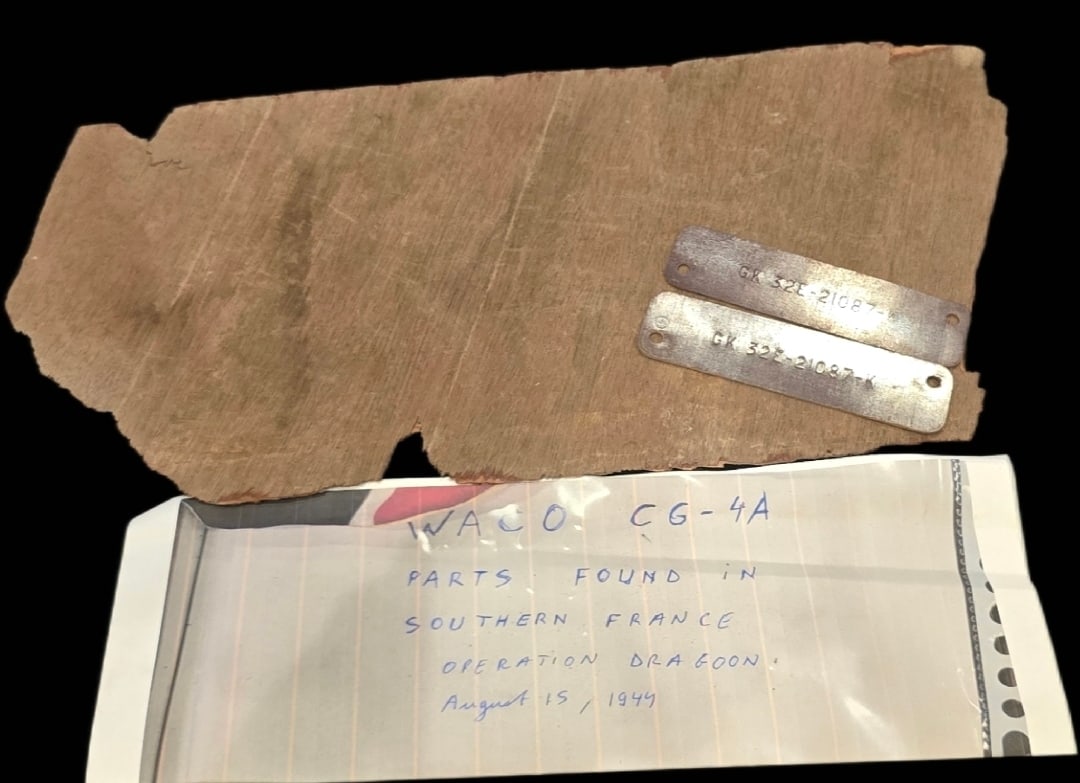
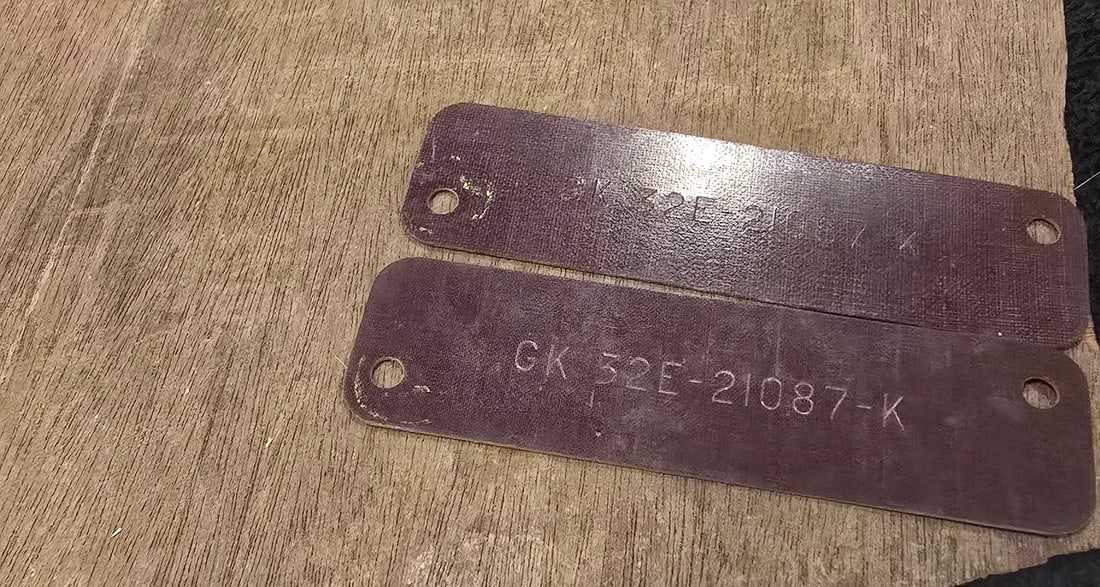
SCARCE ETO: WACO CG-4A Glider Skin Fragment & Marked Tags, Operation Dragoon 1944. WACO CG-4A combat-glider plywood skin fragment together with two stamped composite tags marked "GK 32E-21087-K, " accompanied by a period-style handwritten collector’s note identifying the pieces as recovered from the landing zones of Operation Dragoon, Southern France, 15 August 1944. This small but evocative lot preserves physical fragments said to derive from the CG-4A glider fleet that carried elements of the 1st Airborne Task Force into Provence during the opening hours of Operation Dragoon. The attribution rests on an accompanying glassine sleeve bearing an ink notation reading "WACO CG-4A, Parts Found in Southern France, Operation Dragoon, August 15, 1944." No independent recovery record, unit history, or provenance chain beyond this collector’s note has been located, and the lot is offered on the strength of that notation together with the physical character of the relic material itself. Designed by the Waco Aircraft Company and built under license by roughly sixteen subcontractors nationwide, the CG-4A was the principal American troop-and-cargo glider of World War II – a steel-tube fuselage skinned largely in fabric and plywood, prized for its ability to deliver infantry and light equipment into terrain no powered aircraft could reach, but correspondingly fragile on rough landing grounds. On the morning of 15 August 1944, hundreds of CG-4As and British Horsas set down glider infantry and artillery of the 1st Airborne Task Force near Le Muy, seizing key roads and high ground ahead of the seaborne assault on the Riviera coast. Losses among the gliders that day were heavy, with many airframes shattered on impact or cannibalized afterward for salvage, a circumstance that gave rise to the modest but persistent relic trade in genuine CG-4A fragments recovered from the Dragoon landing fields. The plywood section is irregularly and jaggedly fractured along every edge, consistent with battlefield recovery rather than deliberate cutting, its surface discolored, weathered, and showing lifted grain typical of long exposure. The two narrow composite tags – likely phenolic or laminated shim material, each pierced with a mounting hole at both ends – carry the die-stamped part number "GK 32E-21087-K"; the marking is crisp and fully legible on one tag, with the impression on the second somewhat softer but consistent with the same stamping. Such part markings identify a subcontractor or component-tracking code typical of wartime glider manufacture and do not by themselves establish a specific maker. The lot comprises the plywood fragment, the two stamped tags, and the original glassine sleeve with the handwritten collector’s identification of find-site and date. Condition throughout is consistent with genuine ground recovery: the wood is broken, discolored, and grain-lifted at the edges, while the tags show light scuffing, fine crazing, and ingrained dirt without loss of legibility; the note sleeve shows expected creasing and handling wear. As with most surviving CG-4A material, no museum deaccession paperwork accompanies the piece. A modest but tangible relic tying shattered glider plywood and its marked hardware to the fields above Le Muy and the opening drop of Operation Dragoon.
Share this lot: