Fall 2026 Militaria and Aviation Auction
Lot 445:
Description
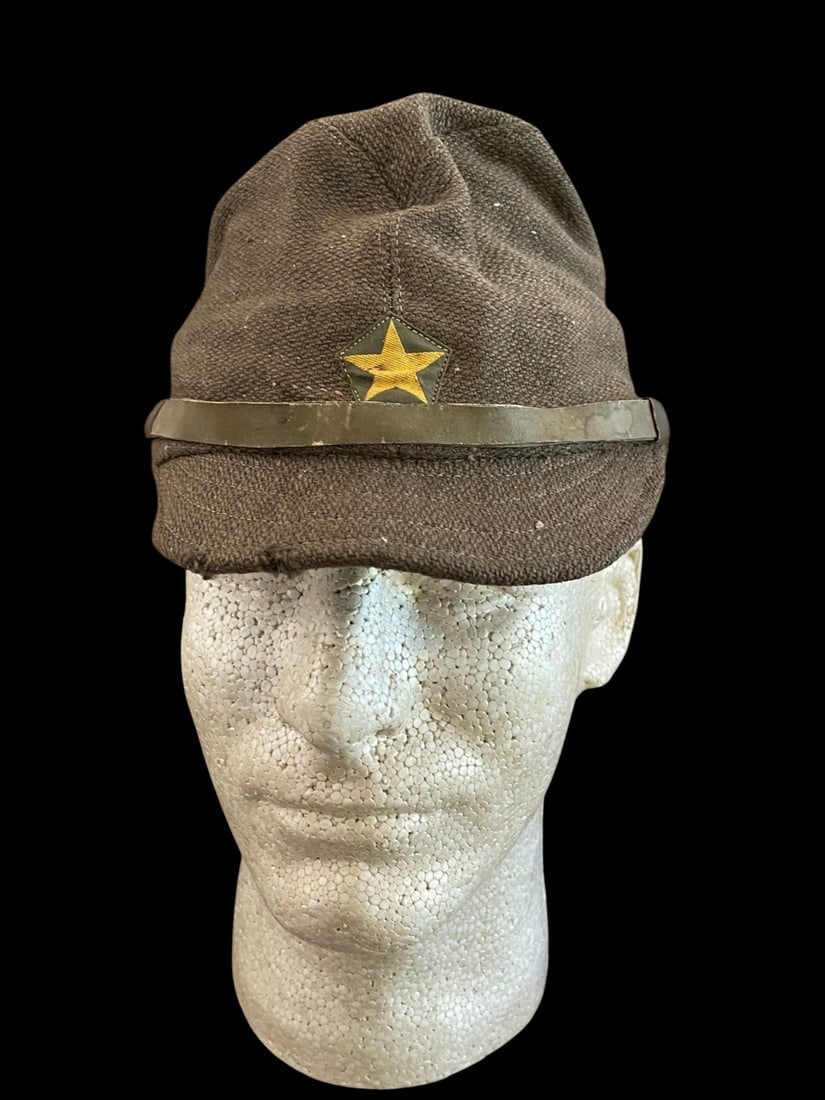
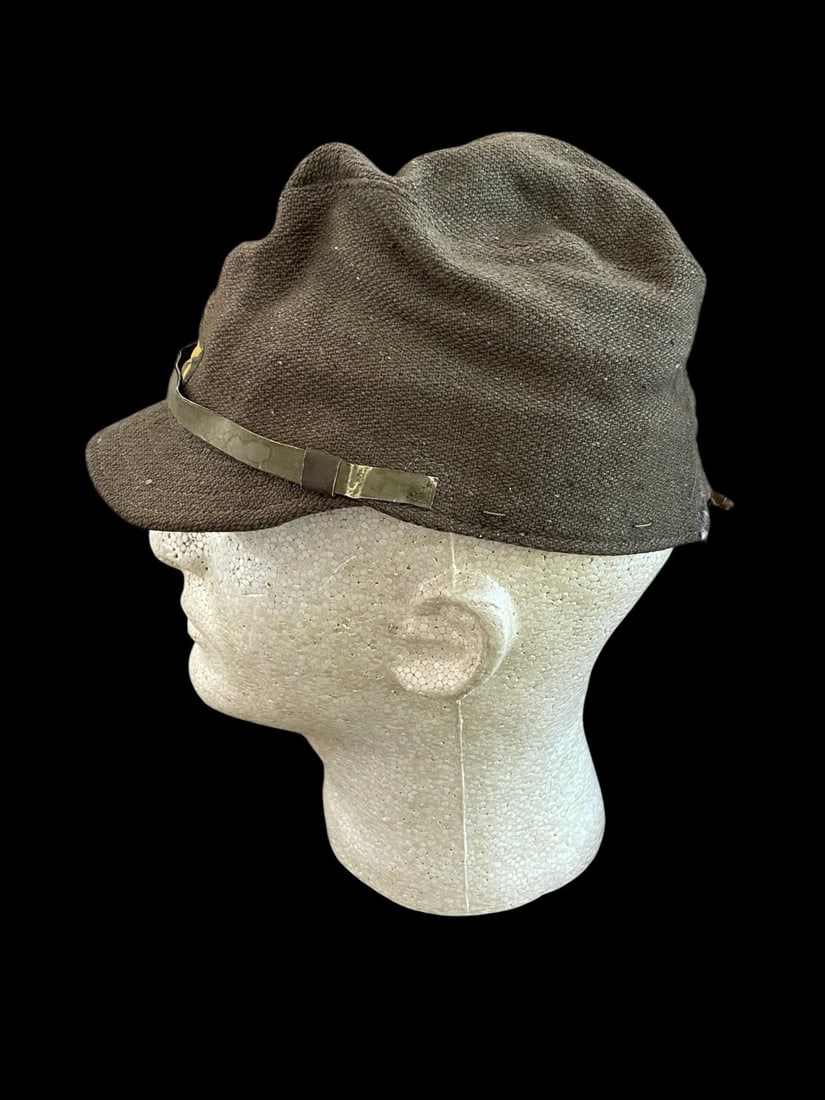
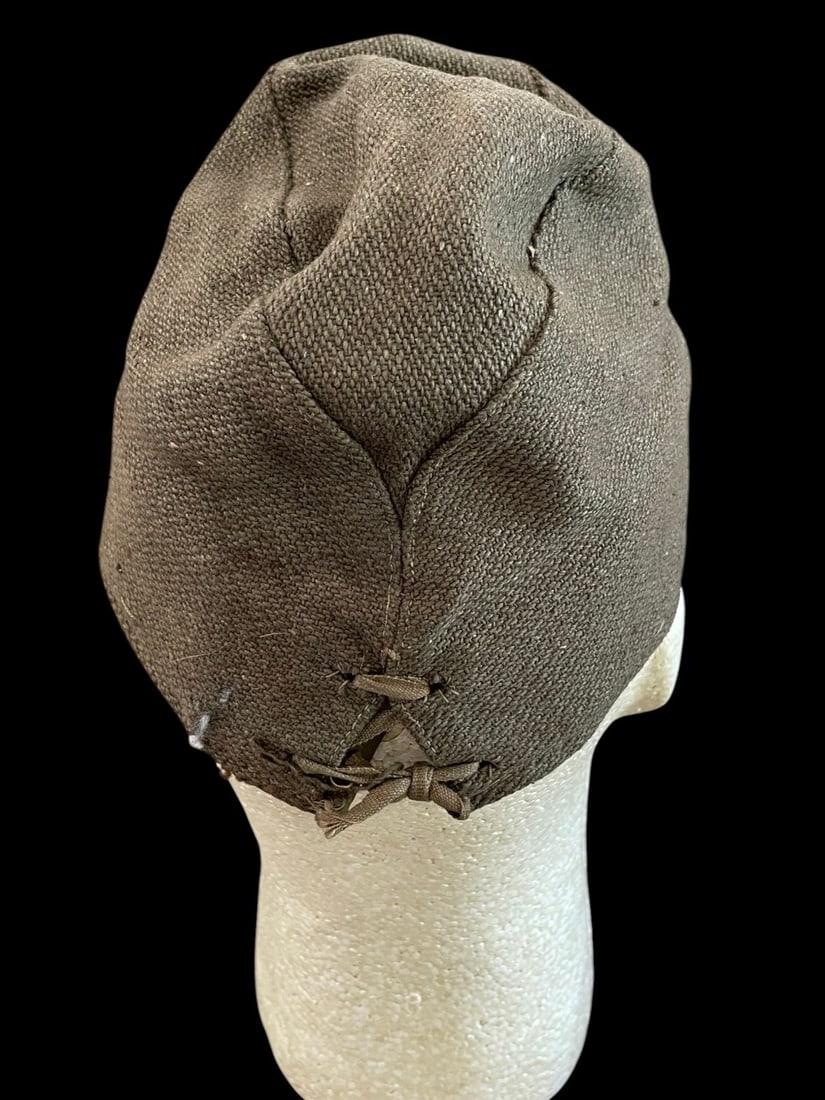
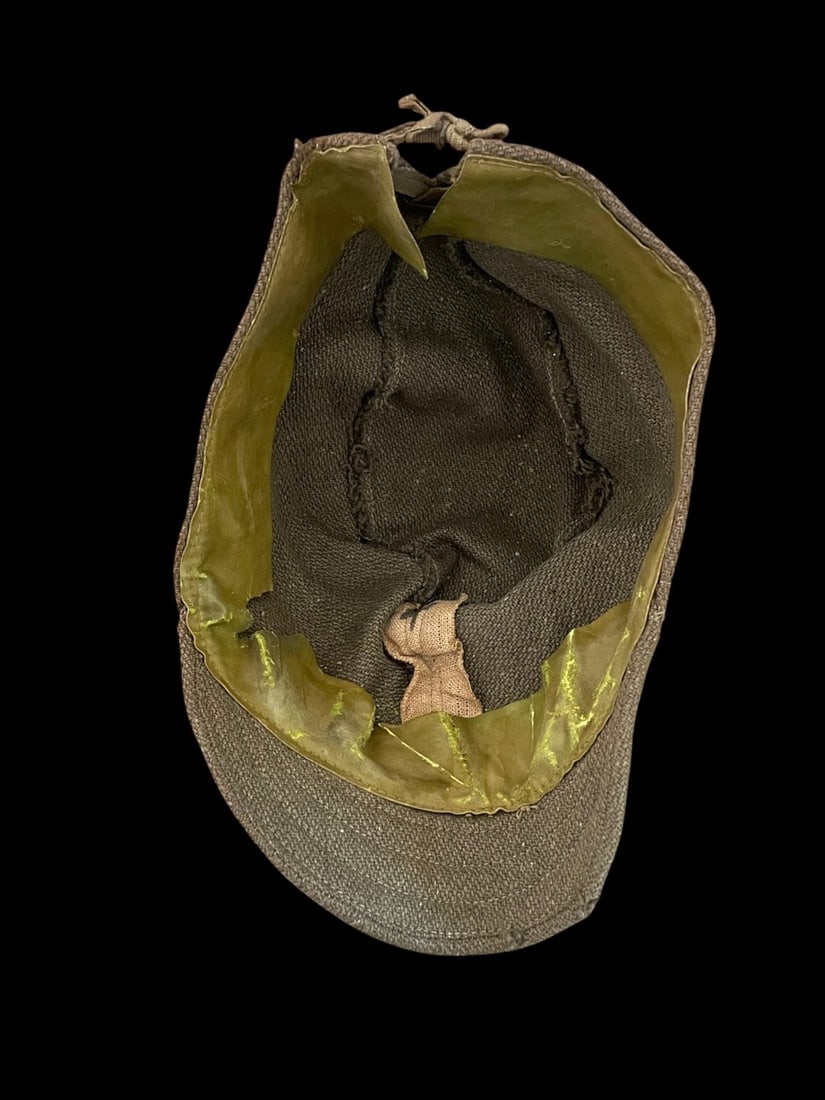
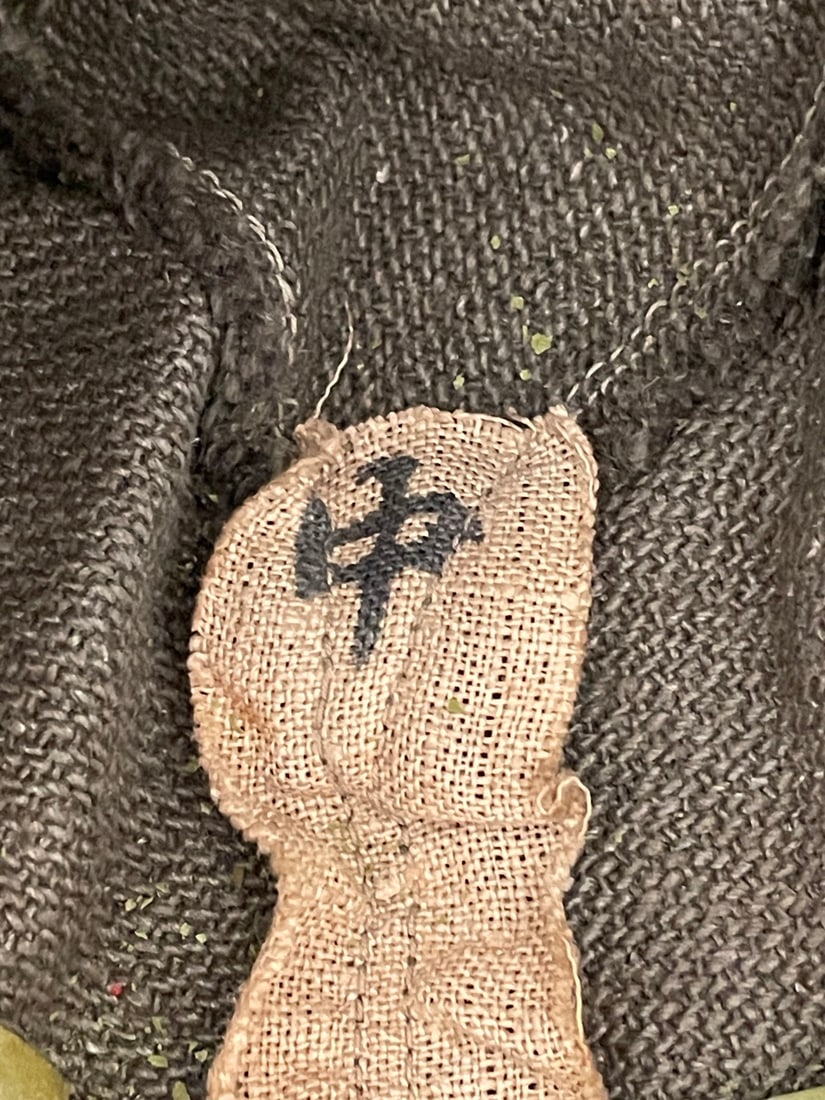
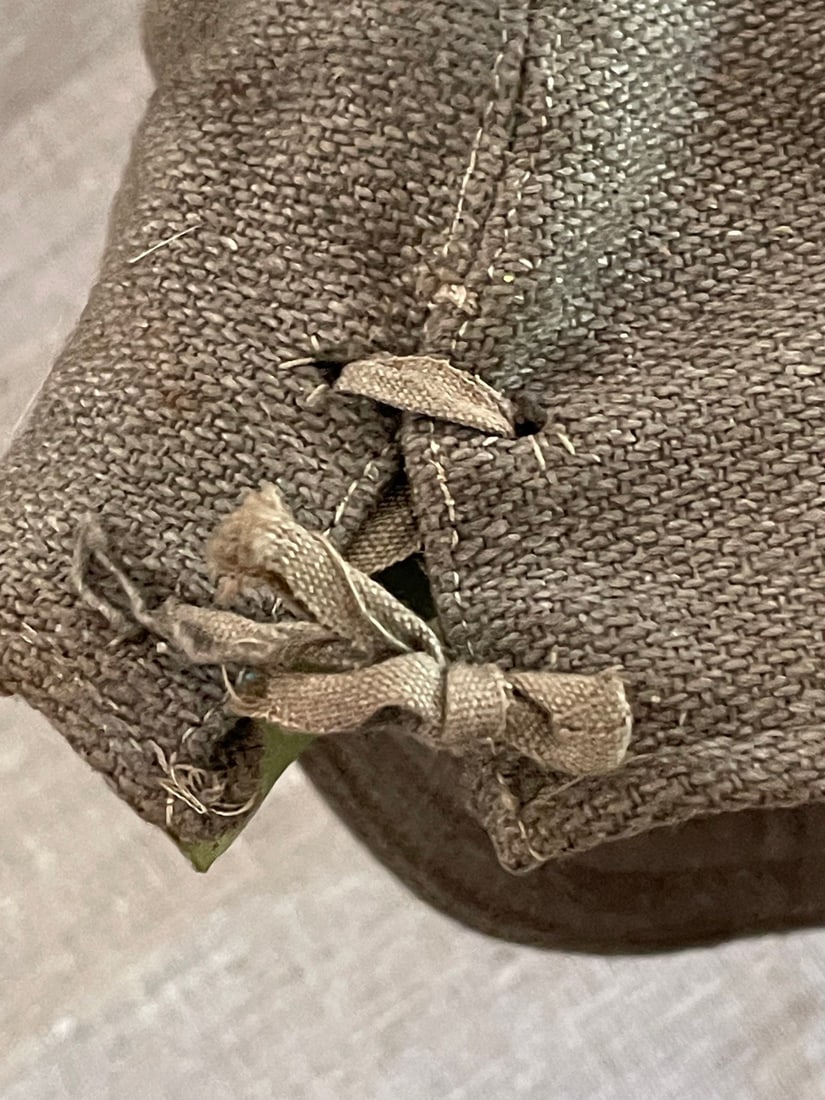
WWII Imperial Japanese Army Late-War Type 98 Ryakub Field Cap – Enlisted/NCO Wool-Blend Example with Yellow Star Front Patch and Ink-Stamped Interior Tab Offered here is an original Imperial Japanese Army soft field cap, or ryakub, of the pattern standardized with the Type 98 uniform in 1938 and worn universally by Japanese ground forces through the end of the Second World War. The coarse, ersatz materials of this example are consistent with late-war manufacture, circa 1943-1945, when the Japanese war economy strained under blockade and dwindling raw-material supply. No individual soldier’s name or unit assignment can be established from the cap itself, and no separate published biography accompanies it; the object’s construction and its stamped interior tab stand as the primary record of its origin. The ryakub was designed for wear alone in garrison, on the march, and in tropical postings, or tucked beneath the Type 90 steel helmet in combat, and it became one of the most recognizable pieces of the Japanese soldier’s kit across the China-Burma-India, Pacific, and home island theaters. Late-war caps such as this one reflect the military’s growing reliance on substitute materials – coarse wool-hemp-rayon blends replacing finer prewar wool, and oilcloth or synthetic sweatbands standing in for leather – cost-cutting measures forced by the collapse of imported raw material supply after 1943. Such caps were produced in bulk at arsenal and depot contractor facilities, and surviving examples bearing legible ink stamps offer a modest but genuine window onto Japan’s wartime industrial decline. The cap is constructed of rough-textured olive-brown wool-blend cloth with a shaped, stitched bill and a two-piece crown joined by a vertical center seam. The front carries the standard pentagonal cloth backing with a machine-embroidered yellow five-pointed star, the universal Imperial Japanese Army enlisted/NCO insignia. A narrow oilcloth-style strap crosses the front beneath the star, now toned and stiffened with age. The rear closes with the characteristic cinch-tie, a small drawstring bow allowing size adjustment. The interior is unlined, retaining an oilcloth-style sweatband around the opening and a stitched fabric inspection/size tab bearing a legible black ink kanji character, likely a depot or size mark. Condition is fair to good and consistent with hard field use and age. The wool shows surface soiling and fraying along the bill edge, crown seams, and rear tie, with several loosened threads at the rear closure. The oilcloth sweatband shows notable splitting, flaking, and material loss typical of this substitute fabric, which embrittles readily with age. The chinstrap has lost flexibility and shows toning to match the cap’s overall wear, while the embroidered star remains bright and fully legible. An honest, unaltered example of the ersatz-material Japanese field cap that defined the look of the Emperor’s soldier in the war’s final, resource-starved years.
Share this lot: