Fall 2026 Militaria and Aviation Auction
Lot 80:
Description
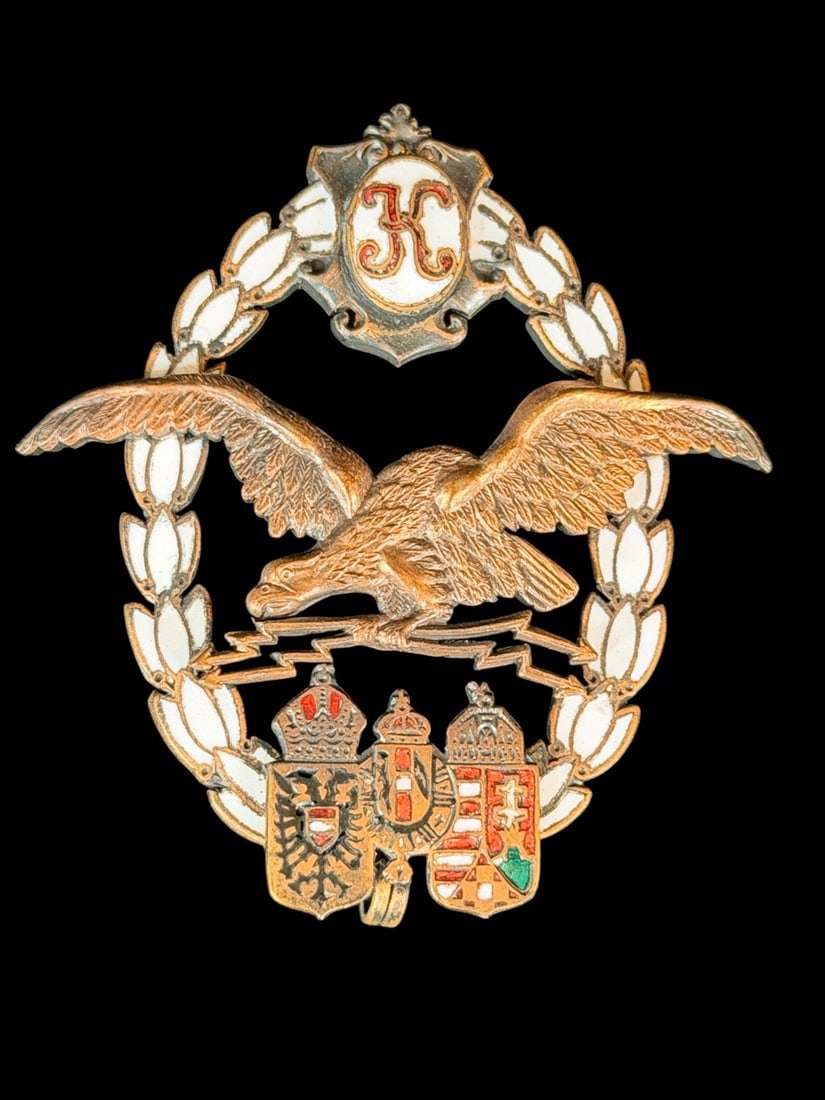
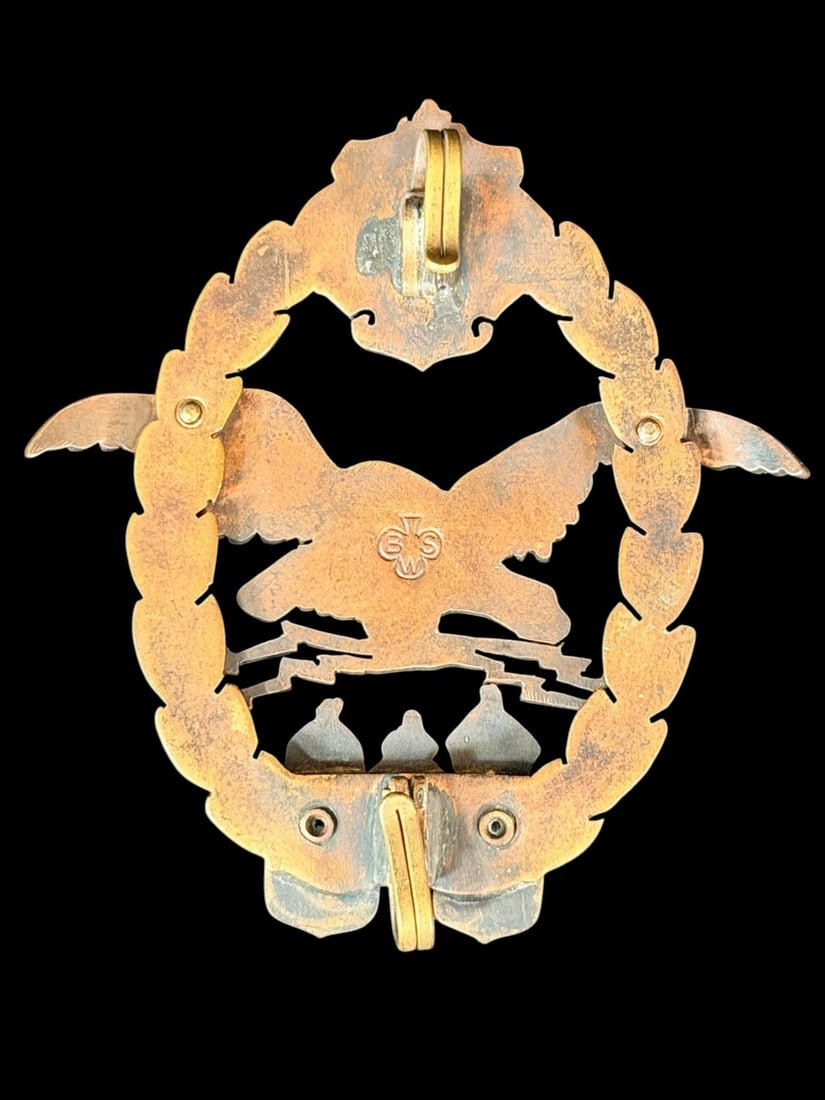
Austro-Hungarian K.u.k. Luftfahrtruppen Feldpilotenabzeichen, 1917 Karl I Type, by Brueder Schneider Wien (BSW) – an Imperial and Royal qualification badge for a combat aviator of the Great War’s final years. This lot presents a fine example of the second-pattern Austro-Hungarian Field Pilot’s Badge, the distinctive breast insignia awarded to qualified combat aviators of the Imperial and Royal Aviation Troops in the closing years of the First World War. Instituted in 1913 under Emperor Franz Joseph I, the Feldpilotenabzeichen was redesigned in 1917 following the accession of Emperor Karl I. The earlier ‘FJI’ cypher atop the badge was replaced with Karl’s own monogram, set within an enameled shield and framed by scrolled mantling – a small but telling emblem of the dynastic transition that unfolded as the empire’s air arm fought against Italy and Russia. Badges of this later pattern were struck by a small circle of trusted Viennese jewelers and medallists – Brueder Schneider Wien, J. Zimbler, and Rothe chief among them – and were pinned to the right breast of a pilot’s tunic. The badge is of multi-piece tombac/gilt and enameled construction, centered on Karl’s red-enameled ‘K’ cypher within a white-enameled oval shield and scrollwork mantling. Below spreads a gilt eagle with wings displayed, clutching a bundle of stylized lightning bolts in its talons, the whole surrounded by a wreath of white-enameled laurel leaves. At the base sit the conjoined, crowned coats of arms of Austria and Hungary, retaining traces of red, white, and green enamel. The reverse bears the maker’s cloverleaf ‘BSW’ trefoil logo for Brueder Schneider Wien stamped clearly at center of the eagle, with the original dual flat mounting prongs and their four securing rivets present and intact. Condition is very fine overall: the enamels on the cypher medallion, laurel wreath, and dual armorial shields remain largely intact with only minor edge wear and expected surface loss, the gilt finish showing light, even age toning consistent with a century of survival, and the maker’s mark crisp and well-defined.
Share this lot: