Fall 2026 Militaria and Aviation Auction
Lot 119:
Description
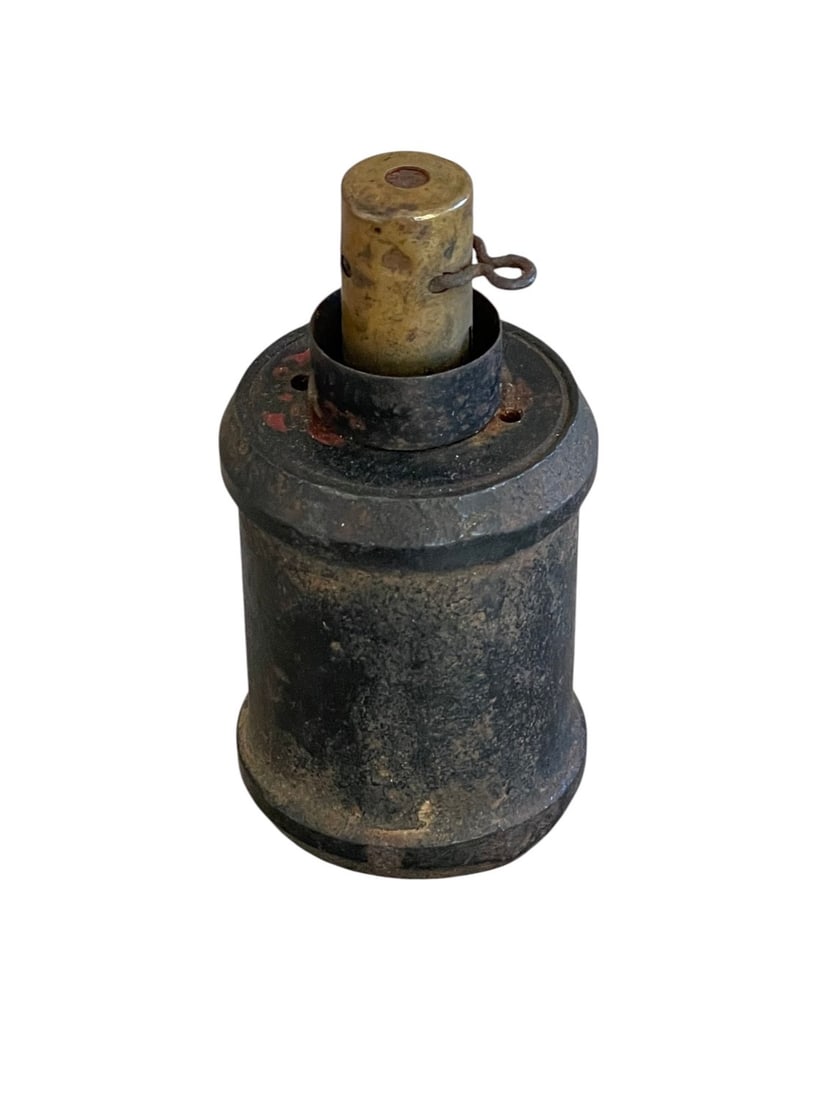
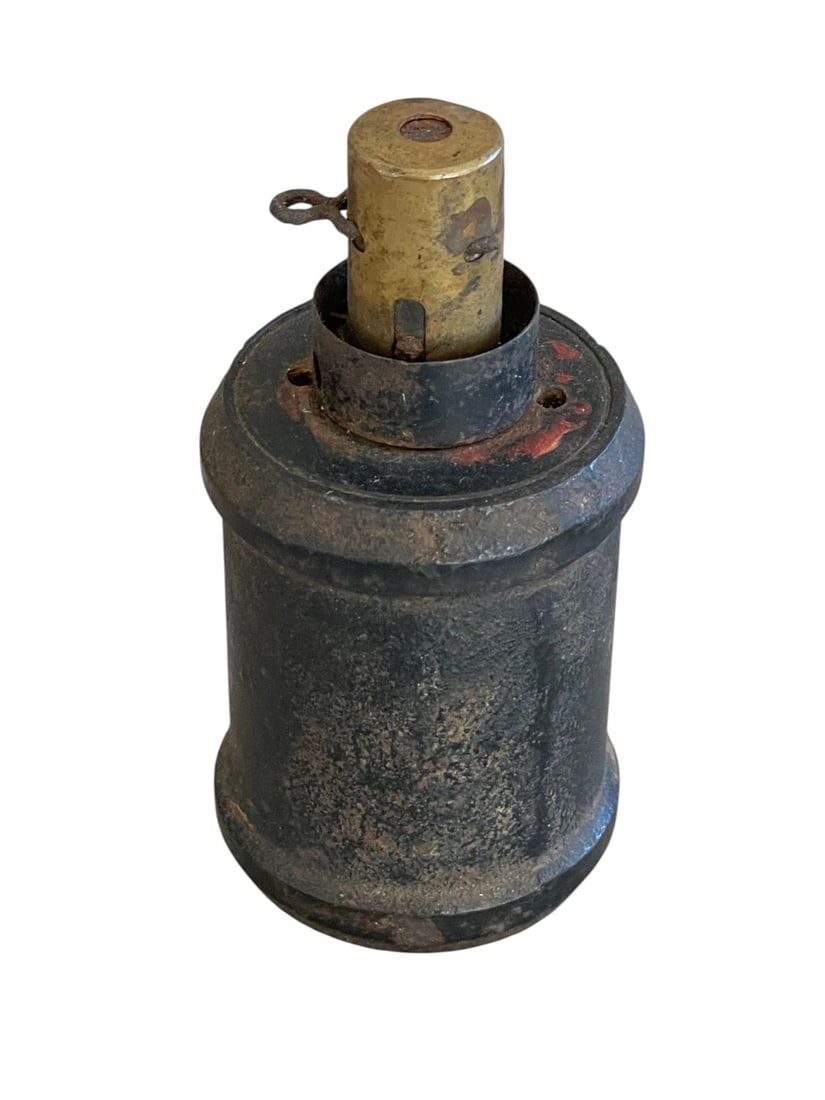
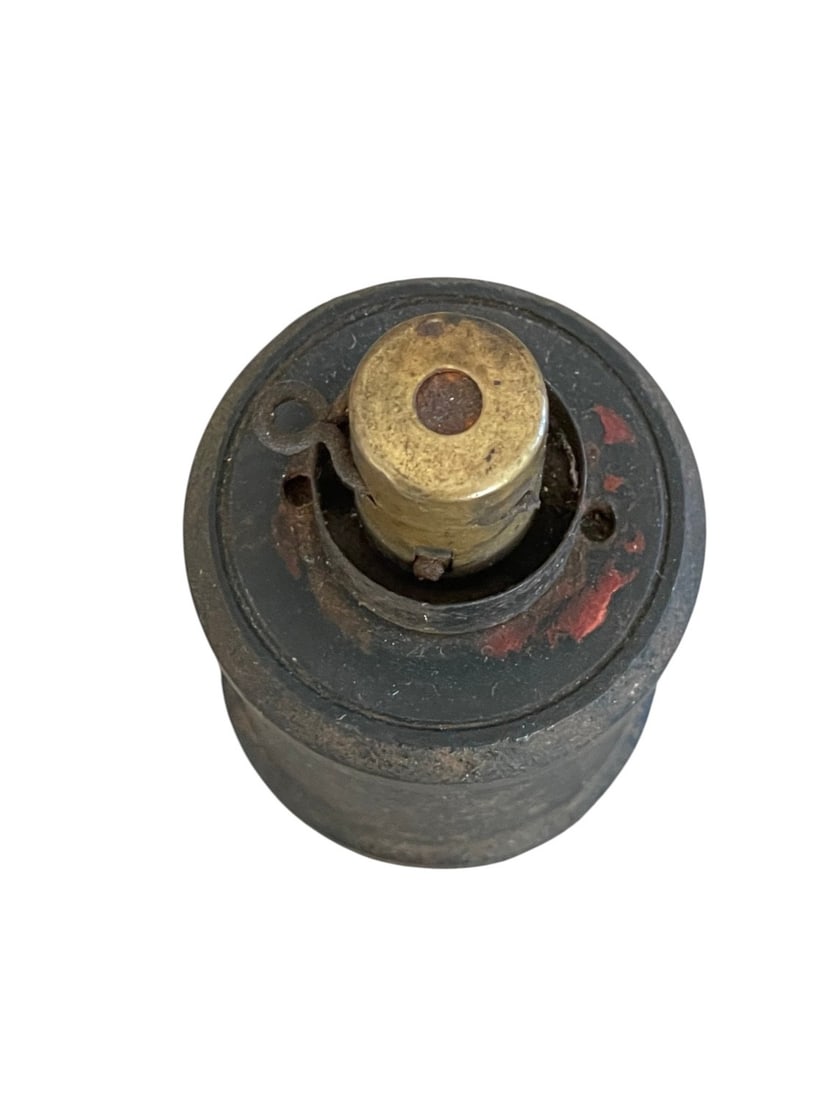
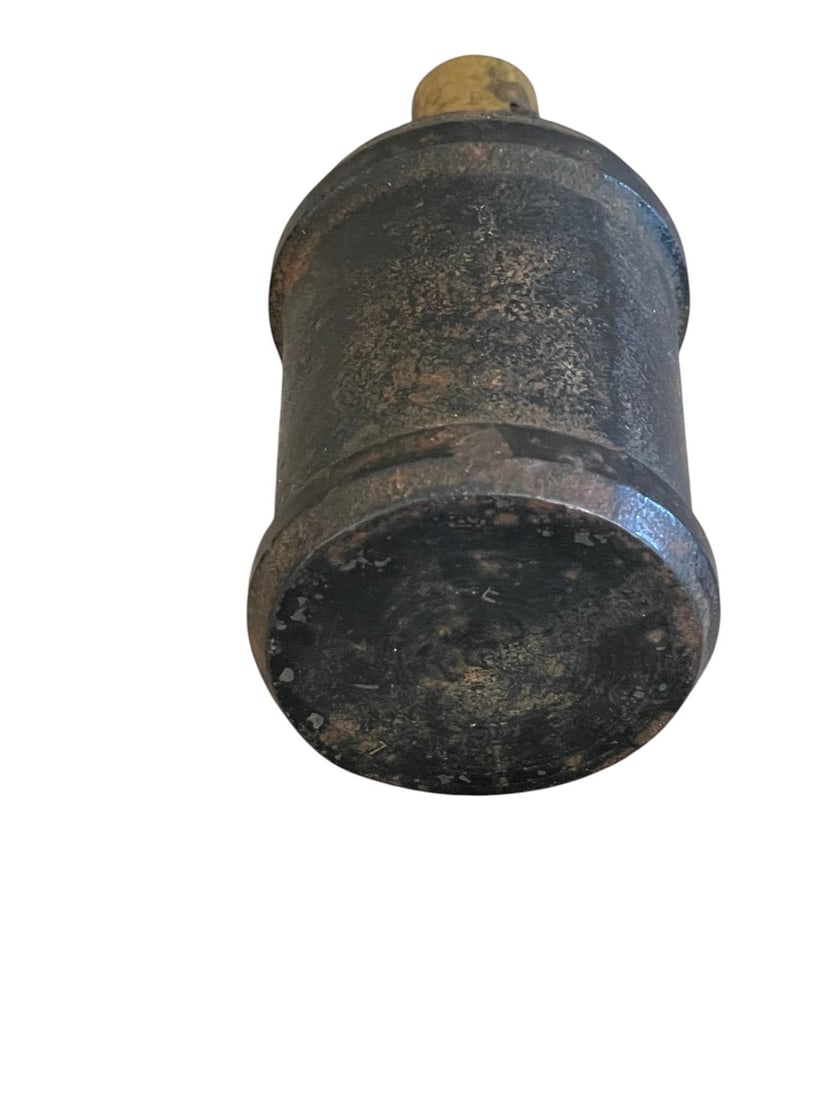
WWII German Schrapnellmine 35 (S-Mine 35) ‘Bouncing Betty’ Anti-Personnel Bounding Mine, inert and demilitarized, with brass central fuze fitting and ground-recovered battlefield patina. This lot offers a genuine World War II German S-Mine 35, the notorious bounding fragmentation mine that Allied soldiers universally dubbed the ‘Bouncing Betty.’ No named recipient or unit provenance accompanies this piece, as is typical for ordnance of this type; its significance rests in the documented design and battlefield role of the weapon itself rather than in any individual attribution, and no separate biography or unit history applies. The specimen is presented fully inert, retaining its cylindrical body, centrally threaded brass fuze collar, and the characteristic three detonator cavity positions on the top plate that once accepted the S.Mi.Z.35 pressure or pull-igniter fuze assemblies. Developed by German ordnance engineers in the mid-1930s and formally adopted by the Wehrmacht, the S-Mine 35 became one of the most feared area-denial weapons of the Second World War, deployed extensively across the European, North African, and Eastern Front theaters. Buried with only its fuze prongs or tripwire exposed, the mine’s mechanism launched an inner canister roughly three to five feet skyward on detonation of a small propellant charge before a secondary blast scattered approximately 350 steel ball bearings and metal fragments in a 360-degree radius, inflicting devastating wounds on advancing infantry. Allied engineers and infantrymen developed a deep and lasting dread of the weapon, and postwar accounts and veteran memoirs from Normandy to Tunisia to Italy frequently single out the S-Mine as among the war’s most psychologically corrosive munitions, shaping doctrine on minefield clearance and probing techniques still studied by military historians today. The example offered here displays a cylindrical steel body with the threaded brass fuze collar intact and legible at its center, and the three top cavity-plug positions clearly visible. Surface condition shows widespread oxidation, pitting, and paint loss consistent with long-term ground burial and battlefield recovery, with soil and corrosion residues embedded in the casing seams; the body retains its original form without significant deformation, making it a structurally sound and visually authentic specimen for display. No accompanying fuzes, packaging, or paperwork are present; the lot consists solely of the deactivated mine body as photographed. The weathering is honestly reflective of a genuine ground-recovered relic rather than a reproduction or refinished piece, and its inert status should nonetheless be independently confirmed by the buyer before handling, shipping, or display. A tangible and evocative artifact of German battlefield engineering, this inert Bouncing Betty offers collectors an authentic, safely deactivated example of one of World War II’s most infamous anti-personnel weapons.
Share this lot: