Fall 2026 Militaria and Aviation Auction
Lot 144:
Description
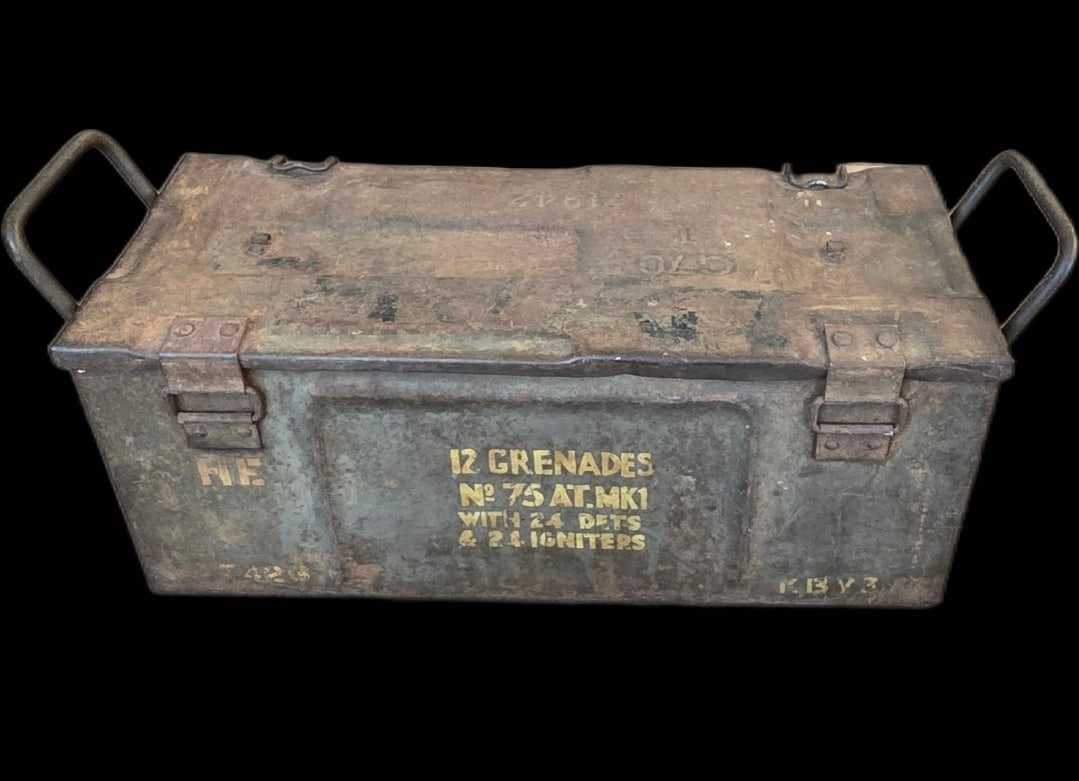
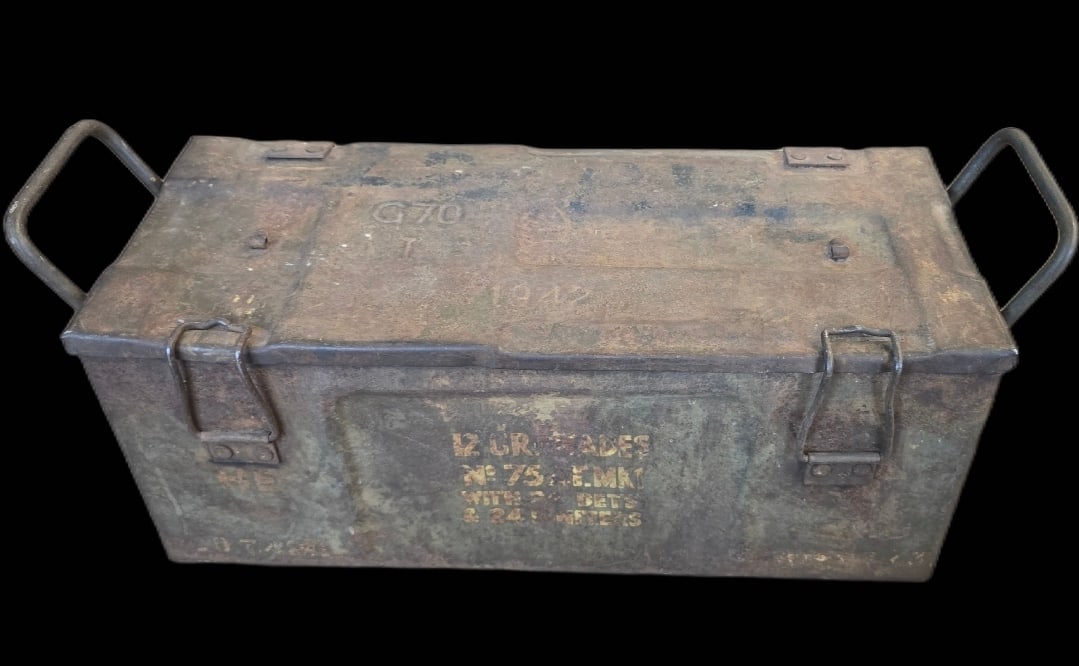
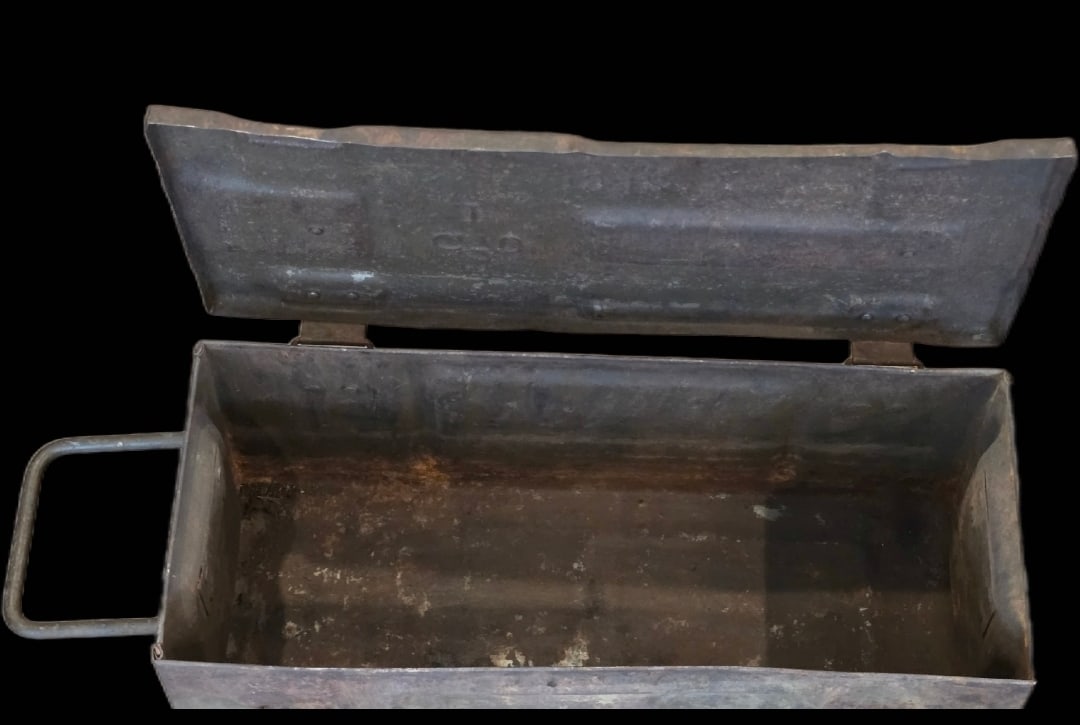
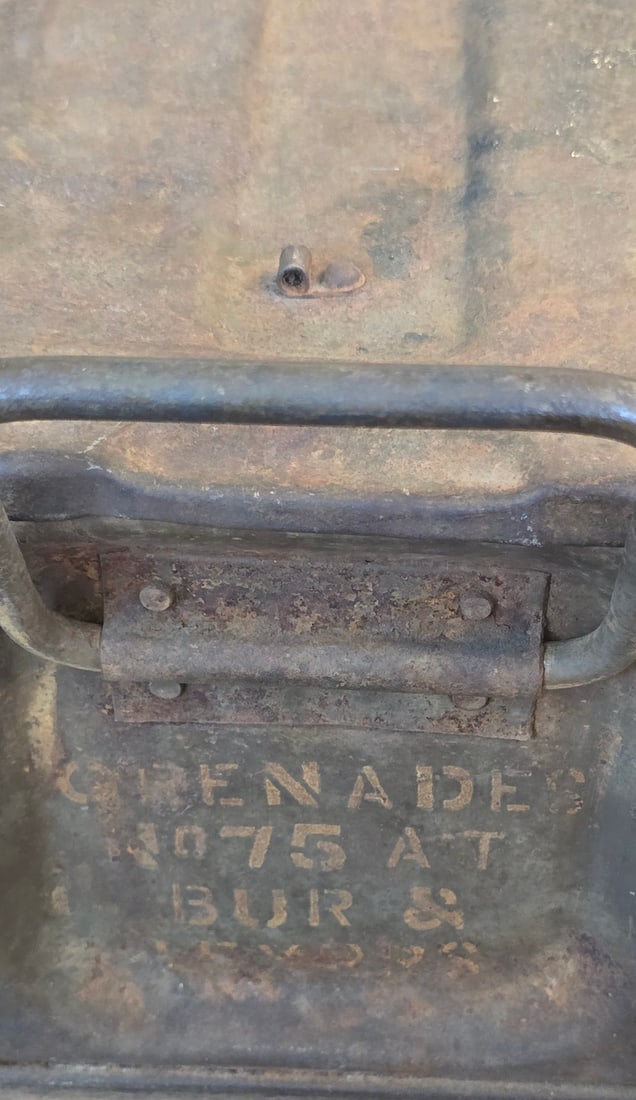
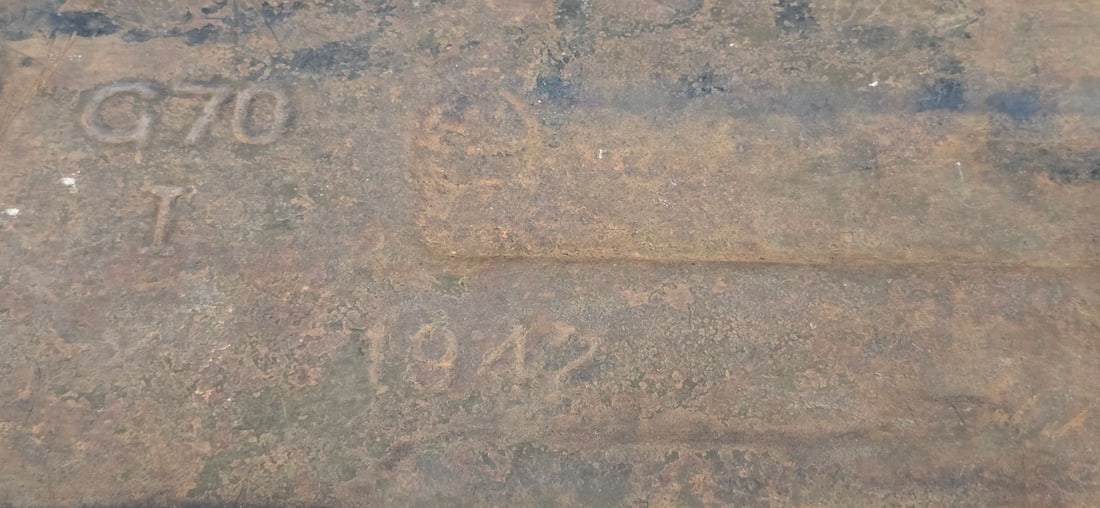
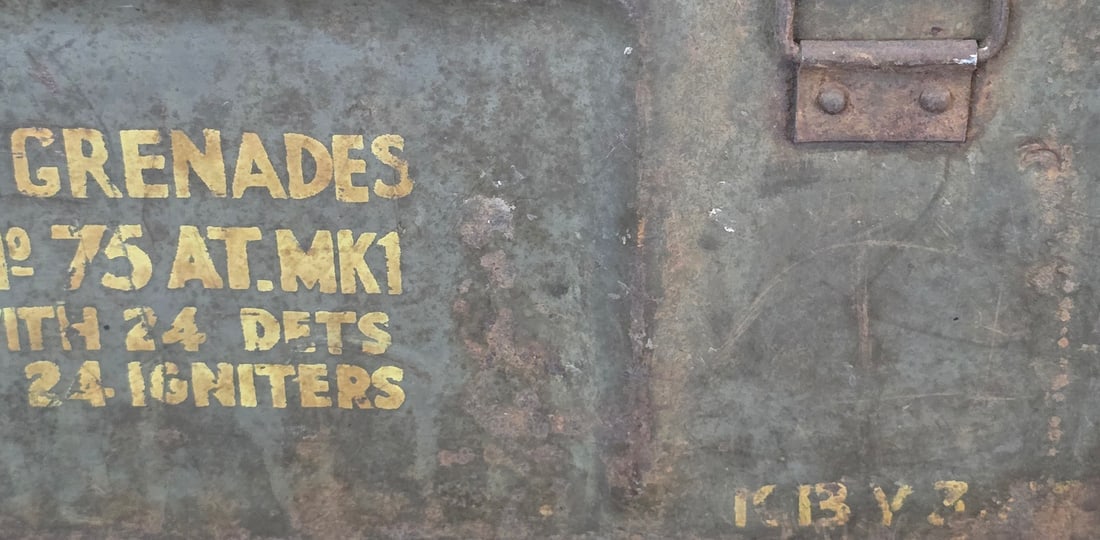
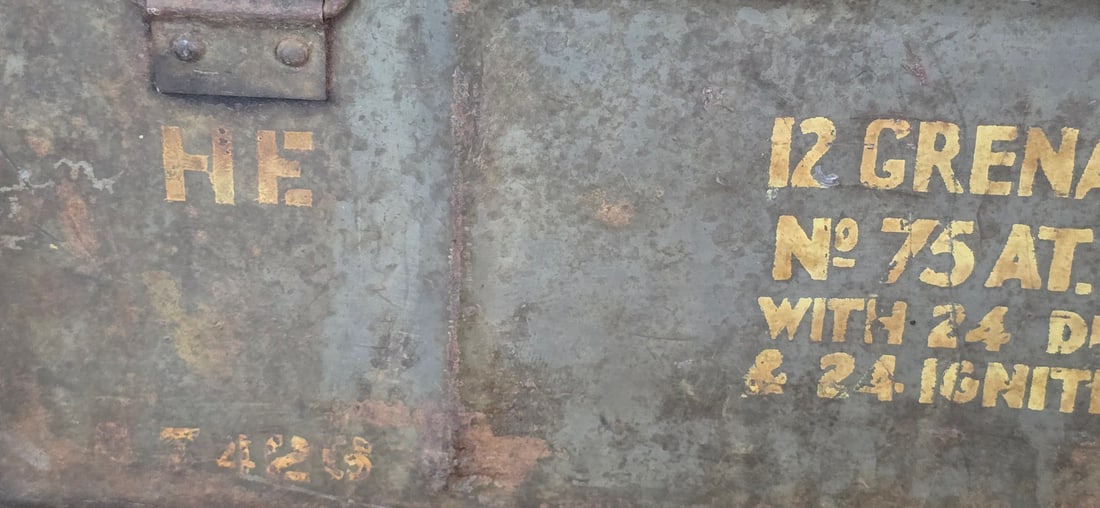
Full catalog title: WWII British G70 Hawkins No.75 AT Grenade Box 1942. British WWII G70 Steel Transit Box for 12 Hawkins No. 75 Mk I Anti-Tank Grenades, Dated 1942, Stenciled ‘BUR’ Theater Marking Offered here is an original World War II British ordnance transport tin, the G70 pattern steel box built to carry a dozen Grenade, Hand, Anti-Tank, No. 75 Mk I – the improvised anti-tank mine universally known to the troops who used it as the ‘Hawkins Grenade’ or ‘Hawkins Mine.’ The lid is stamped ‘G70 / I / 1942’ with a maker or inspection code impressed beneath that appears consistent with ‘C&C, ‘ though the impression is worn. No separate published history accompanies this box; its story is carried entirely in its own factory, inspection, and theater markings. Introduced into British service in 1942, the No. 75 was a flat, flexible steel case charge filled with roughly a pound of explosive, designed so a single soldier could deploy it against enemy armor by throwing it beneath tank tracks, laying it as an improvised road mine, or rigging it as a demolition charge against bridges, vehicles, or fortifications. Cheap, compact, and easily concealed, it was issued in quantity to line infantry and to the Home Guard for anti-invasion defense, and it later saw service with British and American airborne forces. Boxes such as this one were the standard means of moving a dozen mines, together with their crush igniters and detonators, safely forward through the supply chain to front-line units; the partial end-panel stencil reading ‘GRENADES / No 75 AT / BUR & …’ suggests this particular consignment was destined for or associated with the Burma theater, where the No. 75 saw active use against Japanese armor and in jungle demolition work. The box itself is of welded sheet-steel construction with a hinged lid, twin wire latch closures, and folding carry handles at each end for two-man transport. The top lid retains its stamped ordnance data ‘G70 / I / 1942’ along with a faint contractor or inspection code impressed beneath the lid. The front face is boldly stencilled in yellow ordnance paint ‘H.E.’, ‘GRENADES / No 75 AT. MK1 / WITH 24 DETS / & 24 IGNITERS’, flanked by the lot and inspection codes ‘T428’ and ‘KBV3’. The opposite end panel carries the partial secondary stencil noted above, its final characters obscured by wear. The box is offered empty of contents, as photographed, with no grenades, igniters, or detonators present. Surfaces show honest, service-consistent wear: widespread oxidation and mottled patina over the original olive drab paint, scattered paint loss and surface scuffing, and light denting along the lid rim. The wire latches and carry handles remain intact and functional, and the yellow stencilled markings remain crisp and legible on the front panel, with the theater stencil on the end panel more heavily worn. A solidly marked, honestly aged 1942-dated transit tin for the war’s most improvised anti-tank weapon, its part-legible ‘BUR’ stencil hinting at overseas service in the Burma theater.
Share this lot: