Fall 2026 Militaria and Aviation Auction
Lot 190:
Description
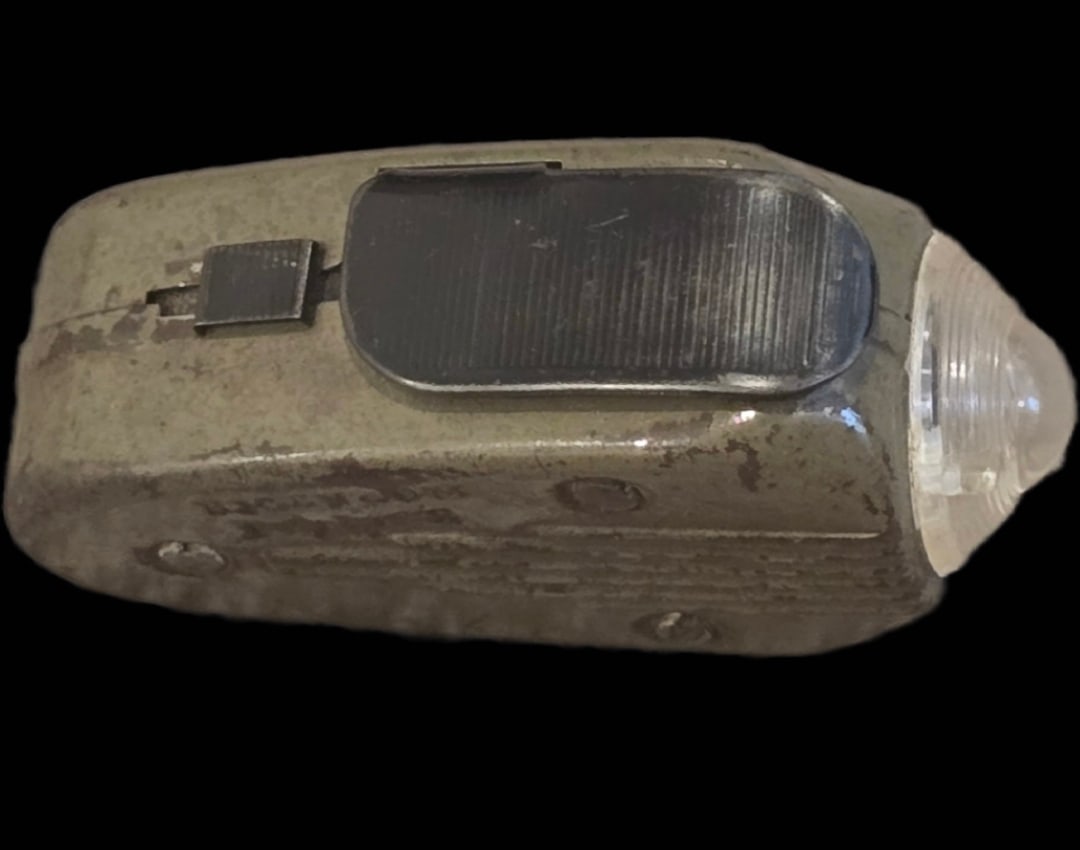
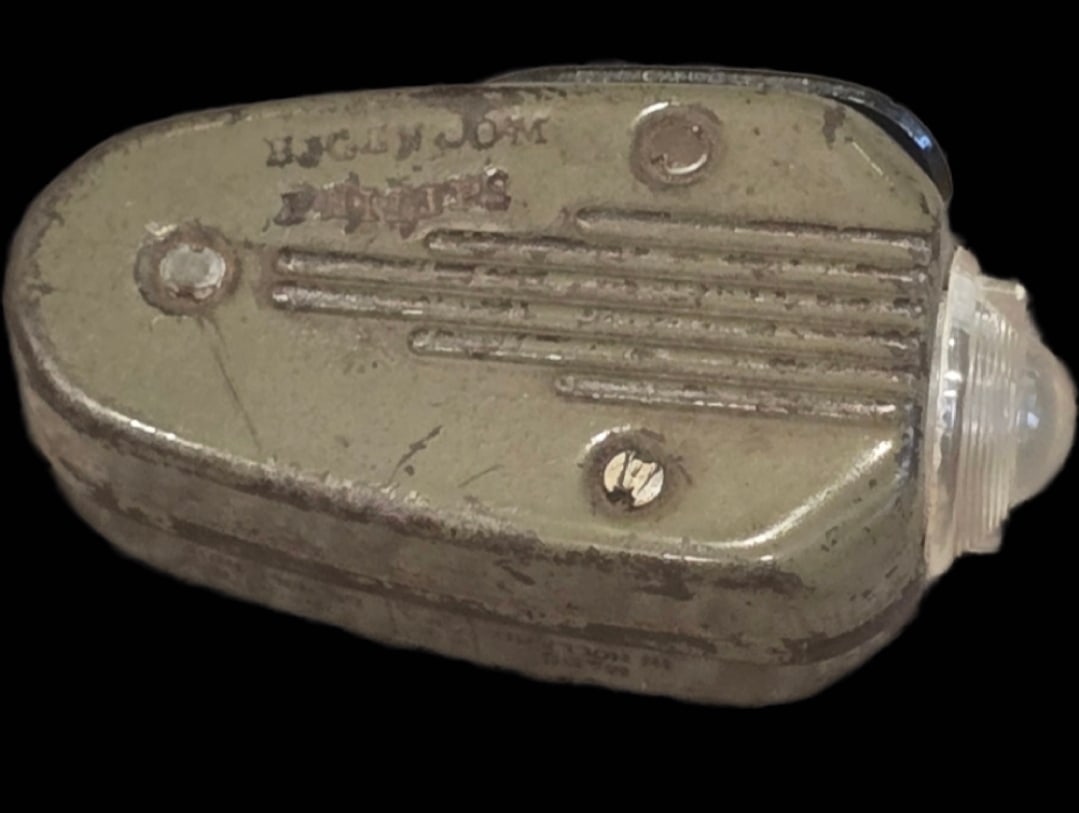
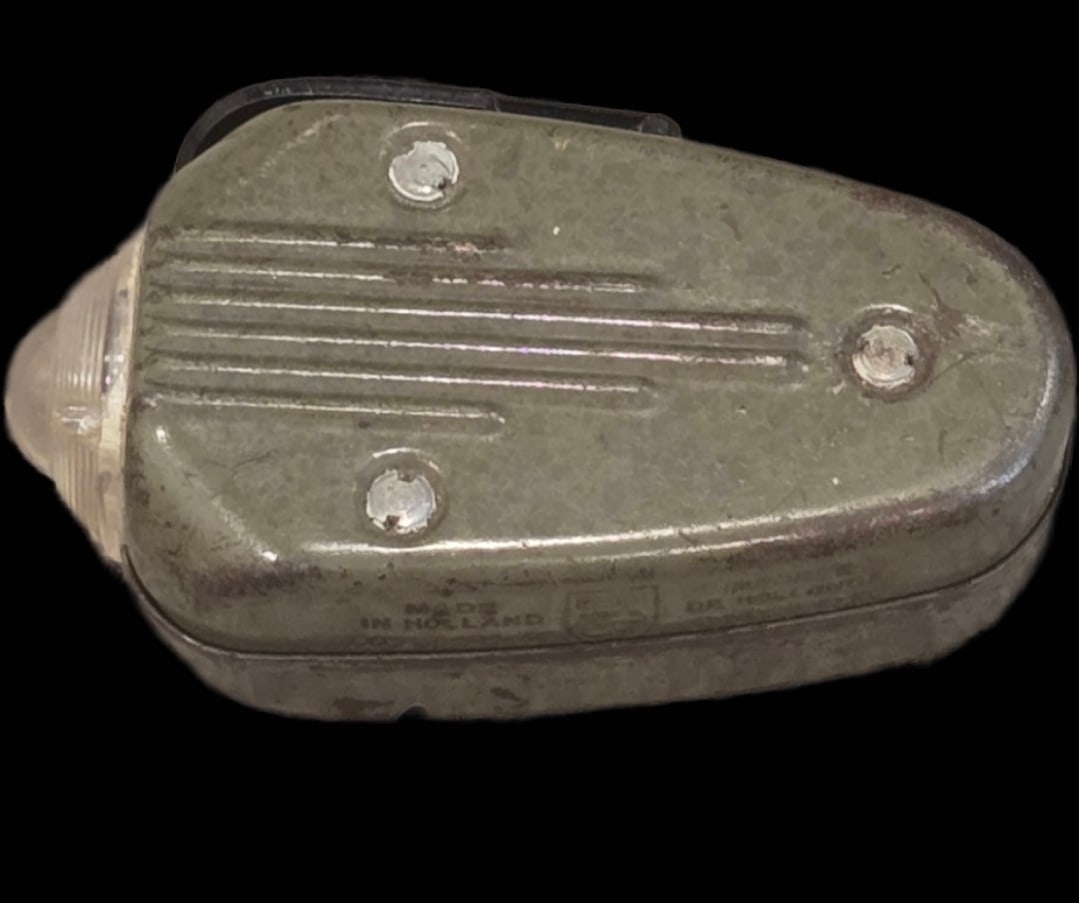
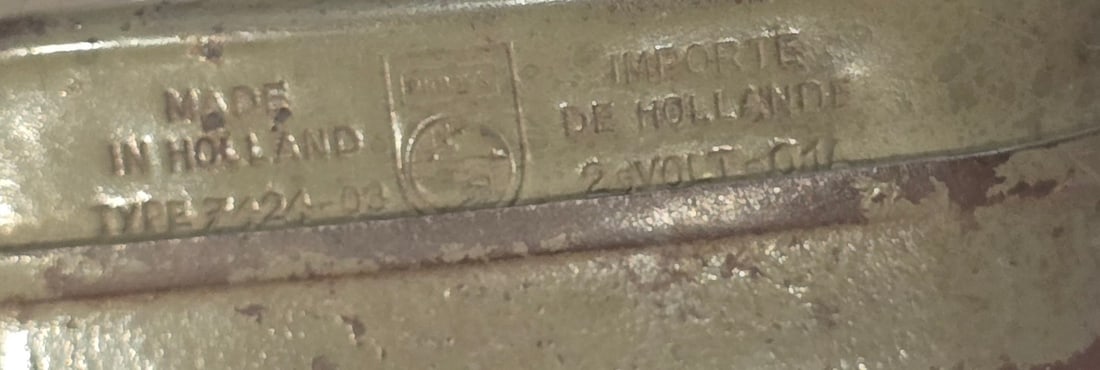
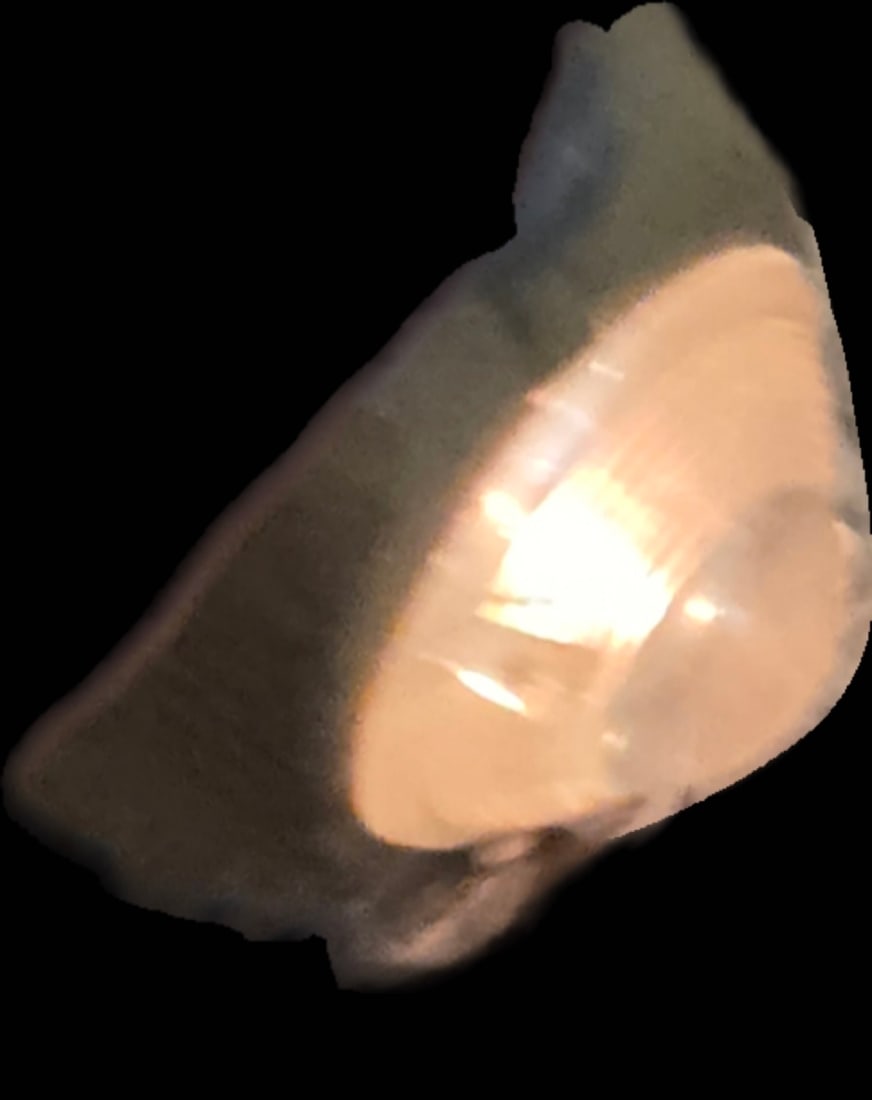
Philips Type 7424-03 ‘Knijpkat’ Hand-Squeeze Dynamo Flashlight, Made in Holland, occupied-era production, olive-painted steel body with working generator Offered here is a Philips Type 7424-03 dynamo torch, the celebrated ‘Knijpkat’ or ‘squeezing cat’ flashlight produced by N.V. Philips’ Gloeilampenfabrieken of Eindhoven during the Second World War. The casing is stamped MADE IN HOLLAND / TYPE 7424-03 / IMPORTE DE HOLLANDE / 2.6 VOLT – 0.1 A alongside the Philips shield trademark, confirming both model and wartime manufacture. No separate published biography attaches to this individual example, and its story rests in the markings and construction typical of the type. The Knijpkat earned its affectionate Dutch nickname from the distinctive purring, whining hum produced by its internal flywheel and gear train as the operator repeatedly squeezed the spring-loaded lever to spin the small dynamo and generate current – no batteries required. Introduced in the early 1940s, these compact, battery-less torches became indispensable across occupied Europe under strict wartime blackout regulations, when conventional cells were scarce or rationed and any open light risked drawing the attention of air raid wardens or enemy aircraft. Civilians relied on them for controllable illumination in homes and shelters, while military personnel found them equally useful in the field. Production of the type continued under German oversight during the occupation, with output associated in historical accounts with workshops including those at Kamp Vught (Herzogenbusch concentration camp); the rarest surviving examples carry an additional ‘Wehrmachtseigentum’ property stamp denoting direct military issue, though the markings visible on this example are of the standard civilian/export pattern and do not establish such ownership. The torch is constructed of pressed sheet steel finished in an olive-green to feldgrau paint, tapering to a rounded nose that houses the original conical glass lens, clear and intact. The top surface carries the long ribbed squeeze-lever and a smaller hinged locking latch that secures the mechanism when not in use; both move freely, and the internal generator remains functional, with the torch photographed illuminating under hand pumping. The underside bears the impressed Philips shield logo along with the legible model, origin, and voltage markings noted above. No case, box, or accompanying paperwork is present; the torch is offered as the standalone flashlight shown in the photographs. Overall the piece shows honest, consistent age and field wear: moderate edge and high-point paint loss revealing the underlying steel, scattered surface oxidation and patina spots, and light abrasions across the body consistent with genuine period handling rather than reproduction or refinishing. A compact, mechanically sound relic of wartime ingenuity – a battery-less blackout light that once hummed its quiet, feline note in the darkened streets and shelters of occupied Holland.
Share this lot: