Fall 2026 Militaria and Aviation Auction
Lot 354:
Description
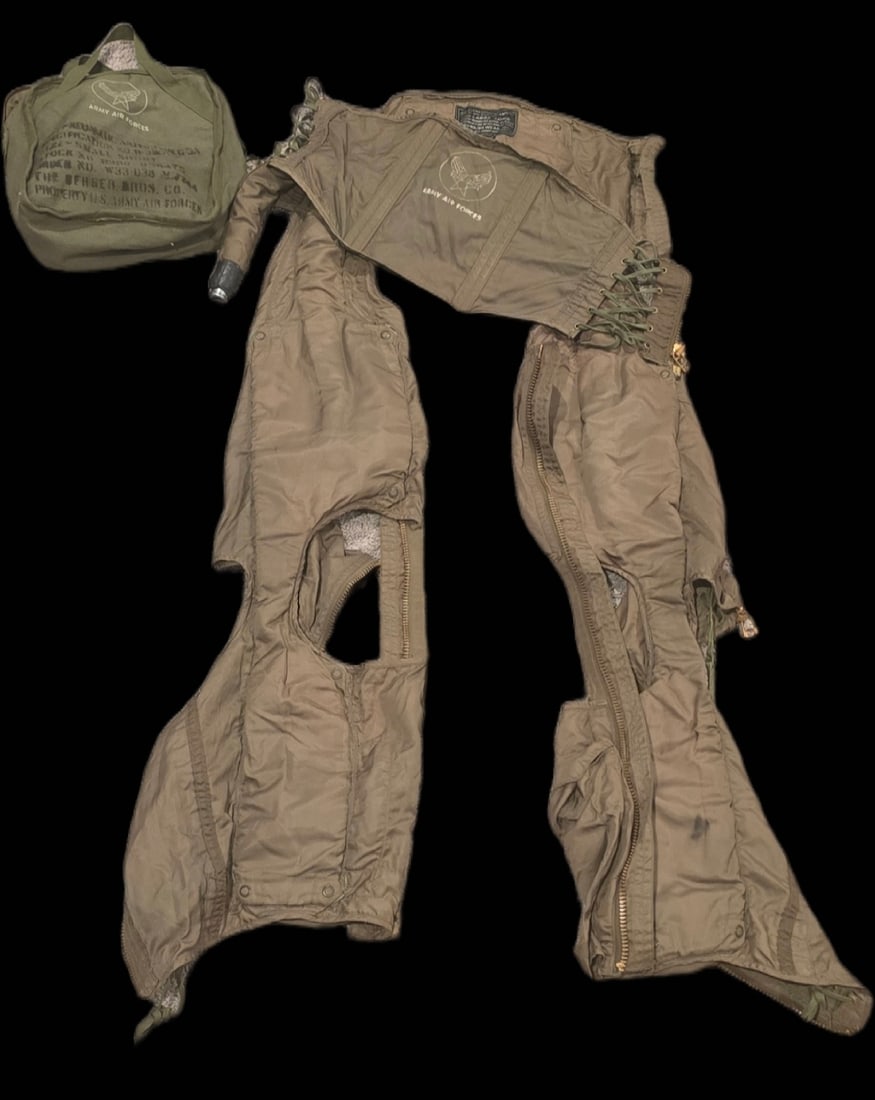
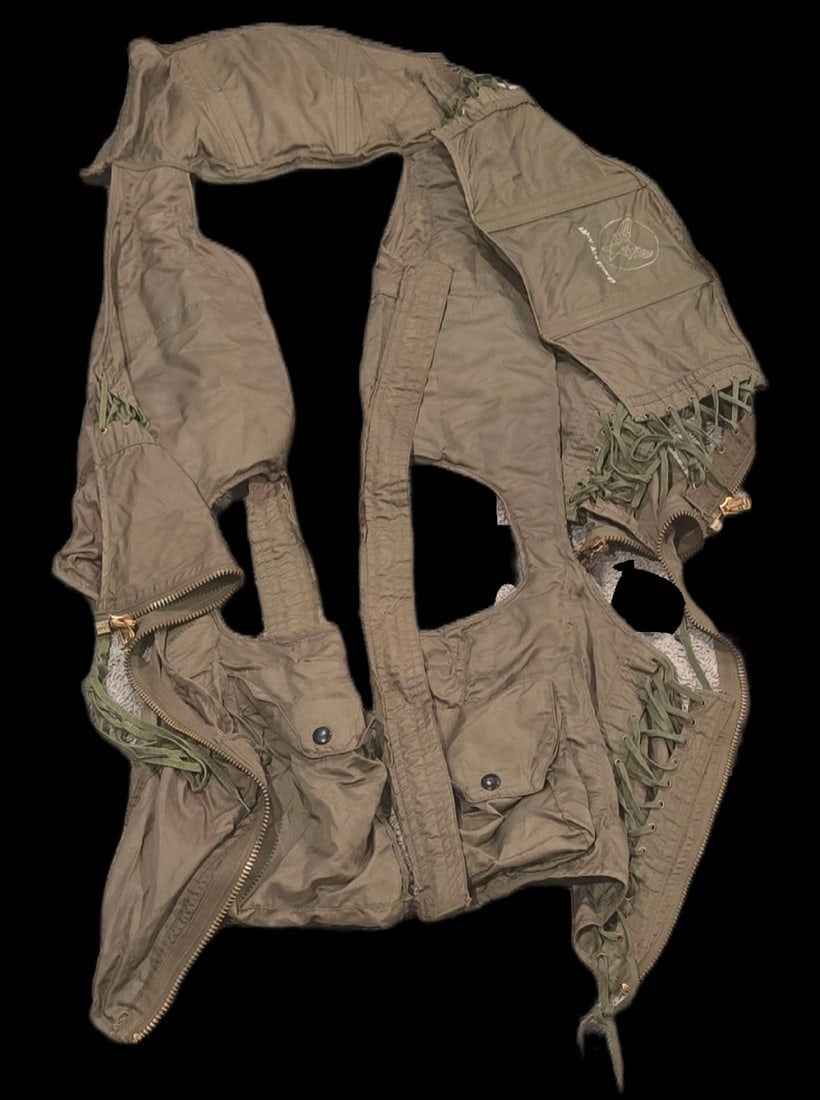
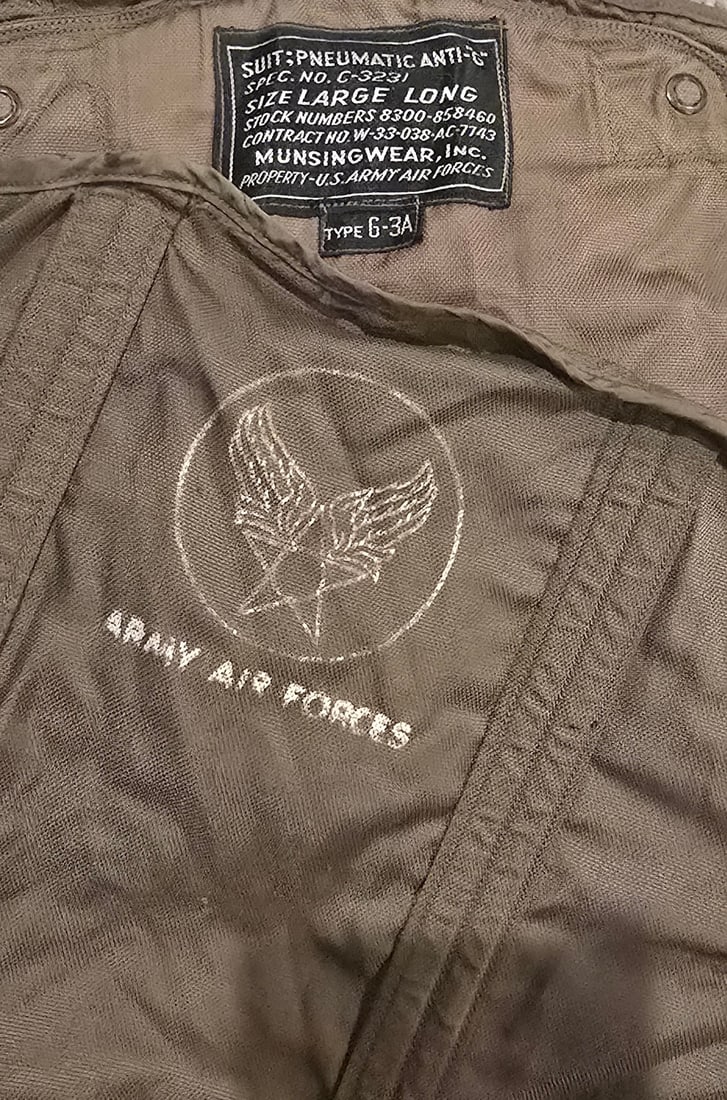
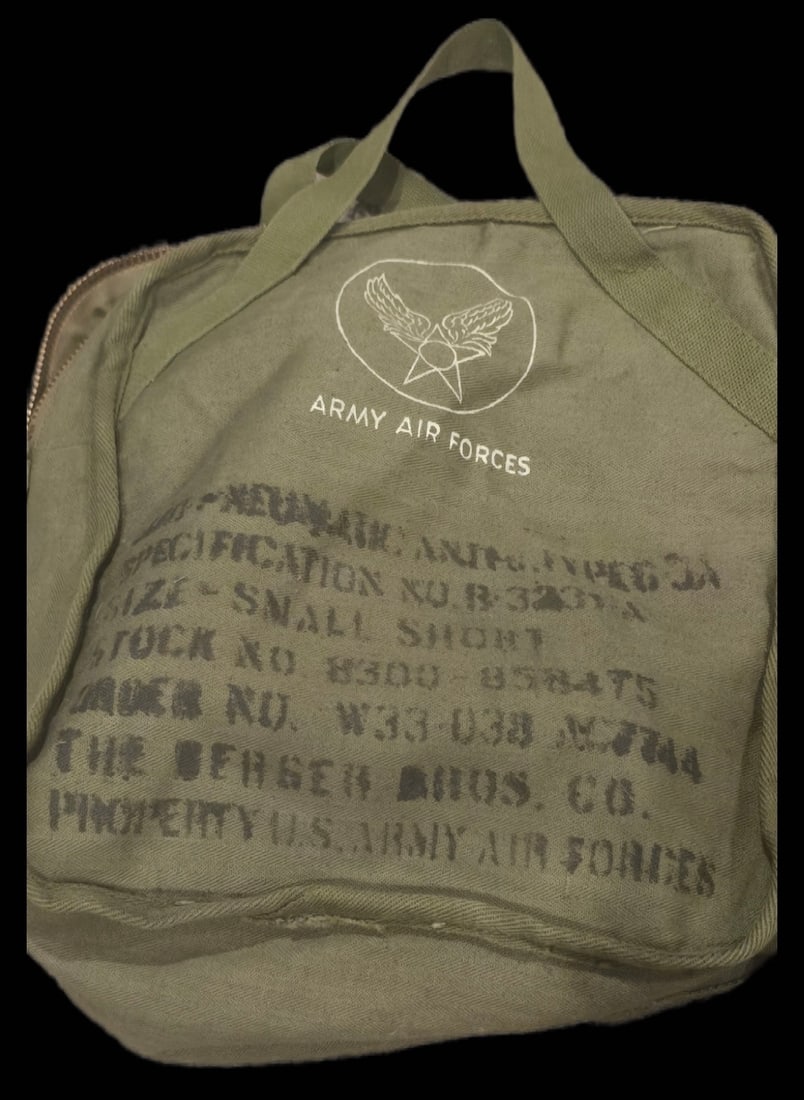
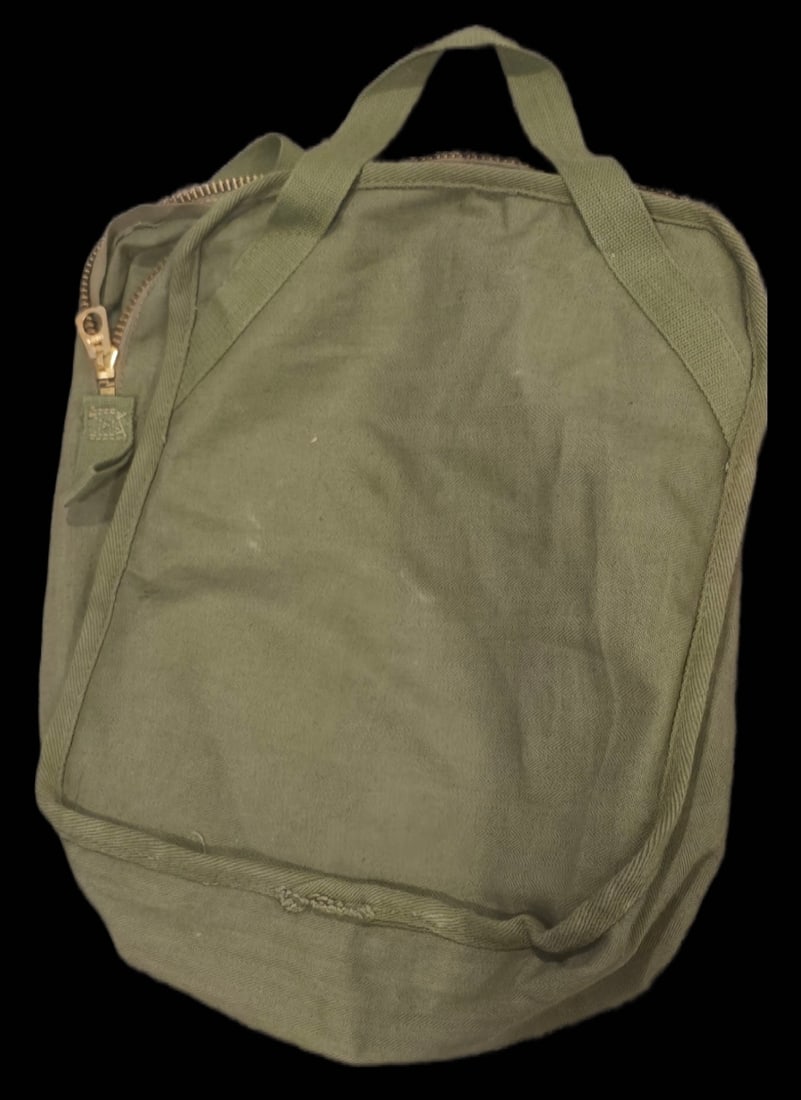
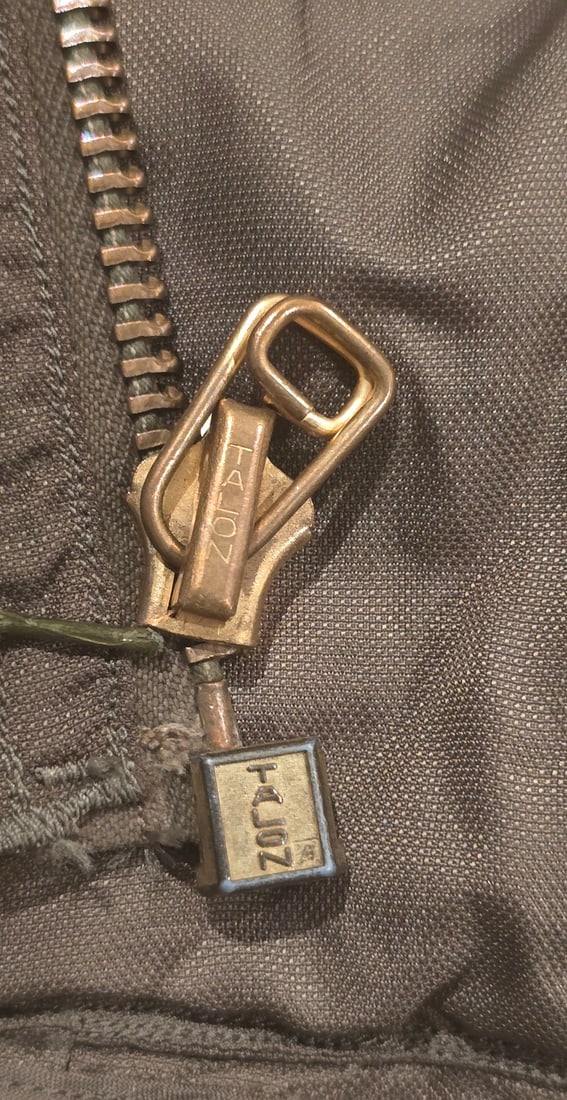
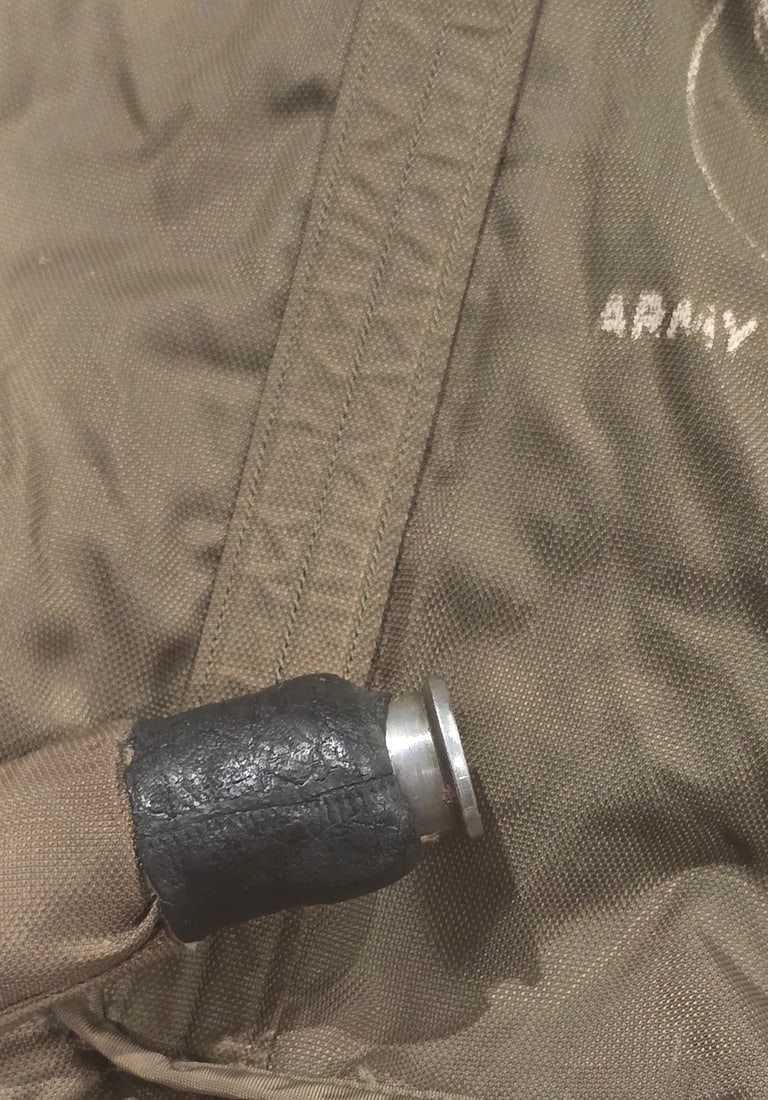
WWII USAAF Type G-3A Pneumatic Anti-G Suit, Size Large Long, by Munsingwear, Inc., Contract W-33-038-AC-7743, Spec. No. C-3231, Stock No. 8300-858460, with original Berger Brothers Co. canvas carrying case, circa 1944-1945. Offered here is a well-preserved example of the Type G-3A pneumatic anti-G suit – the cut-away "speed jeans" rushed into Army Air Forces service in the closing months of World War II to keep high-performance fighter pilots conscious under sustained high-G maneuvering. This suit is tagged Size Large Long and retains its full woven identification label sewn to the waistband, giving maker, specification, stock, and contract numbers in full, alongside crisp Army Air Forces wing-and-star stencils front and back. No individual pilot or unit issue record accompanies the piece; its story is carried entirely by its manufacturer’s tags, contract markings, and surviving physical construction. Introduced in late 1944 to supersede the bulkier, full-body G-2 suit, the Type G-3 and G-3A represented a major evolution in flight physiology equipment, trading coverage for a corset-like, cut-away design that could be worn over standard flight coveralls without hampering cockpit mobility. Pneumatic bladders built into the abdomen, thighs, and calves connected via a rubber hose to an automatic pressure valve mounted in the aircraft; under G-load, the bladders inflated to force blood back toward the pilot’s head, staving off the blackout that had cost airmen control of their aircraft during hard turns and dives. Fighter pilots flying the P-51 Mustang and P-47 Thunderbolt in the ETO and Pacific theaters were among the first to receive these garments as the AAF raced to match the increasing performance envelope of late-war fighters, and the G-3A’s basic pneumatic-bladder principle became the direct engineering ancestor of the G-suits worn by jet fighter pilots in the decades that followed. The suit presents in strong olive-drab color throughout its nylon and mesh body, with the AAF wing-and-star stencil remaining crisp and legible on the reverse waist panel. The woven contract tag is fully intact and readable. Brass Talon zippers, stamped and marked on the pull tabs, secure the cut-away leg openings, and the original green cotton lacing survives at the waist and thigh adjustment points for a custom fit. The rubber inflation hose remains attached with its leather-wrapped metal connector sleeve, showing only age-appropriate surface drying and cracking consistent with eight decades since manufacture. Accompanying the suit is its period canvas carrying case, produced under separate AAF contract by The Berger Brothers Co. and stenciled Small Short, with web carrying handles, a brass zipper closure, and a painted Army Air Forces wing-and-star emblem above a black stenciled specification block listing size, stock number, and contract data. The differing size markings between suit and bag are typical of period government supply practice, in which garments and carrying cases were drawn from separate contract stock rather than issued as matched pairs. Light handling stains are visible on the lower leg panels of the suit, and the case shows mild surface wear with fraying along the zipper seam and slight fading to portions of its stencil. A well-marked Large Long G-3A anti-G suit paired with its scarce original AAF carrying case – a tangible survivor of the pneumatic technology that let American fighter pilots out-turn their opponents without blacking out.
Share this lot: