Fall 2026 Militaria and Aviation Auction
Lot 355:
Description
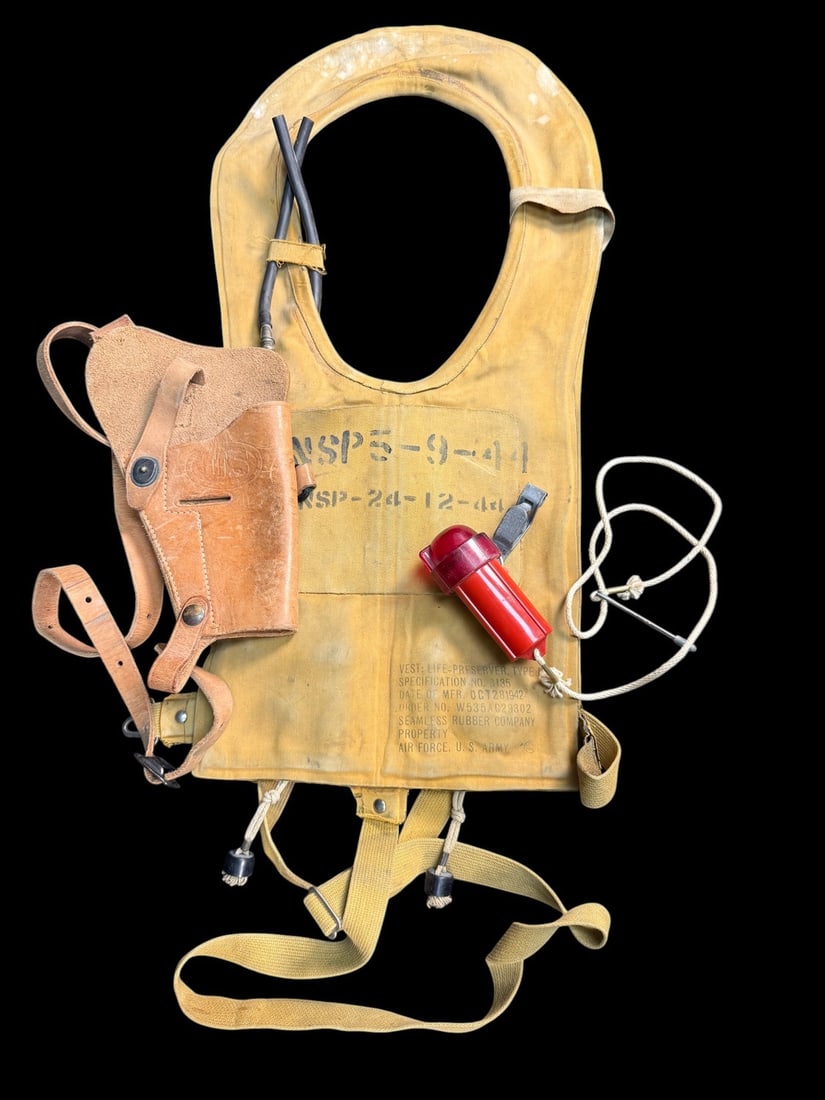
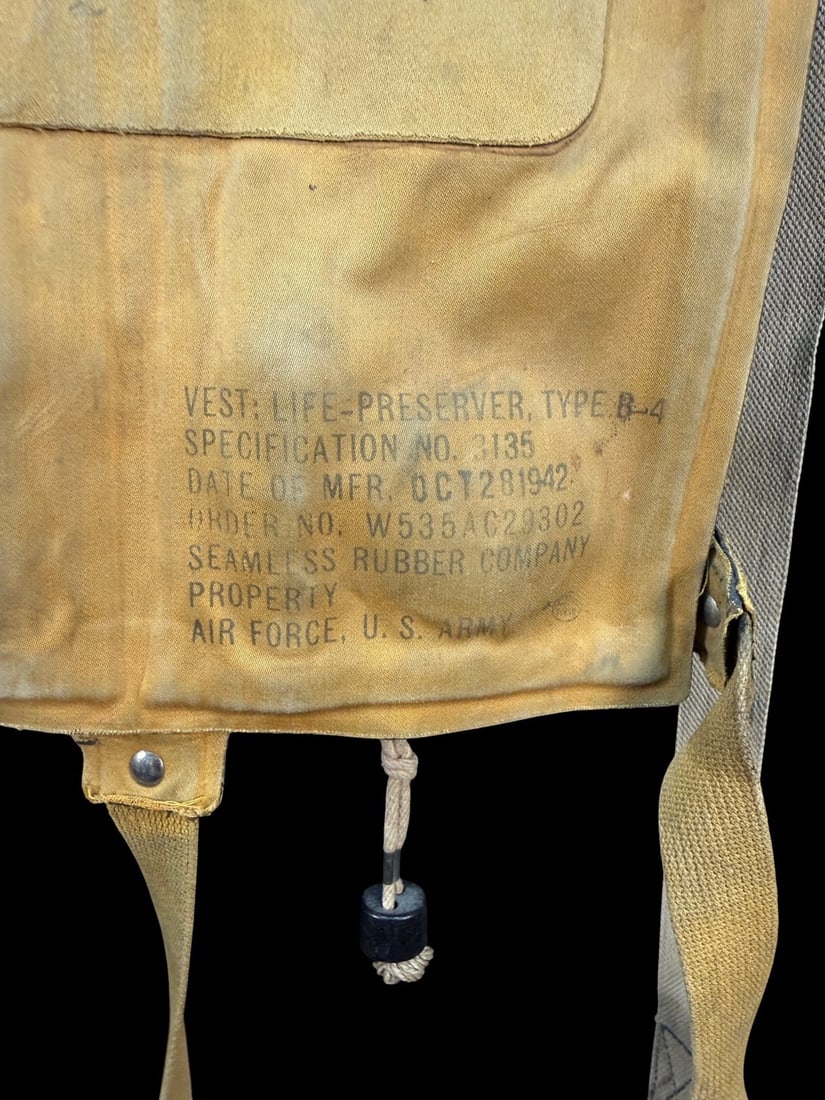
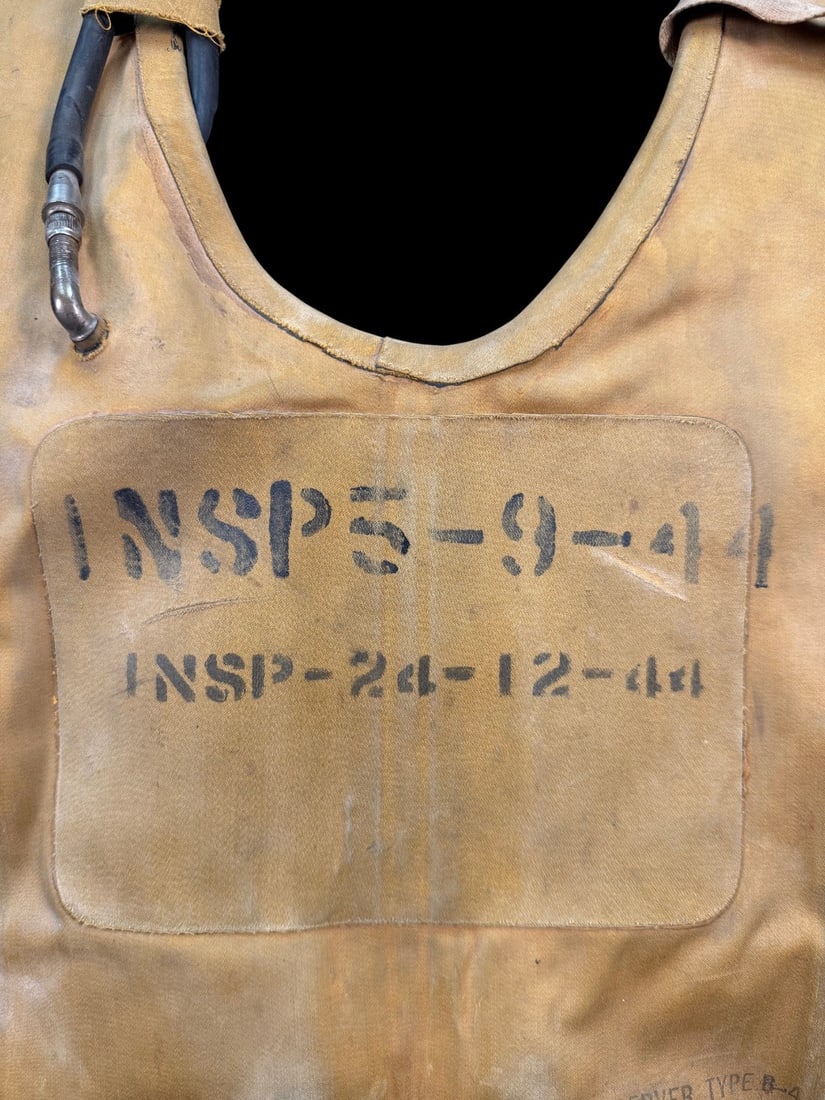
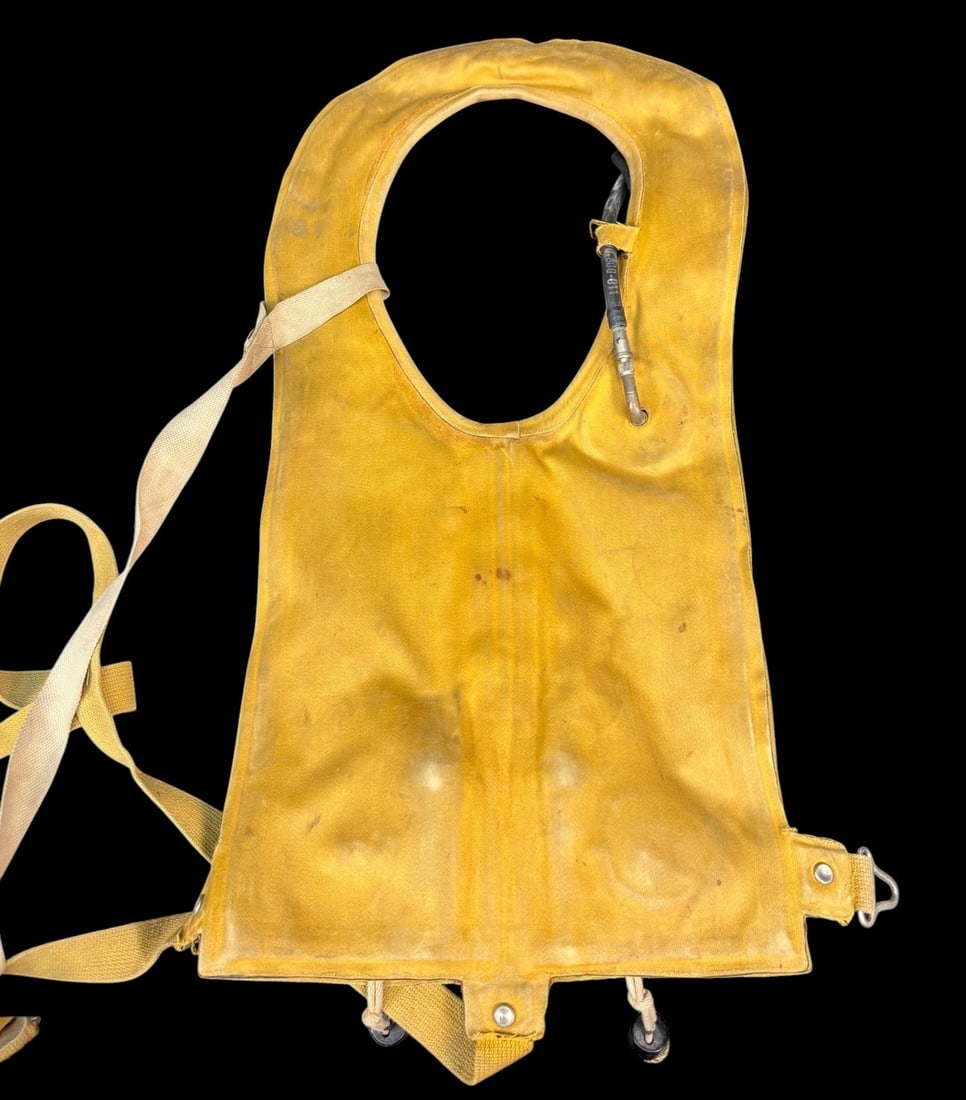
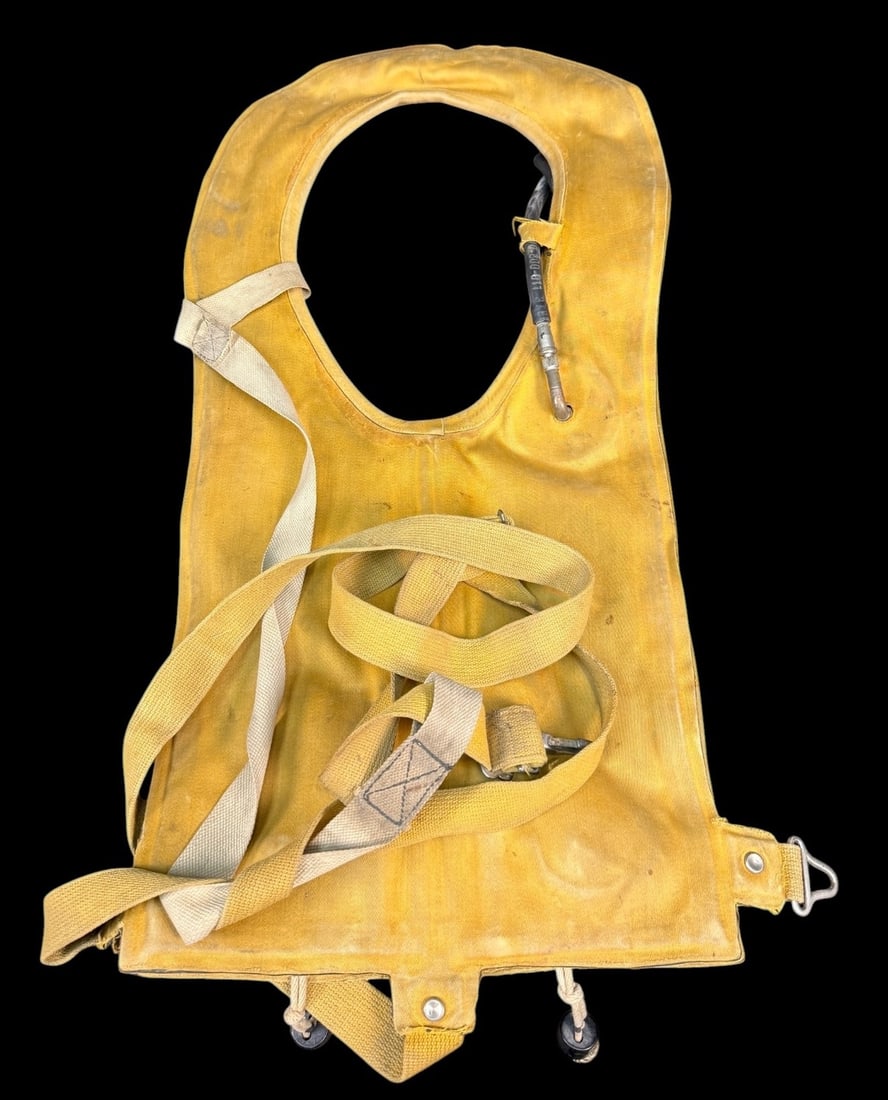
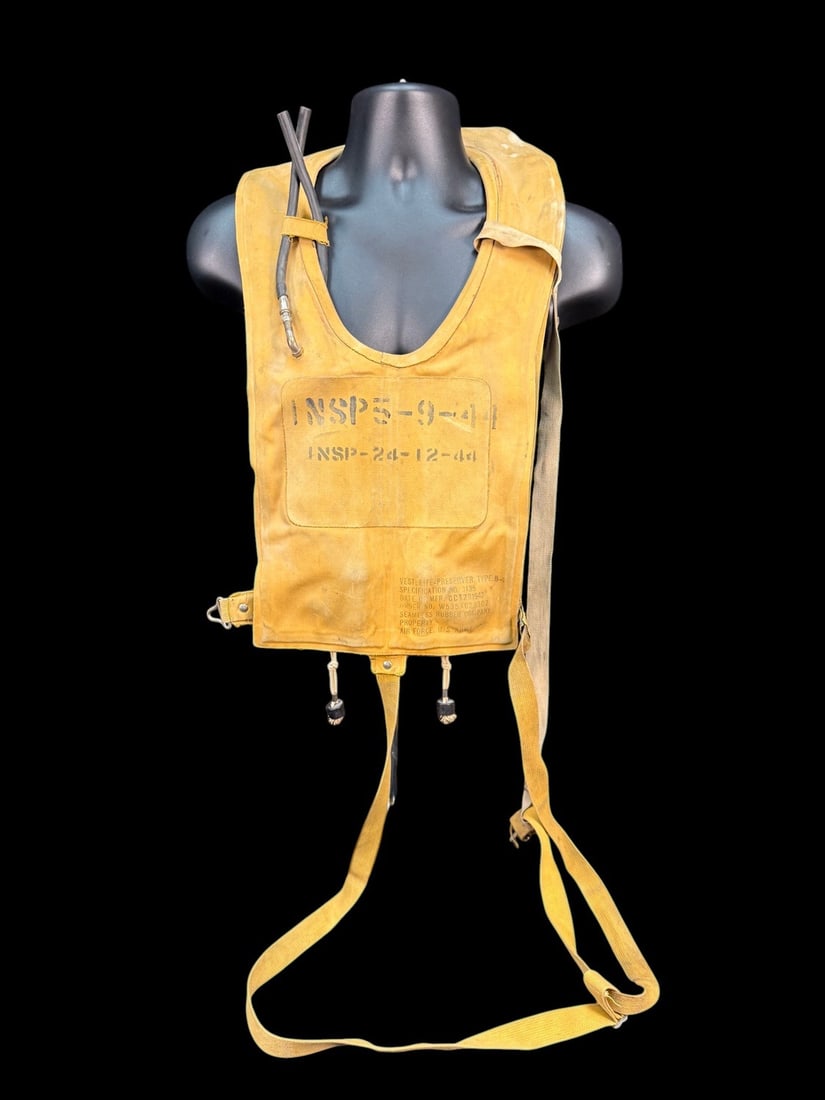
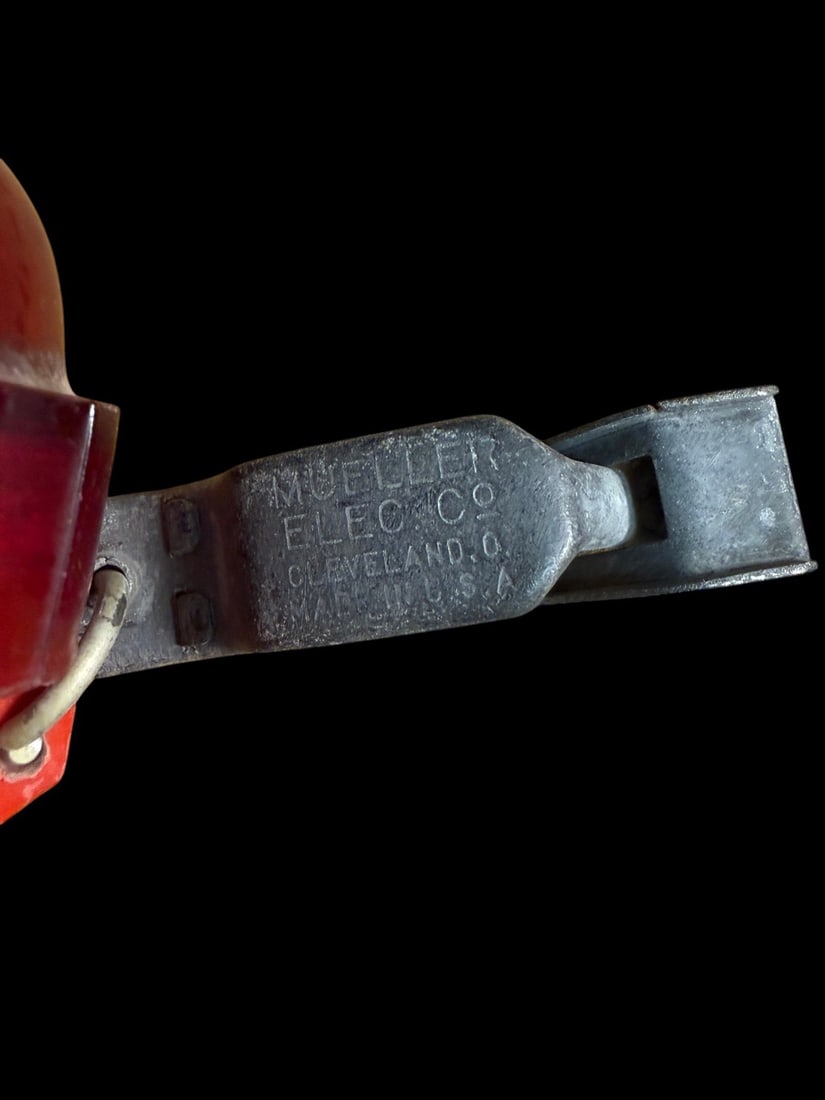
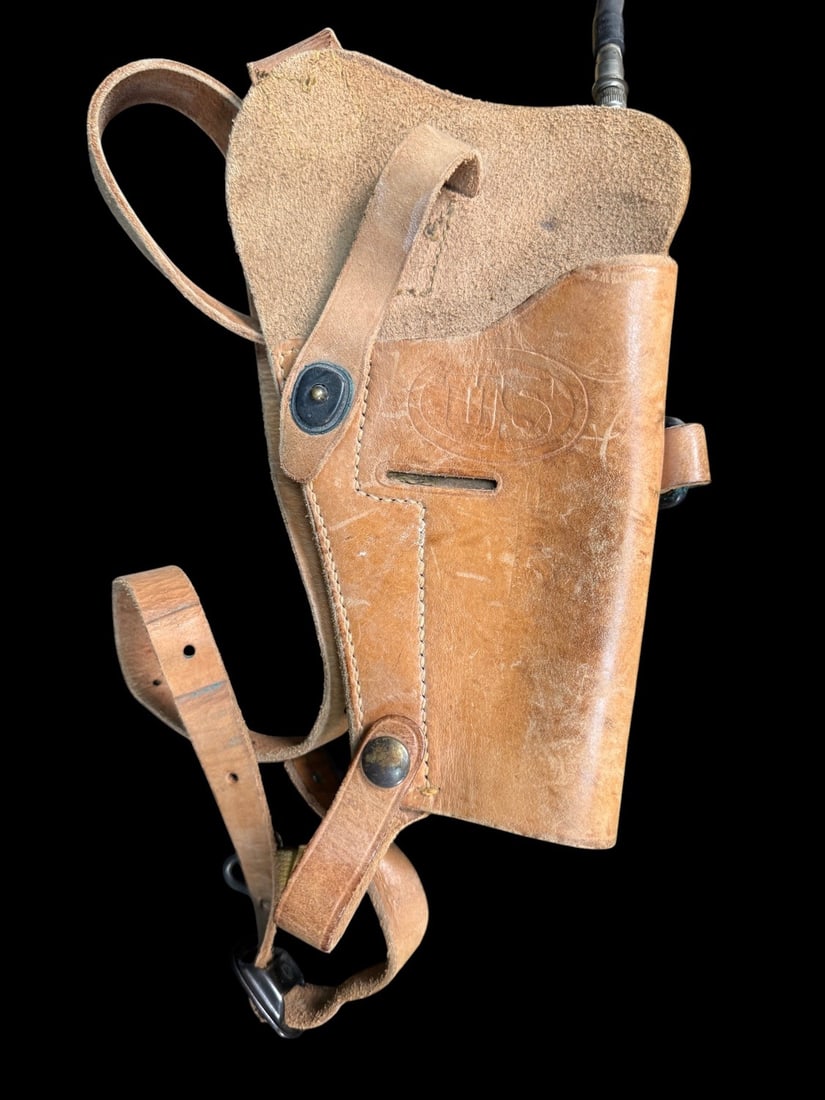
WWII USAAF B-4 Mae West, M3 Holster & Signal Light. WWII USAAF Type B-4 ‘Mae West’ Life Preserver Vest by Seamless Rubber Co., dated Oct. 28 1942, Specification No. 3135, Order No. W535AC29302, with 1944 field inspection stamps, an M3 leather shoulder holster for the M1911A1 pistol, and a Mueller Elec. Co. emergency locator light. This grouping brings together three pieces of personal survival and sidearm equipment associated with American aircrew of the Second World War: a Type B-4 pneumatic life preserver, an M3 leather shoulder holster, and a red celluloid distress light with its original clip. No individual named recipient has been identified and no separate published biography accompanies the grouping; its interest rests in the manufacturer markings, contract data, and inspection stenciling carried on the vest itself, which firmly anchor it to wartime U.S. Army Air Forces procurement and field service. The B-4 preserver was the standard-issue flotation device for bomber and transport crews flying long overwater legs across the Atlantic, Pacific, and Mediterranean theaters, where a single ditching could leave a crew with only minutes to inflate and deploy their gear before going into the water. Worn draped over the shoulders and buckled at the waist, it could be inflated by twin CO2 cartridges activated by pull cords, or, if those failed, by the oral inflation tube still fitted to this example. The stamped specification and order numbers, together with the two hand-applied inspection dates of 5 September and 24 December 1944, indicate the vest was checked and recertified for continued service well after its October 1942 manufacture, a common practice as flight gear was cycled through squadrons over multiple deployments. The accompanying M3 shoulder holster reflects the practical reality of cockpit life, where a standard belt holster was impractical beneath a parachute harness and flotation gear, prompting wide adoption of the shoulder-carry pattern for the M1911A1 sidearm among pilots and aircrew who might need quick access to a pistol after bailing out or ditching. The small red emergency light, fitted with its Mueller Elec. Co. alligator clamp, served as a simple but vital means of signaling rescuers in poor visibility, consistent with the layered survival philosophy built into USAAF flight equipment of the period. The vest is constructed of yellow rubberized cotton twill in two inflatable chambers, stamped ‘VEST: LIFE-PRESERVER, TYPE B-4, SPECIFICATION NO. 3135, DATE OF MFR. OCT 28 1942, ORDER NO. W535AC29302, SEAMLESS RUBBER COMPANY, PROPERTY AIR FORCE, U.S. ARMY, ‘ with the separately stenciled inspection dates ‘INSP 5-9-44’ and ‘INSP-24-12-44’ above the maker’s block. A metal-tipped oral inflation tube remains fitted at the neckline, and the black pull-toggles for the CO2 activation cords are present at the lower hem, alongside the original webbing harness straps and nickel-finish snap fasteners. The M3 holster is of russet leather with an embossed ‘US’ oval to the flap, a working snap closure, adjustable leather shoulder and retaining straps, and sound stitching throughout. The distress light is a red celluloid cylinder with a spring-loaded switch cap and a Mueller Elec. Co., Cleveland, Ohio clamp stamped ‘MADE IN U.S.A.’ along its jaw, retaining its cord lanyard. Condition throughout is very good for issued flight equipment of this age. The rubberized fabric of the vest remains supple with light surface soiling, mottled age toning, and scattered staining, while the stenciled markings remain crisp and legible. The holster shows honest service wear with scuffing and a mellow darkened patina to the leather but retains sound stitching and a functioning snap. The signal light is complete with its clip intact, showing only minor handling wear. A well-matched trio of USAAF flight survival gear that brings together dated flotation equipment, a serviceable sidearm holster, and a rescue signal light, each piece a tangible reminder of the split-second decisions faced by aircrew forced down over water.
Share this lot: