Fall 2026 Militaria and Aviation Auction
Lot 371:
Description
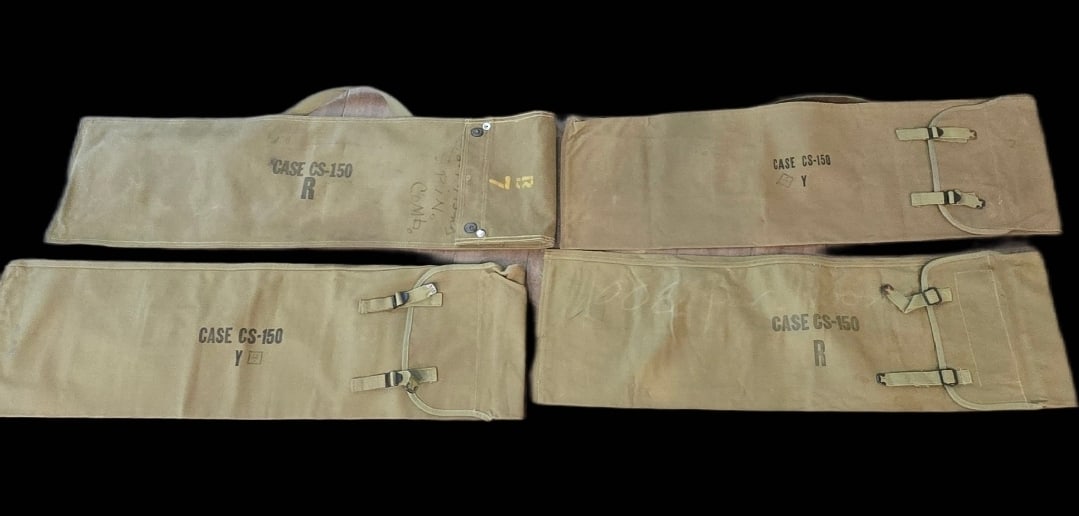
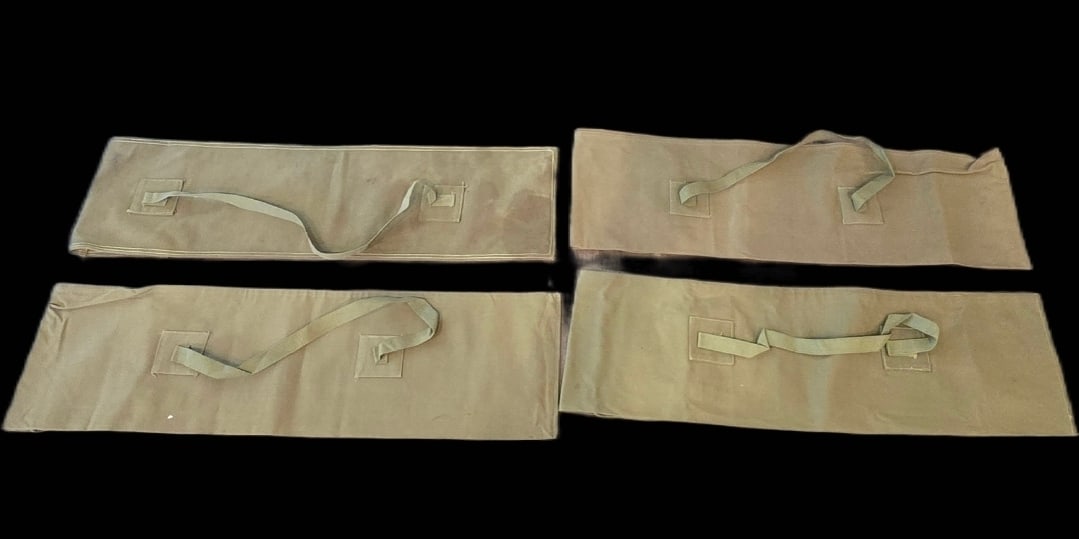
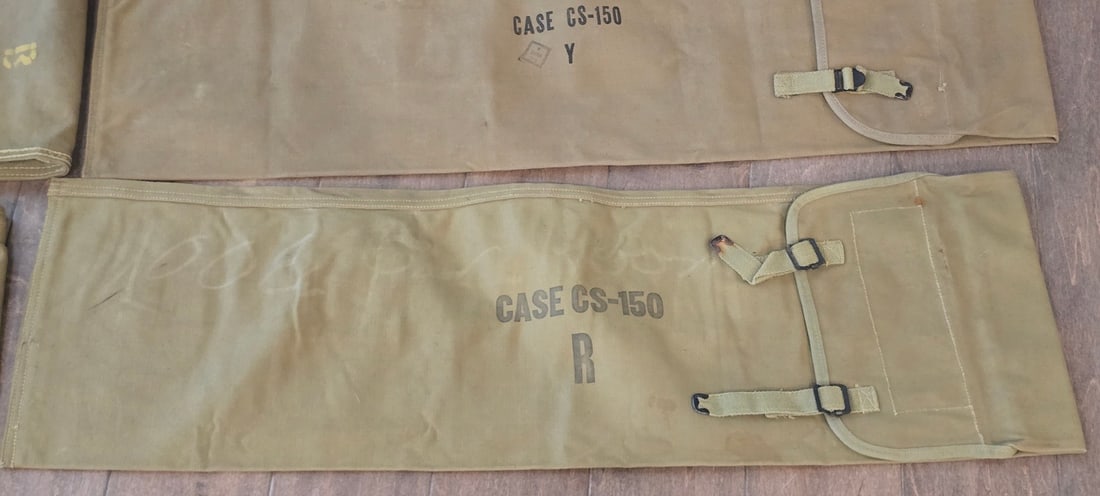
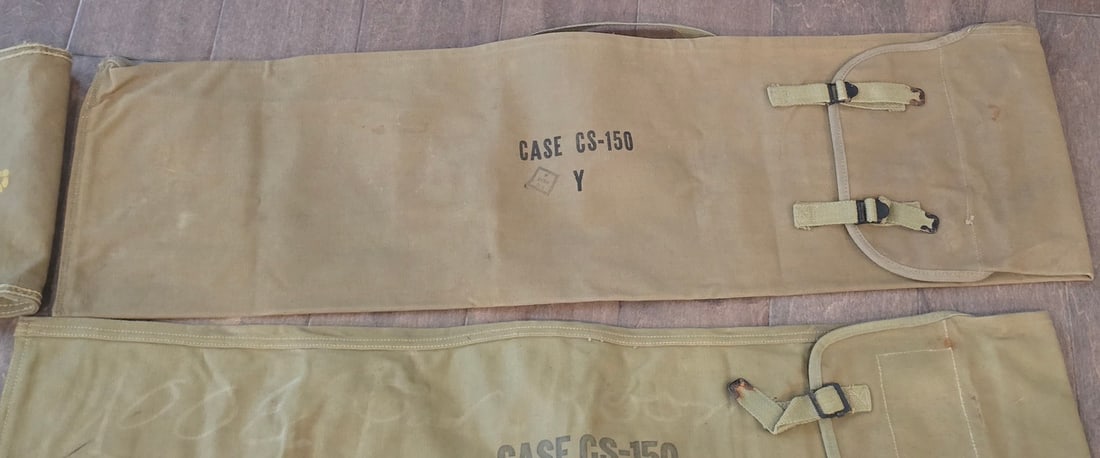
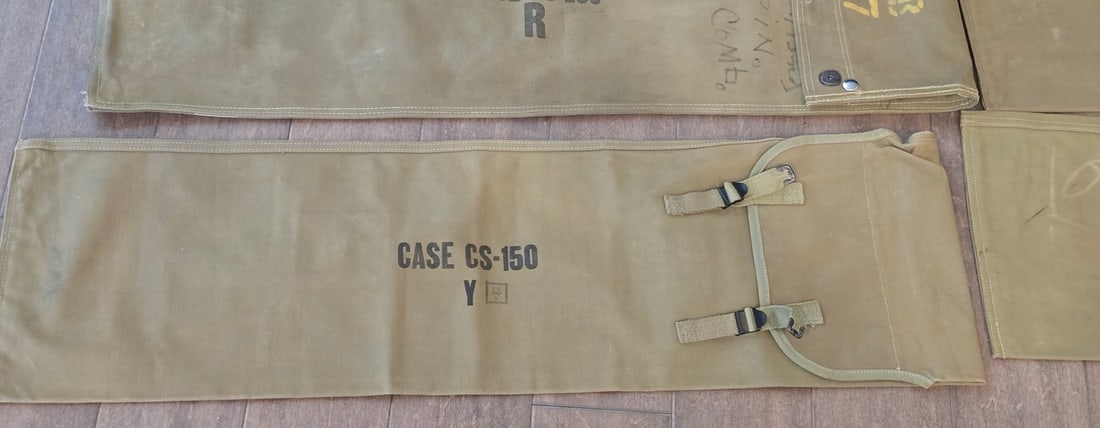
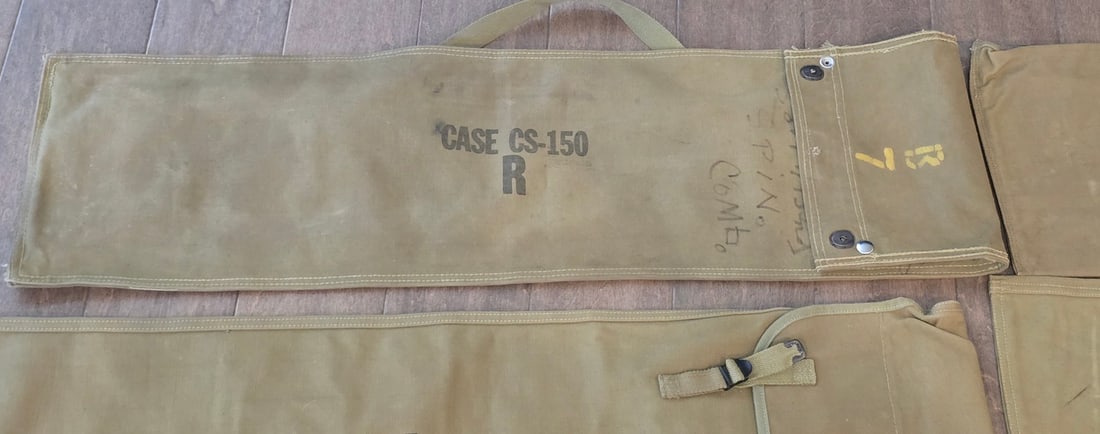
WWII CS-150 Signal Panel Cases, R/Y Study Lot of 4. Lot of Four WWII U.S. Army Signal Corps CS-150 Canvas Panel Cases, Two Stenciled ‘R’ for Red and Two Stenciled ‘Y’ for Yellow, Showing Distinct Construction, Closure and Contractor Variations. Offered here is a study group of four CS-150 canvas carrying cases, the standard U.S. Army Signal Corps sleeve developed to hold and transport high-visibility fabric marker panels used in air-to-ground identification systems such as Panel Set AP-50 and the AL-140/AL-141 series. Two examples are stenciled CASE CS-150 R for red panels and two are stenciled CASE CS-150 Y for yellow, the color coding allowing ground troops and airborne signal teams to select the correct panel fabric quickly without opening every case in the field. These cases were a small but essential link in the Army’s visual signaling network, carried by infantry, forward observers, and airborne troops alike to mark drop zones, landing strips, front lines, and bomb safety lines for supporting aircraft. Airborne Pathfinder teams, who jumped ahead of the main force to prepare and mark drop zones for follow-on paratroopers and gliders, relied on exactly this kind of panel gear to guide incoming serials by day. The Signal Corps fielded these panels widely across the European and Pacific theaters from 1943 onward, and stenciled, field-marked cases such as these are tangible survivors of that recognition effort. All four cases are constructed of khaki-to-olive canvas in a long rectangular sleeve profile sized to hold folded panel fabric, each with a fabric carry strap along one long edge. Three of the four feature dual web strap-and-buckle flap closures, with clearly different buckle hardware, strap placement, and stitching between the examples – one R-marked case and both Y-marked cases share this closure type, though hardware patina and strap tabs vary noticeably across them. The fourth, an R-marked example, is closed instead by a snap-button reinforced fold flap and bears a period hand-inked field inscription reading ‘SP. No. / Comb.’.
Share this lot: