Fall 2026 Militaria and Aviation Auction
Lot 386:
Description
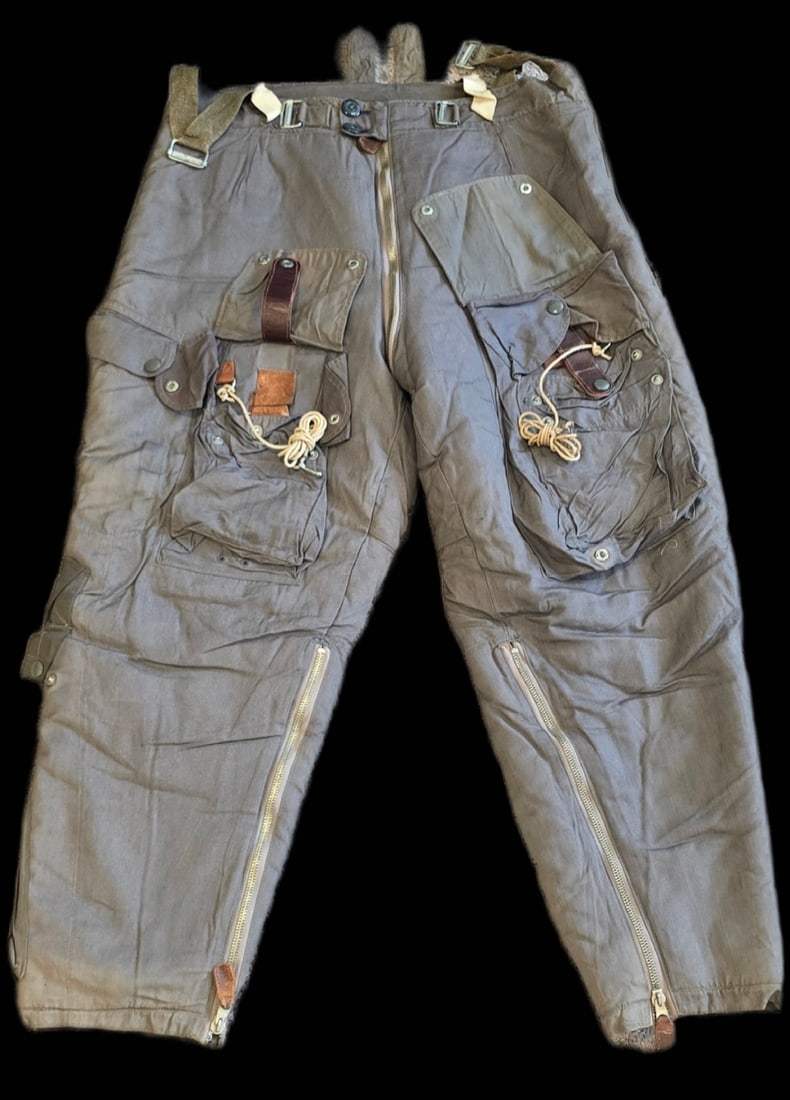
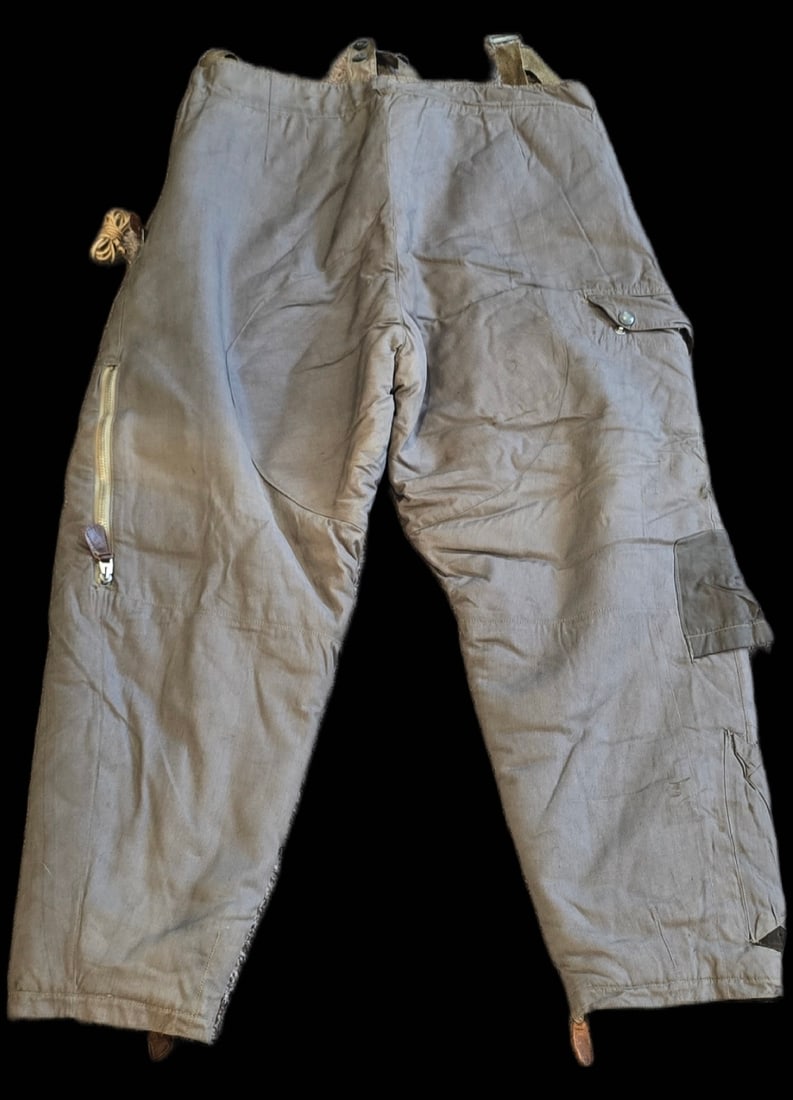
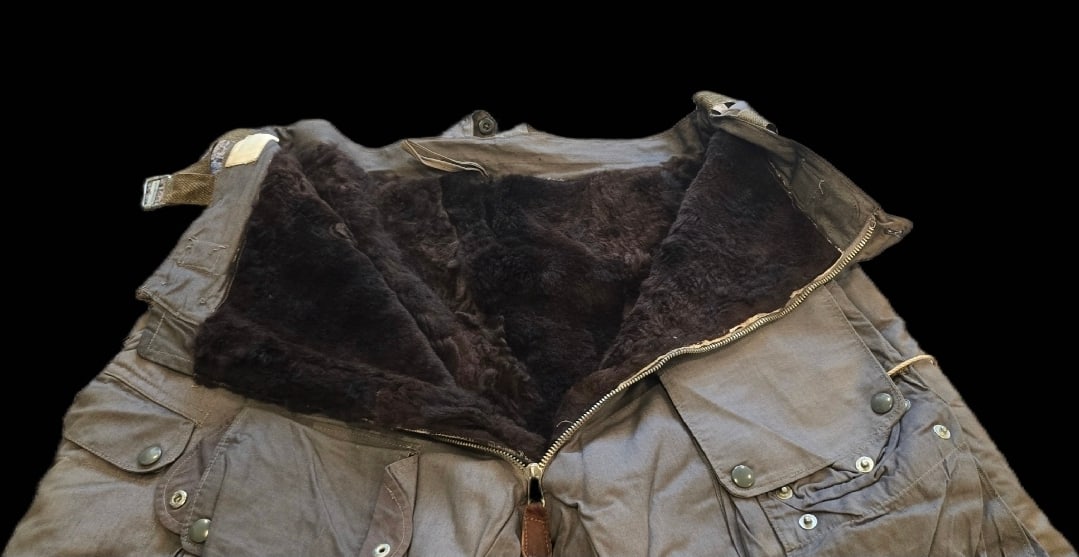
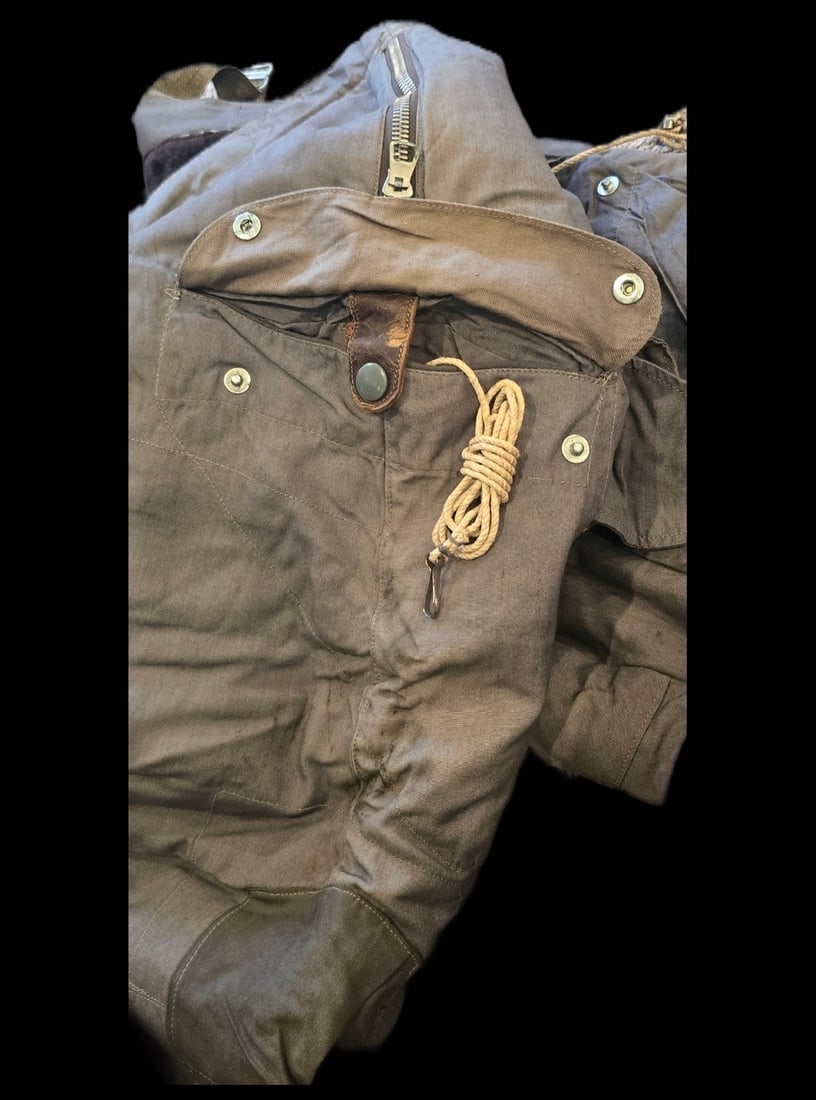
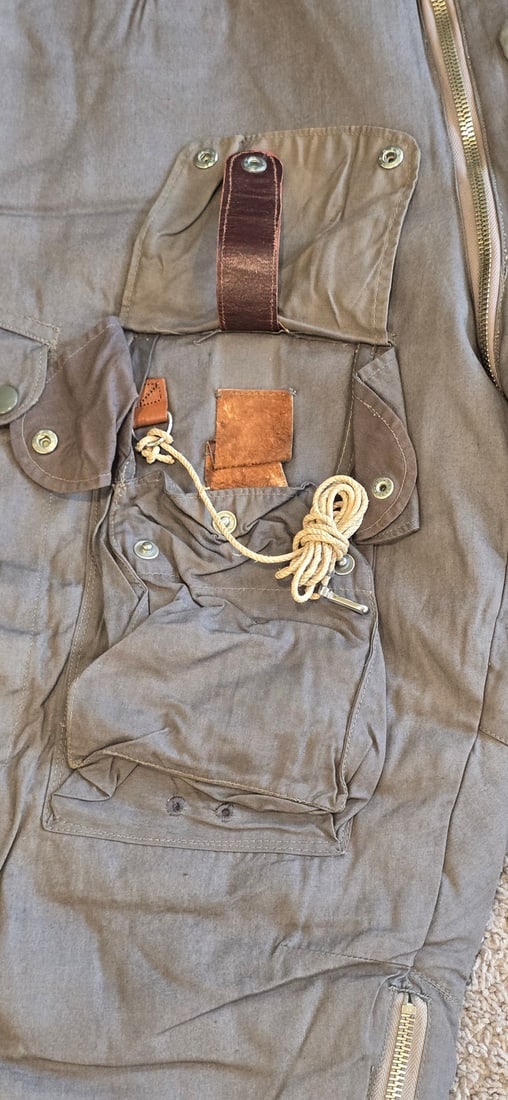
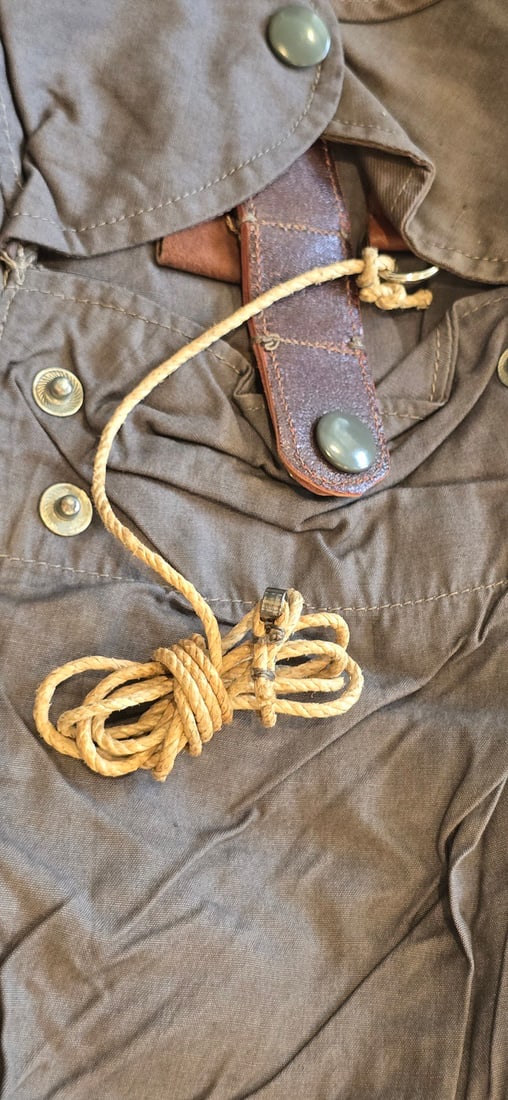
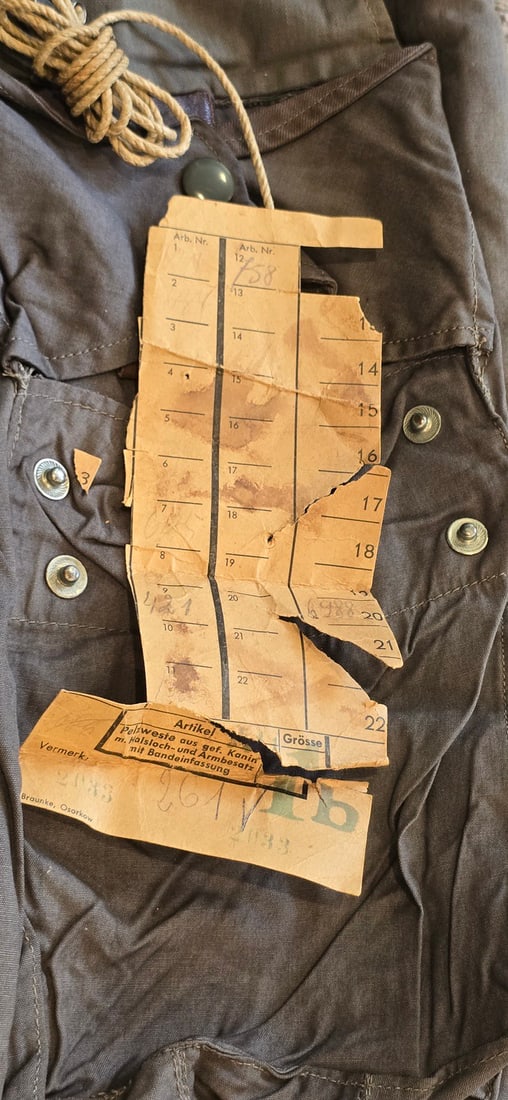
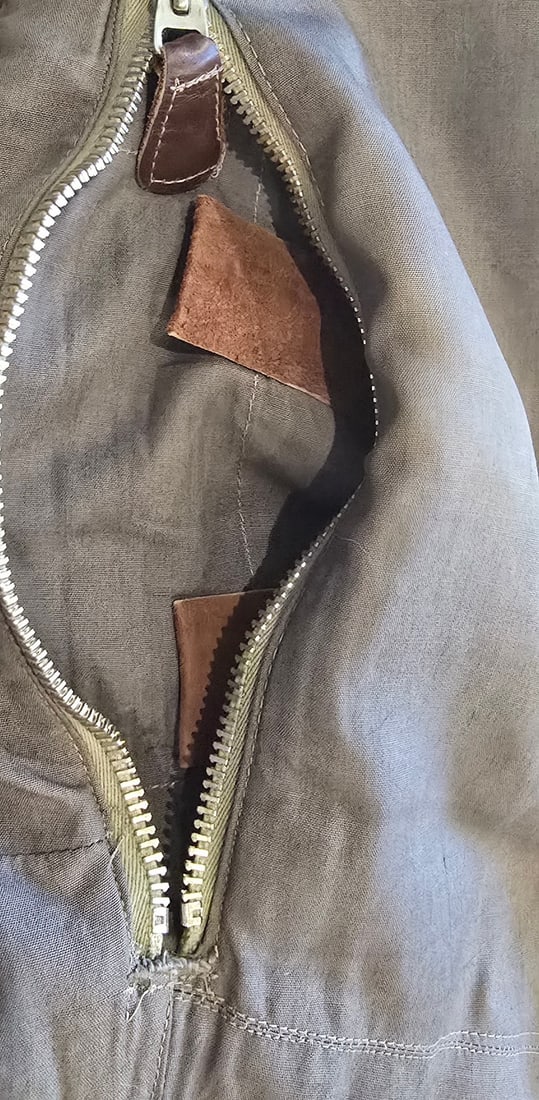
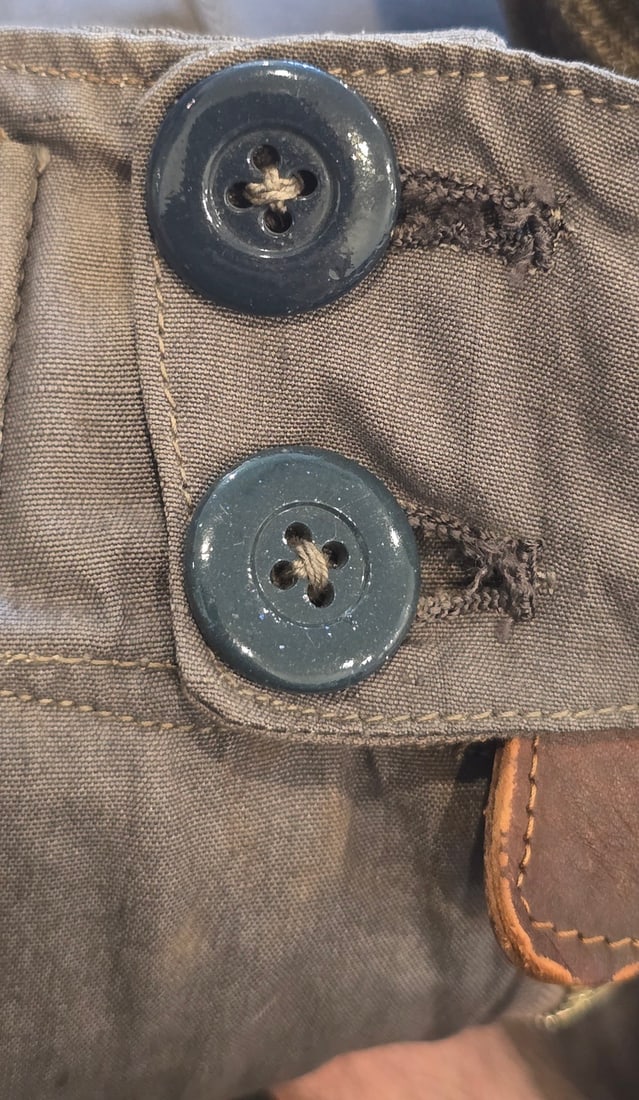
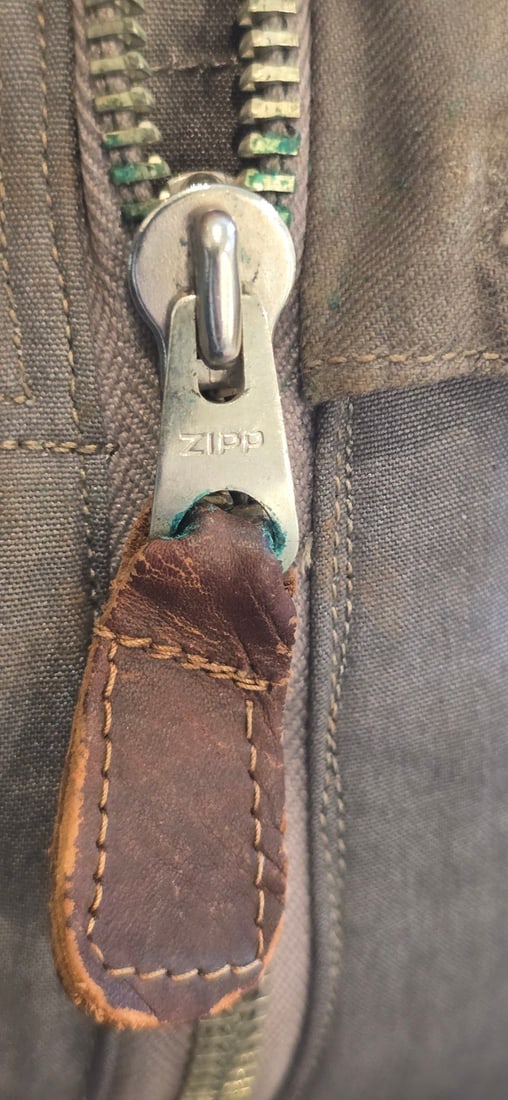
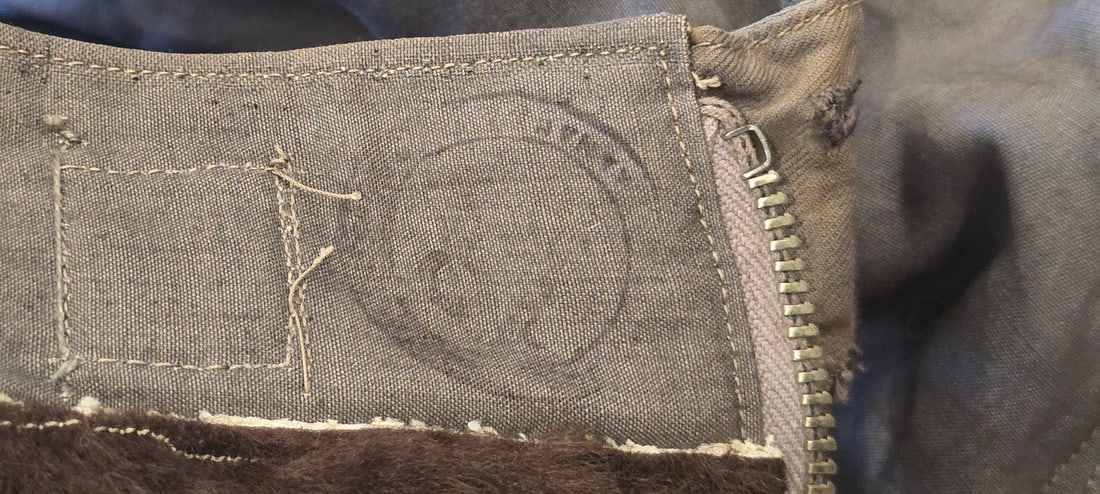
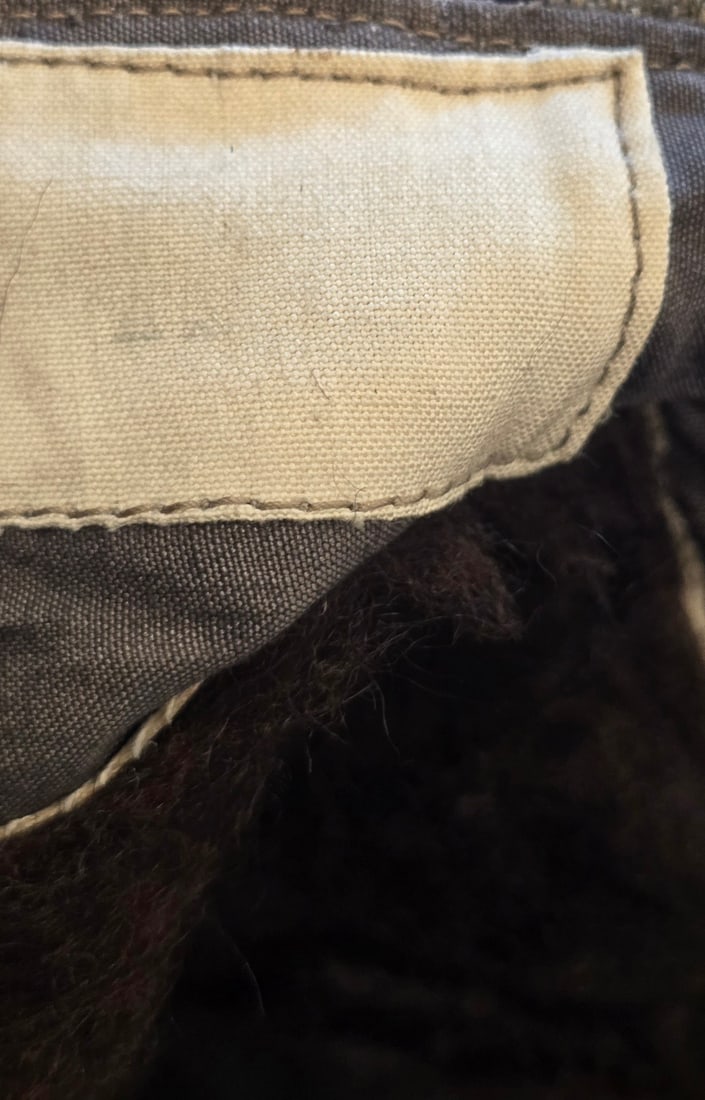
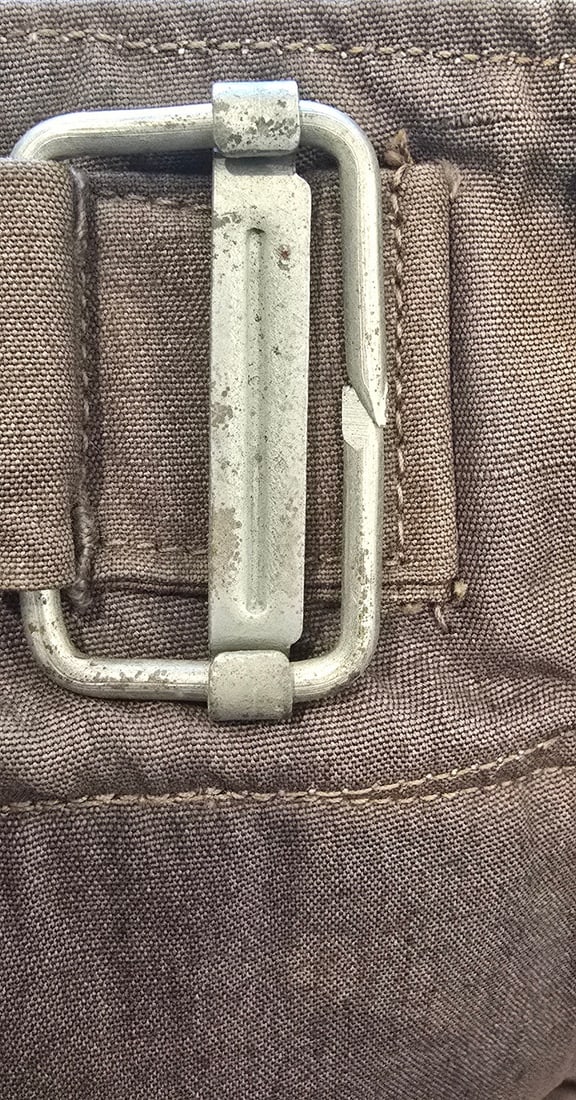
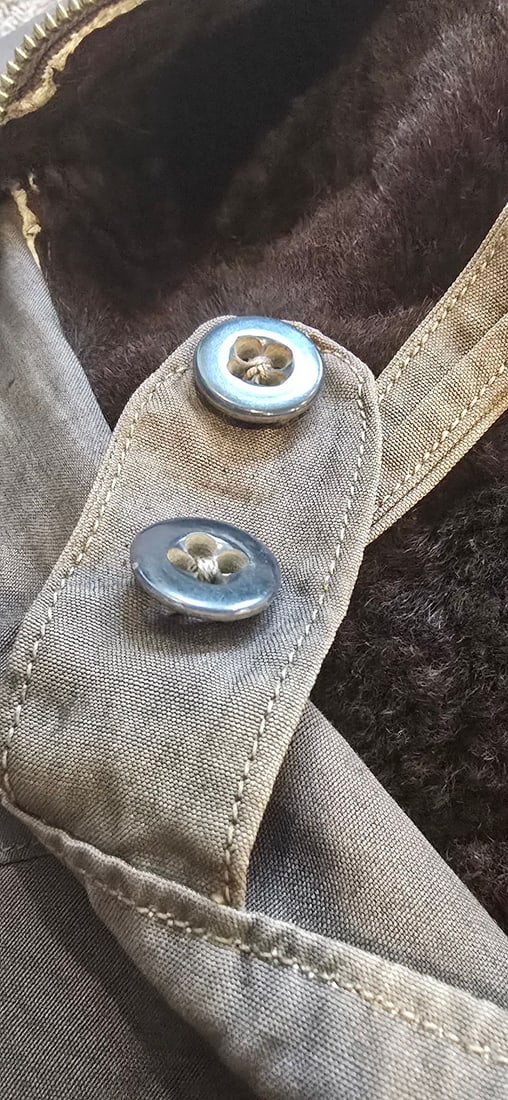
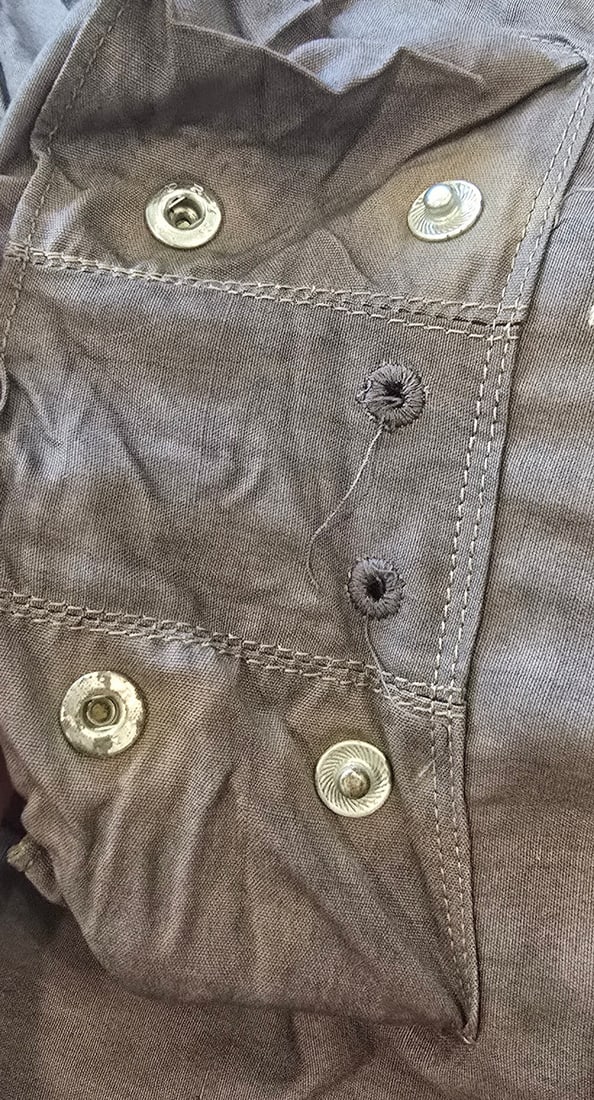
WWII German Luftwaffe High-Altitude Winter Flying Trousers (‘Kanalhosen’/Channel Pants), Shearling-Lined, with ‘Zipp’-Marked Fasteners, ‘Prym’ Press-Studs, Original Rigging Cords and Fragile Factory Tag Marked Braunke, Osorkow, circa 1941-1944 Offered is a well-preserved example of the heavy winter flying trousers issued to Luftwaffe aircrew for high-altitude operations over the English Channel and the wider European and Eastern Front theaters – the garment universally known to collectors as Kanalhosen, or Channel Pants. No individual recipient is identified with this example, and no separate published biography accompanies it; the story of its service rests in its construction, hardware markings, and the fragile paper slip tucked within a thigh pocket, printed with the article description ‘Pelzweste aus gef. Kanin m. Halsloch- und Armbesatz mit Bandeinfassung’ and the stamped notation ‘Braunke, Osorkow.’ Because that printed article line describes a fur-collared vest rather than trousers, the slip likely traveled with this garment through wartime depot or veteran handling rather than serving as a direct maker’s label, and it should be read with appropriate caution as an artifact of production paperwork rather than firm proof of manufacture. Developed to counter the extreme cold encountered by bomber, reconnaissance, and fighter crews flying at altitude, these unheated trousers relied entirely on natural insulation, engineered for the brutal realities of high-altitude flight in the years before electrically wired suits became standard. Worn layered over uniform trousers and tucked into flight boots via long lower-leg zip closures, they allowed rapid donning in cramped cockpits and crew stations. The large thigh pockets, each fitted with a coiled cord and metal clip on a leather tab, speak directly to the practical hazards of the job – gear kept close at hand, secured against the violent motion of flight or a bailout over freezing terrain. Such sets are documented in period Luftwaffe quartermaster and clothing-depot records as standard cold-weather flying kit distributed to crews flying the Channel front and, as the war widened, across the Eastern Front as well. Constructed of a durable slate-grey/brown cotton-twill shell, the trousers are fully lined in thick, dark-brown sheepskin shearling that remains dense, full, and supple with only minimal loss. The high waistband closes with molded blue-grey bakelite buttons alongside functioning press-stud snaps, and retains adjustable webbing straps with metal slide buckles along with attached suspender-strap loops at the rear. Both large thigh pockets close with leather-tabbed press studs and retain their original coiled rigging cords and metal snap-clip hardware in full; an additional rear hip pocket and a side utility pocket with a smaller zip closure are also present. The lower legs open via long metal slide fasteners stamped ‘ZIPP’ on the pull tabs, each retaining its original stitched leather tab; the teeth show light verdigris consistent with age but remain sound and functional. A faint ink stamp is visible on the interior waistband facing, though it is too indistinct to fully decipher. The fragile printed and hand-annotated paper slip, torn and incomplete but still bearing legible printed and ink fields, remains tucked into the pocket where photographed. Condition throughout is very good for a piece of combat flight gear of this age and type: the twill shell shows only folding creases and light, even surface fading with no significant tears, rot, or fabric loss; the shearling lining is full and clean with minimal shedding; all hardware – buttons, snaps, buckles, and zippers – remains structurally complete and operative. The leather pull tabs show honest handling wear consistent with period use, and the paper slip is delicate, torn along its folds, and should be handled with care. A rare, exceptionally complete example of Luftwaffe high-altitude winter flying kit, distinguished by its fully retained rigging cords, dense original shearling, and a fragile surviving depot slip that anchors it to wartime German production.
Share this lot: