Fall 2026 Militaria and Aviation Auction
Lot 474:
Description
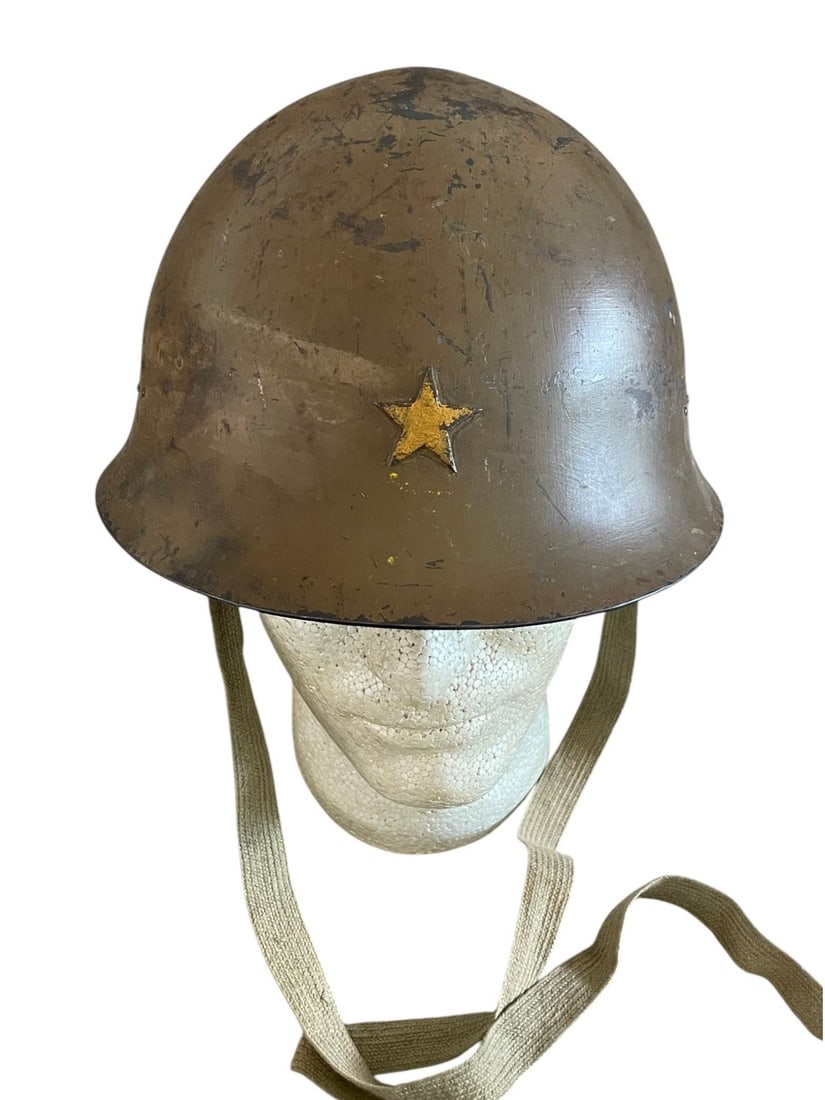
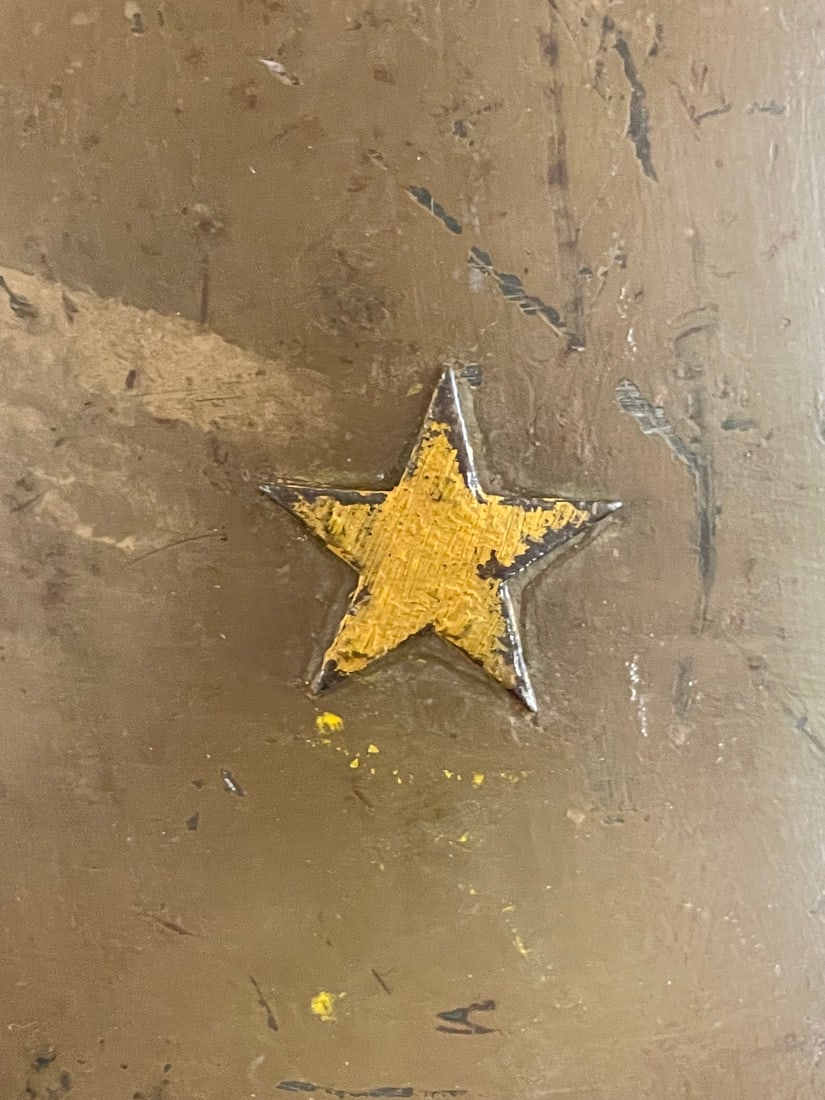
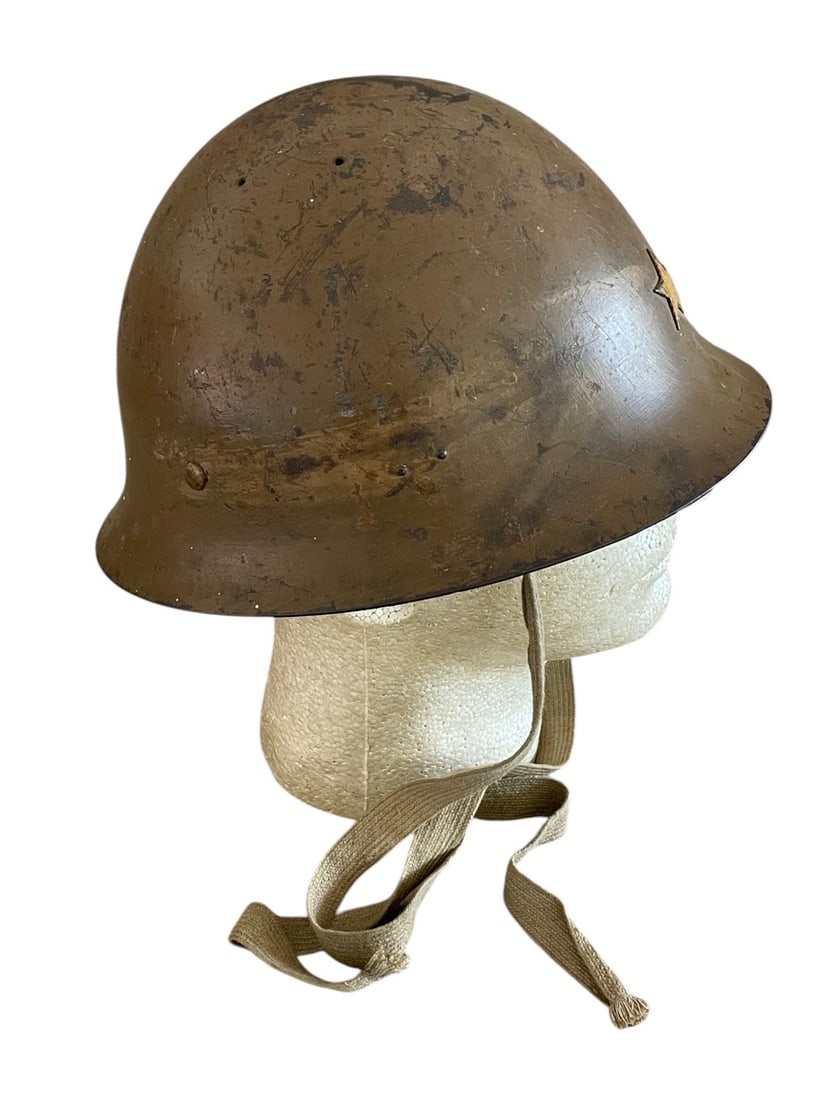
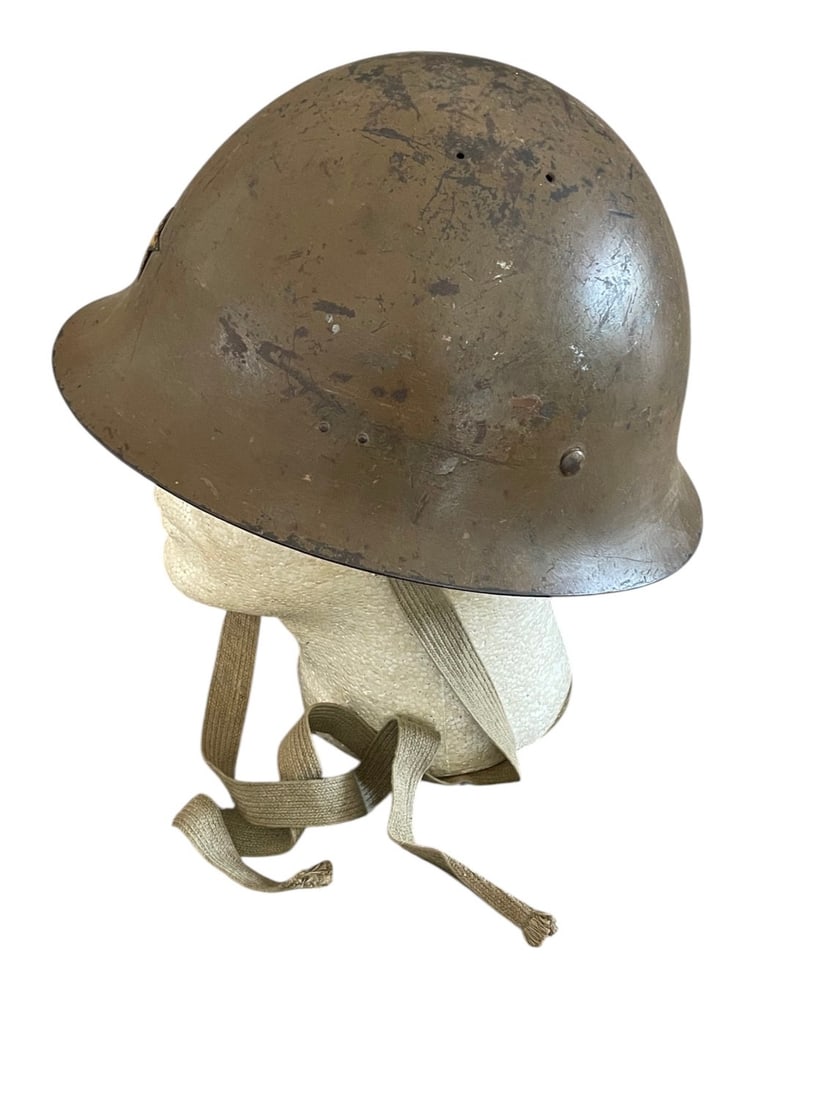
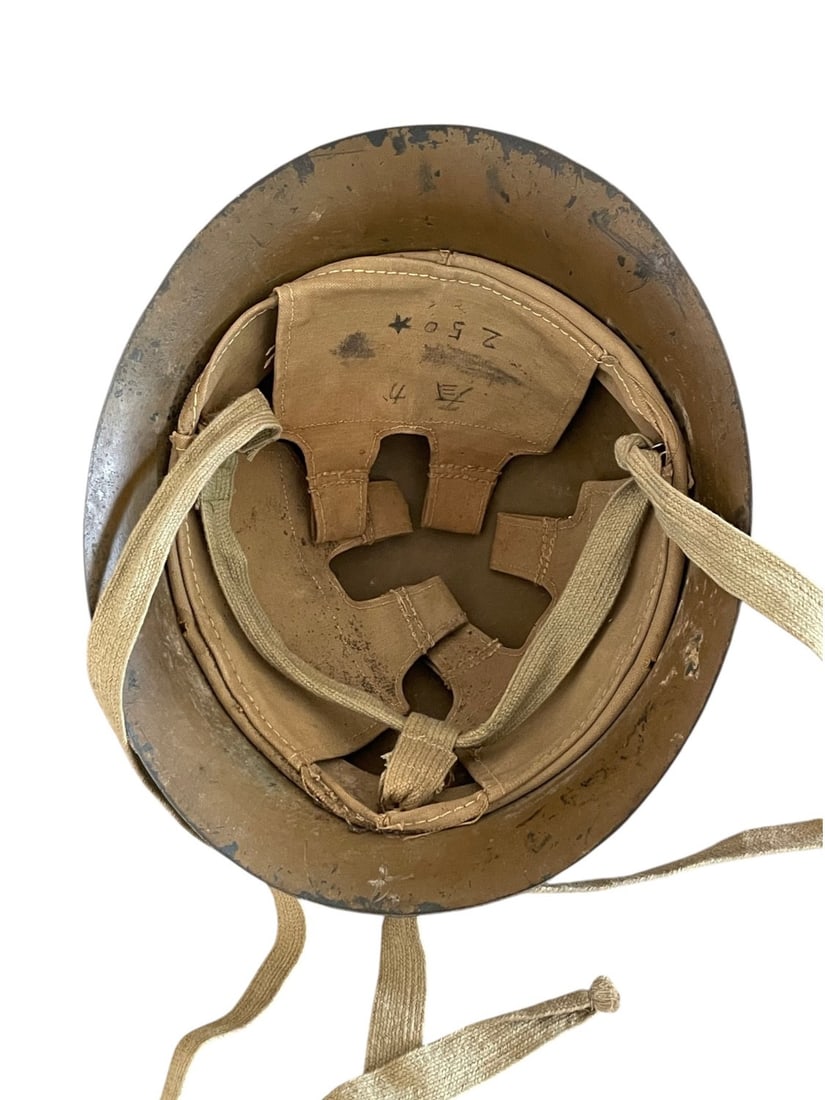
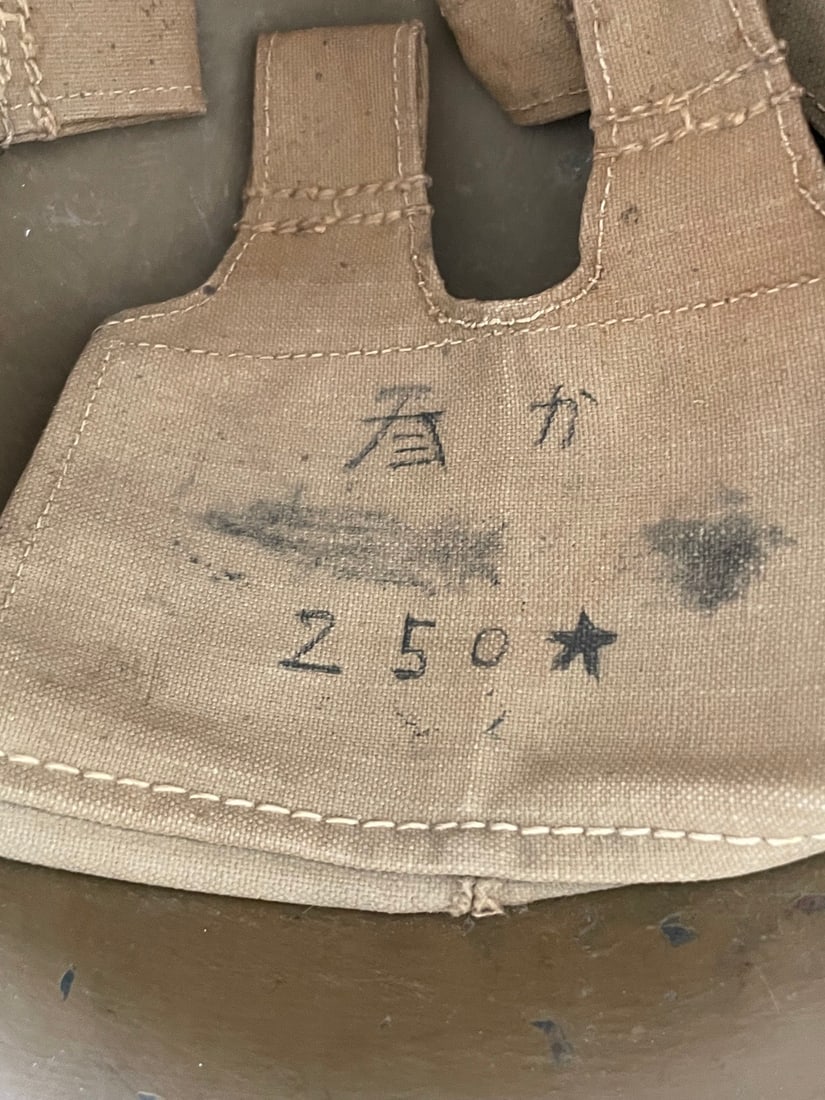
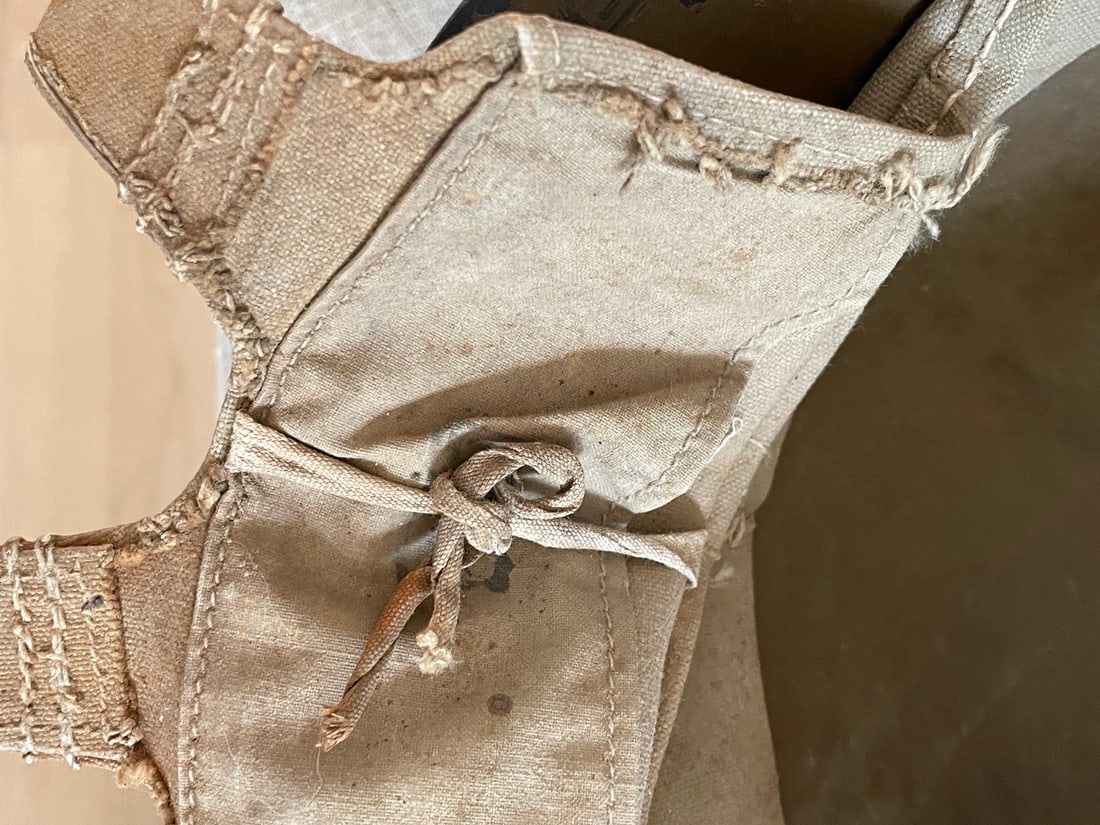
WWII Imperial Japanese Army Type 90 (Tetsubo) Combat Helmet with Star Insignia, Late-War Canvas Liner Marked "250 " and Original Tie-Tape Chinstrap Offered is a World War II Imperial Japanese Army Type 90 steel combat helmet, the standard-issue tetsubo of Japan’s ground forces from its 1930 adoption through the surrender in 1945. The shell retains its brass five-pointed star front insignia, a hallmark of Imperial Army issue, and is fitted with a substitute canvas liner bearing ink brush kanji and a hand-inked "250 " inventory notation, a configuration closely associated with the material shortages of the war’s final years. Adopted in Imperial Year 2590 (1930), the Type 90 equipped Japanese infantry through the Second Sino-Japanese War and every major Pacific campaign that followed, from the jungle fighting of Guadalcanal and New Guinea to the defense of the Philippines and the final battles for the Home Islands. Standard production called for a leather or pigskin three-pad liner, but as raw materials grew scarce late in the war, depots and factories turned to heavy cotton canvas as an emergency substitute, a shift reflecting the mounting strain on Japan’s wartime industrial base. Helmets fitted with this style of liner are frequently associated with late-1944-1945 manufacture, reserve and militia issue, and the frantic buildup undertaken in anticipation of an Allied invasion of the Home Islands. The brushed kanji and numeral on the liner tab, while not fully translated, are consistent with the depot or unit inventory notation common to materiel processed under these conditions. The steel shell displays a dark olive-drab to khaki-brown painted finish with heavy overall wear: scattered scratches and abrasions across the crown and brim, small spots of surface oxidation, and honest losses consistent with extended handling and age. The brass star retains substantial traces of its original yellow field paint, worn through to darker metal at the raised edges. The interior canvas liner is complete and constructed with period stitching, showing three shaped pads, cloth suspension tabs, and the noted ink inscriptions.
Share this lot: