Fall 2026 Militaria and Aviation Auction
Lot 59:
Description
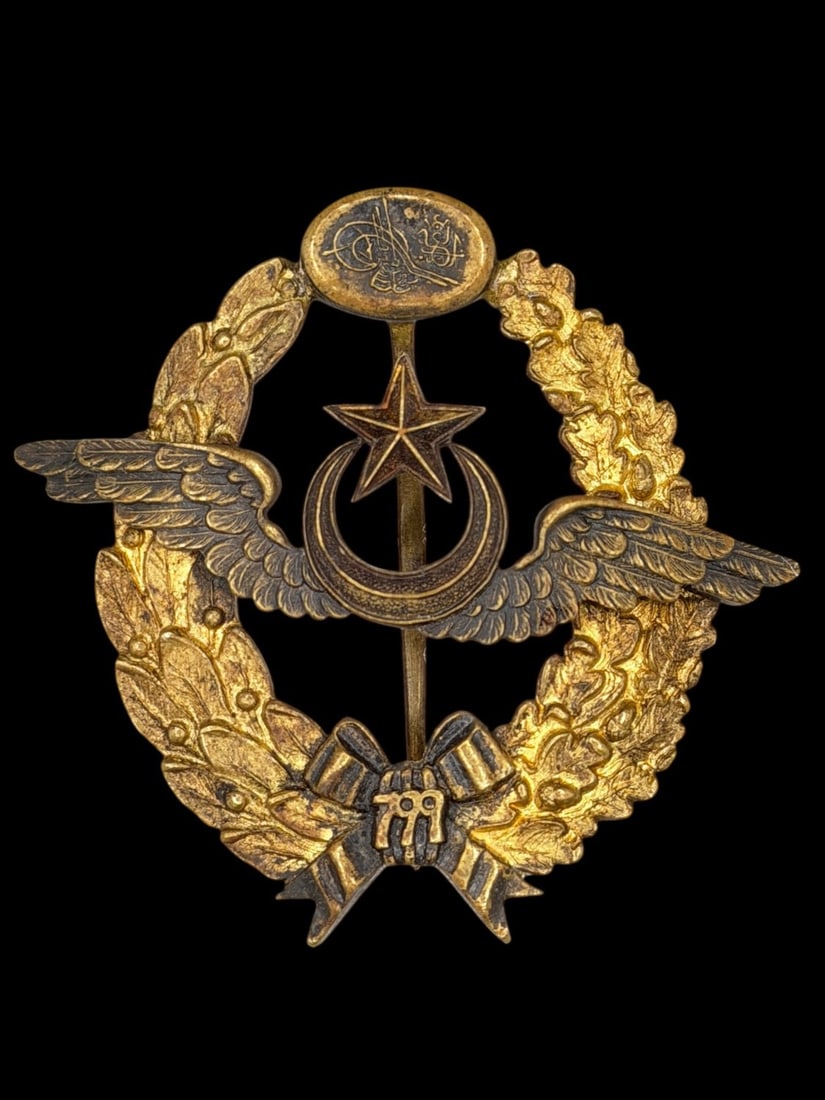
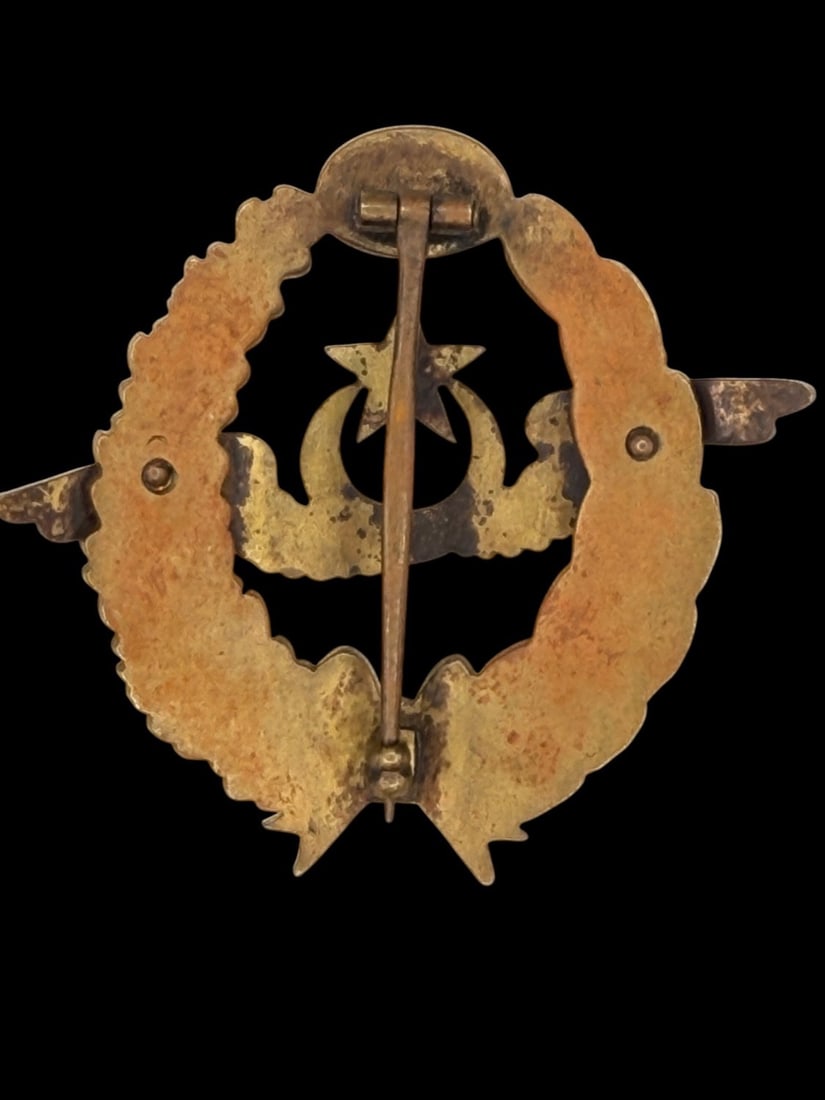
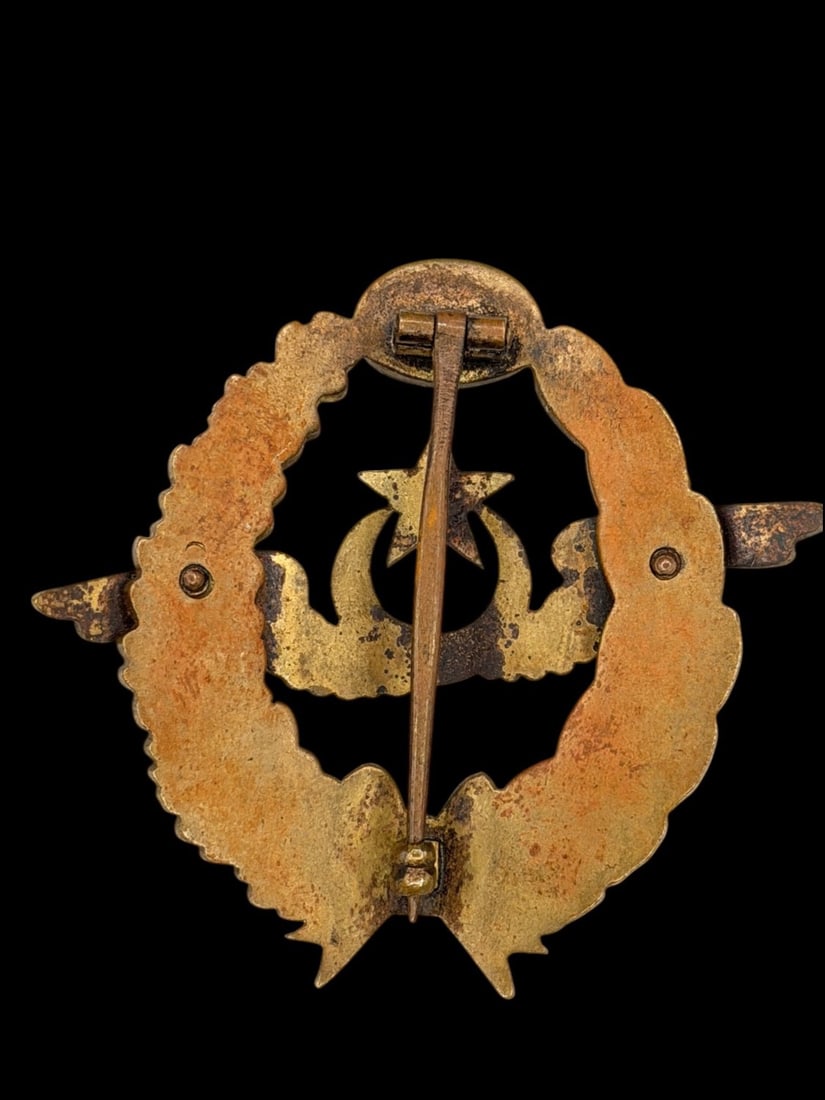
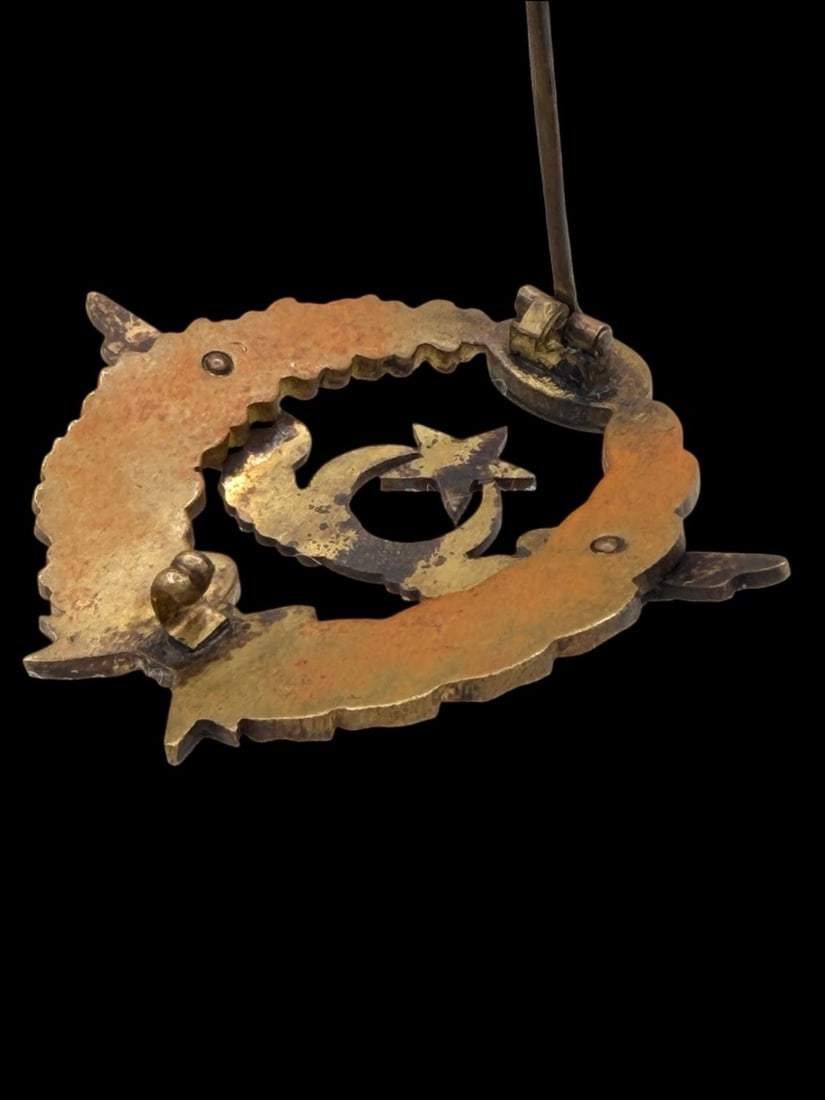
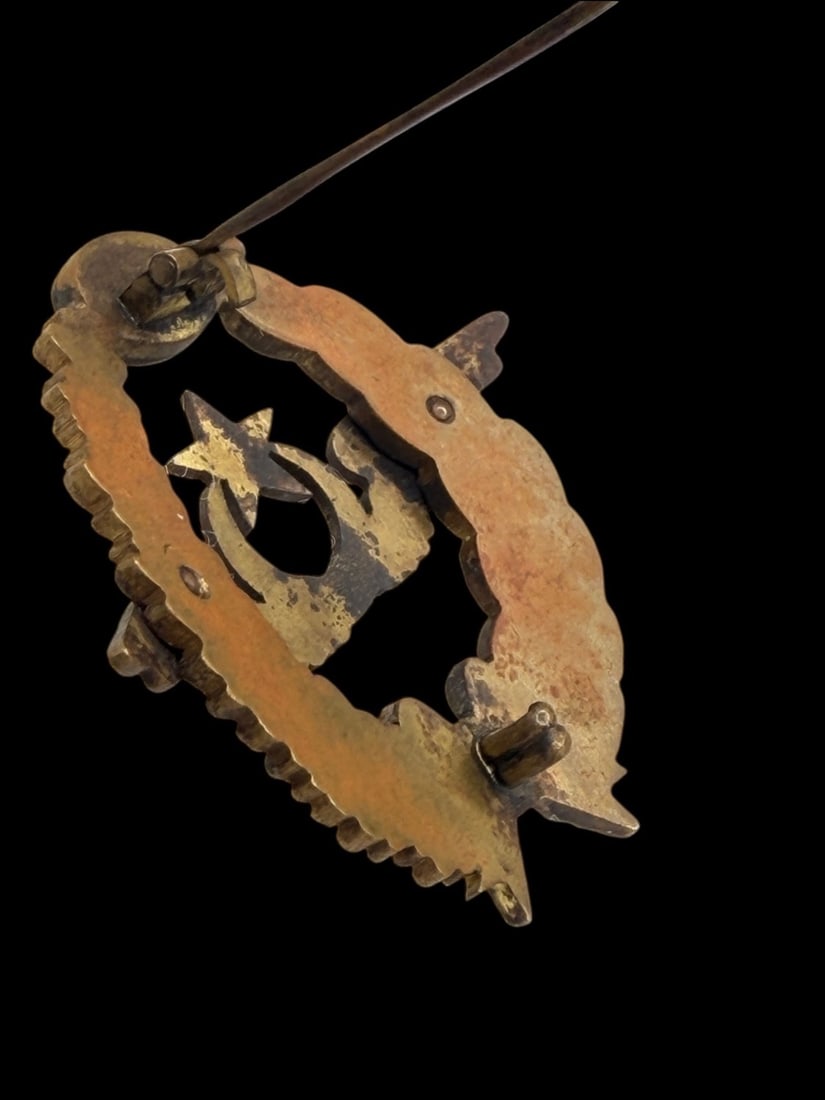
RARE WWI Ottoman Military Pilot’s Badge, Tughra of Mehmed V, Dated 1331. WWI Ottoman Imperial Military Pilot’s Badge (Osmanl Askeri Pilot Rozeti), bearing the tughra of Sultan Mehmed V Read and the Hijri date 1331 (1914/1915), the qualification insignia of the Ottoman Empire’s fledgling Osmanl Hava Kuvvetleri. This badge represents one of the scarcer and more evocative categories of First World War aviation militaria: the pilot’s qualification insignia of the Ottoman air service. No recipient, squadron, or individual service history is established for this example, and as with the great majority of surviving specimens, no separate biography accompanies it – the badge’s imperial cartouche and dated ribbon bow stand as the primary record of its origin and purpose. Instituted in 1914 (Hijri 1331) under Sultan Mehmed V, the pilot’s badge was conferred upon qualified aviators of the Ottoman Aviation Squadrons, a service that expanded rapidly once the Empire entered the war alongside the Central Powers. Ottoman airmen flew reconnaissance and other sorties over the Gallipoli Peninsula, the Sinai and Palestine fronts, and Mesopotamia, frequently alongside German instructors, mechanics, and pilots attached to Fliegerabteilung units seconded to Ottoman command. Because the two air services operated in such close partnership, German airmen qualifying under the Ottoman flag were themselves entitled to wear this badge – a fact that helps explain why so many surviving examples display German manufacturing traits, whether from workshops such as C.E. Juncker or Meybauer, or from Constantinople court jewelers and mint craftsmen working to a shared design. This particular example bears no maker’s mark, so it cannot be firmly assigned to a specific workshop or country of manufacture, though its construction is consistent with the period. The badge is built in multiple parts from gilt bronze/brass. An oval cartouche engraved with the tughra of Mehmed V surmounts an oval wreath of laurel and oak leaves. Within the wreath, a separately mounted winged crescent and star, its wings extending beyond the wreath’s edge, is secured by two rivets visible on the reverse. A bow-form ribbon device at the base carries the raised Hijri numeral ‘1331’. The reverse retains its original barrel hinge, long vertical pin, and heavy C-catch, all appearing intact and present in the photographs, though the clasp’s function has not been independently tested. No case, award document, or additional insignia accompanies this lot; the badge is offered as photographed. Surfaces retain traces of original gilding beneath an attractive, uneven natural patina, with oxidation and verdigris spotting visible on the reverse consistent with age and honest, uncleaned condition. The recessed crescent-and-star device shows expected darkening in contrast to the higher gilt tone of the wreath, and the tughra cartouche remains sharp and legible. A genuinely scarce survivor of Ottoman military aviation, this riveted winged-crescent badge captures the brief but remarkable history of the Empire’s air arm during its final and most consequential war.
Share this lot: